
Aluminum pergola cutting is often described as one job even when the proposed product contains several manufacturing routes. The frame, roof members, covers and purchased accessories may not share a section, material or end requirement. A saw quotation based only on a roof blade can therefore be accurate for that blade and incomplete for the factory’s intended product.
Before choosing equipment, define what your factory will actually make. Identify the approved pergola system, which aluminum parts arrive as stock, which parts arrive finished and what work follows cutting. The useful purchase decision is whether the proposed saw fits those defined cutting operations. It is not whether a machine photograph resembles equipment used somewhere in the outdoor-products industry.
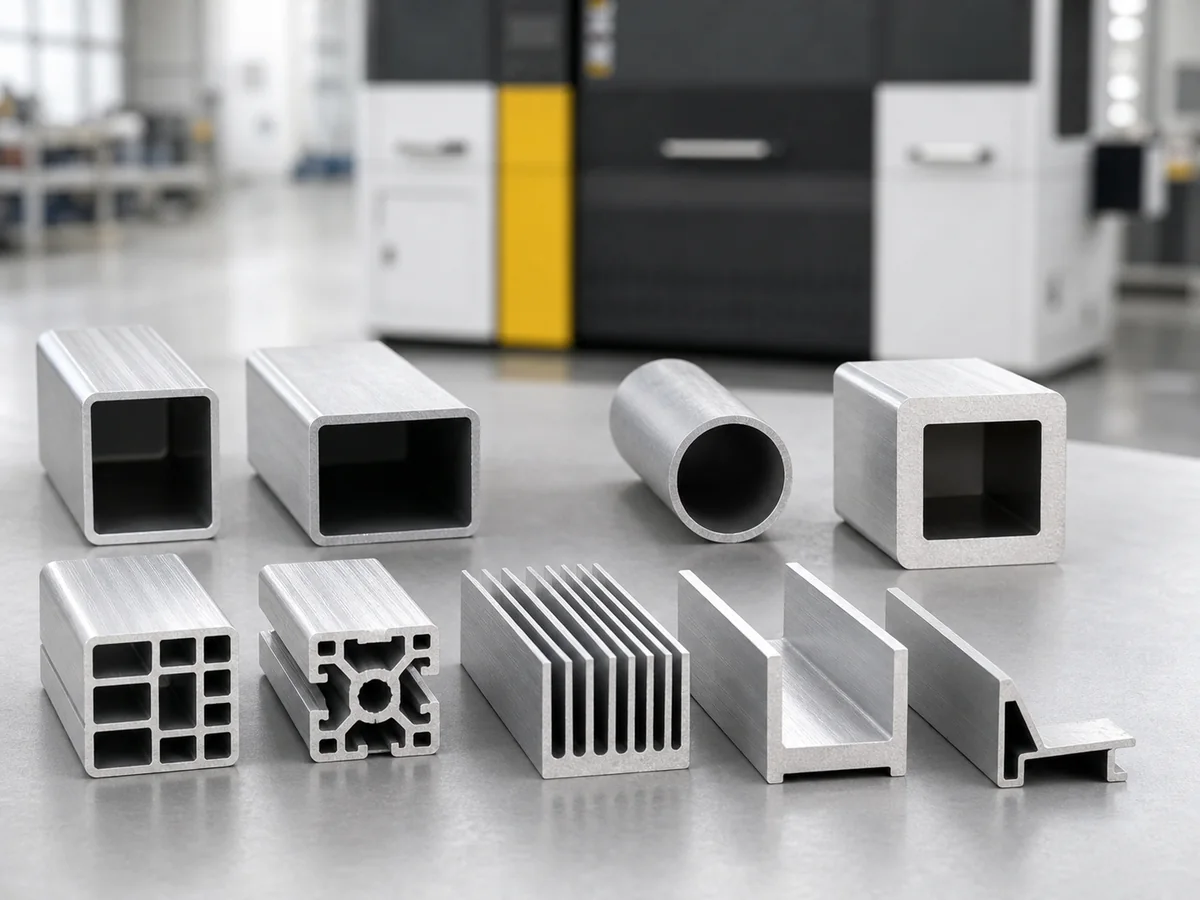
Define aluminum pergola cutting from the parts your factory will manufacture
“Pergola” is not a complete material or process specification. The Renson product range, for example, includes different roof arrangements and integrated options rather than a single universal construction. Its range illustrates why the product name alone does not define the cutting work. Obtain the applicable drawings and manufacturing information for your own approved product.
Start with a component list tied to the product version being released. Identify the frame members, roof components, covers and other parts relevant to that version. For each item, record whether it is manufactured internally, received as a finished component or supplied by another process. Do not include glass, fabric, electrical assemblies or other purchased items in an aluminum saw capacity claim.
Next identify the incoming form of the aluminum items you will cut. Send the actual extrusion section drawings, material information, stock lengths and finish condition. A beam, column and roof blade can create different holding and support questions even if they all contribute to one pergola. A product brochure does not replace the individual stock information needed by the cutting equipment supplier.
Keep optional product arrangements visible in the inquiry. If your factory will make both one roof version and another, show the cutting families associated with each. If only one version is currently approved, do not quietly treat a proposed future variant as confirmed machine work. Ask the supplier to distinguish the current scope from options that still require engineering or material information.
Worked example: two offers describe different factory responsibilities
Consider an invented comparison for the same approved pergola product. The buyer intends to cut frame extrusions internally and purchase finished roof assemblies. Offer A confirms the frame cutting schedule but excludes subsequent holes and joining features. Offer B says it covers pergola production, yet its part schedule contains only one roof-member section. The second offer has broader wording and a narrower demonstrated cutting scope.
Rewrite the comparison around the actual factory responsibility before comparing prices. Identify the frame families made internally, the finished roof items bought from another supplier and the remaining frame operations. Ask each equipment supplier to mark those same rows as included, excluded or unresolved. The purchased roof assembly belongs in the product plan but should not inflate the saw workload if it receives no cutting operation in this factory.
The outcome need not be that one offer replaces the other. The buyer may need a confirmed frame-cutting proposal together with a separately defined route for the remaining features. Alternatively, the factory may decide to manufacture roof members later. That is a scope change requiring the actual new section and part records, not proof that the original purchase already covered them. Record the unresolved decision separately from the current production commitment.
This exercise also exposes missing cost assumptions. One quotation may include stock support while another assumes the purchaser provides it. One may discuss cut-part output while another stops at the machine discharge. Ask what each proposal actually supplies at the same agreed process boundary. Do not compare a complete frame-to-next-process arrangement with a machine-only price as if their contents were equal.
Separate cut dimensions from the operations that create product functions
The approved part drawing should define the cut length, end geometry and references. The overall width or height of the finished pergola is not automatically the length of every individual extrusion. Connector positions, covers and other selected details can affect part definition. Resolve those relationships through the applicable design records rather than applying a deduction copied from an unrelated system.
A drawing may also contain holes, openings, recesses or other features after the stock has been cut. List those operations explicitly. A quotation for sawing does not, by itself, include drilling, milling, punching, sealing or assembling the pergola. This distinction is especially useful where the product has integrated functions that extend beyond the cut faces.
Where the approved system includes drainage or enclosed services, ask which component features participate and which manufacturing stage supplies them. Specify the relevant drawings and the route for those features. Do not assume that producing the requested cut length proves drainage continuity, sealing performance or a completed service route.
Renson’s pergola information also notes that changing a factory-cut column length can affect previously positioned holes. This is a product-specific example of the relationship between length and other features, not an instruction to modify your product. Agree the required sequence and references with the responsible product designer and manufacturing parties.
| Scope row | What the cutting supplier needs | What remains separately defined |
|---|---|---|
| Frame extrusion | Actual section, cut length range and ends | Joining features and completed frame requirements |
| Aluminum roof member | Applicable section, end record and handling condition | Roof mechanism and finished system function |
| Cover or accessory extrusion | Stock identity and individual part requirements | Attachment, finish and final fit |
| Purchased finished item | Its relationship to the manufacturing route | No aluminum sawing operation assumed |
Compare saw configurations against the actual extrusion families
Build a cutting-only schedule from the manufacturing scope. Include each actual section envelope and geometry, stock length, cut-length range, end angles if specified and dimensional requirements. Ask the supplier to mark the rows confirmed for the proposed model and configuration, the rows requiring additional information and any rows outside its quoted scope.
Do not use one outside dimension as proof that different extrusions behave alike in the proposed arrangement. The section drawing matters when discussing support, clamping and feeding. Ask how the actual hollow or shaped stock would be handled and what information is needed to establish suitability. A photograph or nominal profile name is a starting point for discussion, not a machine confirmation.
The longest members and the shortest covers may need different output arrangements. Describe how parts enter the cutting stage and where they go next. Ask about the support and transfer scope included in the proposal. Record any additional handling equipment or work that the purchaser must provide, so two quotations can be compared on the same basis.
If the drawings call for different end angles, compare those requirements with the selected model’s confirmed functions. Do not assume that every CNC saw provides angle cutting or that an adjustable-looking head covers every required condition. Request a row-by-row response based on the actual parts. A confirmed square-cut scope should not silently become a promise for an angled family.
For roof blades, the existing aluminum louver blade cutting guide addresses that individual family. The purchasing scope here is broader: determine which other parts are made internally and whether the proposed equipment covers their distinct requirements as well.
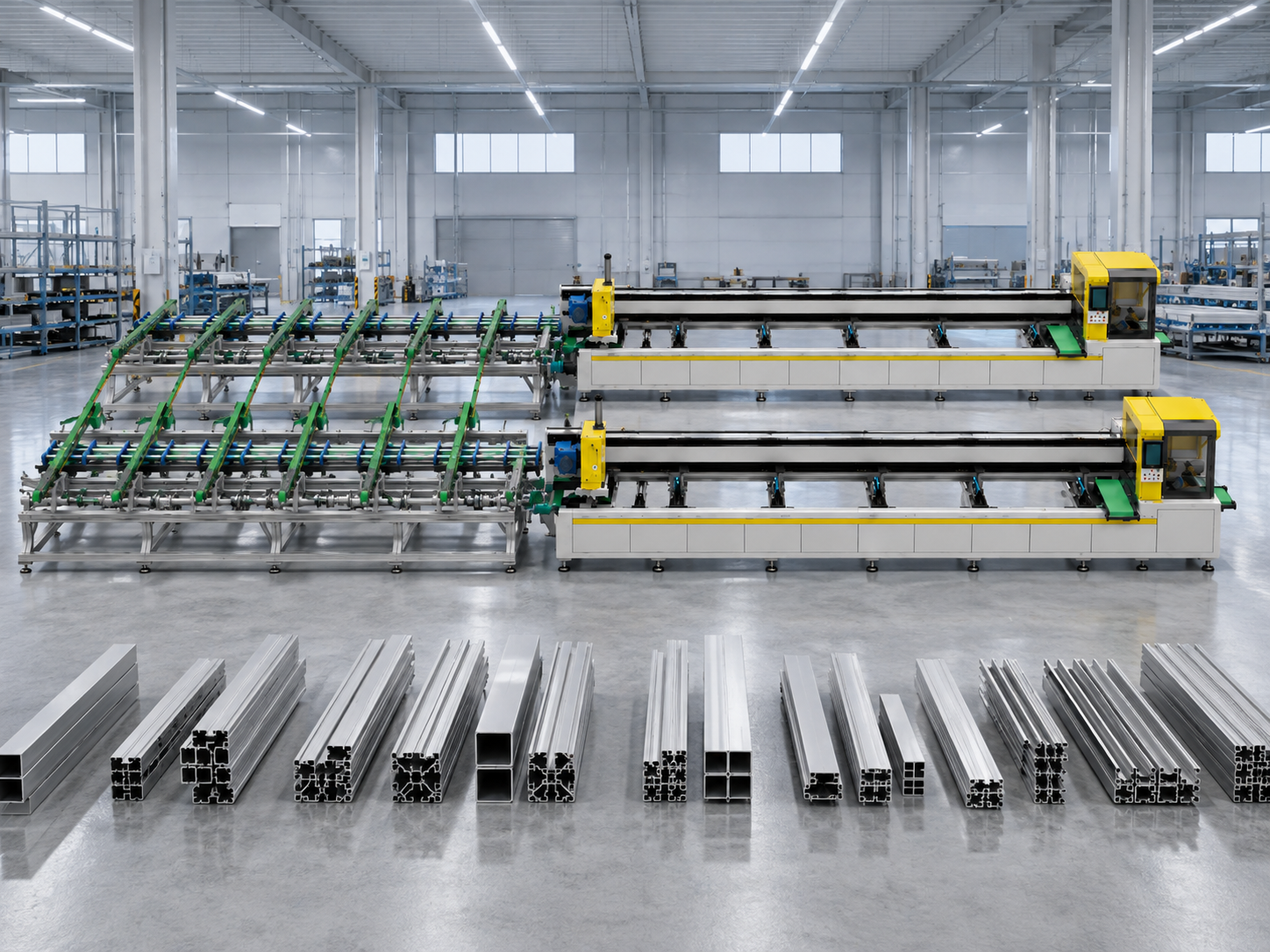
Review finish, orientation and the transfer to the next process
Identify the stock’s actual finish state at cutting. Material cut before a finishing process and material already supplied with a visible finish create different purchasing questions. State which faces remain exposed, how the parts are referenced and what observations the purchaser expects from representative material.
Ask the supplier to explain the proposed material contact and output arrangement for the actual section. Include protective film information where applicable, while requesting confirmation of its treatment in the proposed process. Do not infer a universal method from one coated sample. The requirement is to establish an applicable handling proposal and evidence for the material you intend to use.
Where approved parts have an orientation or end identity, preserve that information through cutting and transfer. An extrusion’s similar-looking faces do not necessarily identify its position in the released product. Use the drawing reference and the agreed record method; do not expect the saw to recognise handed or destination-specific parts unless that function is explicitly confirmed.
Discuss the handover to the next operation. The downstream team needs the correct part identity and revision along with any unresolved observations. If an item requires further features, its cutting-stage completion should be recorded as that stage only. Avoid calling it a finished pergola component until the remaining defined work and acceptance have actually been completed.
Size the purchasing discussion around the production mix, not a single roof
State the expected orders and the cutting work they introduce. A quotation should distinguish repeated stock and lengths from changing product variants. A large piece count for one repeated family can conceal a smaller family whose section, handling or end requirements are outside the proposed scope.
Consider an invented planning example with two approved product versions. Each order of version A requires eight cut pieces in family X and two in family Y. Version B requires six X pieces and four Z pieces. These letters and quantities describe a hypothetical scope comparison; they are not a pergola design or an actual customer production result.
For ten A orders and five B orders, the cutting schedule contains 110 X pieces, 20 Y pieces and 20 Z pieces, or 150 pieces in total. A proposal confirming only family X addresses 110 of those planned pieces. It leaves two families and forty pieces without a confirmed cutting route. It does not establish that the 110 pieces will achieve any particular output rate.
Use that kind of family schedule when selecting representative parts for a demonstration or quotation clarification. Explain why each selected example matters. Ask the supplier to record the actual configuration and conditions with its response. If one family requires another process, compare that complete route rather than presenting the saw alone as the whole manufacturing solution.
A calculated piece schedule is not a capacity guarantee. Production timing also depends on the actual operations and handovers included in the plan. Request applicable evidence for those conditions before assigning an output commitment, and keep supplier estimates distinct from measured results.
Worked example: an optional feature changes only part of the manufacturing route
Suppose a hypothetical product release adds an optional enclosed service feature. The outside frame dimensions remain the same, so the purchasing team initially assumes that its cutting information is unchanged. The revised component records, however, identify an affected cover family and additional work assigned to another manufacturing stage. The equipment decision depends on those records, not on the unchanged overall product dimensions.
Compare the affected part identities and revisions with the current cutting-only schedule. Identify any changed section, cut end, finish requirement or transfer condition that needs the saw supplier’s response. Keep the separately assigned feature-making operation with its responsible process. If the cut requirements truly remain unchanged, the existing cutting confirmation may still be relevant; it does not confirm the new downstream feature or the completed optional function.
Ask the buyer’s manufacturing team to reconcile the revised route before releasing a production commitment. A representative sample from the earlier version should retain its earlier identity. An unchanged sample cannot demonstrate a changed feature, while a newly revised drawing is not itself measured production evidence. This distinction makes the equipment inquiry specific without treating every product option as a reason to replace the saw.
Send a pergola cutting inquiry that makes the manufacturing boundaries clear
Send the approved product version, the internal-versus-purchased component list and the cutting-only schedule. Attach the actual aluminum section and part drawings, revisions, material and finish information, stock lengths, cut requirements and expected production mix. Identify the downstream features and operations separately.
Ask the quotation to state the proposed model and configuration, confirmed component families, support and transfer scope, exclusions and the information needed for unresolved rows. Include representative material where appropriate. Agree how cutting observations will be recorded against the approved part requirements instead of relying on a broad claim that the machine makes pergolas.
Product-level drainage, mechanism, structural and installation requirements remain with the responsible product parties. Cutting evidence can answer a defined manufacturing question; it cannot substitute for the completed system’s required verification. Keep those boundaries clear when comparing offers and planning the factory route.
Send Jiurun your aluminum pergola cutting schedule with the actual sections and part drawings. Request a cutting proposal tied to the families your factory will manufacture. A useful inquiry makes the aluminum sawing work visible while keeping purchased items and downstream functions explicitly accounted for.
Use an equipment video to discuss the cutting stage
This Jiurun video provides cutting-equipment context. It does not demonstrate approved pergola components, a completed roof system or the manufacturing scope of your proposed order.