
Aluminum mirror frame cutting starts with a product decision, not a saw setting. A four-piece frame with mitered corners, a decorative edge trim and a wall-mount J-channel are different assemblies. Their extrusions may all arrive as long aluminum stock, but their visible faces, glass pockets, end conditions and acceptance checks differ. Before requesting cut blanks, the buyer should identify which part the shop will actually make and which operations remain with the mirror assembler.
This guide is for an OEM or component buyer with an approved mirror system. It does not set a universal frame dimension, glass clearance, hanger design or installation method. For product context, Extrude-A-Trim lists mirror edge trim and matching top or bottom J-channels, while Electric Mirror specifies a framed mirror system with an aluminum extrusion. These are different supplier examples. The project drawing, glass specification and joining hardware control the cut list.
Aluminum mirror frame cutting: choose the supply route
First ask whether the order is for straight stock, cut frame members, a drilled and joined frame, edge trim around a mirror, or a complete finished mirror. A cutting machine can deliver approved aluminum blanks. It cannot by itself validate the glass, adhesive, mounting, electrical features of a lighted mirror or the finished product. A quote that mixes those scopes hides where the dimensions and inspection responsibilities sit.
For a true four-sided frame, request the profile drawing and the corner connector or joining method. For edge trim, identify the trim and the top or bottom retaining channel separately. Some systems use an open back or a mounting cleat; others carry the glass inside a pocket. Keep those configurations separate in the traveler and packing list. If the assembly is already bought as a finished mirror, confirm whether a separate saw operation has any purpose before buying equipment.
Define the visible face and miter datum
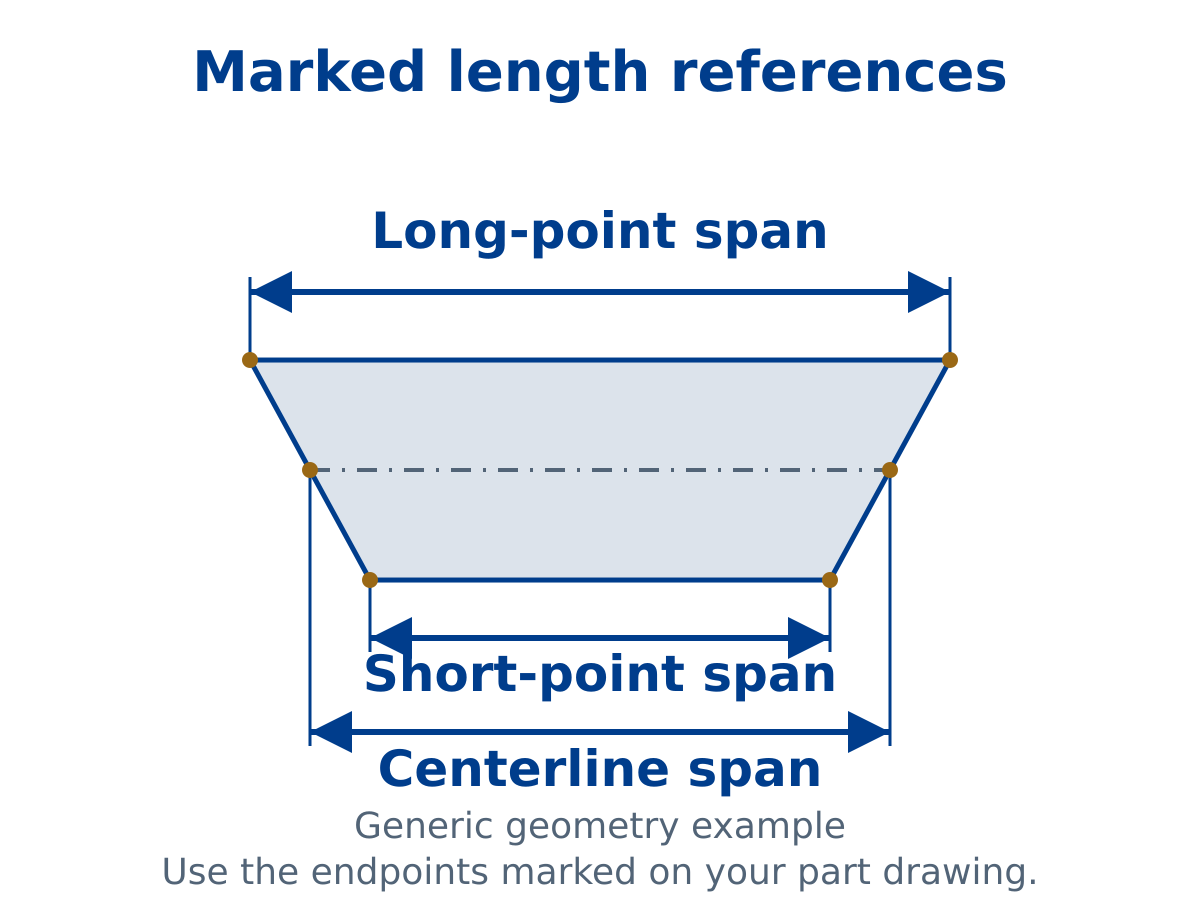
When the drawing calls for a mitered frame, mark the visible face, the glass-side edge and the reference face before measuring any length. A “45-degree cut” does not tell the shop whether the required length is the outside long point, the inside short point or another dimension on the profile. The drawing must give the angle, the measurement endpoints and the permitted tolerance. Opposite members may share a nominal length, but left and right miters still need orientation control. For an asymmetric section, a correctly angled part can be unusable if it is cut as the wrong hand.
A first-off set should be laid out in frame order rather than checked as four unrelated lengths. Bring the approved connector or joining method to the bench. Dry-fit the corners and verify the opening against the specified mirror size and edge treatment. Check for daylight at the visible miters, step between adjacent faces, burrs at the glass pocket and interference with any screw or clip location. The assembler, not a generic article, must approve the allowed gaps and clearances.
Protect the finish and glass pocket
Anodized, painted or polished surfaces can be damaged at the infeed, clamp, stop and outfeed. Decide which side may contact the fixture, whether protective film remains in place through cutting, and how chips will be cleared from the pocket. The sample inspection should cover scratches, chipped coating, sharp edges and trapped debris as well as angle and length. Deburr only as the approved finish and fit allow; rounding away a retaining feature may solve a sharp edge while spoiling the assembly.

SYHARVEST describes aluminum picture and mirror frame profiles offered as stock or cut with mitered ends. That demonstrates why a buyer should state whether the shop is supplying stock or finished cut members, but it does not establish the dimensions of another brand’s profile. The same caution applies to published catalog stock lengths and tolerances: quote to the approved drawing, not a web example.
What an RFQ should make measurable
Send the profile cross-section or CAD file, finish and visible face, mirror thickness and specified edge treatment, cut lengths with datum and angle, quantities by hand, corner hardware, hole or slot map, packing protection and the acceptance method. If the profile is ordered as edge trim, separate each trim piece from any top or bottom J-channel and describe whether the ends meet, overlap or are hidden. State if drilling, countersinking, joining or assembly is included; do not let a saw-blank price imply a completed mirror frame.
A practical trial can use one approved stock length to produce a complete four-member set. Record each part ID, measured datum, miter orientation, surface condition, first-off dry-fit and any rework. A photograph of the assembled corner is useful, but a photo alone cannot certify glass fit, mounting or finished mirror quality. Keep the release criteria tied to the actual system and buyer’s drawing revision.
Related machine view
The Jiurun video below is a related aluminum-cutting equipment view. It is not a mirror-frame cut, a specific configuration proposed for this order, a customer sample or proof of miter accuracy. It can help start a discussion about infeed, fixture access and part handling before the actual extrusion is reviewed.
For a different four-sided enclosure problem, our display case frame cutting guide covers a cabinet and glazing route rather than a mirror edge. If you have an approved mirror-frame section and cut list, send the drawing and first-off requirements to JiurunCut for an equipment-fit discussion.