
Aluminum ladder saw scheduling should start with the number of complete rail-and-rung sets an assembly line needs, not a brochure’s isolated parts-per-hour figure. A saw can finish a large batch of rungs while assembly waits for the matching left and right rails. Before requesting a machine quote, define which members are cut in-house, how each product family is identified, and where a cut part becomes a releasable kit.
This guide is for ladder manufacturers evaluating a saw or a cutting cell. It does not approve a ladder design, load rating, rung joint, or compliance claim. Those decisions belong to the product drawing, engineering validation, and applicable product requirements. For a wider equipment decision, see our ladder manufacturing saw selection guide; the question here is how to quote the flow of matched members.
Define a finished kit before comparing machine speed
List each ladder family and revision, then identify its required saw-cut members. A straight ladder may have two rails and its specified rung set; an extension product may add distinct base and fly sections. A platform product can require another combination. Do not assume that all rails, rungs, braces, caps, locks, or purchased subassemblies pass through the same saw. An actual product page from Werner illustrates why rail and rung geometry are separate component questions; it is an example of a product design, not a JiurunCut machine specification or an endorsement.
Create a routing sheet with one row per cut member. Record the product family and revision; member drawing; alloy and temper where relevant; incoming extrusion or tube profile; stock length range; nominal cut length and tolerance; cut-end orientation; later punching, drilling or joining operation; and the point at which the part is accepted. Mark bought-in items explicitly. Otherwise the supplier may quote a fast rung cycle and quietly leave rail handling, sorting or assembly preparation outside scope.
A useful output measure is complete accepted kits available to the next operation per shift. The least available required member limits that result. This is a planning definition, not a promised rate. It prevents an attractive piece count from hiding a shortage of left-hand rails, a delayed short-member batch, or rejected ends awaiting rework.
Aluminum ladder saw scheduling for a real order mix
Give bidders a representative order schedule rather than one convenient sample. Show product families, drawing revisions, member quantities, expected lot sizes, and the timing of changeovers. Separate repeat work from small replacement or custom orders. If different rail and rung families share the same saw, the schedule must include their actual sequence; a rate measured on one long uninterrupted run will not capture resets, first-piece checks, blade changes, labeling, or removal of mixed offcuts.
Ask each supplier to return two views: a machine-cycle estimate for each defined member and a complete-kit schedule that includes handling and checks. State who provides operators and how labor is counted. A multi-piece clamping proposal may suit identical short rungs but cannot be assumed to cover long rails or delicate sections. If a bidder proposes batching by profile to reduce setups, ask how matched parts will be kept together and what work-in-process space the batch plan consumes.
NIST’s Manufacturing Extension Partnership describes value-stream mapping and setup reduction as ways to understand flow and time between the last good piece of one run and the first good piece of the next. Use that principle to request a transparent changeover record, not a generic efficiency percentage. Our takt-time buying guide explains how to start from accepted part demand; this ladder-specific plan adds the requirement that the parts form complete assemblies.
Challenge the capacity calculation at each handoff
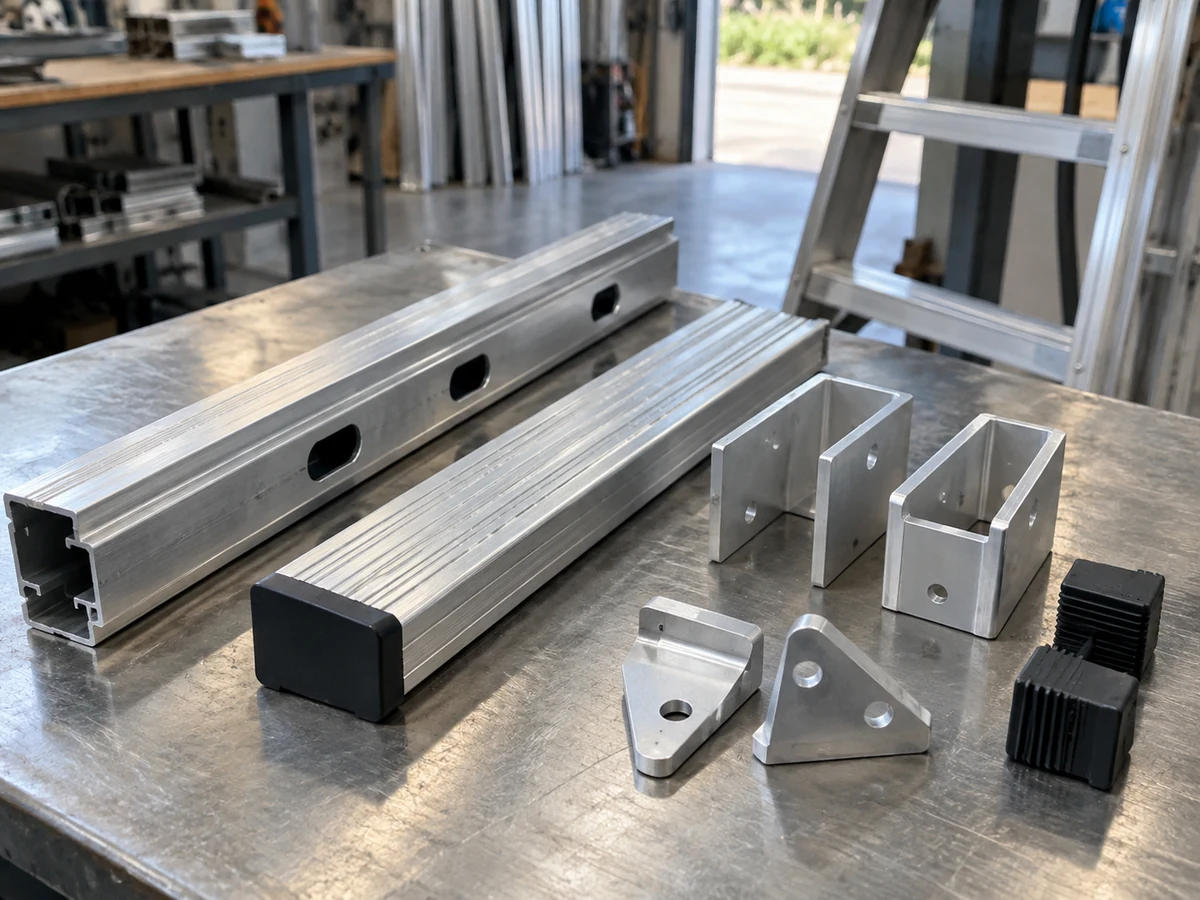
For long rails, check how incoming stock reaches the infeed, how it is supported near the datum, whether it can twist or bow, and where the finished length is supported after the cut. For short rungs, ask whether the actual section can be clamped without damage and whether a proposed multi-piece setup maintains individual identification. A photograph of a large machine does not establish either capability. Request a witnessed cut on your worst relevant profiles and lengths.
For aluminum ladder saw scheduling, map the handoff after the saw as carefully as the cut itself: deburring or edge treatment if required by the drawing; inspection; left/right or base/fly sorting; transfer to punching or joining; rejection segregation; and release to assembly. Ask who owns every bin, label and data field. If a purchased extrusion arrives in several mill lengths, model yield and remnant identification for each accepted stock length. A short remnant is useful only when a real future member can be cut from it under the same control rules.
The kit plan should make a shortage visible. For example, if the rail station has finished its scheduled pairs but a rung lot is held for an end-quality decision, the report should show incomplete kits separately from accepted kits. Neither the saw counter nor a stack of uninspected parts should be called production output. NIST’s kit-preparation case study provides an independent example of why visibility of incomplete kits matters; its results are not a forecast for ladder cutting.
Specify a trial that ends at the assembly boundary
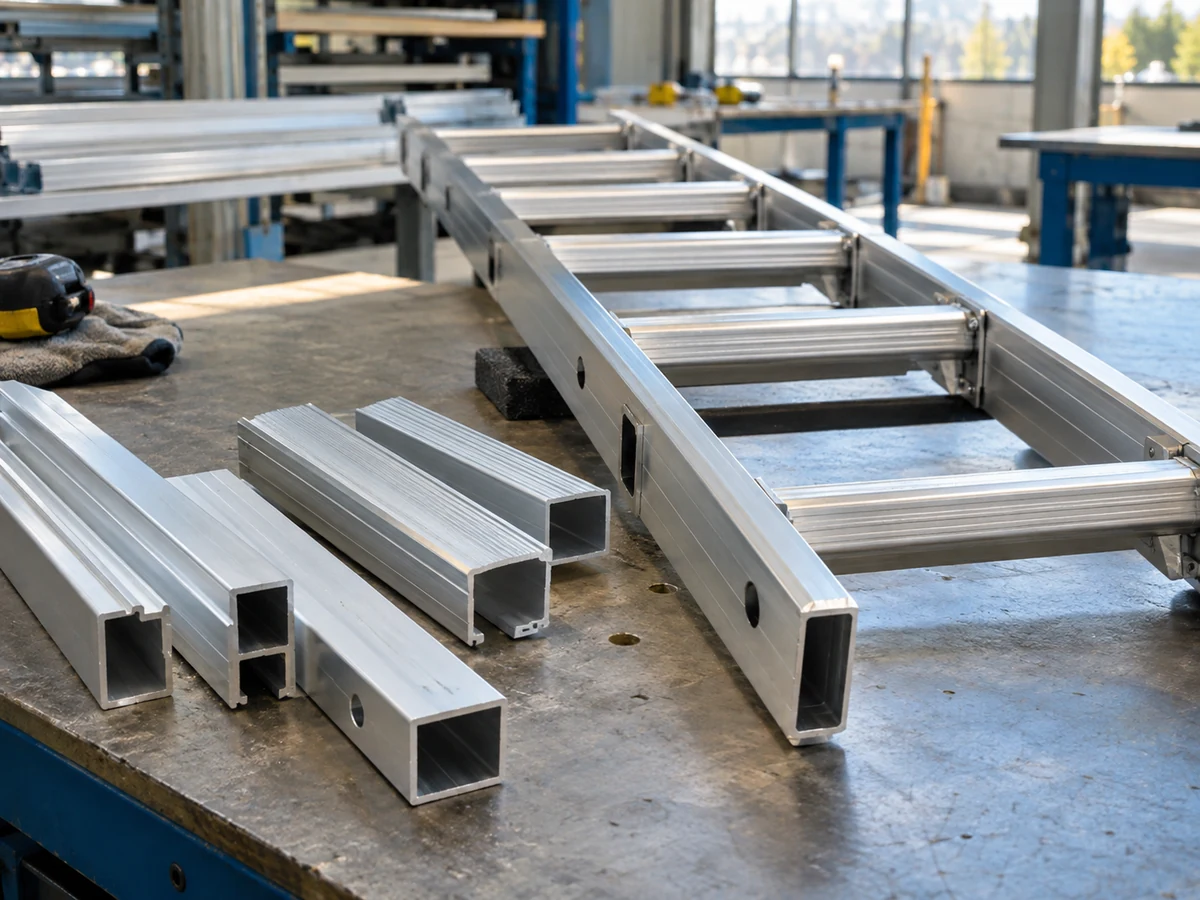
Send current drawings and physical samples for every profile that could change the equipment decision. Identify the largest and smallest relevant sections, longest rail, shortest rung, surface condition that may mark easily, and any angled or handed ends. Agree which sample is the setup piece and which pieces will be measured. Measure to the drawing datum with a suitable instrument; record the method, part identity, operator, and result. A feeder positioning claim is not a finished-part accuracy result.
Then follow the accepted pieces through the next real operation. If hole pitch, swaging or another join process establishes the final fit, the saw trial should not pretend to certify the assembled ladder. Instead, ask whether the cut length, squareness, surface and part identification are adequate inputs to that downstream process. Keep the witnessed samples and a signed disposition for any deviations. Our rail-and-rung saw trial checklist covers the profile-level fit checks; the scheduling acceptance here adds complete-kit timing and transfer.
Run a representative mixed sequence, including a change from rail to rung and back if that is a normal order pattern. Capture elapsed setup time, first accepted part after each change, inspection holds, handling interventions, and incomplete kits at the end. Have the bidder state which figures were directly observed and which are estimates. Do not extrapolate a demonstration clip, brochure cycle or single-stock trial into a production guarantee.
What should the RFQ require?
- Defined scope: a member-by-member routing matrix with included and excluded operations, supplied stock and tooling, and responsibility for unloading and sorting.
- Fit evidence: drawings and sample inventory, rail/rung clamping method, infeed and outfeed support, accepted cut-end criteria, and a plan for fragile finishes.
- Flow evidence: family-specific cycle estimates, a changeover method, labor assumptions, first-piece inspections, rejected-piece handling, and a complete-kit output model.
- Traceability: a practical label or traveler tying family, revision, batch and inspected member to the assembly kit without mixing a held lot with released work.
- Acceptance: named witness, measurement tools and datums, sample quantities agreed before the trial, safety review, retained records, and the condition for final release.
- Commercial boundary: machine and handling equipment, spare blades and wear parts, installation, training, service access, and any separate sorting or software work clearly priced.
Compare bids on accepted kit availability, operator work and integration responsibility alongside price. A larger automatic saw may be justified when long-rail handling is the constraint; a simpler machine with disciplined staging may serve a low-volume mix. The RFQ should let either option explain its actual scope rather than rewarding the highest unsupported pieces-per-hour number.
A practical acceptance decision
Approve the proposed cell only after the supplier has shown that the relevant profiles fit, the witnessed pieces meet your drawing, the mixed sequence is recorded, and the handoff makes complete kits identifiable. If a rail, rung or downstream operation remains outside the trial, label that gap and assign a later validation owner. The buyer can then compare a real operating route, not an isolated saw motion.
Need a quote? Send your ladder family list, member drawings, stock ranges, expected order mix, and an example of the kit traveler to JiurunCut. Ask us to separate what can be demonstrated on a saw from what your assembly team must still validate.
Related equipment footage
The following video is from Jiurun Machinery’s YouTube channel. It shows general aluminum-saw equipment and long-stock feeding. It does not show ladder rails or rungs, the configuration proposed for this article, a customer order, a witnessed cut trial, complete-kit throughput, or safety and performance approval.
Source note: Werner’s public ladder page is used only to illustrate that actual product members and joints vary. NIST MEP’s process-flow material and kit-preparation case are general manufacturing references. The RFQ and trial steps above are buyer recommendations; all specifications and acceptance limits must come from the buyer’s current drawings and agreed test plan.