
An aluminum extrusion billet inquiry should identify the material supplied to the extrusion operation, rather than leave the delivery stage implicit. A billet request and a finished-profile request need different product descriptions.
Before comparing quotations, ask the supplier to confirm what its product name means in this offer. Keep the agreed material, dimensions, supplied condition and intended processing stage together. The familiar word “aluminum” cannot settle those fields.
Aluminum extrusion billet and ingot terminology
Hydro’s extrusion-ingot page describes its product as raw material for extruded profiles. Its sheet-ingot page instead identifies material for the rolling industry.
This manufacturer terminology illustrates why the word “ingot” alone leaves the intended product unclear. In a billet inquiry, retain the supplier’s exact product description and ask how it matches the intended operation. Do not impose a universal naming rule on every supplier.
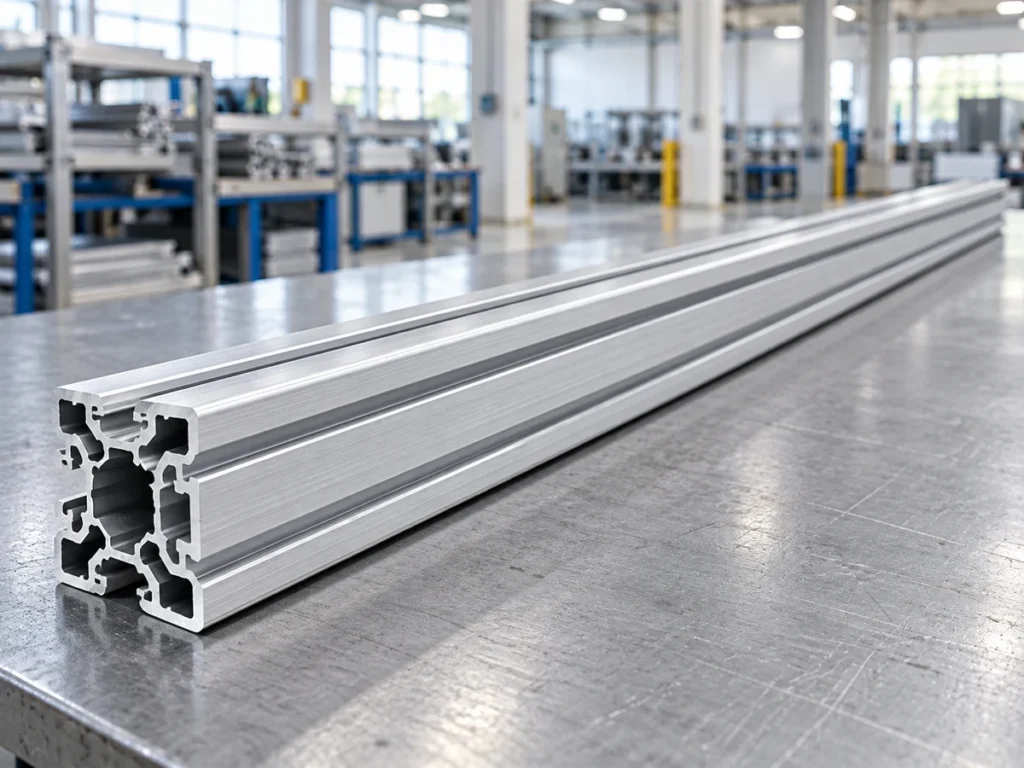
A finished profile has its own section drawing and delivery requirements. Do not replace that definition with the upstream material’s name. Ask which product the supplier is actually quoting before comparing a unit price or delivery promise.
If two offers use different labels, request a short written clarification from both suppliers. Resolve the supplied product first. A quotation should not need the purchasing team to infer the material form from a catalog photograph.

Check 1: define the material and supplied stage
For an aluminum extrusion billet order, keep the required material designation and governing specification beside the offered product. Ask the supplier to confirm its supplied condition and any separately included preparation.
Do not attach a finished-profile requirement to an upstream product without review. Have the material supplier and responsible process owner identify which requirements belong to the incoming product and which belong to later operations.
A buyer planning to order profiles may not be buying billet directly at all. State whether the commercial order is for upstream stock, formed profiles, cut blanks or finished components. Keep the intended deliverable visible at the top of the request.
Consider an original fictional project called Frame F. The buyer needs 60 cut profile members, each defined by drawing F-C. Supplier A offers material for an extrusion operation. Supplier B offers finished profile stock against F-C. These are different supply stages even if both offers say “aluminum material.”
The buyer should identify which party performs the extrusion and whether that work is included. Neither offer can be compared as a completed 60-member delivery until the quoted operations and accepted item definition are clear.
This example is a scope illustration. It contains no actual quotation, approved alloy, extrusion yield or production result. It does not establish that either supplier can produce Frame F.
Check 2: read the supplied dimensions with their conditions
Hydro’s extrusion-ingot brochure, carrying a 2019 copyright, lists product diameters, available lengths and dimensional conditions. Its notes limit stated tolerances to particular alloy groupings and qualify availability by agreement and diameter.
Use that as a document-reading example, not a current universal dimensional table. Request the actual offered sizes and applicable limits from the supplier. Keep the qualifying notes beside the values instead of copying a convenient row into the order.
For aluminum extrusion billet procurement, ask the process owner to confirm the intended input dimensions and supplied condition. Retain that approval with the quotation. A general brochure does not confirm suitability for the buyer’s equipment or route.
If the offer includes length preparation, request the supplied length definition and applicable end requirements. Identify whether the price covers the original supplied product, prepared pieces or another stage. Keep excluded work visible.
| Quotation field | What to retain with it |
|---|---|
| Product name | Confirmed material form and delivery stage |
| Diameter or other input dimensions | Applicable limits, notes and process-owner review |
| Supplied length | Included preparation and required end condition |
| Quantity | Ordering unit and defined delivered item |
This is an original purchasing checklist, not a supplier specification. Fill it from the actual offer and approved requirements. Leave an unanswered field visible for resolution rather than completing it from an unrelated catalog.
Check 3: connect the delivery to the agreed records
Keep the aluminum extrusion billet product identity, material records and delivery entries linked. Ask which documents accompany the offered material and how the purchaser can match them to the received product.
Identify the supplier’s actual record references and the order requirement they address. A general material-family brochure describes a product range. It does not become the inspection or material record for this shipment.
When the product changes hands or moves into another operation, retain the original identity through the agreed handoff. If several material groups are supplied, keep their records distinguishable. Do not combine them merely because they belong to Frame F.
For the fictional project, a later profile delivery against F-C needs its own defined material and accepted section. Keep the upstream material documents as applicable supporting records, while obtaining the evidence required for the delivered profile stage.
If the supplier proposes a changed product or supply condition, record the proposal and responsible approval before treating the offer as unchanged. Save the revised quotation beside the affected drawing or material requirement.
Move from the material order to profile cutting
Once the profile supply is defined, prepare the actual section drawing, stock lengths, required cut lengths and quantities for the cutting discussion. Identify the supplied condition and relevant downstream requirements.
An aluminum extrusion billet description alone does not define the profile that a cutting machine will receive. Show the actual incoming geometry and handling requirement. Ask for a machine review based on representative material and the defined cutting task.
Keep extrusion tooling and later cutting work distinct in the order. Our extrusion die guide addresses the tooling discussion; it does not establish a saw fixture or the included cutting scope.

Aluminum extrusion billet questions
Does “ingot” identify one universal product?
Ask the supplier to confirm its specific product and intended processing stage. Retain the complete description in the quotation.
Can a brochure size confirm present availability?
Request the actual offered dimensions, applicable notes and current supplier confirmation.
Does a billet inquiry define a finished profile order?
No. The profile order needs its own section, material, supplied condition and delivery requirements.
Bring the actual profile to the cutting review
Send JiurunCut the supplied profile section, stock lengths and cut list. Identify which material and production decisions are already approved so the cutting proposal addresses the correct incoming product.