
Aluminum cut-part interleaving starts with a practical question: which customer-facing surfaces must stay separated before dispatch, how will the parts be supported, and what will count as an acceptable pack? A saw trial can approve length and cut-end condition while a shipment still arrives with rub marks on a visible face. Buyers therefore need a separate packing release for the actual cut-part family. This guide turns that release into a comparable request for quotation and a practical receiving check; it does not assume that any separator guarantees damage-free delivery.
Define the purchased unit and the finish boundary
Start with the drawing revision, profile section, cut length, quantity per bundle and the accepted production stage. Mark every face that will remain visible after assembly, and identify faces that will be hidden, machined later or covered by another component. Record the finish state at dispatch: mill finish, anodized, painted and film-protected stock do not automatically share the same contact tolerance. A written reference sample or agreed visual acceptance method is more useful than the vague instruction “no scratches.”
Keep the handoff between operations explicit. Saw acceptance concerns the identified stock, cut length, cut end and any agreed process marks. Pack approval concerns contact between parts, restraint in the container and condition at receipt. If the supplier is also finishing or assembling, name the handoff point at which each party takes responsibility. For a claim after arrival, keep the shipment identity and package condition with the part evidence; our transit-damage evidence guide covers that separate dispute path.
Map every contact point before choosing an interleaf
Draw one cross-section of the real pack, not just the aluminum profile. Show the bottom support, each adjacent profile, the top restraint and the package wall. Identify whether a broad flat face, a narrow rib, a sharp cut corner or a coating edge is carrying load. A soft sheet between layers may isolate broad surfaces while leaving exposed ends free to hit one another. A sleeve on each part may separate ends but still allow a bundle to slide. A spacer that works on one section may press a delicate lip on another.
For each profile family, the aluminum cut-part interleaving specification should state the separator material, its contact width, where it begins and ends, and how it stays in place while the bundle is lifted. Specify whether the visible face must avoid part-to-part contact entirely or whether a validated contact material is allowed. Agree who supplies and removes protective film, foam, paper or sleeves, and whether adhesive residue, fibers or moisture marks would be unacceptable. Do not treat a photograph of white foam as proof that a particular finished surface will pass.
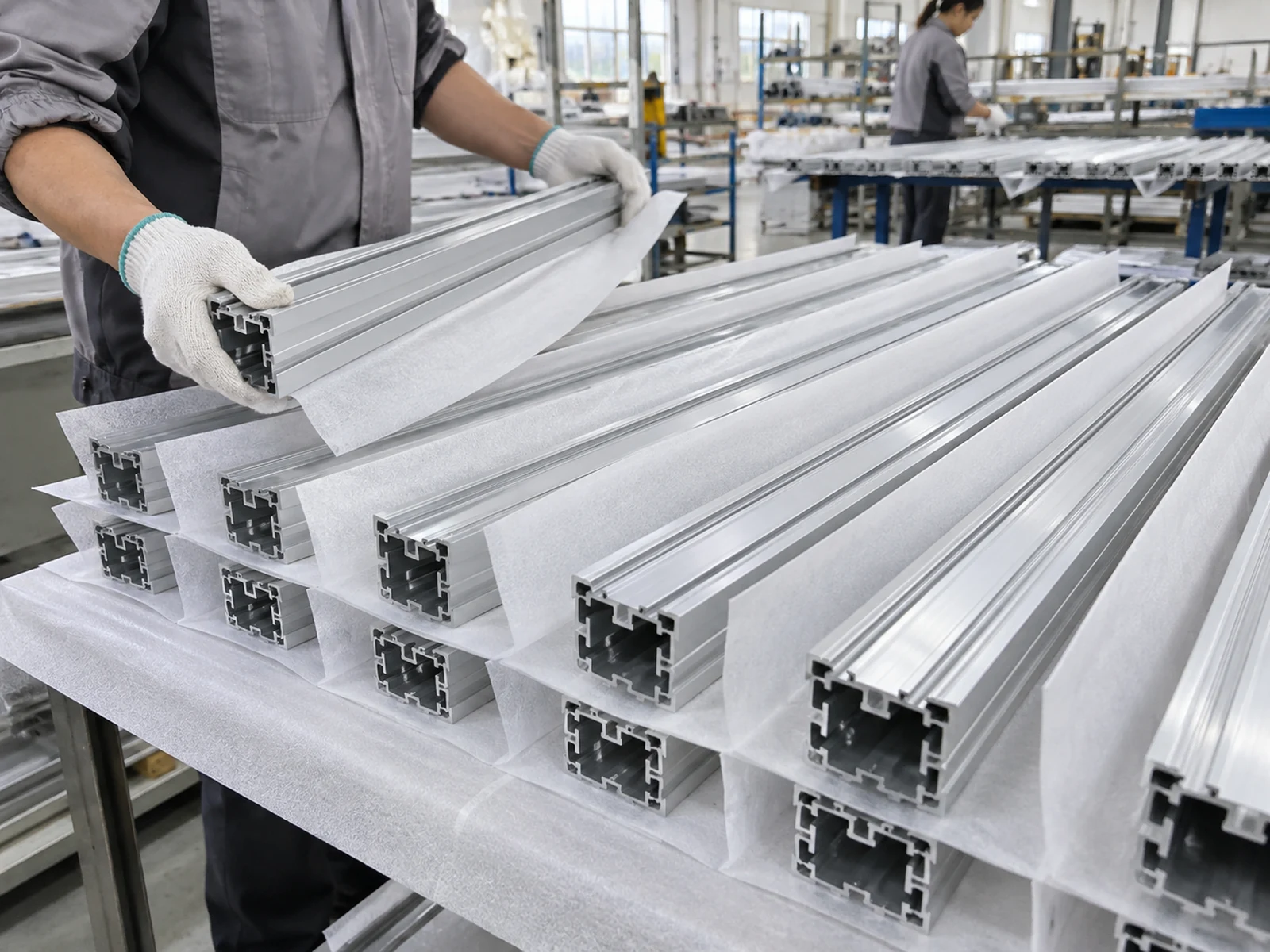
Quote the whole pack, not a material name
Ask each bidder to price the same accepted shipment unit: parts per layer, layers per bundle, bundles per container, maximum bundle handling method, orientation, labeled revision and lot, and the planned receiver. Request the assumed packing labor, disposable material, returnable containers, packing photos and replacement policy as separate lines. This makes a low piece price with an unprotected mixed bundle visibly different from an offer that includes individually separated, identified members.
Ask how the bidder will protect cut ends from contacting the next part, how the bottom layer will be supported, and how strapping or stretch wrap will restrain movement without bearing directly on a cosmetic face. The package must remain compatible with the buyer’s forklift, trolley, rack and unloading space. The Aluminum Association’s handling guidance describes interleaving of surface-critical flat aluminum with paper, foam or similar material and warns that moisture precautions still matter. That document addresses plate, sheet and coil; for cut profiles, use its principles as questions to test, not as an automatic profile-pack specification.
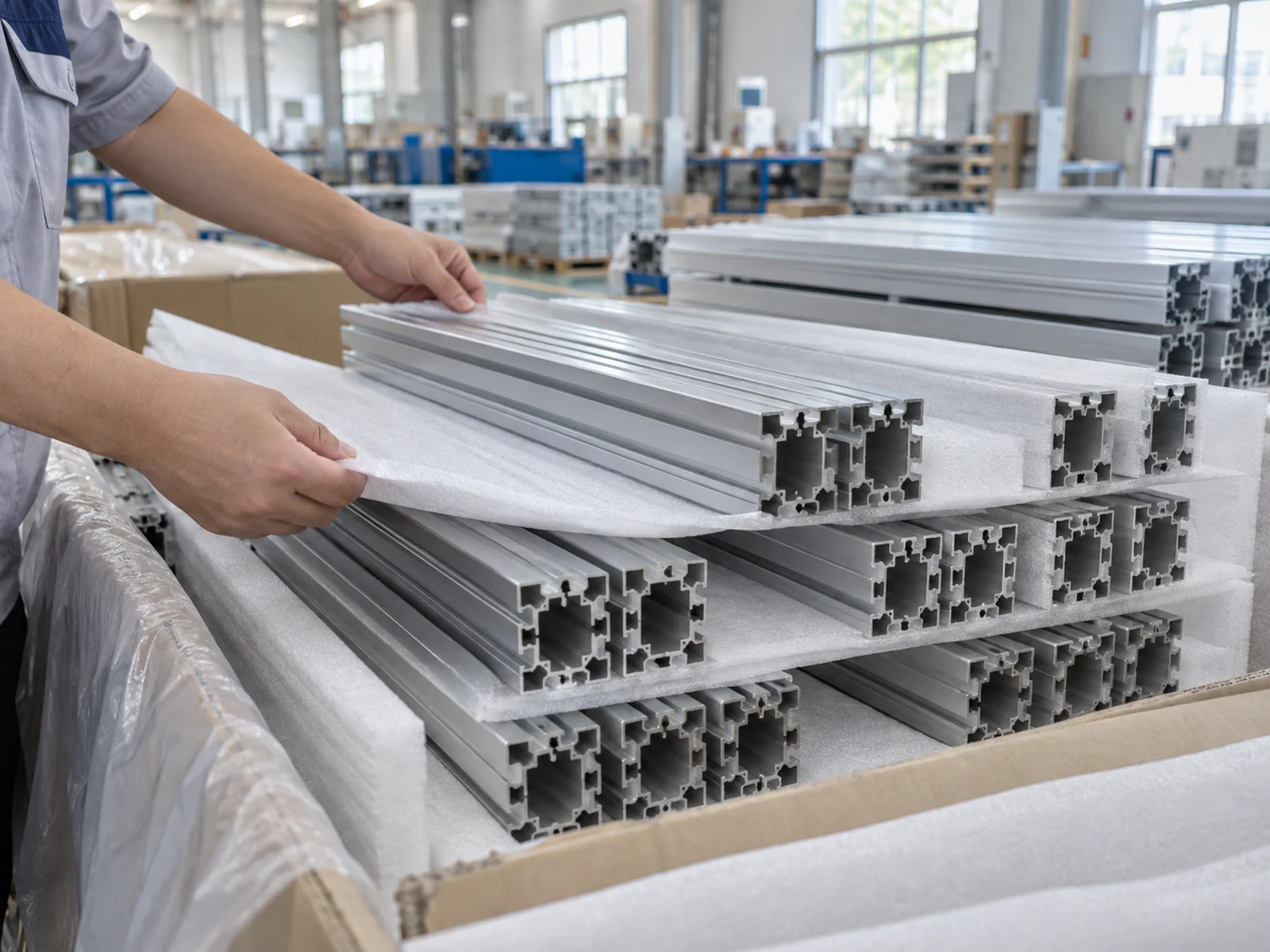
Run a representative pack trial and write a release rule
Use actual or representative section geometry, surface finish, cut length and bundle mass. Photograph the accepted part faces before packing, then record the layer arrangement, protective materials, labels and restraint. Have the intended receiving team unpack the trial using its normal handling tools. Inspect agreed visible zones under the agreed lighting and compare them with the signed reference. Record any rub, dent, moisture mark, residue, displaced interleaf or end contact by part and location. An empty box mock-up is insufficient if the production pack will be heavier or contain a different section.
If transport testing is justified, choose a method for the real distribution route and define product damage tolerance before testing. ISTA’s packaging-design guidance emphasizes representative products and packages, a predefined damage tolerance and a test selected for the decision being made. A successful laboratory result is evidence for the tested combination; it is not a blanket approval for every length, finish or route. For smaller orders, a documented trial shipment may answer the immediate purchasing question more directly. State which approach was chosen and what still needs monitoring.
The release record should name the part and finish revision, approved pack diagram, separator and container specification, photos of the trial, inspection method, acceptable cosmetic condition and the owner who can authorize a change. A supplier changing an interleaf thickness, wrap tension, bundle count or container should not silently inherit an earlier approval. The buyer can approve a controlled change after comparing a representative new pack.
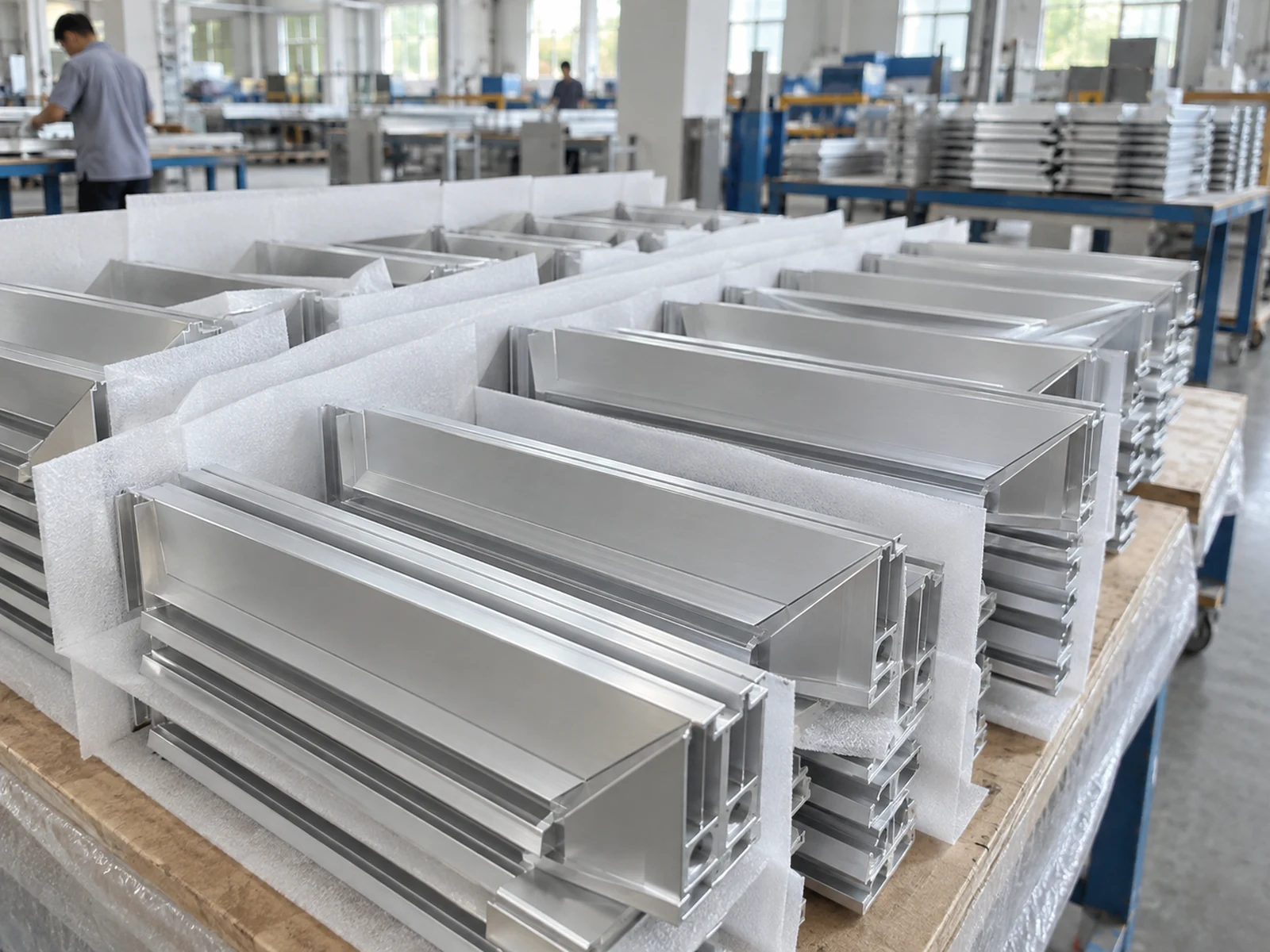
What the machine video shows
The following video from Jiurun Machinery shows general aluminum-saw equipment and profile handling. It is equipment footage only. It does not show or verify the separator material, pack configuration, customer, shipment, trial, finish condition or performance discussed in this article.
RFQ checklist and receiving decision
- Identify profile, finish, revision, visible face, cut length, quantity and agreed pre-pack condition.
- Mark the contact map: part-to-part, part-to-support, part-to-restraint and cut-end exposure.
- Specify the proposed interleaf or sleeve, its placement and who supplies, applies and removes it.
- Define layer and bundle counts, container, restraint, handling route and external labels.
- Request a representative packed sample or agreed shipment test with a written pass/fail rule.
- Require pack photos, lot traceability and an approval step before material or layout changes.
- At receipt, preserve the package identity, inspect agreed visible zones and separate packing damage from pre-existing stock or saw-process marks.
For a saw quotation, send Jiurun the released profile and cut-stage information, and send the chosen packing/receiving boundary to the supplier responsible for dispatch. Contact Jiurun to discuss the eligible aluminum cutting job; pack design, finish acceptance and shipment evidence should remain written, testable items in your purchase specification.