
Aluminum corner guard cutting is a small job with a large specification trap. A finished wall guard may be an extruded angle, a formed sheet-metal cover, or a multi-part guard with a separate retainer. Those products can have similar installed outlines while presenting very different stock to a saw. Before asking a cutting-machine supplier for a price, establish the approved guard construction, the specific aluminum blank your factory will retain, and the stage at which that blank will be accepted.
This guide is for manufacturers and cut-part buyers evaluating straight aluminum corner-guard members against an approved product drawing. It does not prescribe wall protection, anchoring, installation, or building-code compliance. The system owner must approve those matters separately.
1. Aluminum corner guard cutting starts with the actual part
Start with the product data, not an installed-wall photograph. For example, Pawling lists a 135-degree aluminum corner guard with stated wing size, length options, and custom angles. Protek describes its own surface-mount aluminum guards with separate angle, wing, size, finish, and attachment choices. These are examples of why a generic request for “corner guard aluminum” cannot define your part; their catalog dimensions are not JiurunCut machine capacity or a specification for your project.
Ask whether the supplied item is a complete finished guard, a pre-cut guard blank, a retainer, or approved long aluminum stock. If the ordered guard is formed sheet or an already finished assembly, do not assume an extrusion saw is the right route. Record the stock form and remaining work before assigning any operation to a saw supplier.

2. Release the section, angle, and surface before quoting
Give every bidder the same revision-controlled section drawing. State the leg or wing dimensions, nominal angle, thickness, inside-corner geometry, orientation, and which face will remain visible after assembly. A guard for a regular 90-degree corner and one for an approved 135-degree corner are not interchangeable merely because their outside heights match. If the design includes a retainer, cover, adhesive channel, fixing holes, or end treatment, identify which features are present on incoming stock and which belong to later work.
Finish is part of the input condition. Inpro’s aluminum corner-guard product page distinguishes clear, black, and bronze anodized finishes and links product technical data. Your RFQ should likewise say whether the tested stock is mill-finish, anodized, or otherwise finished, and which visible surfaces must be protected. Do not borrow an alloy, temper, finish, or warranty from a different supplier’s catalog.
3. Define the finished-length datum and supply boundary
“Guard height” may describe the visible installed result rather than the length of the aluminum blank at the saw. The top and bottom may meet a base, trim, cap, skirting detail, or another approved component. Ask the product owner to release the actual finished cut length and the two end references for each member code. Keep any field-measured allowance, site adjustment, or installation decision outside the saw acceptance test unless it is explicitly part of the released manufacturing drawing.
For mixed orders, issue a simple schedule: product family, section revision, finish, blank length, quantity, end condition, and receiving kit or room-zone identity. A stock-length quote and a cut-to-length quote should use the same accepted unit. This prevents a cheap cut price from hiding sorting, recutting, finish damage, or missing documentation at the receiving bench.
4. Prove support and clamping on the released section
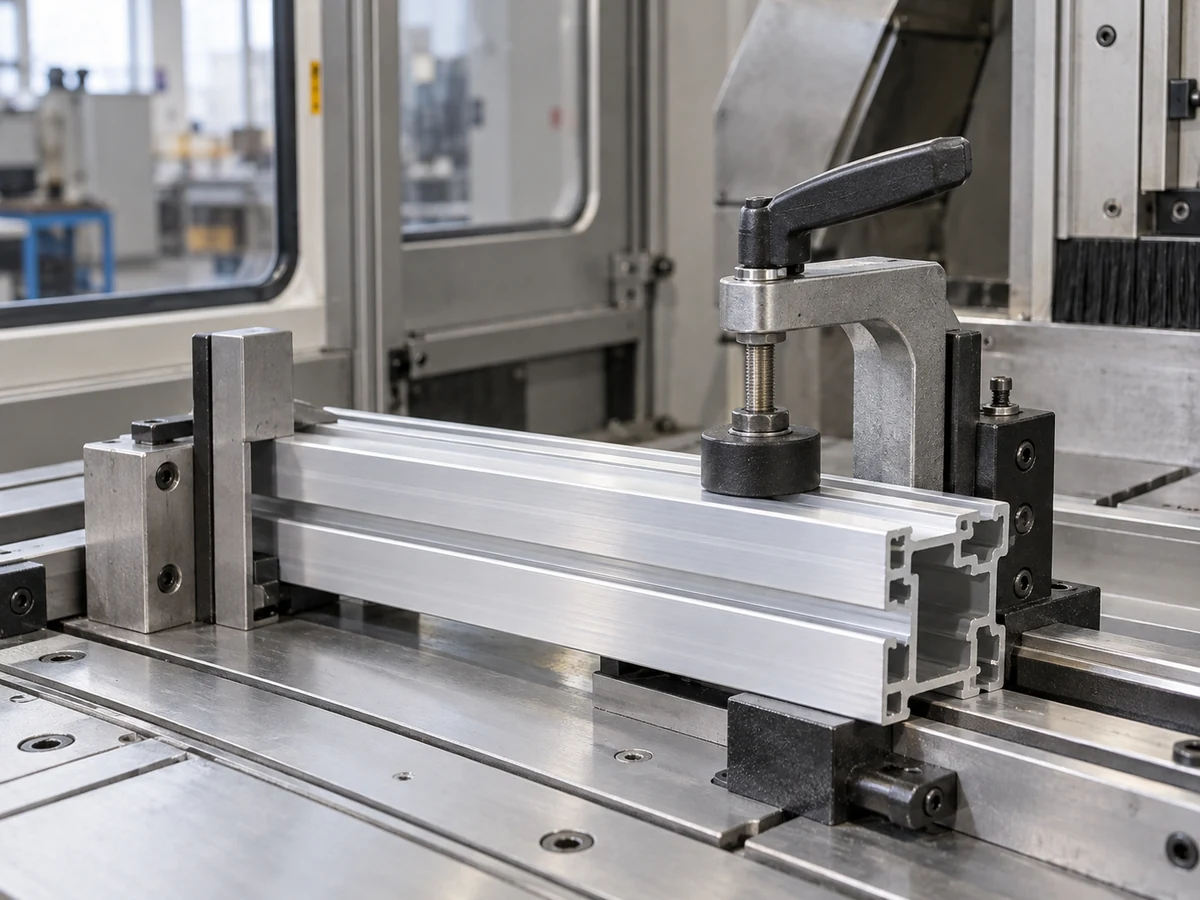
A thin or open leg can move when a generic clamp bears on the wrong face. Request a guarded, supplier-approved trial using the actual section family and its specified finish. The trial record should show the reference face, support points, profile orientation, clamping arrangement, and how the part stays identified through the cut. The buyer is testing the offered configuration, not prescribing a clamp force or a machine modification.
If several guard profiles share an order, include the smallest and largest approved sections and the changeover between them. Look at the resulting end, leg condition, and visible finish after each setup. The published aluminum angle saw trial guide gives a broader test framework for open L-sections; the corner-guard RFQ adds the wall-product finish and length handoff.
5. Specify the cut end and protected visible face
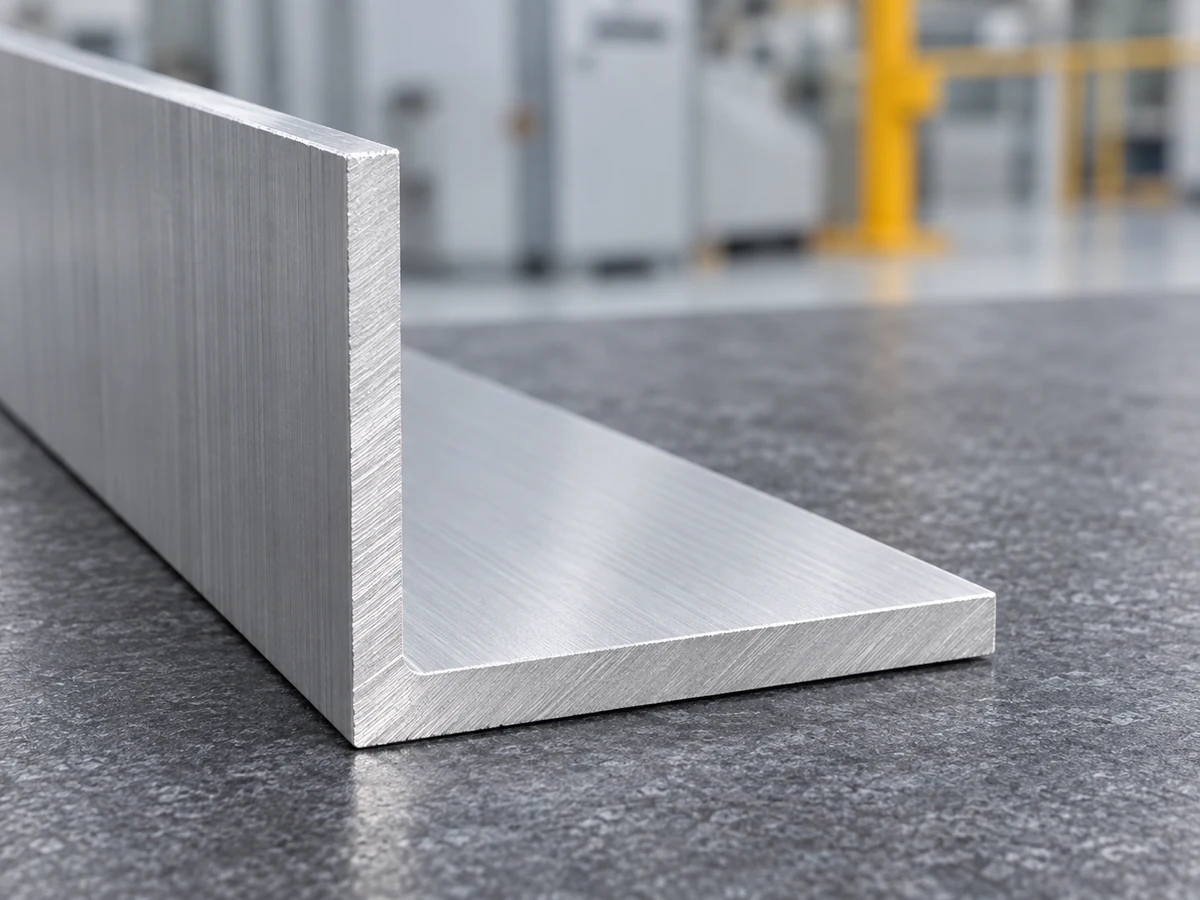
Agree how an accepted end will be judged before the first article is cut. The checklist may include finished length, end squareness relative to the drawing datum, leg distortion, edge burrs, finish scratches, and the appearance of an exposed top or bottom end. The product owner should state which edges will remain visible and which will be concealed by approved trim. Do not turn a generic “burr-free” video claim into a measurable acceptance limit.
Also state whether the incoming member is cut before or after its final finish. That changes what the inspection team sees at the cut end and which surfaces need protection in handling. The saw trial can document the condition it actually produced; subsequent finishing, end caps, fixing and installed-wall appearance remain separate responsibilities.
6. Request a representative first-article package
Send the released drawing, actual stock, and agreed inspection plan to every shortlisted supplier. Ask for labeled first articles covering the relevant section, finish, and length range. Record the machine configuration offered, the sample’s stock identity, measured results, photographed end and face condition, rejects, and the person authorized to accept the blank. If a later operation makes holes or adds mounting parts, make that stage visible in the handoff record without implying that the saw performs it.
For aluminum corner guard cutting, a good sample package is traceable to the quotation. One attractive loose offcut cannot establish repeatability across an order that contains multiple lengths, section variants, and finished faces. Conversely, the guard’s installed impact resistance or fixing performance cannot be established by a saw trial.
7. Compare quotations at the same accepted stage
Ask each bidder to price the same scope: qualified stock range, support and handling equipment, changeover, sample inspection, part identification, consumables, training, and any excluded downstream step. Compare the cost and lead time of buying approved finished guards, buying cut blanks, and cutting released stock in-house only when each route is priced through the same accepted receiving stage. The lowest machine price may not be the lowest cost to deliver a complete, identifiable guard-member order.
The video below is from Jiurun Machinery’s own channel and shows a JR-455CNC aluminum cutting machine. It provides a view of one equipment arrangement; it does not show this corner-guard section, a customer job, the proposed quotation configuration, or accepted trial results.
What should go into the RFQ?
Attach the approved guard product and aluminum-part drawings, revision and finish schedule, actual stock samples, cut-length and end definitions, required quantity mix, visible-face criteria, receiving labels, and first-article acceptance owner. Ask the supplier to identify its machine, support and inspection scope in writing. For another example of how an assembly dimension differs from an individual cut member, see the floor-transition profile RFQ.
Ready to compare equipment offers? Send JiurunCut the released aluminum profile drawings, stock condition, length mix, and blank acceptance checklist. We can discuss an appropriate sample-cutting review and quote the equipment scope against those parts, while the guard-system owner retains responsibility for the completed wall protection design and installation.