
Aluminum floor transition profile cutting begins with the approved transition system, not with a generic length list. A narrow T-shaped cover for two level finishes and a sloped edge protector for different finished heights have different exposed faces, anchoring features and end conditions. A saw may make repeatable blanks, yet the result can still fail if a tongue is bent in the clamp, an anodized top is marked, or the cut quantity ignores the joint plan.
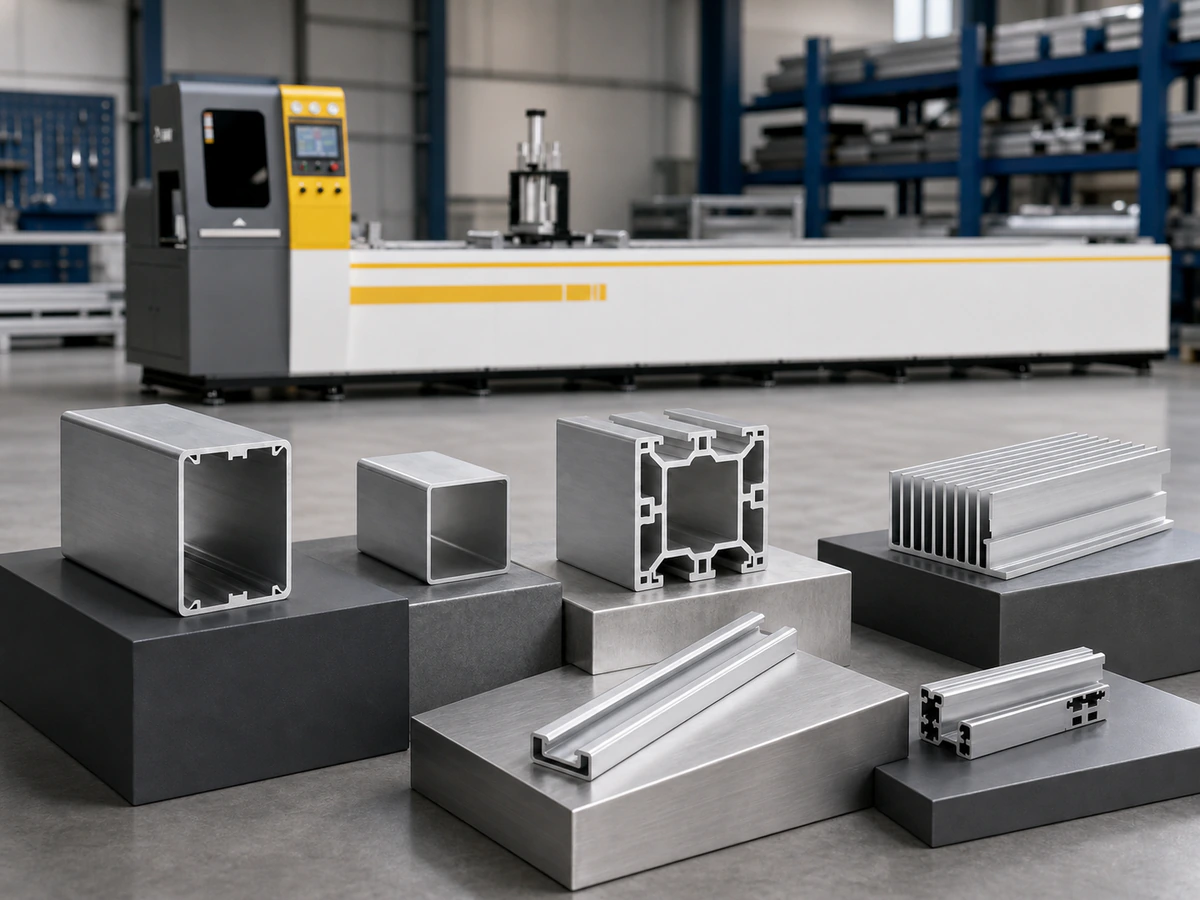
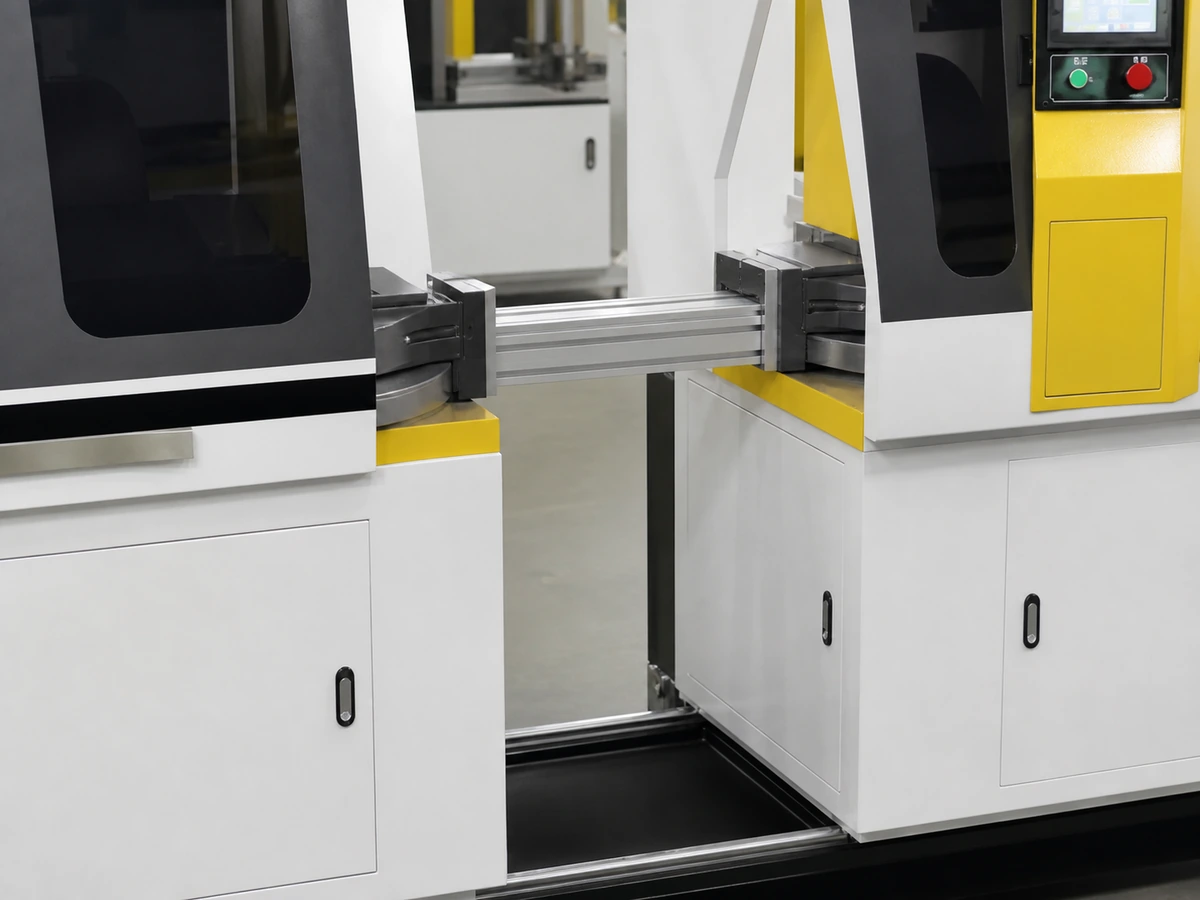
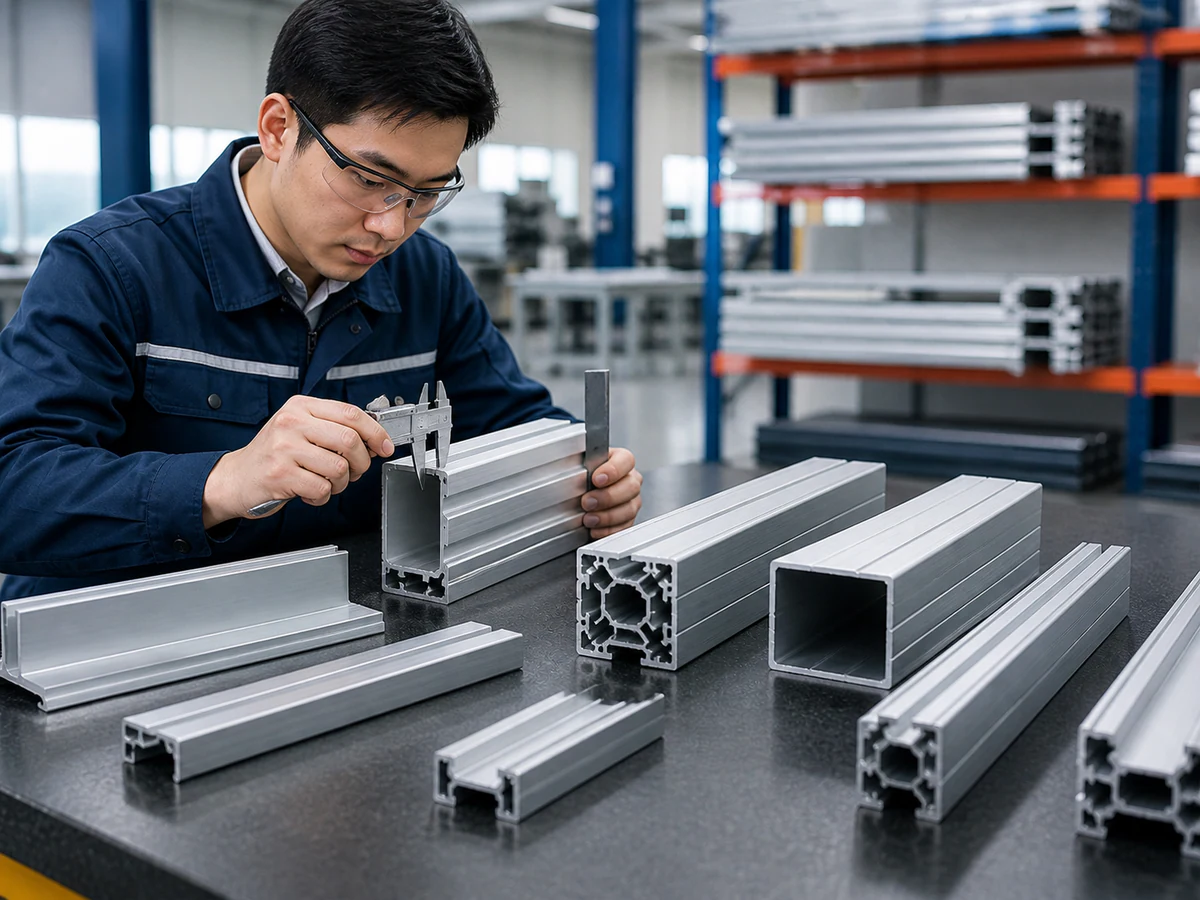
This guide helps buyers quote a factory aluminum cutoff route for transition profiles. It is not an installation instruction or a finding that a JiurunCut machine is approved for a particular manufacturer’s profile. The system owner must release the profile, finish, layout, joint and installation details. The JiurunCut media images below are related illustrations of profile selection, positioning and cut-end review; none is the named floor-transition product, a customer order, a quoted configuration or trial evidence.
Name the transition type and its approved section
Do not combine all threshold and floor-edge strips under one line item. Schluter’s RENO-T page describes a T-shaped same-height transition whose lateral crosspiece rests on the adjacent coverings. Its RENO-U page describes a sloped transition with an anchoring leg and, in the aluminum version, an integrated joint spacer. These examples show why the upper visible face, stem or anchoring leg, and supporting floor geometry matter to a cut plan. They do not establish that either branded product should be cut on a JiurunCut saw.
Identify the exact maker and profile code, drawing revision, approved material and finish, section dimensions, stock length and cut direction. Mark the face that will remain visible and the feature that engages the floor or adjoining covering. If the purchaser supplies a substitute extrusion, obtain the responsible designer’s approval rather than treating a similar cross-section as interchangeable. Keep product selection, installation suitability and accessibility review with the system owner.
Separate factory cut length from installed joint layout
A room measurement is not always the factory cut length. Ask for a marked layout showing each straight run, door opening, return, termination, joint and any section that must be trimmed in the field. State whether the purchase unit is a stock length, a numbered cut kit, or an installed transition. The saw quote covers only the identified cutoff stage. Any site-fit adjustment belongs to its named installer or downstream operator.
For each run, define the end datum and whether its dimension is measured to the visible top face, the vertical stem, or the outer edge of a sloped flange. If two parts meet, use the approved manufacturer’s joint and movement detail; do not invent a universal gap or assume two saw-squared ends make an acceptable finished seam. The RFQ should note whether any corners use a miter, a specified fitting, or a site-made return. Include the permitted orientation and handedness so a batch of correct lengths does not deliver the wrong end condition.
Protect the finished face during the saw trial
An exposed anodized or other finished surface needs an acceptance sample and handling rules before production. Mark the visible face on the drawing. Ask the supplier where stock rests during loading, where the clamp touches, how the cut piece leaves the machine and when protective film is removed. Inspect a representative piece before and after each transfer. A generic statement such as “non-marking clamp” is not an acceptance method; the buyer needs the allowable contact condition and the person authorized to accept it.
A thin T stem or sloped wing also needs support appropriate to its section. The supplier should explain how the offered locator prevents rotation, lifting or local deformation without crushing an unsupported lip. Trial the actual profile, including its shortest required blank, at the planned clamp pressure and orientation. Record a first-off piece and a later piece after repeated feeding. A sturdy box-extrusion sample cannot validate a narrow transition strip.
Accept the cut end against the mating system
Agree how the finished blank will be measured: length from the specified datum, squareness or approved angle, burr and sharp-edge condition, visible-face damage, coating condition and whether the stem or anchoring leg remains straight. Check the first piece against the drawing, then check a representative run after the chosen fixture and feed settings have stabilized. A caliper reading alone does not prove that the profile still seats or meets its adjacent covering correctly.
Where cut parts meet an approved joint, end cap or return, test a controlled fit with the actual mating component. Separate saw-caused defects from stock defects and installation variables. The installer and system owner retain the final installed-floor and safety acceptance; the saw supplier can only demonstrate what its cutoff operation produces. If the project has special movement, access, hygiene or slip requirements, refer those to the responsible specification rather than infer compliance from the saw trial.
Send one comparable RFQ to every saw supplier
The quotation should price accepted, labeled lengths rather than only blade cycles. Include handling time for thin or finished profiles, setup changes between sections, inspection, rejected pieces, protection and packing. Compare equipment proposals against the same stock mix and the same accepted delivery unit. A higher nominal saw speed has little value if the visible finish or joint end repeatedly fails receiving inspection.
Before asking for a machine recommendation, provide:
- Approved manufacturer, profile code, section drawing, finish and drawing revision for each transition type.
- Actual stock length, finished cut lengths, batch volumes and changeover frequency.
- Visible face, reference datum, orientation, handed parts and shortest required blank.
- Run and joint layout, specified end caps or returns, and the person responsible for site trimming.
- Required cut-end measurements, burr/edge condition and visible-surface acceptance sample.
- Actual profiles and mating components for a witnessed trial, including first-off and repeat samples.
- Delivery unit, labeling, protective packing, inspection record and product-level approval owner.
Send the released package to JiurunCut for an aluminum saw and sample-cut discussion. We can propose a cutoff route to trial against your parts. This page does not establish a machine model, cut tolerance, throughput, product compatibility, installed joint performance or compliance with a floor-system requirement.
Watch a related aluminum-profile saw example
This video comes from Jiurun Machinery’s own channel and shows general aluminum-profile cutting and feed equipment. It is a related machine illustration, not a demonstration of the transition strips, surface finish, joint detail, customer job, quoted configuration or trial results discussed above.