
Aluminum compost bin frame cutting becomes a useful equipment-buying question only after the composter maker has fixed its frame architecture. One product may use four extruded columns and base rails with bolts; another may use aluminum guide-rail corners around separate metal wall panels. Those layouts create different cut-member lists, locating surfaces and handoff points. A saw can prepare approved aluminum blanks. It does not design the composting system, supply every infill component or validate the finished bin.
This guide is for an OEM or component supplier deciding whether to buy cut profiles, outsource a complete frame kit or bring selected cutting work in house. The photographs below show related industrial frame, mesh-junction and saw-fixture scenes. They do not depict a compost-bin order, its approved drawings, a Jiurun customer, or an accepted trial.

1. Choose the composter architecture before listing cut members
The finished outside dimensions alone cannot tell a saw supplier what to cut. In CarbonCycle’s customizable composter example, the frame is described separately from optional side and lid slats. Its frame package lists four engineered aluminum columns, four aluminum base rails and bolts. That is one frame-and-infill route, not a universal bill of materials. Biohort’s MonAmi example takes another route: extruded aluminum corner elements with guide rails join separate galvanized-steel wall panels, and a sliding front panel provides an emptying opening. The examples show why a buyer should not treat every bin as four identical corner posts.
Ask the product owner to release a simple exploded drawing and a member schedule for the exact family being quoted. Identify each aluminum column, base rail, lid-frame member if any, guide-rail corner and replacement part by drawing revision. Record which panels, slats, mesh, lid pieces, bolts and other hardware are bought or fabricated elsewhere. If a composter has several capacities or a multi-bin configuration, keep each family’s cut list separate. Do not infer a rail length by subtracting a guessed wall thickness from a published overall size.
2. Compare frame-only, prepared-member and complete-kit offers
A frame-only supply contract may deliver accepted aluminum columns and rails. A prepared-member contract may add drilling, tapping, deburring, protective finish or labeled bags. A complete composter kit may add wall infill, lid, mesh, fasteners and assembly instructions. Comparing the price of one cut rail with a full kit is misleading because the receiving stage differs. Quote all routes at the same accepted output: cut blank, prepared frame member, revision-matched frame kit or complete saleable bin.
CarbonCycle’s standard model illustrates how a broader package can include a lid frame, timber slats, lid pieces and cut wire bases in addition to the aluminum frame. Its FAQ distinguishes frame manufacture from slat sourcing. That distinction is a useful prompt for an OEM RFQ: name the supplier responsible for every nonaluminum part. The cited product is a market example, not a JiurunCut product or proof that a particular machine can process its profiles.
Build a comparison sheet with the same annual order mix for each route. Include incoming stock, saw setup, secondary features, surface protection, labeling, packaging, rejected members and freight. State who owns drawing changes and replacement-part identification. If bought-in frame kits already arrive ready to assemble, count only the aluminum stock that the OEM truly intends to retain in house when estimating saw demand.
3. Specify the profile section, datum and end condition
An engineered corner extrusion with a panel guide is not the same workpiece as a plain square tube. A base rail may have a channel, a bolt pocket or an exposed face that determines how it must sit in a clamp. For each retained aluminum member, supply the cross-section drawing, alloy and temper if specified by the designer, delivered finish, stock length, quantity and any protective film. Mark the locating datum and surfaces that may be clamped. A sample or drawing should identify which lip, groove or cavity remains functional after cutting.
Record finished blank length from a stated datum, end angle, orientation, cut-end acceptance and allowance for later machining or coating. A column that meets a base rail through a bracket can require a different blank length from a rail captured inside an extruded corner. If the designer has not released the joint detail, keep the length as an engineering question; a saw vendor should not invent a production stop setting. Distinguish left and right or top and bottom members where the geometry, finish or later hole pattern makes them noninterchangeable.
Use a revision-controlled cut list rather than a verbal description such as “four sides.” The list should show part number, section ID, cut length, cut angle, blank tolerance, end identity, lot quantity and next operation. Ask for an example packing label that lets the assembler find the correct member after several similar-looking kits have been cut.
4. Keep infill, access and environmental design with the product owner
Slats, sheet panels, mesh and lid parts determine the bin’s airflow, access and handling characteristics. They are outside a bare aluminum cutoff scope. Biohort’s sliding front wall and CarbonCycle’s separately selected slats show two different access and infill decisions. The product designer must establish opening clearances, retained edges, water management, cleaning route, intended loading and any applicable product requirements. A saw supplier can discuss cut ends and handling of supplied aluminum sections, but a clean end cannot validate ventilation, pest resistance, assembly strength or outdoor life.
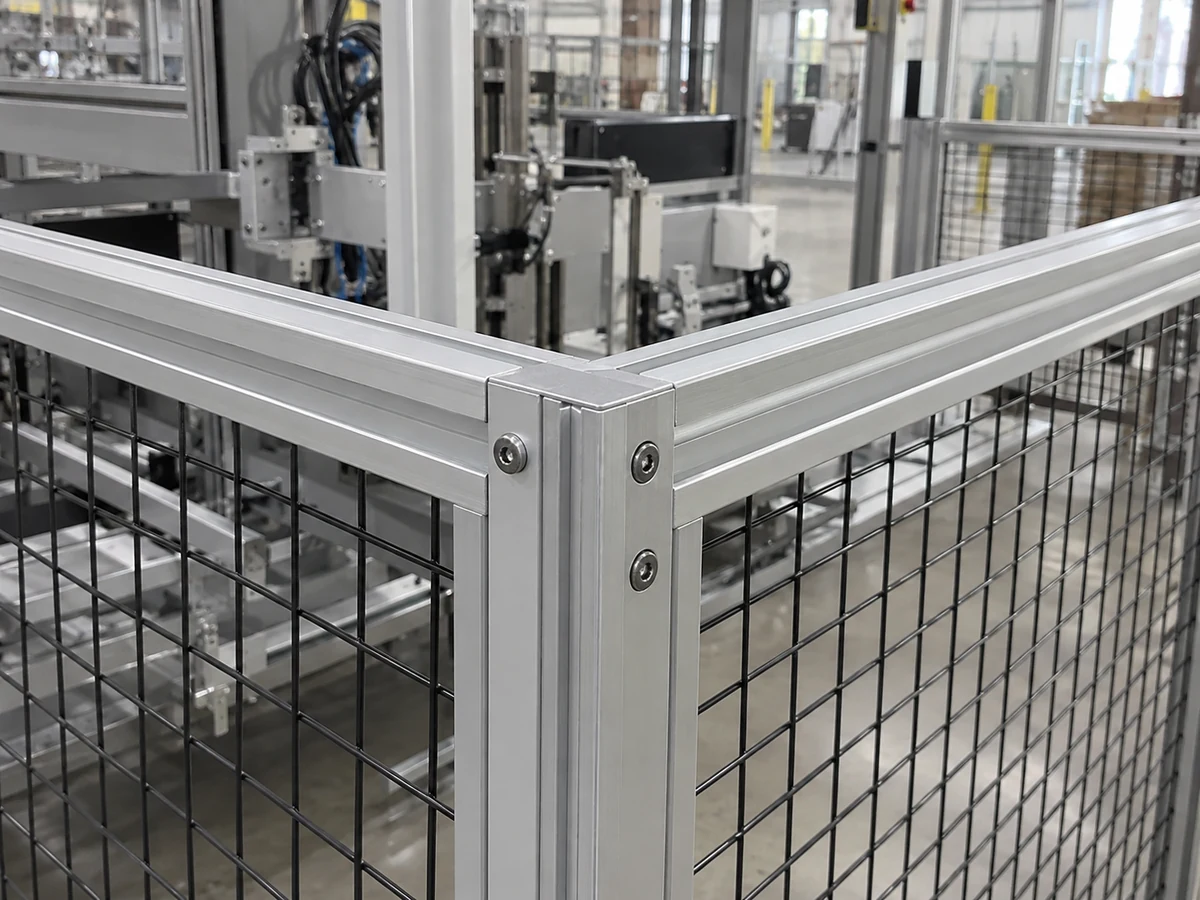
If a design includes mesh or a wire base, ask the product owner to supply the attachment drawing and acceptance criteria. Is the mesh bought as a cut sheet, a mounted subassembly or a separate kit item? Which edge may protrude, and where is it covered? These questions can change the frame’s receiving inspection and packaging, but they cannot be answered by an image of another product. If the chosen bin uses solid panels or slats instead, remove mesh from the RFQ rather than quoting it as a default component.
5. Plan a representative saw trial around the actual retained members
Before choosing a machine, submit the longest and shortest approved aluminum blanks, the most sensitive profile section, and the full set of required angles. Explain whether a guide-rail lip or hollow wall is vulnerable to clamping, whether a visible finish must remain unmarked, and how finished pieces leave the machine. Request an agreed locating and support plan. A demonstration on convenient stock is helpful for seeing equipment movement, but it is not acceptance evidence for the composter members that were not tested.

For an actual trial, record the profile drawing and revision, material condition, blade and machine setup, clamping contacts, datum, program or stop setting and sample sequence. Inspect length, angle, burr condition, end collapse, surface marks and piece identity against the buyer’s written limits. Check first and later pieces, not only a selected best sample. After cutoff acceptance, the frame maker should assemble representative columns and rails with its real connectors and infill to check fit. That dry fit is a separate product-approval step.
6. Price the accepted kit across revisions and batch sizes
A purchasing decision depends on the complete demand pattern. One annual total can hide many short batches, color or finish variants, revisions and spare-part orders. Tabulate units per frame family, members per unit, batch frequency, stock lengths, cut angles and setup changes. Compare the cost per accepted cut member and per revision-matched frame kit. Include inspection, remnant handling, rework, packaging and the time needed to stage different profiles. Do not convert a video cycle or a single trial cut into a guaranteed hourly output for mixed orders.
Ask how a design revision will be isolated. If a guide-rail profile changes but a base rail does not, do the labels, bins and remaining stock keep old and new members apart? If an OEM orders replacements, can a single post be traced to the correct drawing revision and finish? This is often more valuable than another headline cutting-speed figure. An economical route is the one that reliably delivers the accepted kit at the requested mix and receiving stage.
Send a controlled aluminum compost bin frame cutting RFQ
- Approved frame family, exploded drawing, revision and quantity by model.
- Separate aluminum column, base rail, lid-frame and guide-rail member IDs; identify bought infill and hardware.
- Cross-sections, alloy and temper, incoming finish, protected faces and stock lengths.
- Blank lengths, datums, angles, tolerances, downstream features and labels.
- Accepted output stage: loose blanks, prepared members, frame kit or complete bin.
- Representative trial stock, inspection limits, assembly-fit owner and required batch mix.
Send JiurunCut the approved aluminum sections and cut list to discuss a relevant sawing approach. We can review the cutting part of the route; the composter designer and assembler remain responsible for the finished product and its acceptance. For related buying logic on another garden product, see our garden trellis member-kit guide. That article covers a different product and cannot substitute for the compost-bin drawings.
Watch a general aluminum-profile sawing example
The following video is from Jiurun Machinery’s own YouTube channel. It shows aluminum-cutting equipment in operation. It does not show a compost-bin frame, the members in this article, a specified machine configuration, a customer project, accepted trial data or finished-bin performance.