
Aluminum garden trellis panel cutting is a member-preparation job only after the buyer has defined the panel system. An aluminum bar trellis, a decorative sheet panel and a large framed shade trellis can all be sold under the same name, yet their cut inputs and acceptance points differ. The saw supplier needs a released list of eligible straight aluminum members, not a photograph of a finished garden. This guide sets out an RFQ for those members while separating cutting from panel design, coating, assembly and site performance.
1. Aluminum garden trellis panel cutting starts with the system boundary
Start by naming the actual product family and the supply stage. Cocklestorm lists both decorative aluminum trellis panels and aluminum bar trellis designs; a decorative panel may require sheet processing, whereas a bar design may include straight members that can be cut from suitable stock. Hauser describes larger all-aluminum trellis frames with different purlin arrangements. These are examples of distinct product architectures, not evidence that Jiurun makes either product or supplies those companies. Do not send one undifferentiated request for “trellis aluminum.” State whether the offer is for loose cut bars, prepared border members, a labeled panel kit, an assembled panel or an installed structure.
A circular saw can be considered for approved straight stock within its verified capacity. It does not create decorative sheet patterns, design the joint, calculate outdoor loads or validate an installed trellis. If the project is a large shade structure, ask the design authority to release its structural and connection requirements before assessing a cutting route. If it is a small garden panel, identify the intended border, vertical bars, horizontal bars, infill, posts and connectors separately. The bill of materials should identify which of these actually needs aluminum cutoff.

2. Release each member family and incoming stock
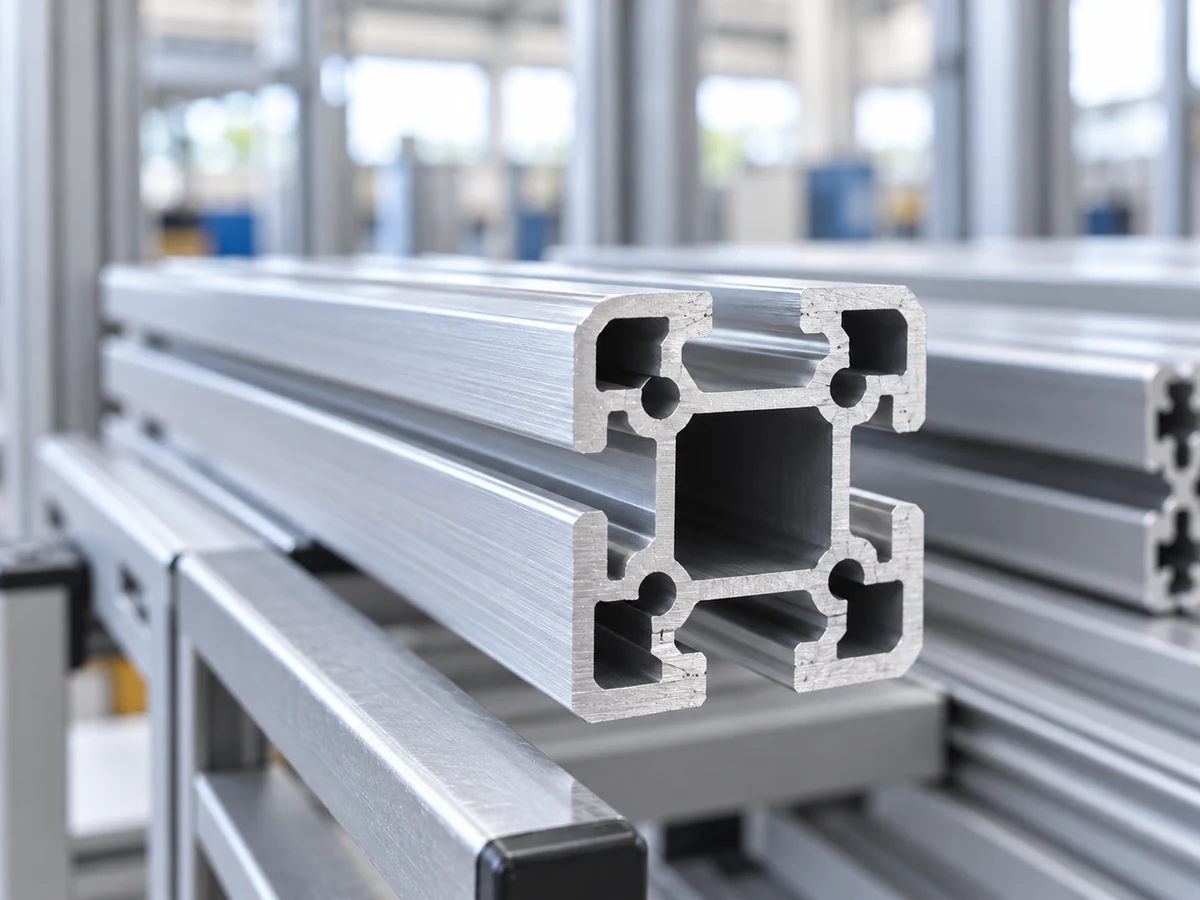
Provide a controlled drawing for each bar or border member: part number, revision, quantity per panel, alloy and temper, section geometry, wall thickness, incoming stock length, surface condition and required blank length. State whether the input is round tube, rectangular hollow section, a slotted extrusion or another approved shape. Do not infer the input section from the appearance of a finished panel. The buyer should identify who buys raw stock, who verifies incoming material and whether substitution is allowed. A supplier cannot responsibly quote the same fixture, blade and yield for unlike section families.
Architectural Grilles & Sunshades’ trellis guide specification distinguishes trellis components, vertical supports and horizontal supports, and calls for approved shop drawings showing profiles, sections, finishes and fastening details. That is a useful document-control example, not a default material or connection specification for this job. The buyer’s own released drawings govern. Keep stock inspection separate from cut-part inspection: an incoming bar may meet its purchase specification while the finished blank still fails length, squareness, burr or appearance requirements.
3. Define the cut datum before assigning lengths
Panel outside width is not automatically a cut length. Joint overlap, corner blocks, end caps and post interfaces can change the required blank. For each member, indicate whether the length is measured between raw end faces, between machined shoulders or after another operation. Mark the datum surface, measurement direction, cut angle and tolerance on the drawing. If a mitered border is used, specify the orientation and the pair of ends; a generic 45-degree assumption can produce the wrong installed geometry. Identify left and right members that look alike but are not interchangeable.
Ask the assembler to confirm what must fit at the first joint and at the last joint in a panel. A saw trial should record the member revision and the connector or mating part used for the fit check. It should not treat a loose member’s nominal length as proof of panel squareness. Drilling, slotting, tapping, bending and corner assembly are separate operations unless explicitly included in the offer. Keep the drawing and first-off record tied to the same revision so a later design change does not silently reuse old blanks.
4. Set edge and surface acceptance separately
Define permissible burr, end-face damage, deformation and visible marks for each part family. An exposed border may need a stricter cosmetic rule than a concealed support. If bars slide into a connector, state which edge enters the joint and whether an internal burr is unacceptable. Specify a practical measurement method and first-off sample rather than relying on an unquantified request for a “clean cut.” Where the profile has narrow walls, grooves or coatings, the holding and deburring method deserves a representative trial. No general photograph or machine video can establish the result on the buyer’s actual stock.
Also decide when finishing occurs. Cutting before coating and cutting a previously coated member can have different edge, scratch and corrosion-protection responsibilities. Define who owns touch-up or end treatment, and whether that work is in the cutting price. Outdoor durability cannot be inferred from the cut itself. The product engineer or architect remains responsible for the chosen material, finish and exposure conditions. The cutting quote should identify its delivered surface state precisely so bidders do not compare unlike offers.
5. Trial the support and clamp arrangement
Show the proposed contact faces and support spans for the approved stock. A long narrow bar may move or bow when clamped; an open channel may deform if pressed in the wrong place. Ask the supplier to explain feed reference, stop contact, protective pads, safe offcut removal and how the fixture changes between member families. If the finished face is exposed, mark the no-contact zones. A trial should use the actual section, or a clearly identified representative sample, and inspect the first piece and a later piece after several cuts. Record the machine setup, blade, stock lot, measured length and edge condition.
The following Jiurun video is a general example of aluminum cutting equipment in operation. It does not show this garden-trellis stock, a selected machine configuration, a trellis customer order, this article’s first-off sample or any outdoor load or durability test.
6. Protect kit identity through packing
A modular panel may have border members, crossbars and posts in several lengths. List the number of accepted pieces per panel and the number of panels per release. Specify labels for part number, revision, lot and orientation. If one post serves two adjacent panels, say whether it belongs to a panel kit or a site kit. Missing one short member can prevent a whole panel from being assembled, so compare quotes by accepted complete kits as well as cuts per hour. State how first-off pieces, setup scrap and replacement pieces affect the quantity supplied.
Define packaging for finished faces and vulnerable cut ends. Separate cut blanks from coated parts and from hardware bags. If the buyer wants preassembled panels, that is a different supply stage with joint assembly, dimensional inspection and packaging responsibilities. Freight damage and field fit belong in the broader delivery plan, not an assumed guarantee from a cutting supplier. For a large architectural trellis, site dimensions and engineered anchors are separate inputs that must be verified by the responsible design and installation teams.
7. Compare bids at one accepted supply stage
Request itemized prices for approved stock, cutoff, edge treatment, any holes or slots, finishing, labeling, inspection, packing and freight. Ask each bidder to identify outsourced operations and who accepts the result at handover. One quote for raw cut lengths and another for finished assembled panels cannot be compared by price per member. Include expected batch size, annual mix and changeover frequency. Where the design is still changing, request a development trial price and a later production price rather than treating a provisional drawing as a volume release.
Document exclusions explicitly. A cutting supplier should not imply that a successful saw trial certifies wind resistance, anchorage, plant-support capacity, coating life or code compliance. Those conclusions require product design, engineering and testing evidence beyond cutoff. The example sources above show why the word trellis alone is too broad: the buyer must release a defined architecture and accepted supply stage before a meaningful machine or cut-part quotation is possible.
8. Send a quote-ready trellis member package
Send the approved panel drawing and bar-by-bar bill of materials, actual stock specifications and sample sections, member lengths and datums, end and surface criteria, quantities by panel and release, connector-fit requirements, finish stage, first-off and batch inspection plan, and packing rules. Mark every unresolved design item. Ask the supplier to return a process boundary and representative trial plan against those inputs. This enables a practical comparison of cutting routes without pretending that a generic frame photo or demonstration video proves the specific trellis design.
For an aluminum garden trellis member-cutting review, send JiurunCut the approved drawings, sample stock and target kit quantities. We can discuss whether an aluminum saw and handling route should be trialed on the actual sections. See our equipment range for general machine context. Product architecture examples: Cocklestorm aluminum trellis panels, Hauser framed trellises and the AGS trellis guide specification. These sources do not establish a relationship with Jiurun or validate a particular cut.