
Aluminum bed frame cutting starts with a product bill of materials, not a saw brochure. A finished bed can contain aluminum frame members, wood rails, a steel support, a separate slat base, textile panels and bought connectors. The purchasing question is which approved aluminum blanks the factory will actually cut, in which condition, and what evidence will show that those blanks fit the released bed design.
This guide is for furniture OEMs and fabricators specifying a repeatable cut-part supply or comparing an in-house saw with prepared parts. It does not design a bed, set a load rating, approve a bunk or loft arrangement, or replace the product owner’s structural and safety checks.
Start with the real material split
Product examples show why the phrase “aluminum bed frame” is too broad for a cutting quotation. MDF Italia’s Aluminium Bed sheet describes an aluminum frame while listing slat bases and mattresses separately. RT London’s Essix Bed uses extruded aluminum posts alongside plywood or laminate rails and wood or steel deck elements. Noah Living’s Heia Bed describes a recycled-aluminum frame with a textile headboard and modular accessories. These are examples of different product architectures; none defines the material or cutting route for a buyer’s own drawing.
Ask the product owner to mark every line in the released parts list as saw-cut aluminum blank, other in-house operation, bought part, or finished assembly. A metal post, a decorative side rail and a slat-support member may look like one frame in a photograph while requiring different stock, finish handling and acceptance. Conversely, a bed with aluminum accents may have no aluminum side-rail blanks to quote at all.
| Supply route | What the saw quotation covers | What stays outside the cut-blank claim |
|---|---|---|
| Complete approved bed or frame | Only separately ordered replacement or production blanks, if any | Assembly, load behavior, finish of the whole product and installation |
| Prepared cut-member kit | Named aluminum members, cut ends, quantities and identification | Bought fittings, slat base, upholstery and final assembly approval |
| Long extrusions cut in-house | Compatible stock families, fixturing, cut schedule and trial evidence | Upstream extrusion, downstream drilling or joining unless separately specified |
Seven checks for an aluminum bed frame cutting RFQ
1. Identify the approved member, not merely the overall bed size
Give each aluminum member a drawing number and revision, cross-section, alloy or temper if controlled, stock condition, finish state, and a clear label such as head-end rail, foot-end rail, side member or post. Include left and right variants where the joint or visible face differs. The mattress size and overall bed envelope belong in the assembly reference, but neither is automatically the saw length of an individual blank. If the release includes a purchased complete side rail, exclude it from the cut list.
Confirm whether the supplier receives bare extrusions, anodized or painted lengths, or a prepared profile with inserted components. That choice changes handling and inspection. The saw cannot create an approved cross-section or validate an unapproved material substitution.
2. State the length datum and end condition on each line
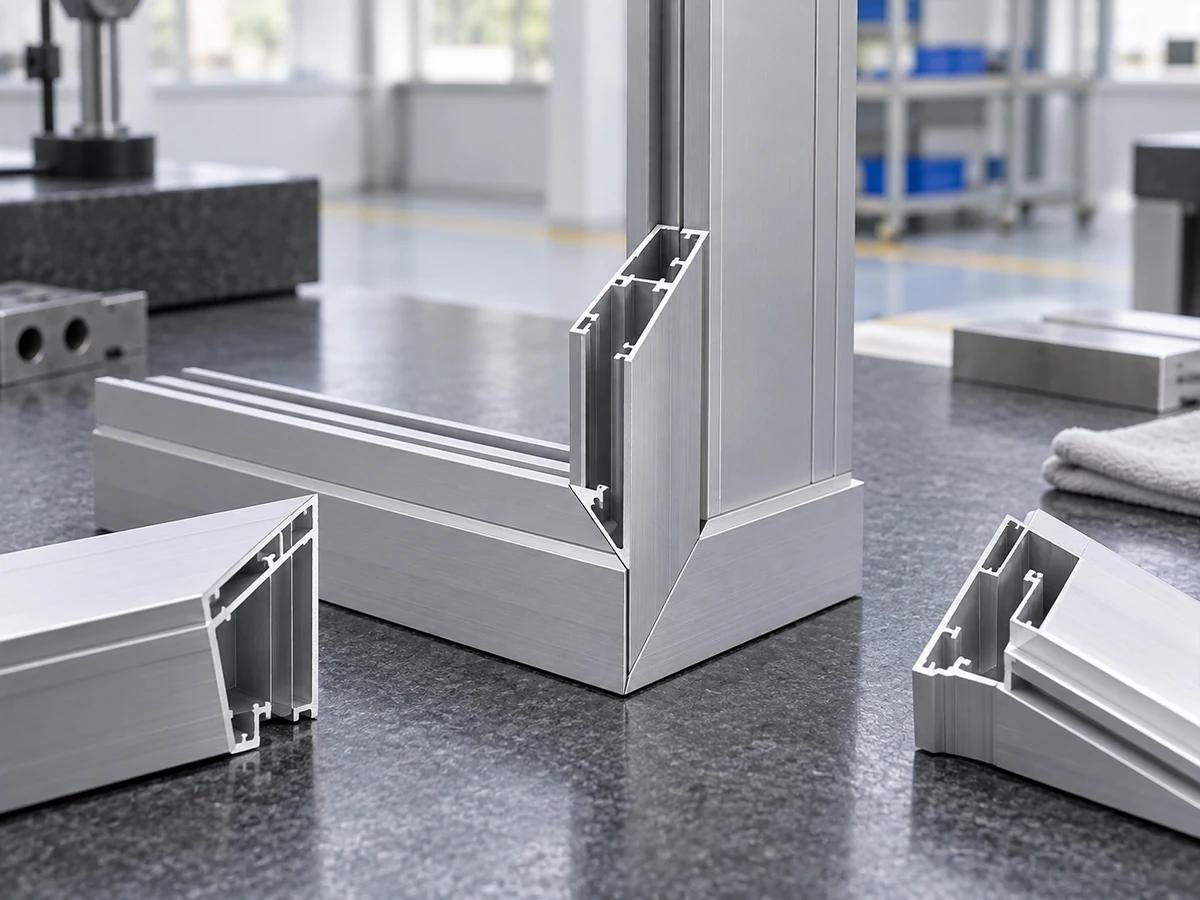
A member schedule should say whether length is measured on the long outside point, short inside point, between shoulders, or on a straight end-to-end datum. Record the intended end form: square cut, paired miter, or a separately machined connection. Note which end is the reference and how the part is oriented when viewed from its visible face. A single “2000 mm bed rail” entry is insufficient if a mitered outside length, corner key or later drilling datum governs assembly.
Do not infer a universal bed-rail cut allowance from a catalog image. Obtain the released joint drawing and mating hardware, then have the product owner approve a sample set. The factory should label the cut member with its part and revision so a visually similar rail is not mixed into another bed size.
3. Separate the cut end from the connection system
A neat miter does not prove the assembly works. Corner blocks, hidden plates, bolts, pins, welds and other joints can demand clearance, orientation or downstream features that a simple saw cut does not provide. If a member needs a drilled hole, milled pocket, weld preparation or protective insert, identify the responsible process and handoff stage. State whether the quotation stops at the saw-cut blank or includes those later operations under a separate approved scope.
For a sample trial, assemble the actual released mating parts without forcing them together. Ask the product owner to assess visible corner gap, alignment, connector engagement and access for the intended assembly method. This is a fit check on a particular design, not a claim about structural capacity or product safety.
4. Mark the visible face and finish state
Bed frames are handled and viewed at close range. A cut may be dimensionally acceptable while a scratch, chip, clamp mark or incorrect face orientation makes the part unusable for a visible frame. Identify the show face and protected edges on the drawing. Specify whether protective film remains in place through cutting, how finished lengths are supported, and where the first-off piece is inspected. Ask for acceptance photographs or a physical sample of the relevant face and end if visual finish is contractual.
Finished stock and unfinished stock should not be mixed in one trial without being identified. A saw arrangement proven on a bare extrusion is not automatically qualified for a coated member with a different handling plan. The buyer should agree the finish acceptance standard and who decides borderline marks.
5. Show how the stock will be held without changing the section
Long, hollow or open profiles can shift, twist or mark when positioned. Supply the actual section drawing and representative long lengths, plus any face that must not be clamped. Ask the saw supplier to describe support, locating and clamping around the real profile, including how a left/right or different-height member is changed over. A stop setting alone cannot solve a profile that seats differently between batches.
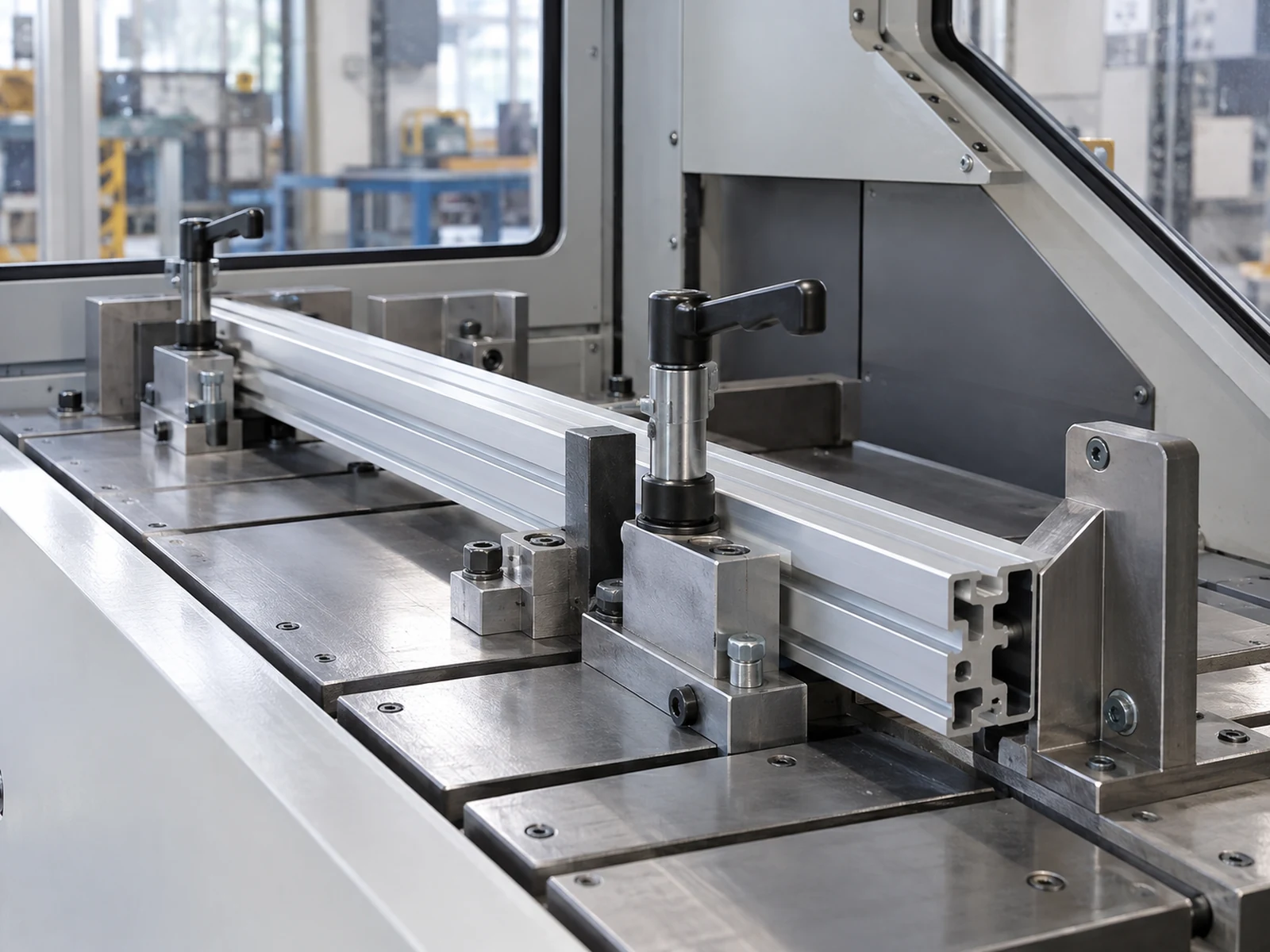
For recurring work, compare the time spent changing clamps and confirming the first piece across the whole released member family. A machine that cuts one straight test bar quickly may still be a poor match for a kit with many sections and ends. Ask for the sample sequence and its reset conditions rather than a single isolated cycle-time number.
6. Trial a complete representative member set
Bring the approved drawings, actual stock and mating connectors to a controlled trial. Include the longest and shortest members, the visually exposed finish, both end orientations and any section likely to need special support. Define measurable checks before cutting: the selected datum, end condition, visible-face condition, cut-edge review, labeling and assembly fit. Where the customer controls geometry or function, record their approval rather than having the saw supplier certify the finished bed.
Inspect the first piece after setup and another after a normal changeover. Preserve part identity through the trial and photograph only the actual tested samples. A generic machine demonstration can explain the saw process, but it cannot serve as evidence that a particular bed rail, connector or finished assembly passed.
7. Compare quotations at the same handoff point
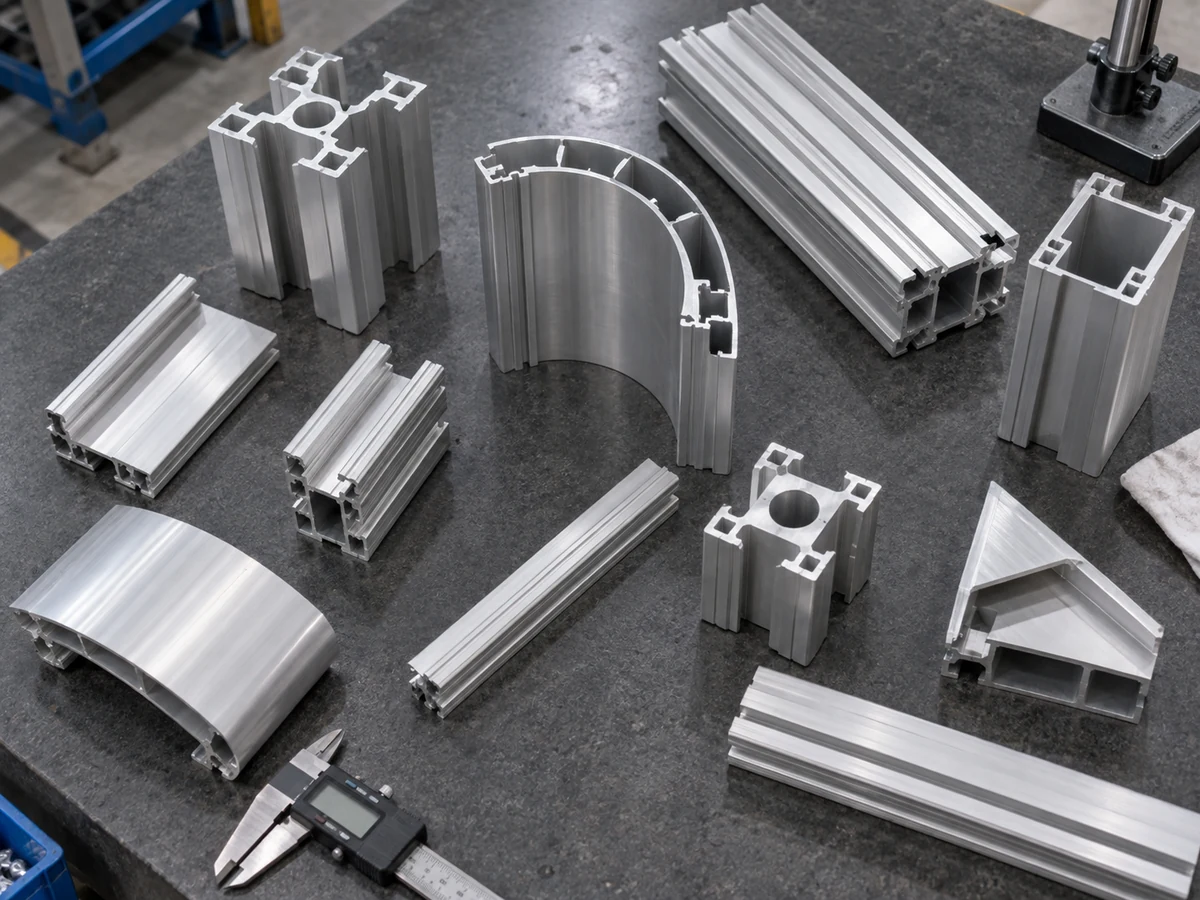
Compare a finished-bed supplier, a prepared cut-kit supplier and an in-house saw on equivalent outputs. For a cut-kit route, include stock preparation, cut quantity, first-off inspection, rejected pieces, member labeling, finish protection, packaging and delivery. For an in-house route, include the actual profile family, support fixtures, changeover, operators, inspection and downstream assembly work. Do not compare a price per raw cut with a price per accepted, identified member set.
Ask each bidder to list exclusions. A low cut price may omit a finished surface requirement or a connector-dependent end; a higher quoted kit may include checks the buyer otherwise must perform. Decide which route owns the remaining risks, then price the same released product revision and volume period.
What a cutting machine can and cannot establish
An industrial aluminum circular saw may be considered when approved long aluminum profiles are retained for straight or specified angled end cuts. Its selection depends on the actual section, cut envelope, finish, support and trial result. Jiurun makes industrial aluminum and non-ferrous circular-saw cutting equipment. A specific machine model or accuracy claim belongs only in a quotation tied to the real member set and verified configuration.
The video below shows a Jiurun machine in general operation. It illustrates a saw process; it is not a bed-frame cut, a customer’s material, a specified model configuration, an accepted trial or proof of bed performance.
The saw trial does not certify load capacity, mattress support, bunk or loft suitability, entrapment protection, anchoring, connector strength or compliance. Those decisions remain with the bed designer, product owner and applicable qualified reviewers.
Copy this RFQ handoff checklist
- Released bed architecture, drawing revision and the exact aluminum parts retained for cutting.
- Part numbers, stock sections, material condition, finish condition and annual or batch quantities.
- For each member: length datum, end geometry, left/right orientation and visible face.
- Mating connectors and any drilled, milled, joined or coated operations outside the saw-cut boundary.
- Actual longest, shortest and hardest-to-hold samples for a witnessed trial.
- First-off and changeover acceptance, including cut edge, face protection and approved fit checks.
- Pack and label rules, rejected-part allowance, output stage and exclusions for comparable quotes.
If your factory is deciding between ready furniture, cut-member kits and retained metal work across many products, see our furniture manufacturing saw-scope guide. For a bed-specific quotation, send the released member schedule, section drawings and sample set through the JiurunCut inquiry form. We can discuss the cutting scope against actual stock and a representative trial; the product owner keeps responsibility for the finished bed.