
A replacement aluminum contact rail may look like a simple length of metal. On an anodizing rack, however, its section, contact features and fit with the carrier determine whether a sawn blank can become a usable replacement. Before buying a saw or ordering pre-cut stock, decide whether the purchased item is a finished contact rail, a prepared blank for further work, or a complete rack assembly. That distinction is the practical starting point for aluminum anodizing contact rail cutting.
This article concerns the fabrication and purchase handoff for a separately approved aluminum rail. It does not specify an anodizing bath, electrical current, rack loading, stripping procedure or contact performance. The rack designer and anodizer must approve those matters for their own system.
Identify the replacement item before quoting a cut
A contact rail is not the extrusion being anodized and is not necessarily the rack frame. As one concrete product example, Servi-Sure describes removable aluminum contact rails that fit over titanium notch rails on its box racks. The supplier says that particular accessory is held by spring pressure and removed for stripping after a run. Those details describe its product, not every anodizing rack.
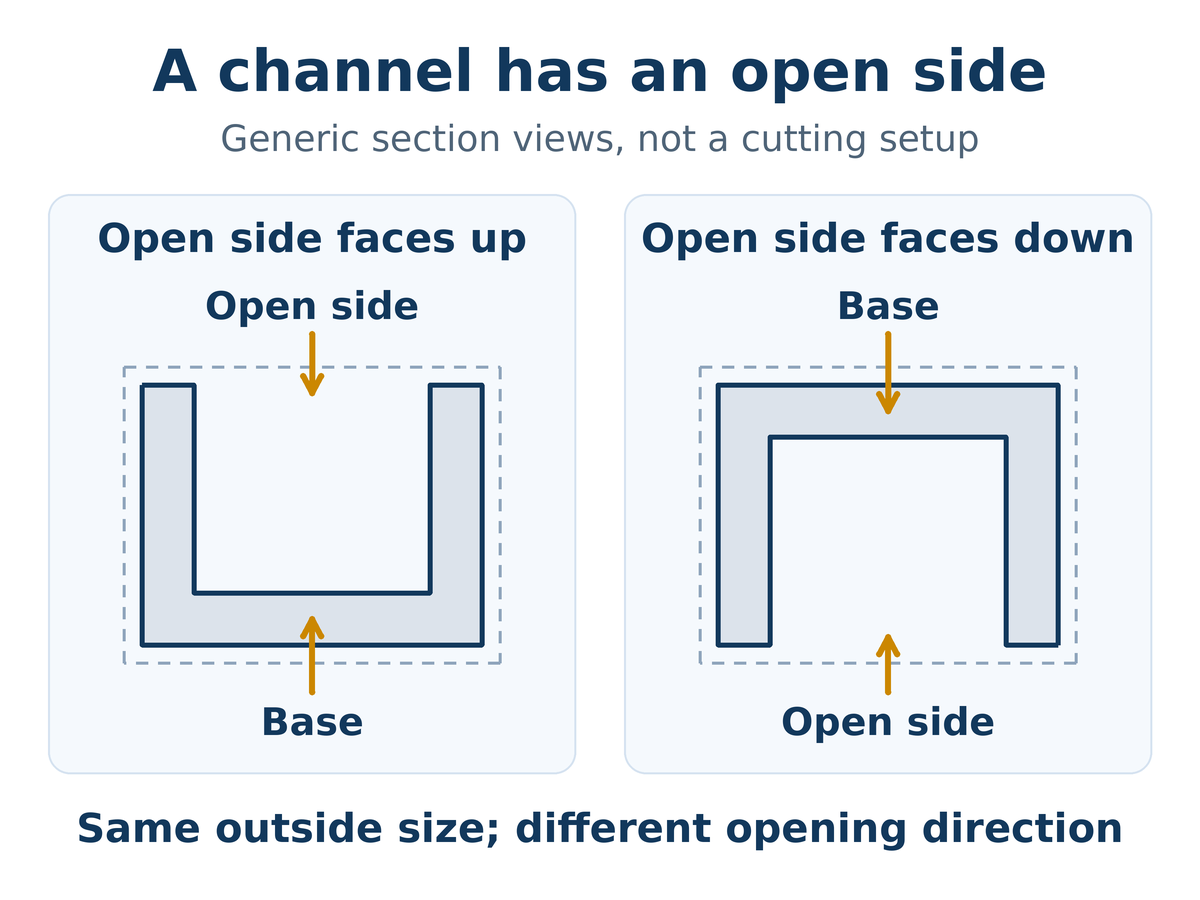
Start the RFQ with the rack maker, rack drawing and existing rail part number. Photograph an approved replacement beside the receiving carrier, then record the revision and which features are already present at delivery. A generic U-shaped piece with the same outside width is not proof of fit. The diagram below is only a generic open-channel orientation example; it does not depict an anodizing contact rail or the fit of the named supplier’s accessory.
Choose the supply stage: finished rail, prepared blank or complete rack
Finished replacement rail. Buy this when the rack maker controls a proprietary section, a notch pattern, a contact feature or a tested fit that the buyer cannot release independently. Ask which rack revision and rail position the item serves and what inspection evidence accompanies it.
Prepared aluminum blank. Buy or cut one only when an approved drawing defines the starting section, cut length and end condition, and assigns any later notching, forming, contact preparation or inspection to a named shop. A saw can establish a cut length; it cannot by that fact establish electrical continuity, secure holding or drainage in an anodizing line. A blank price and a finished-rail price represent different deliverables.
Complete rack or module. If the carrier, contacts or mounting structure are also changed, quote the approved assembly rather than quietly treating the rail as a stand-alone spare. The receiving test then belongs to the whole authorized module.
Italtecno’s rack guidance identifies secure part holding, electrical contact and drainage as basic rack functions. These functions explain why a dimensionally correct blank still needs system-level approval. The anodizer should also decide acceptable contact-mark locations; our separate rack-mark guide addresses that finished-workpiece question.
What belongs on the cut-blank drawing?
For an independently released blank, require a drawing or controlled sample that identifies the aluminum stock form and its mating rail. Mark the length datum and tolerance, the cut-end geometry, the orientation of the open side or contact face, and the features that must remain untouched. If the finished rail uses notches, holes or local contact details, state whether those are made before or after sawing and who inspects them. Do not copy a spacing or material grade from a different rack catalog into this job.
Record the delivered unit as one blank, a matched set, or an assembled replacement. The set identity matters when several rail positions appear similar but are not interchangeable. Agree how the supplier will label revision, position and quantity before the first shipment.
Witness an aluminum anodizing contact rail cutting trial
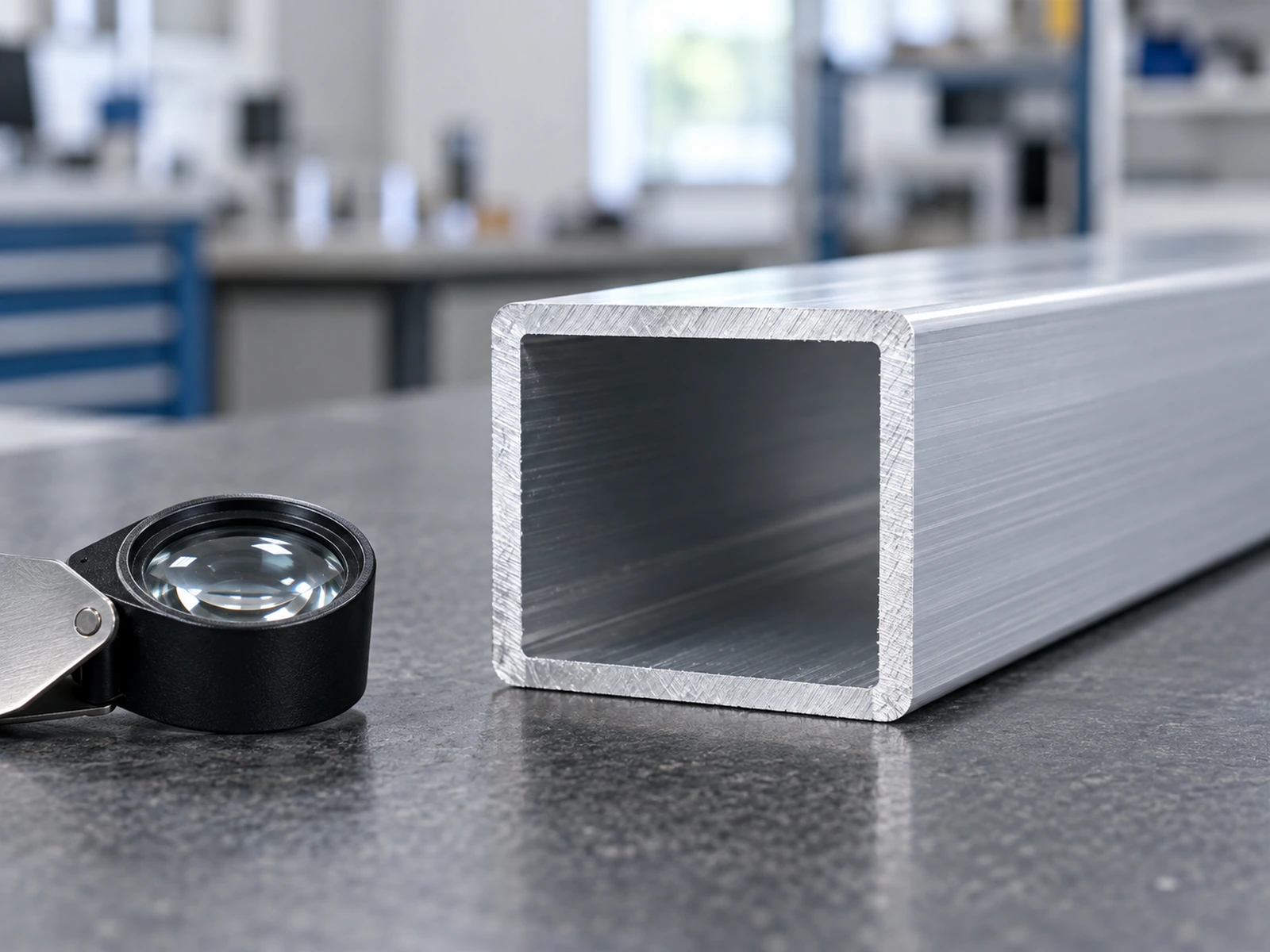
Use the actual approved stock section and a representative short and long blank. At a safe, supplier-controlled demonstration, observe how the section is supported, which surface is used as the datum, whether the cut end remains accessible for the next operation, and how the length is checked. Compare the cut piece with the approved drawing and the receiving carrier. Record any burr, deformation or marking at a feature that will later seat or make contact. The photo below shows a related aluminum cut end being viewed on a bench; it is not this contact rail or a measurement of its fit.
Keep the acceptance stages separate. A saw trial can release a defined cut blank for the next operation. It cannot release the final rack, contact performance or finished anodized part. The rack owner should specify any later fit, electrical and process checks. This avoids using a clean-looking cut as evidence for a different product stage.
The Jiurun video below shows a general automatic aluminum cutting line and feed path. It is equipment context only; it does not show this contact rail, a particular rack configuration, an anodizing process, a customer job or verified performance for the proposed blank.
Compare offers at the same accepted handoff
A low blank price can shift work to the buyer. Compare three routes at the same usable replacement stage: approved finished rails from the rack supplier; independently approved blanks plus all remaining fabrication and inspection; or a complete replacement module when the carrier is also affected. Include the specified stock, cutting, later features, identification, inspection, rejected pieces and delivery timing. Ask the rack owner how many replacement sets must be available and who controls the reusable rail’s service condition. Do not assume a universal reuse count.
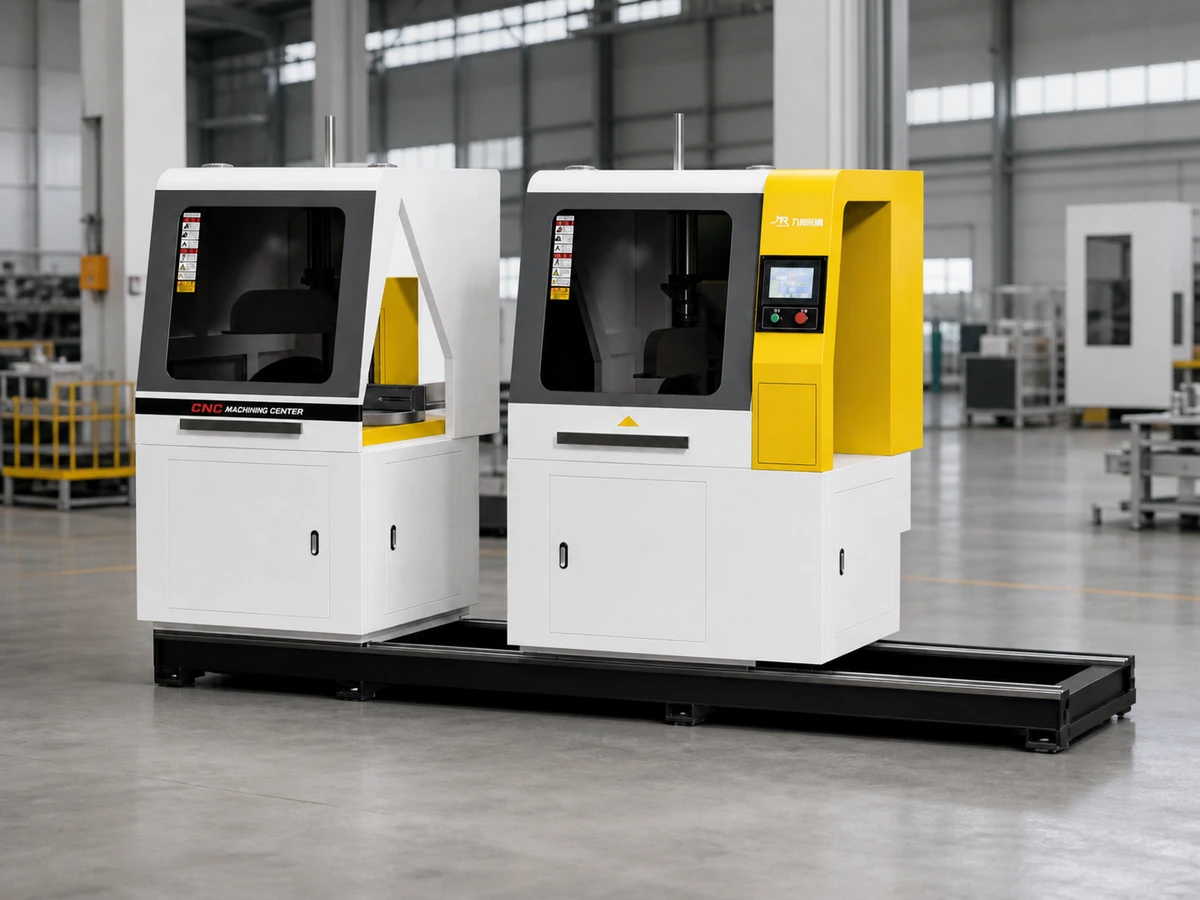
The machine choice follows the released blank, not the rack label. Ask a saw supplier to confirm whether the actual section and required end can be supported and cut on the offered configuration. The image below is a related aluminum cutting-machine exterior, not proof that this model has cut the proposed rail or can meet its drawing.
Send a useful contact-rail RFQ
For aluminum anodizing contact rail cutting, send the approved rack and rail identifiers, a drawing or controlled sample, the mating-carrier interface, the blank or finished-rail delivery stage, the quantity by position, and the proposed inspection and downstream ownership. Ask for a written exception if the offered saw trial covers only cut length while other features remain to be qualified. If the rail is a maker-specific spare, involve that maker before replacing it with a generic extrusion.
For a machine-specific cutting assessment, contact JiurunCut with the approved section, required blank drawing and receiving criteria. We can discuss a representative cutting demonstration and clarify the boundary of the offered machine. Final rail and anodizing-process acceptance stays with the authorized rack owner and anodizer.