
AGV safety bumper carrier profile cutting begins with a design-authority question. Is the buyer ordering a complete, approved pressure-sensitive bumper, or an aluminum carrier that the bumper supplier has explicitly released for separate manufacture? Those are different purchases. A saw can prepare a specified aluminum blank; it cannot make an unapproved substitute into a validated safety device.
Safety-bumper suppliers describe assemblies that combine a compliant body, sensing element, carrier or mounting profile, wiring, and a monitored controller interface. ABB’s bumper product manual shows an aluminum carrier and a separate mounting profile in its cross-section. Its safety-products catalog lists moving vehicles such as AGVs as an application and describes the sensing and control function. Mayser’s Safety Bumper product information includes aluminum mounting plates and fixing-groove details. These are examples of supplier-defined systems, not interchangeable drawings for a generic AGV rail.
This guide is for an OEM or integrator considering a separately sourced, supplier-approved aluminum carrier or mounting member. If the safety-device supplier requires its own supplied profile or complete bumper, keep that supply boundary. The responsible machine builder must validate the complete installation and safety function under its own project requirements.
First decide whether there is a cut part to quote
Ask the safety-bumper supplier for a written answer before sending an extrusion to a saw vendor. The answer should identify whether the carrier or mounting extrusion may be sourced and cut separately, its controlled drawing revision, and any restrictions on material, finish, fastening, or rework. A photograph of a bumper cannot answer those questions. Neither can a nominal length copied from a catalog.
A complete bumper quotation can include the sensing element, cable exit, cover, end treatment, and supplier-controlled mounting arrangement. A separately supplied aluminum blank quotation should say exactly which of those items are outside the saw supplier’s scope. This prevents a low blank price from being compared with the cost of a complete safety assembly.

AGV safety bumper carrier profile cutting: seven RFQ checks
1. Identify the controlled section and supply authority
Send the approved section drawing, extrusion source, alloy and temper specification, finish requirement, and revision. Mark the carrier, mounting plate, and any other aluminum member as separate line items. Confirm which party owns each drawing. If a supplier has approved only a complete bumper, do not infer permission to replace its carrier with a similar-looking commercial extrusion.
2. Define the cutting datum and installation orientation
A channel or asymmetric carrier can sit on several faces. The RFQ should show the intended support face, blade approach, and which groove or lip must remain undamaged. Mayser’s product information illustrates that some fixing grooves are accessible only through their openings. That is a useful reminder to ask about assembly access; it is not evidence that any pictured JiurunCut profile fits a Mayser bumper.
For a trial, supply a section view with the datum face highlighted. Ask the cutting supplier to photograph the supported orientation and the finished ends. If the fixture contacts a cosmetic or functional groove, agree on acceptable witness marks before running a batch.
3. Separate cut length from active bumper length
The aluminum blank length, finished carrier length, active sensing length, and overall installed envelope may differ. End caps, foam, cable exits, brackets, corner joins, and vehicle clearance can each affect the final dimension. The bumper supplier or AGV designer should issue the dimension chain and tolerances. The saw quotation should name the dimension it will control and the inspection datum used to measure it.
Give the saw vendor a drawing-based tolerance rather than asking for the tightest available machine specification. Sample cuts should be measured at the required datums, including both ends where squareness or angle affects assembly. Do not treat a single caliper reading as a validation of the installed bumper.
4. Protect the section during clamping and feeding
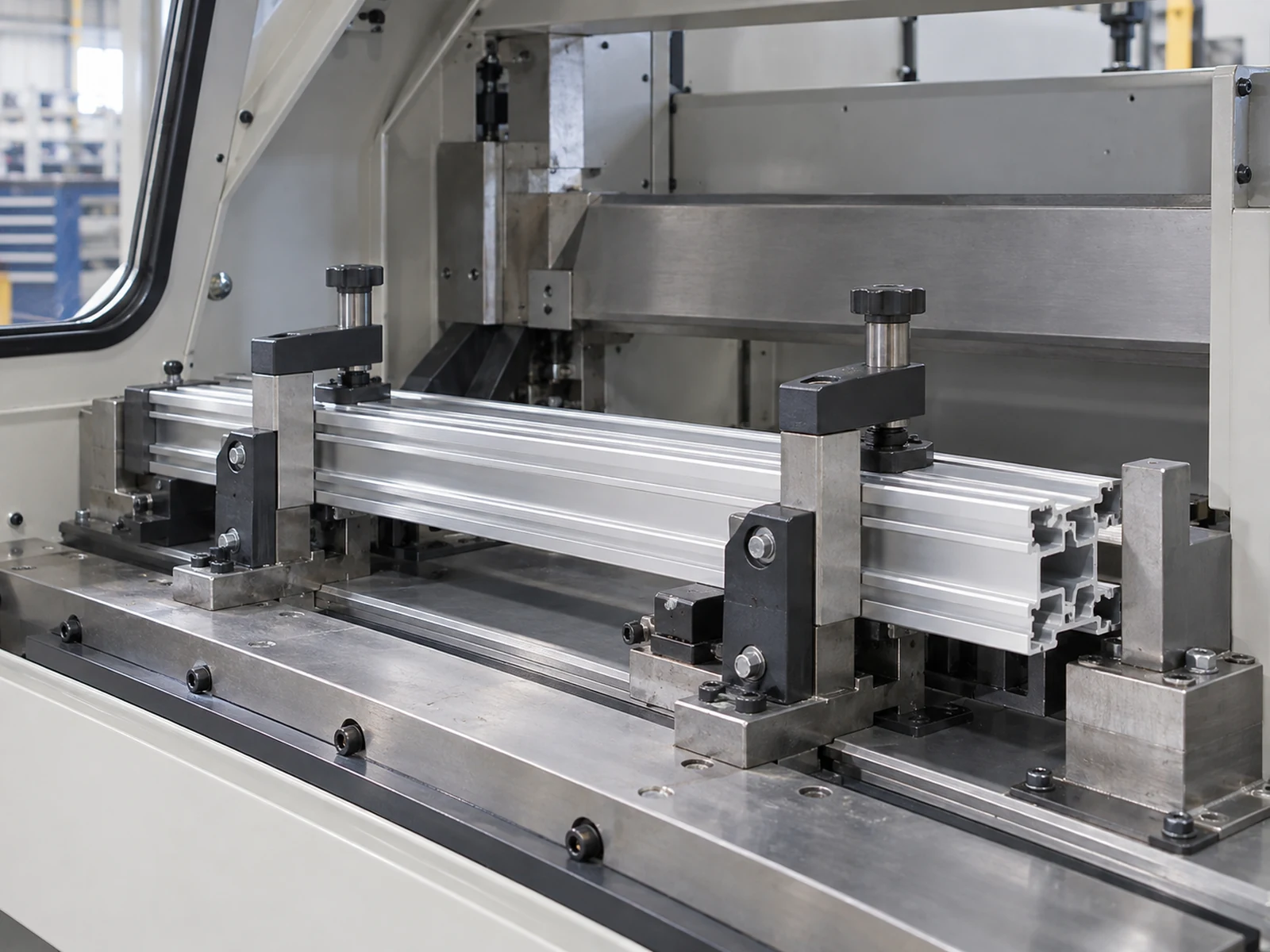
Thin walls, internal cavities, and projecting lips can deflect under clamps. Specify where support blocks may touch the section and where they may not. A short trial on the actual approved extrusion can reveal whether a fixed stop, hold-down, or feed system distorts the profile or leaves marks near a mounting feature. JiurunCut’s clamping trial guide explains how to compare contact and repeatability before choosing a production setup.
5. Specify end quality at the interface
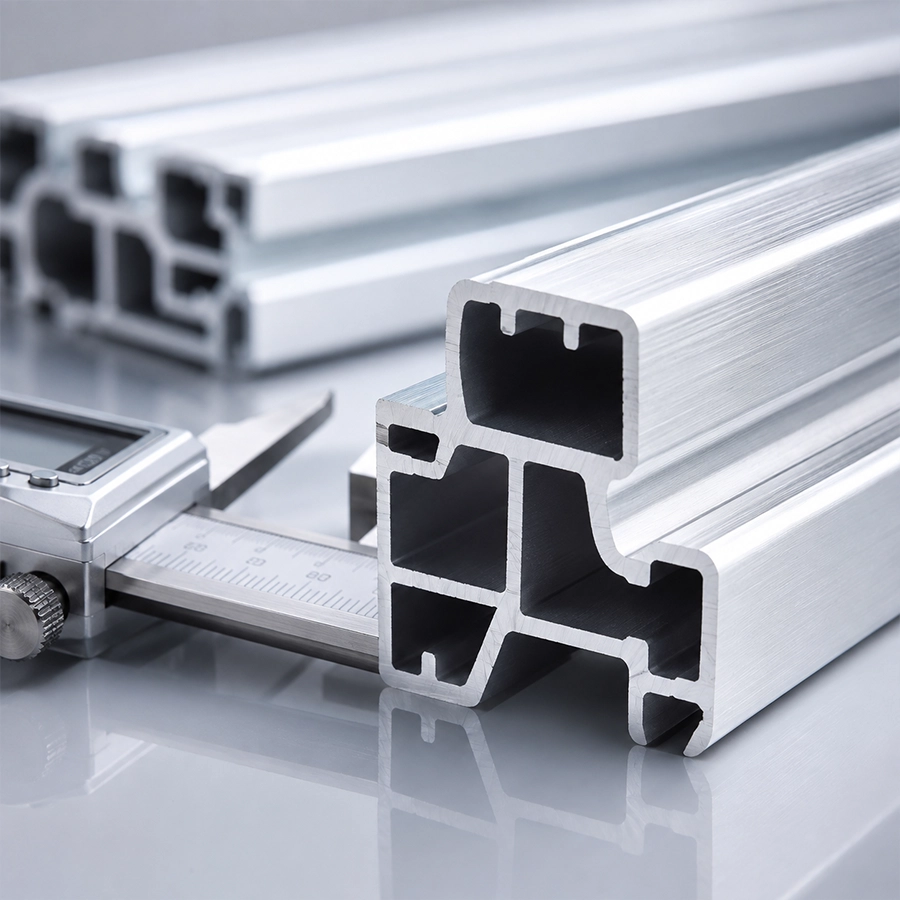
Define acceptable burrs, chips, sharp edges, squareness, and visible-surface marks on the released drawing. The buyer should identify whether a cut edge will meet a cover, foam body, wiring path, bracket, or operator-accessible area. Ask who performs deburring and cleaning, and whether that work is included in the cutting price. The bumper supplier should decide which edges and surfaces are critical to its assembly; the saw vendor should demonstrate that its sample meets the released acceptance criteria.
6. Keep secondary features on the process map
Holes, slots, miters, cable passages, end closures, and attachment points may be required after a straight saw cut. List every operation and its owner. If an end needs machining or drilling after sawing, specify whether cut length is an intermediate blank dimension or the final part dimension. A saw-only quotation should not silently include features that require another process.
7. Define sample approval and traceability
For the first article, record profile lot and drawing revision, saw setup, cut orientation, inspection results, and any approved deviation. Agree who signs off the cut blank and who signs off the complete bumper assembly. A successful saw sample shows that a particular blank meets its drawing; it does not validate impact response, stopping distance, wiring fault detection, or the vehicle’s safety function.
Compare quotations on the same boundary
| RFQ item | Buyer must provide | Cutting supplier should return |
|---|---|---|
| Authorized scope | Supplier approval for separate carrier manufacture | Explicit blank-only or finished-member scope |
| Profile | Controlled section, material, finish, revision | Support and clamping proposal for that section |
| Length and end | Datum, tolerance, angle, burr criteria | Sample measurements and end-condition images |
| Secondary work | Holes, slots, cleaning, marking and owner | Included work, exclusions and handoff point |
| Release | First-article and change-control authority | Records tied to lot and drawing revision |
Two bids are comparable only if they describe the same part stage. A price for a loose sawn extrusion and a price for a complete monitored bumper answer different purchasing questions. If the OEM has not yet resolved the safety supplier’s restrictions, finish that decision before judging cutting-machine proposals.
What the equipment video can and cannot show
The following video is from the Jiurun Machinery channel and illustrates an aluminum saw process. It shows a related machine scene only. It does not show an AGV bumper carrier, the approved material, a specific quoted configuration, a customer project, a first-article test, or any safety performance.
Send a scoped carrier-cutting RFQ
For AGV safety bumper carrier profile cutting, first confirm your bumper supplier permits a separately manufactured aluminum carrier. Then send JiurunCut the released extrusion drawing, material and finish, cut list, datum and end criteria, annual volume, and a sample of the actual profile. State whether the requested output is a saw-cut blank or a finished machined member. We can then discuss a profile-specific cutting and support trial and return a quote for the defined cutting scope. Contact JiurunCut with your drawing and sample requirements. For the vehicle’s other structural members, see the separate AGV top-module frame cutting guide.