
4043 vs 5356 aluminum filler selection should follow the parent materials, joint requirements and service conditions. Give the welding specialist the complete assembly brief before buying consumables. Neither filler designation is a universal approval for every aluminum joint.
For a procurement team, the useful comparison is an identified welding proposal with an approved filler, supplied form and acceptance scope. This guide helps you prepare that request without turning a general selection chart into your welding procedure.
Keep three records connected
- The actual base materials and joint drawing.
- The welding owner’s approved filler and process.
- The finished assembly’s inspection and appearance requirements.
On this page
4043 vs 5356: identify the filler and supplied form
Hobart Brothers’ aluminum filler introduction identifies 4043 and 5356 as common filler alloys supplied as wire for GMAW and cut lengths for GTAW.
The number is not the complete purchasing description. Ask for the exact product, applicable classification, supplied form, diameter, package and required documentation. Use the welding owner’s released requirement when checking the reply.
Separate filler identity from the aluminum components being joined. A parent profile, connector and filler are different items. Their similar appearance or shared description as aluminum does not make them interchangeable.
The MIG versus TIG guide addresses the process choice. Here, the focus is the consumable decision and purchasing record within the approved joining route.
The questions to answer before selecting
Hobart’s filler-selection guidance starts from the finished component’s operating conditions. It asks about the base-metal designation, sustained elevated temperature, later anodizing, shear strength, ductility, toughness and post-weld heat treatment.
Put those questions in the assembly brief and assign the missing answers to the responsible team. “Indoor frame” or “aluminum enclosure” is too broad to resolve the complete joining requirement.
Hobart gives different guidance for different base-metal compositions. Do not choose a filler solely from a series name such as 5xxx. Have the welding specialist review the exact material combination and applicable requirements.
The guidance favors 5356 for anodized color matching, while identifying restrictions on its use for long-term elevated-temperature exposure. These are reasons to review appearance and service together, not permission to replace an approved filler independently.
A purchasing comparison should preserve the actual service-temperature requirement and its duration. Ask the responsible engineer to review it against current filler guidance and the joining procedure. Do not substitute the workshop air temperature for the component’s operating conditions.
Three purchasing scenarios
Scenario 1: a visible frame will be anodized
Imagine a fictional frame order with visible welded corners and a requested anodized finish. The drawing identifies the members, but the buyer has not supplied an appearance reference or the finished sample requirement.
The next action is to connect the welding and finishing teams. Ask for the proposed filler, approved joining route and representative finished sample. Review the weld area and surrounding material together under the agreed viewing conditions.
A favorable filler recommendation for color matching does not guarantee that the joint becomes invisible. Keep cosmetic approval separate from the assembly’s structural and dimensional requirements. The welded-aluminum appearance guide covers the finished-sample review.
Scenario 2: the component sees sustained heat
Imagine a second order where the frame operates near a heat source. The inquiry names only a peak temperature and provides no duration or normal operating range. Those missing details should reach the design and welding owners.
Ask them to define the relevant service conditions and confirm the proposed filler and procedure. An earlier cosmetic approval for an unheated display frame does not answer this new application question.
Do not select from a filler’s general strength description and ignore the service brief. Keep the approved choice connected to the component revision and intended use. These scenarios describe missing purchasing information, not qualified joints.
Scenario 3: a consumable supplier offers a substitution
Imagine an approved order names one identified 4043 product, but a supplier offers 5356 because it is available sooner. Procurement should retain the substitution as a proposal, with its exact product details.
Send it to the welding owner for review against the approved route. Record the decision before issuing the revised consumable order. Price and delivery availability cannot by themselves establish technical equivalence.
Make the consumable offer comparable
Match the offer against the same released requirement. The following editorial checklist helps procurement find incomplete replies; it supplies no filler diameter or process setting.
| Order field | What the reply should identify |
|---|---|
| Filler identity | Exact product and required classification. |
| Supplied form | Wire or cut lengths, specified diameter and packaging. |
| Order scope | Quantity, delivery plan and included documents. |
| Approval record | Responsible welding owner and released requirement revision. |
A wire-spool offer and a rod offer can have the same stated mass but serve different supplied forms. Confirm the intended process and package. Do not treat price per kilogram alone as a complete comparison.
Keep any proposed changes to diameter, product, classification or packaging visible. Ask the responsible owner which changes affect the approved equipment, handling and procedure. This guide does not authorize a change.
Keep material and process identities separate
At receiving, connect the delivered consumable labels and required documents to the purchase order. Preserve the product and lot information required by the approved route. Record an unresolved mismatch before the material enters that route.
Do the same for the parent parts. Use the material-certificate guide to connect the stock record with the delivered members. A filler document does not certify the parent profile’s alloy or temper.
Keep approval, production and inspection records distinct. An approved filler establishes the agreed input; it does not document that a particular weld was completed correctly. The finished assembly still needs its specified evidence.
Connect the cut parts to the welding brief
Give the cutting supplier the released member drawing, length references, orientation and required delivery condition. State which preparation operations remain with the welding team.
Use the cutting-before-welding handover guide to define that division. Preserve member identity and protect the surfaces required by the approved downstream route.
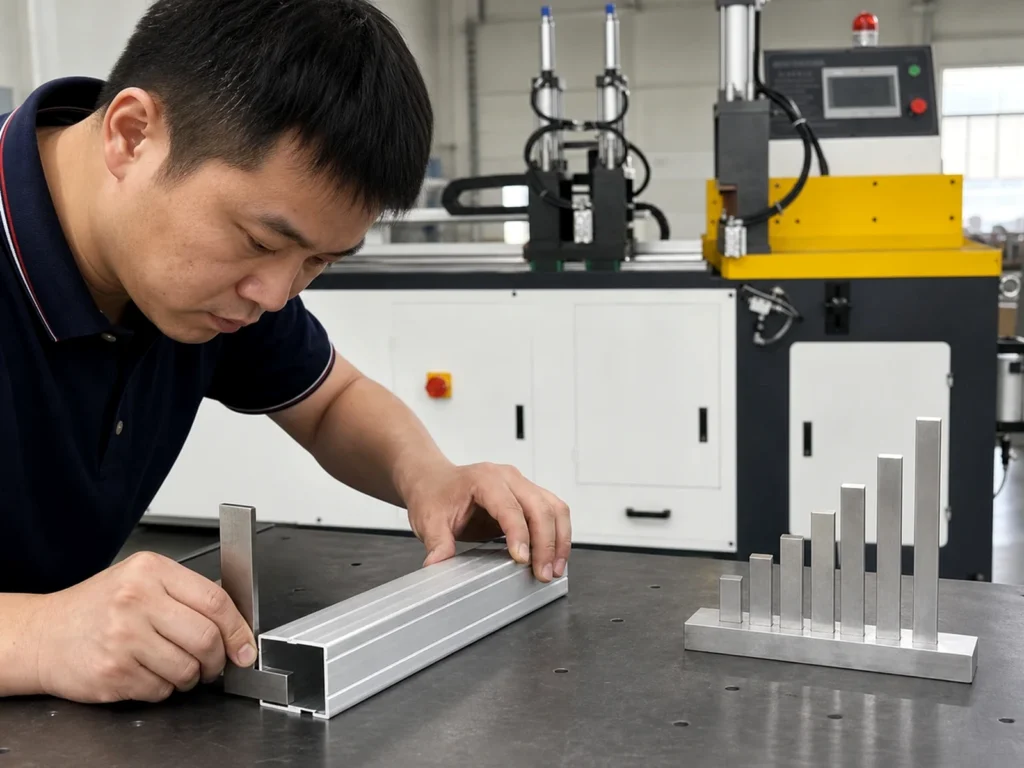
Send JiurunCut the aluminum member drawings and cut list to discuss the cutting stage. Keep filler selection, welding qualification and completed-assembly approval with the responsible engineering and welding teams.
Buyer questions
Is 5356 always better than 4043?
No universal ranking answers the joint’s requirements. Review the actual parent materials, service conditions, finish and approved procedure.
Can appearance alone select the filler?
Review the appearance target with the joining and design requirements. Approve a representative finished sample where required.
Does an approved filler prove an accepted weld?
No. Keep the input approval separate from the production and finished-assembly inspection records.
Can procurement accept a substitute to reduce lead time?
Submit the exact proposal to the responsible welding owner and retain the documented decision before revising the order.