
A saw can stand level and still be affected by vibration from the surrounding bay. Conversely, a machine can shake because of its own setup or cutting condition, and a pad under the base may leave that cause untouched. Aluminum saw vibration isolators deserve a place in a quotation only after the buyer and machine supplier identify which disturbance they are trying to control, whether the proposed mounting is approved for that machine, and how the installed cut will be accepted. An isolator is a configured support component, not a universal accuracy upgrade.
This article is for a plant deciding whether to request an isolation option on a new industrial aluminum saw. It does not specify a pad, anchor, floor design, or safe installation for a particular Jiurun machine. The photographs show related saw bases and factory scenes; none proves that an isolator is fitted, necessary, or successful.
First separate the vibration you bring in from the vibration the saw makes
Describe the location before naming a mount. Is the saw beside a press, a heavy vehicle route, a conveyor, or another moving machine? When does the disturbance occur: while the neighboring equipment runs, while the blade spins without stock, during clamp motion, or only while the blade cuts a particular section? Note the time, machine state, stock identity, blade, and where the motion was observed. A short video of a moving cabinet is useful context, but it is not a measurement of vibration at the saw base or at the workpiece.
A plant-side disturbance and a saw-generated disturbance ask for different remedies. If the symptom follows another machine, the site team may need a location or floor review. If it follows one cutting setup, first verify the blade, workholding, stock support and approved operating condition with the saw supplier. Do not claim an isolation pad has solved a cut-face problem without a controlled before-and-after result.
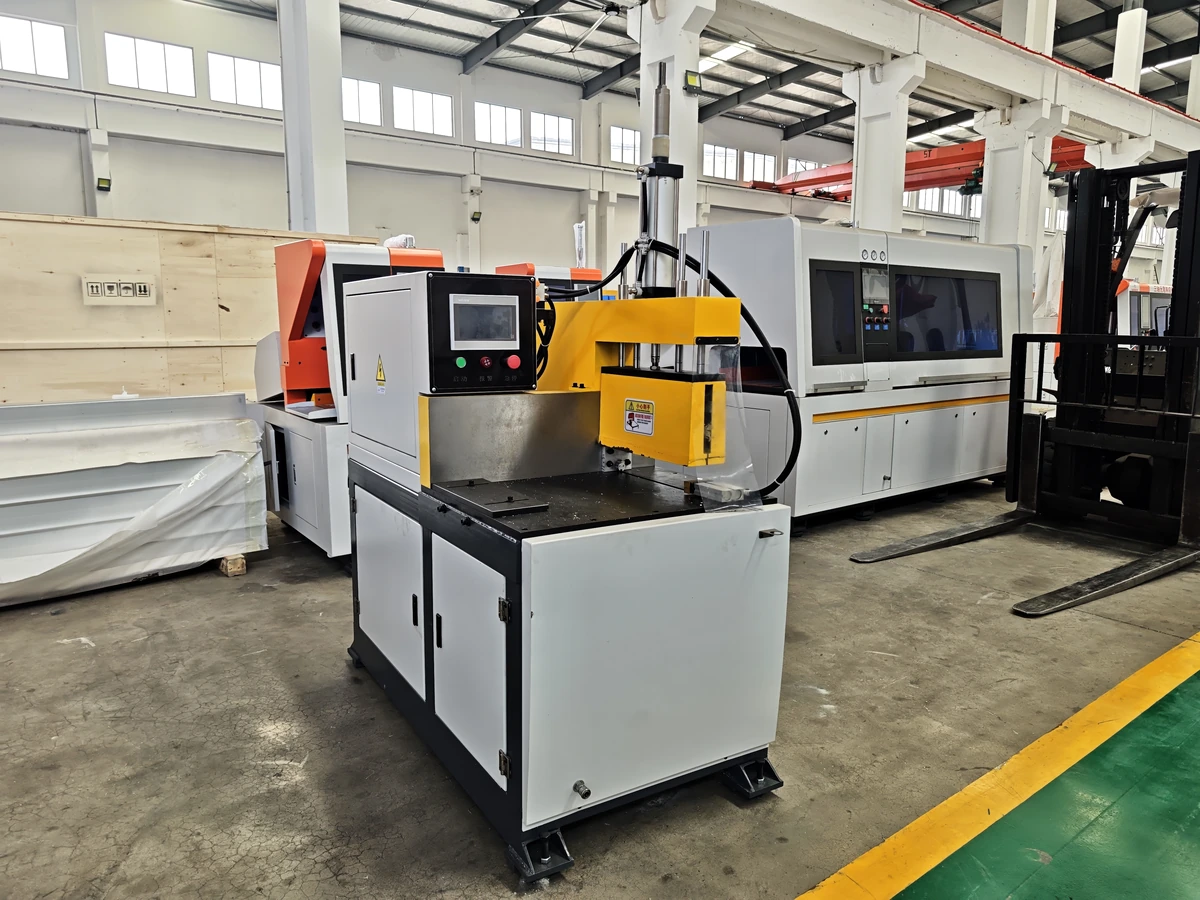
When aluminum saw vibration isolators are justified
The useful starting record pairs the proposed machine configuration with the proposed site. Ask the supplier for the as-offered mass, support-point layout, permitted leveling or fixing method, and any restrictions on compliant mounts. Ask the site engineer for the actual floor and neighboring-machine conditions that matter to the decision. The existing floor-load guide concerns support reactions, while the floor-anchoring guide assigns the approved fixing plan. Isolation adds another question: can a selected support reduce the relevant transmitted disturbance without allowing machine movement that harms the cut or the installation?
Do not use total machine weight divided by four as a substitute for actual support-point reactions. Machine mass may be distributed unevenly, and added infeed or outfeed equipment may have separate supports. An isolation supplier needs the load at each mount, the disturbance frequency or measured spectrum, the target criterion, and the physical constraints. In its pad application guidance, Fabreeka starts with the troublesome forcing frequency and arranges pad area in proportion to the supported load. That is a method from a component manufacturer, not a recommendation for any Jiurun saw or a substitute for a site survey.
Choose a mount only after its boundaries are named
If aluminum saw vibration isolators are offered, request the proposed mount make and model, load range at each support, attachment arrangement, required deflection, leveling method, and maintenance access. Ask whether the support needs a separate restraint or approved anchor and what happens if a mount settles or fails. The answer depends on the actual machine, support frame, floor and local requirements. A supplier cannot demonstrate compatibility by placing a generic rubber pad under one corner for a photograph.
Manufacturer data illustrate why “rubber mount” is incomplete. Mason Industries publishes capacity and deflection information for particular elastomeric isolator families; those values belong to those products. The buyer should request the selected component’s current data and a load calculation for the proposed installation. Any claimed isolation percentage, acoustic reduction or cut-quality gain belongs in a defined test, not in a sales phrase borrowed from a catalog.
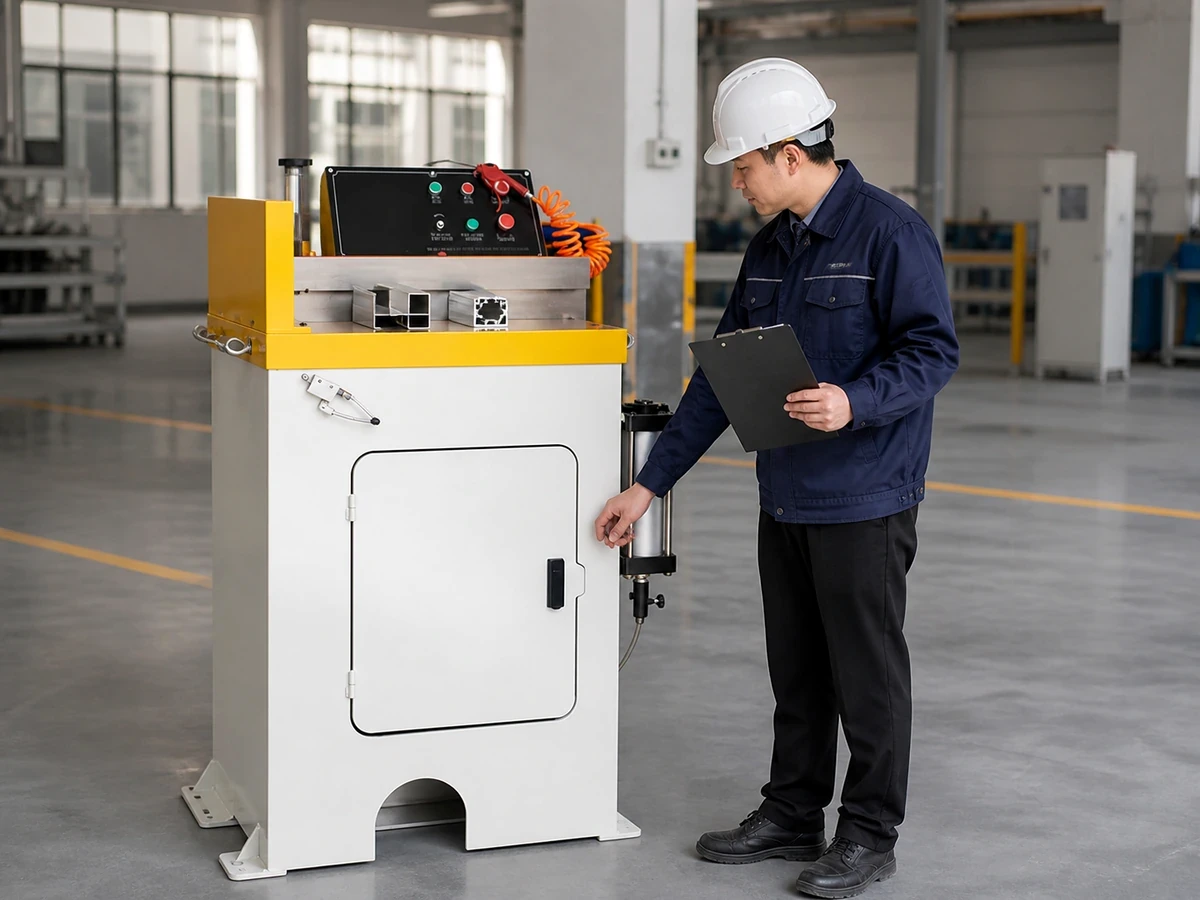
Keep the machine geometry and utilities in the same review
A compliant support can change how the machine responds to static load and motion. Ask the machine maker how bed level, head alignment, feed-to-saw handoff and clamping datum are checked after installation. If a long feed line or outfeed table is supplied, establish whether those sections share the isolated support or remain on the fixed floor, and how their relative heights are maintained. A good result at the base is not enough if the stock path changes at the first roller or the finished part no longer meets its drawing.
Trace power, compressed air, extraction and any coolant or data connection across the mounting boundary. Fabreeka’s foundation guidance notes that rigid service connections can transmit vibration around an isolation system. The site and machine suppliers should therefore approve the connection arrangement together; this article does not prescribe flexible joints or a routing detail. Guarding, access, emergency functions and maintenance clearances must remain as delivered and approved.
Run an acceptance comparison that can fail
Agree the operating cases before the machine arrives. One case should represent the normal saw cycle on an approved stock and blade. Another should include the site disturbance that motivated the isolation request, if it can be run safely and repeatably. Record the machine configuration, mount specification, floor location, neighboring equipment state, sample stock and cut program. Have qualified personnel measure at agreed locations and record the cut-part dimensions and visible end condition against the released drawing.
Compare the result with the agreed criterion, not a vague impression that the machine “feels quieter.” If there is no baseline or no repeatable disturbance, say so and limit the conclusion. A pass on one sample does not certify every profile, blade, shift or neighboring production pattern. Also plan a recheck after leveling or mount adjustment, because the accepted condition is the installed machine, not the boxed component. The post-transport requalification guide covers a related but separate release of the installed cut.
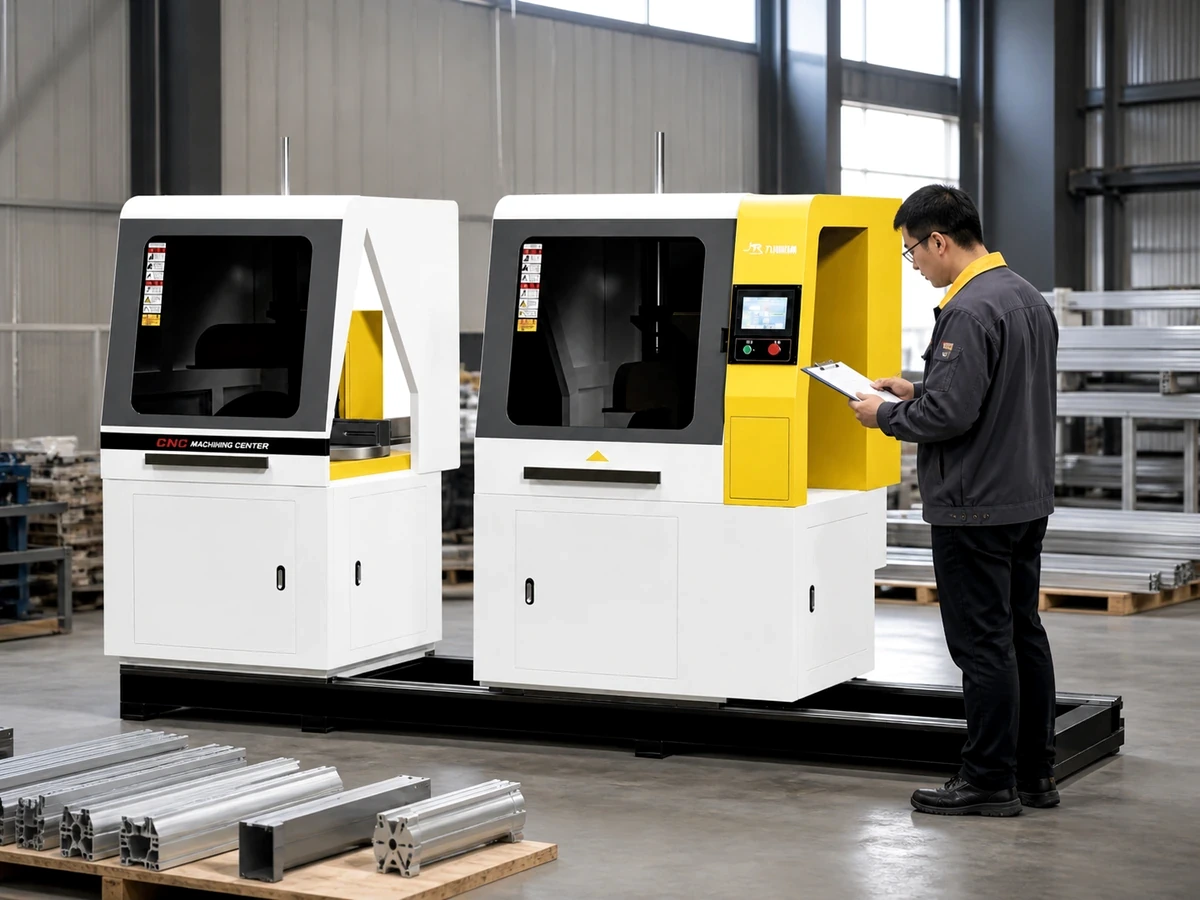
Put the decision and the exclusions on the quotation
A comparable offer should state either that vibration isolators are included with an identified approved design, or that they are excluded pending a site assessment. If included, list the mount quantity and identity, machine and site information used for selection, who supplies attachments and restraints, who installs and levels the system, who reconnects utilities, and who witnesses the agreed operating cases. State the records that will be handed over and the condition that releases production.
If the evidence points instead to a blade, clamp, stock-support or neighboring-floor issue, request the remedy under that scope rather than adding pads by default. This is the decision the article adds to a general floor-fixing plan: whether isolation is warranted at all, and how to show it did not trade cut quality for a quieter-looking base.
Watch the saw cycle, then ask for the missing measurement
The Jiurun machinery video below shows stock feeding and automatic cutting on a CNC aluminum saw. It makes the moving states in an acceptance plan easier to identify. It does not show a vibration survey, isolator installation, floor condition, cut measurement or a guaranteed result for a quoted machine.
Send the supplier a site-specific question
To assess an aluminum saw vibration isolation option, send the proposed machine configuration, profile and cut requirements, floor location, neighboring equipment schedule, any observed vibration evidence, and the acceptance criterion you need to protect. Ask for the approved support arrangement and a clear included/excluded scope. Contact JiurunCut with the drawing and site details for a machine-specific discussion; the supplier must confirm whether any mount option applies to the offered configuration.