
An aluminum saw extraction hood should be assessed where the cut creates chips and airborne material. A fan rating, a tidy enclosure photograph, or a connection port cannot show whether the proposed hood captures that material during the buyer’s actual cutting cycle.
The purchasing decision is concrete: identify the capture arrangement in the quoted machine, then agree how a representative cut will be observed and assessed by the responsible extraction specialist. This article addresses that machine-side question; it does not approve a dust-control design or prescribe an airflow value.
In this guide
Aluminum saw extraction hood: follow the material from the blade
Before comparing collectors, ask the machine supplier where material leaves the cut in the offered configuration. A hood may receive material carried toward it by the cutting process, surround the source, or rely on air moving across an open space. Those are different capture situations. The answer should name the actual opening, guard and collection point, rather than merely show that a round port exists somewhere on the cabinet.
For a circular saw, the useful drawing or photograph shows the blade area, profile support, clamp, guard, collection opening and the path to the machine connection. A buyer can then see whether the proposed inlet is near the release point and whether a profile or fixture blocks the intended path. Ask for the view with the guard in its normal operating position; an open maintenance photograph can hide the obstruction that matters during production.
The UK Health and Safety Executive’s guide to local exhaust ventilation describes general hood principles: greater enclosure, a hood near the source, positioning that uses the direction of emission, and a size matched to the process. Those principles explain why the hood location deserves its own review. They are not a specification for this saw or a substitute for competent site design.
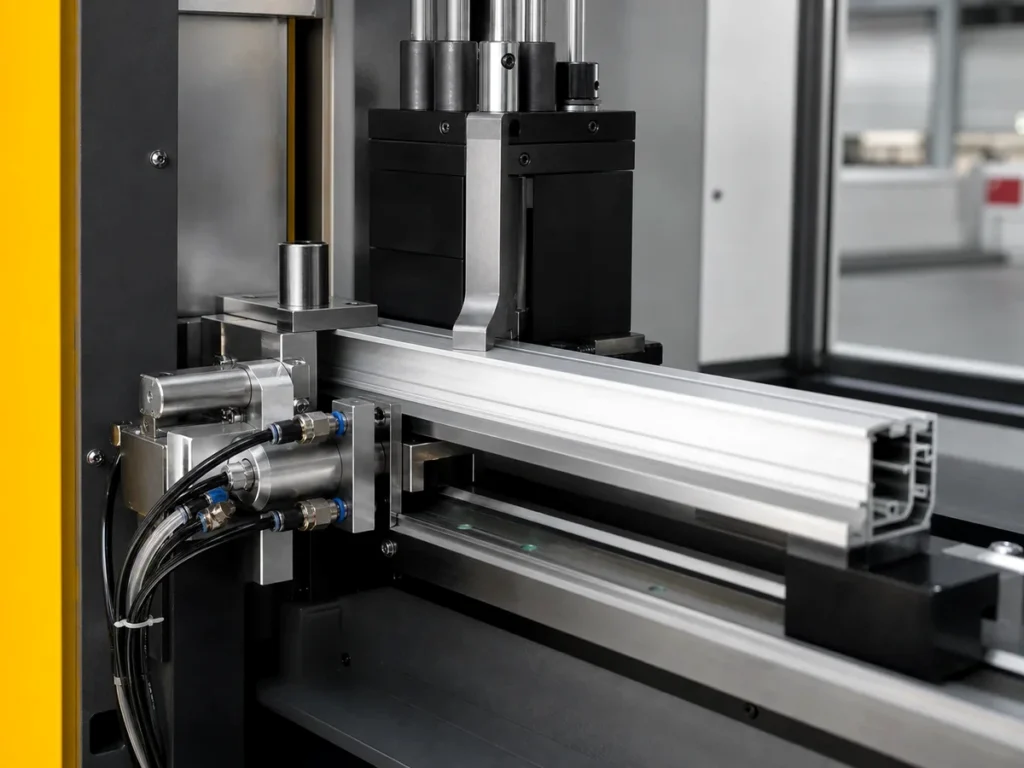
Ask for the three views that settle the quotation
A clear machine-side proposal should make three views available for the exact configuration being quoted:
- Inside the guarded cutting area: where the source, clamp and capture opening sit relative to one another.
- Outside the guard: how the machine collection path reaches its connection point, with included and excluded parts identified.
- During a representative cut: what can actually be observed as the intended profile is cut with the guard in its working position.
The first two views establish geometry and scope. The third can reveal an obvious escape path or an operating obstruction, but a clean-looking video alone does not establish exposure control or measured capture performance. Agree with the responsible extraction specialist what observation and commissioning evidence the purchase needs.
Test the operating state that will be purchased
A demonstration should identify the profile family, stock orientation, clamping arrangement, guard position and other concurrent processes that the buyer expects to use. Changing any of these may change what the opening faces or how material travels. The observation belongs to the quoted arrangement, not to every profile that might later pass through the saw.

Make the test question visible in the purchase record: “With this profile and guard position, where does material leave the cutting zone, and what evidence shows that the proposed capture arrangement controls it?” The supplier can provide configuration details. The responsible extraction specialist must decide the measurements and acceptance criteria for the actual installation. Avoid turning a short factory video into a claim about workplace exposure or site compliance.
For a central system, the shared extraction airflow guide addresses supply at the proposed machine connection under concurrent use. A satisfactory connection assessment and a sensible hood layout answer different questions; both need to relate to the same operating state.
Keep the hood usable through the job
Ask how routine profile loading, adjustment, offcut removal and service access interact with the proposed enclosure and collection point. If normal work requires the guard or an added hood to be left open, the assumed capture geometry may not be the geometry actually used. The responsible machine and extraction suppliers should resolve access and guarding as part of the offered configuration.
For a line with several cutting stations or more than one opening, ask which hood is being assessed in each operating state. A result at one opening cannot silently stand for every other station. The HSE commissioning guidance calls for defining operating conditions and checking performance at every hood in a system. It also requires a report that can serve as a benchmark for later examinations.
This is a purchasing requirement for evidence, not an instruction to move a hood, alter a guard or adjust a fan. Such changes need the appropriate machine and ventilation specialists to review the actual installation.
Turn the test into a sign-off record
Before placing the order, agree who will document the machine configuration, who will assess the installed extraction system, and which results close the capture question. A usable record identifies the tested profile and operating state, the hood or opening involved, the observations and measurements required by the responsible specialist, and any condition that remained unresolved. Keep the record with the final quotation revision.
HSE’s commissioning guidance distinguishes the process and operating conditions from measured performance, and says the system should be suitable for the process when used. That is why a demonstration of a bare machine should not be substituted for an assessment of the completed installation. The chip collection scope guide helps assign supply and site responsibilities; this article focuses on what happens at the cutting zone.
If the quoted hood geometry changes, request an updated drawing and assess whether the previous evidence still applies. The purchase can remain open on this point until the responsible parties define the remedy and acceptance evidence. There is no universal hood size, duct diameter, capture velocity or pass/fail number in this article.
What to send with your enquiry
Send JiurunCut the intended profile range, saw arrangement, proposed collector or shared-system connection, and the specific view you need of the guarded cutting area. Ask which capture components are included in the quoted machine and which machine-side drawings or demonstration conditions can be supplied. Give the same operating-state description to the responsible extraction specialist for site assessment.
For machine context, see JiurunCut’s aluminum profile cutting machine category. The related Jiurun video below shows a semi-automatic saw and guarded cutting area. It does not show a verified extraction hood, measured capture, or this article’s proposed installation.
Discuss the cutting-zone capture question with JiurunCut. Include the profile and configuration details so the response can distinguish the machine quotation from the separate extraction assessment.