
A shipping crate can make a long rail look like a problem for the saw. The tempting answer is to divide it into shorter pieces. For a stairlift, however, every extra joint changes the rail that the carriage will travel on. The manufacturer must approve the section plan before a purchasing team asks a saw supplier to quote cuts. Stairlift rail cutting begins with an approved section map, not a freight limit copied into a cut list.
This article is for an OEM or approved rail manufacturer evaluating the cutting of straight aluminum rail stock. It does not authorize shortening, splitting or repairing an installed lift. The rail material, joint design, end details and installation instructions belong to the stairlift manufacturer.

Stairlift rail cutting starts with the section plan
A straight staircase can call for a long continuous rail, while transport, access to the building or an OEM installation method may call for shorter factory sections. Those are different decisions. Stannah says its straight stairlift rails are cut to the length of the customer’s stairs. Its account of curved rail production also explains that fewer joins can make the journey smoother, subject to transport. These are examples of manufacturer-controlled design and delivery choices, not dimensions or joint rules for another brand.
Ask the responsible OEM to release one of three outcomes for the specific rail: a single approved piece; a numbered set of approved sections with defined joints; or an unresolved layout that must stay out of the saw quotation. A crate-length limit can be supplied as an input, but it cannot silently create an extra rail joint. The same distinction matters if the installation route includes a narrow doorway or tight turn: logistics constraints go back to the designer before the blank is shortened.
Put the section map on the RFQ
For each approved section, the RFQ should identify the rail profile and incoming finish, drawing revision, finished blank length and its measurement datum, end orientation, quantity and permitted end condition. Mark which ends will meet a joint, stop, bracket or other OEM-defined interface. If a feature is already machined into one end, the saw operator needs a clear rule for locating from that feature; measuring from the convenient end can reverse the section.
Keep the total installed path length, the individual transport-piece lengths and the saw-cut blank lengths in separate columns. A one-piece rail may need a manufacturing allowance before its final end work. A multi-piece rail may have different end treatments at the joint and at the terminal ends. Only the released rail drawing can settle those values. A general saw acceptance measurement method helps agree how to inspect the cut, but it cannot supply an OEM rail tolerance.

Test the stock handling before promising a cut length
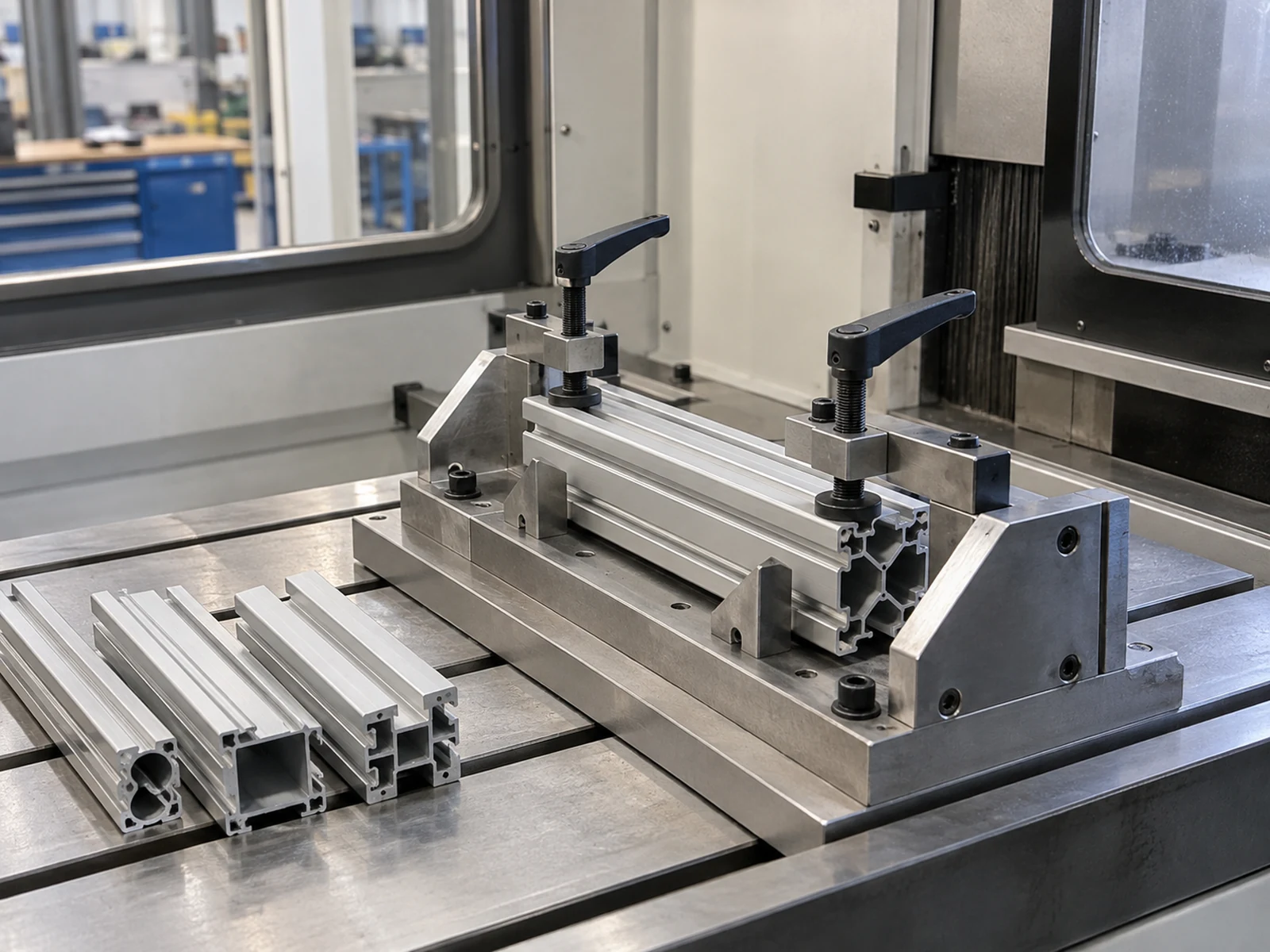
For a stairlift rail cutting trial, bring an actual production-length sample and the approved rail section drawing. Confirm that the infeed supports the full stock length, that clamps contact permitted surfaces and that the outfeed catches the separated piece without bending or cosmetic damage. Observe the first piece and a repeat piece; compare their measured lengths from the specified datum. Check both ends for the OEM’s stated burr, squareness and surface limits. A demonstration on a different profile is useful for discussing the machine layout but is not a qualification of a stairlift rail.
Record what the saw trial does and does not prove. The machine supplier can demonstrate stock handling and cut blank consistency under agreed conditions. The OEM must still approve the rail section, the joint, the carriage path and the completed lift. If the rail is supplied as a finished proprietary spare, a factory saw purchase may be the wrong procurement route altogether.
Keep section identity through packing and installation
When the OEM approves more than one section, cutting is only the start of the handoff. Specify a durable way to identify each piece and its orientation without marking a prohibited surface. The pack list should preserve the rail order, revision, left/right or top/bottom designation if the drawing uses one, and any matched joint reference. Protect exposed ends as the approved packing method requires. Receiving inspection should reconcile the pieces against the released section map before installation work starts.
Do not treat a neat pile of equal-length pieces as a passed assembly. Section identity, joint fit and ride quality must be checked by the party responsible for the lift. The useful purchasing boundary is simple: quote the saw for the exact authorized blanks and measurable end condition; let the OEM own the rail system and installation acceptance.
Related Jiurun cutting-line footage
The video below is from Jiurun Machinery’s own channel and shows a different aluminum extrusion moving through a Jiurun cutting line. It illustrates material feeding and cutting equipment. It does not show a stairlift rail, an approved section layout, a shipping trial or a ride-quality test.
Send the approved section map with the saw inquiry
For a stairlift rail cutting inquiry, if your team manufactures approved straight rail sections, send the current rail drawing, incoming stock condition, section sequence, authorized cut lengths and datums, end-condition limits, expected batch size and packing boundary. Include the longest stock and piece that the machine must safely support. Contact JiurunCut to discuss a representative aluminum cutting trial. Ask the supplier to list assumptions before pricing, and obtain the OEM’s decision on any proposed joint or length change first.