
A service door that opens in the CAD model may hit a newly cut crossmember in the assembled unit. A frame rail may also leave room for a pipe while covering the leak sensor or the path to a drain pan. For a custom liquid-cooling enclosure that specifies aluminum members, CDU enclosure frame cutting should therefore begin with the installed service and fluid-control envelope. A saw can make accurate blanks; it cannot decide where a complete coolant distribution unit (CDU) needs access. The buyer and integrator must freeze those interfaces before a supplier treats the cut list as released.
This guide concerns a custom aluminum support or enclosure frame only where the project drawing actually calls for one. It does not imply that every CDU has an aluminum frame, that a Jiurun saw has been tested on the pictured profiles, or that a saw-cut part proves cooling performance or leak tightness. The useful purchasing question is: which frame edges can the cutting supplier finish, and which clearances still belong to the CDU designer?
CDU enclosure frame cutting: draw the service envelope first
Start with the approved CDU or rack layout: the installed unit footprint, panel or door swing, filter withdrawal direction, valve and hose connections, power access, and any maintenance reach zone. These are not interchangeable with the outside dimensions of a bare frame. A crossmember that looks harmless in an empty cabinet may block a component that must be removed later. Mark the required access in the assembly drawing, then overlay the proposed aluminum members. Only after that comparison should the cutting list identify each member’s finished end geometry and length reference.
Manufacturer instructions illustrate why the installed envelope matters. A Vertiv XDU1350 installation guide specifies access around its own unit and describes future service access to internal components. Those dimensions belong to that model, not to every CDU and not to a Jiurun machine. Use the actual unit’s approved installation drawing for your project. If the enclosure is still changing, quote sample cuts or a provisional blank set, with the service dimensions explicitly awaiting approval.
Separate the aluminum frame from the cooling system
The word “CDU frame” can hide different scopes. One purchase may concern an external support rack; another may mean an OEM enclosure with doors, panels and pipe penetrations. A third may ask only for straight saw-cut aluminum blanks that another factory will machine and assemble. Put the part number, extrusion section, alloy and supplied condition against each member. Show which ends are saw-finished and which will receive later drilling, milling, joining or coating. If the engineering team has not approved the extrusion and the connection design, the saw supplier should not infer them from a photograph of a complete unit.
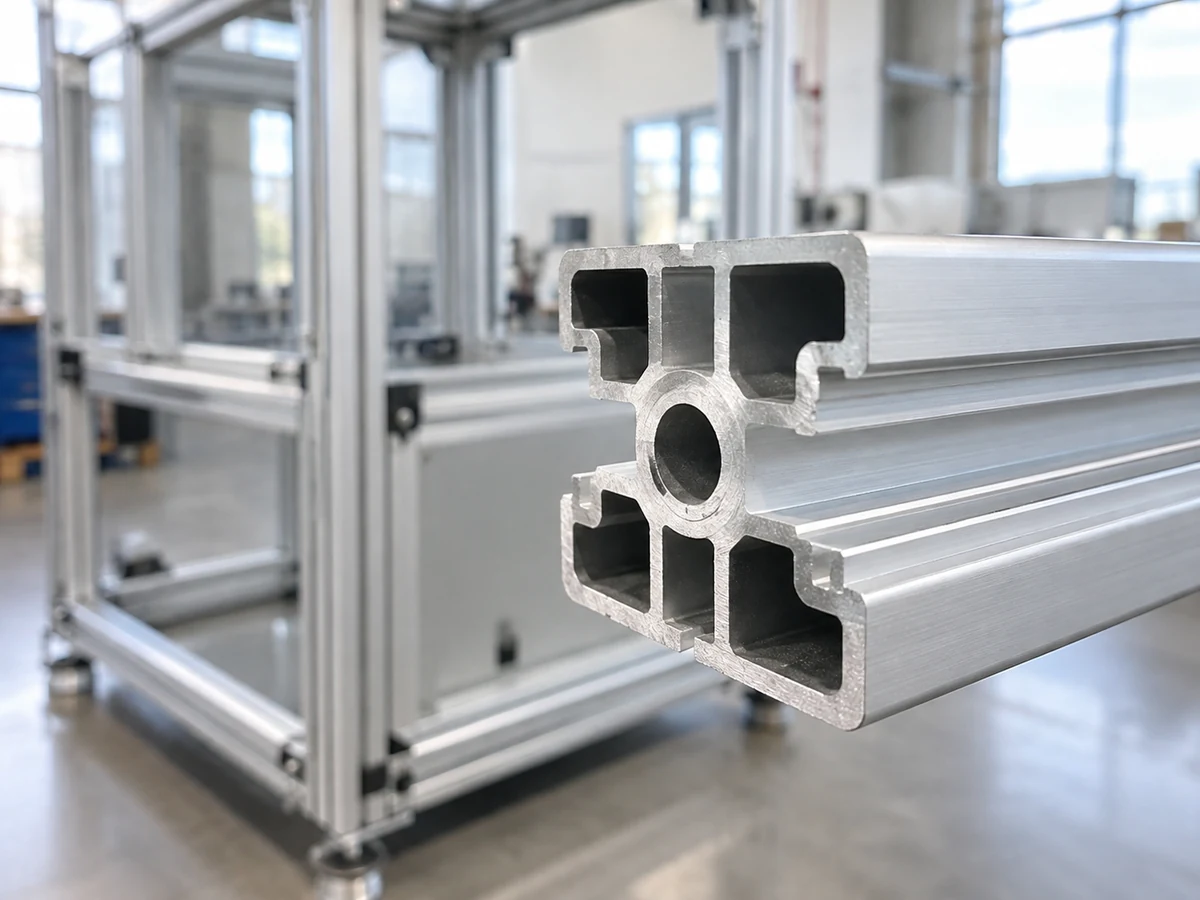
The Open Compute Project’s liquid-cooling integration paper describes rack integration as a combination of frame, manifolds, hoses, IT equipment and power infrastructure. That is a useful reminder about the number of interfaces, not an approval of any particular aluminum section. A custom frame quote should state whether the supplier delivers bare lengths, labeled cut members, a mechanically assembled frame, or a finished CDU enclosure. Assign the wet circuit, pressure test, controls and commissioning to the parties that actually design and validate those systems.
Keep the leak path visible in the frame drawing
Do not place a lower frame rail from a generic cabinet sketch before the leak-detection and drainage plan is known. A rail, foot, panel return or added trim can change where liquid collects, whether a sensor remains reachable, and whether a drain or shutoff device can be inspected. This is an integration question, not a saw tolerance. The CDU designer should mark the approved pan, sensor, drain and connection positions; the frame drawing should then show the clearance and attachment boundaries around them. If no such design exists, the cutting supplier can state the assumed envelope but cannot certify leak protection.
A Vertiv XDU070 planning guide discusses an overflow pan, monitored leak detection and shutoff provisions for its application. A Schneider Electric CDU installation checklist separately checks piping, drainage, cleanliness and access. These documents show why the complete unit requires more than dimensional fit. They do not prescribe a universal frame detail. Use the specific OEM documents and local engineering approval for the unit being purchased.
Make a sample assembly answer a real question
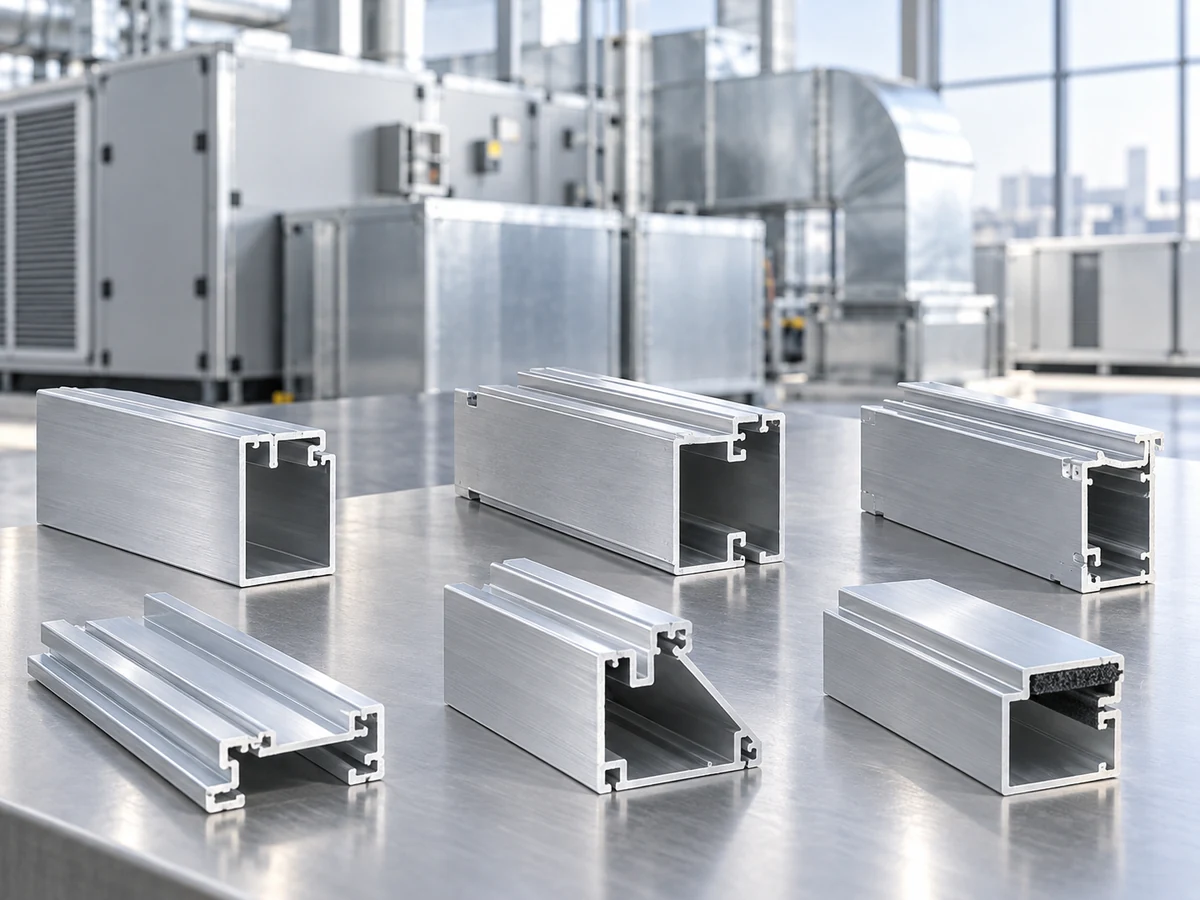
Before a production batch, select a small representative set of the approved extrusion profiles and end conditions. A sample should include the member near the door opening, a lower member close to the pan or drain route, and an end that meets a connector or panel. Keep the mating parts and the current drawing revision with the trial. Inspect the saw-made length, angle, burr and visible damage against the drawing. Then assemble the members with the intended hardware and check that the required door, panel and service paths remain open. A clean, square coupon alone cannot answer that assembly question.
Write down which party signs each result. The cutting supplier can report dimensions and condition of the cut blanks under the agreed method. The frame integrator can confirm fit, fastener access and panel operation. The CDU OEM or responsible engineer must decide whether the finished unit meets its fluid, electrical, thermal and safety requirements. If a sample reveals an interference, revise the frame or layout first. Repeating the same cut more precisely will not remove an interference designed into the drawing.
What the saw demonstration can show
The following video from Jiurun Machinery’s own channel shows a related automatic aluminum sawing process. It helps a buyer discuss loading, clamping and cut-part handling while planning a sample trial. It does not show a CDU frame, the particular extrusion sections in this article, a service-clearance check, leak detection or a cooling performance test. Request a witnessed trial on your approved profile if those cut results matter to the purchase decision.
Release a cut-ready pack, then ask for a quote
For CDU enclosure frame cutting, a useful pack identifies the approved enclosure or rack revision, each aluminum member’s section and length datum, the end geometry, surface condition and handling requirements, and the assembly features that must remain clear. Include a marked drawing of door swing and service withdrawal, the wet-system designer’s drain and sensor boundary, and the exact sample acceptance method. Mark unresolved interfaces as open rather than silently assigning them to the saw supplier. The quote can then distinguish a saw-cut blank from downstream machining, assembly and validation.
If you are comparing a general cabinet frame trial, see our control cabinet frame saw-trial guide. If the project instead involves an aisle containment roof, the aisle-roof member guide covers that separate cut-list boundary. For a custom CDU enclosure frame, send JiurunCut the released aluminum profile drawing, cut list, sample quantity and required end checks through the contact page. We can discuss the saw-cut scope using your actual stock and drawing, while the CDU integrator retains approval of service access, leak control and complete-unit operation.