
At a saw, a finned aluminum base may look like a single metal part. After a sealed heat pipe has been fitted into that base, the cut line can cross a second, very different component. A smooth aluminum face would not establish that the pipe remained sealed. For a buyer planning heat pipe heat sink cutting, the first question is therefore where the pipe will be when the aluminum blank is cut.
The useful decision is a manufacturing route, not a universal blade setting. Cut the approved aluminum extrusion while it is still a bare section, or ask the thermal assembly designer to release an explicit post-assembly machining zone. Do not treat an assembled heat sink as an ordinary solid extrusion merely because its outside envelope fits a saw.
Read the cut line as two components, not one outline
A conventional heat pipe is a sealed envelope with a wick and working fluid. Advanced Cooling Technologies’ reliability guide describes those internal elements and the need for a vacuum-tight enclosure. Boyd’s heat-sink fabrication guide likewise distinguishes heat pipes from the surrounding sink fabrication. The specific assembly drawing must show which features are aluminum, where each pipe runs, and what material is present in the proposed saw path.
Ask for the actual cross-section and assembly stage. A fin channel, pipe groove, or cap may be hidden by the exterior view. The saw operator should not infer a safe cut zone from a catalog photo or an overall length. If the blade path intersects a sealed pipe, pause the routing decision and return it to the heat-pipe or assembly designer. Cutting through the pipe would breach its envelope; a cut-end photograph cannot restore the lost seal.

Choose the route before choosing the saw trial
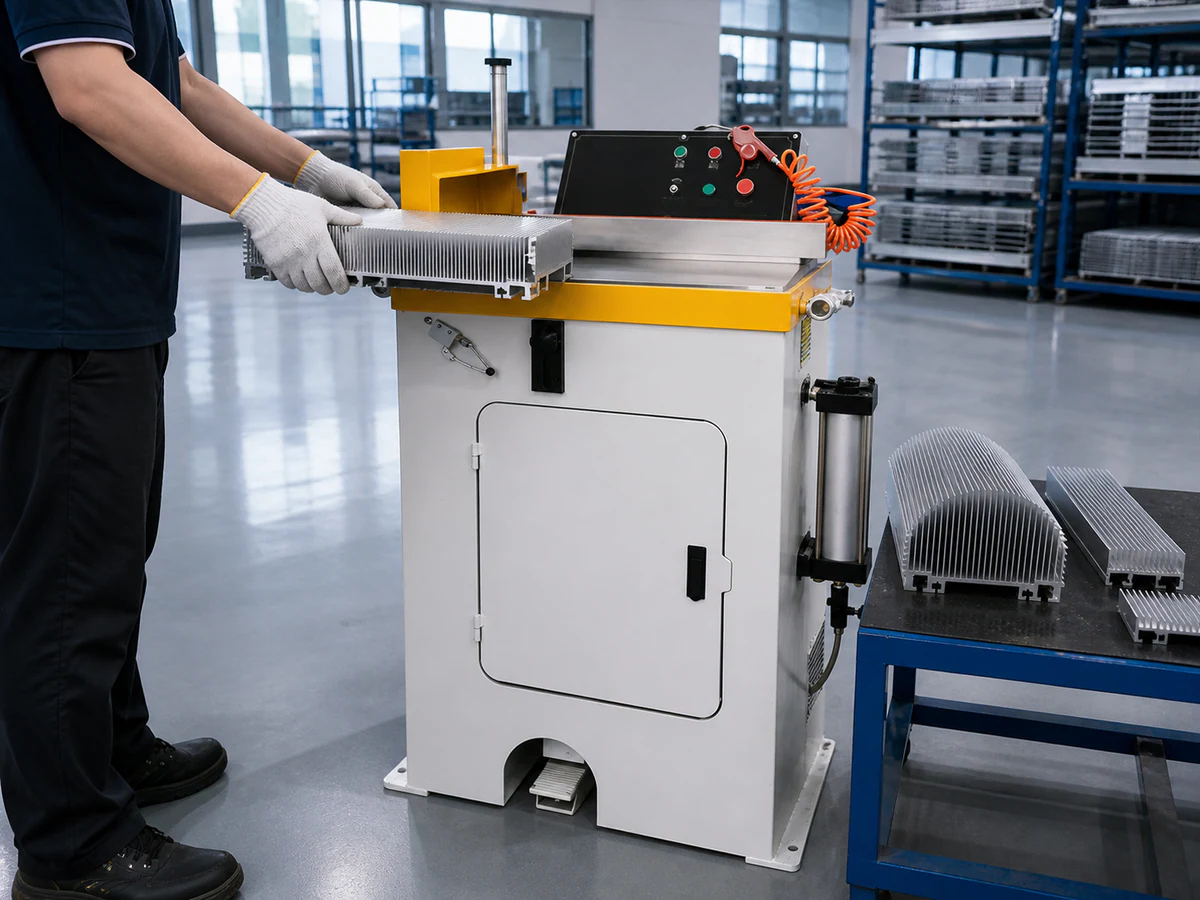
Route A: cut the bare aluminum section first. The thermal product team releases a finned extrusion or base drawing, a blank length, the intended datum, and the later pipe-installation interfaces. The saw trial can then evaluate that aluminum input: how it is supported, whether fins are marked or bent, how the end face is inspected, and whether chips remain in recesses. It cannot certify the later thermal assembly.
Route B: buy or build a prepared base, then install pipes. The aluminum supplier may supply cut and further machined bases, while a separate specialist inserts, bonds, solders, or otherwise integrates the specified pipes. In this case, put the cut blank acceptance and the assembly acceptance on separate records. ACT’s heat-pipe design guide discusses integration methods and assembly-level thermal testing; those decisions belong with the responsible thermal designer, not with a generic saw demonstration.
Route C: machine an already assembled unit only under a released design. Some assembly designs may leave a controlled aluminum-only trimming area. That possibility is not permission to cut anywhere on any finished sink. The drawing owner should identify the allowed zone, pipe position and clearance, holding method, inspection after machining, and responsibility for seal and thermal validation. Boyd notes that machining an assembly creates a risk of puncturing a sealed heat-pipe wall. Where no written release exists, quote the operation as a design question rather than an available saw cut.
Heat pipe heat sink cutting: what a bare-base sample can show
For Route A, send the real extrusion cross-section and an approved piece of stock. A finned section may have a sturdy base and delicate fins; the fixture contact should be reviewed against both. The first sample should be examined at the end face and along the fins, then checked against the drawing’s length datum and subsequent mounting or pipe-interface needs. Record observed burrs, fin damage, chips, and handling marks. Avoid turning one attractive sample into a batch capability claim.
The cut test should use the production orientation and a representative support arrangement. If the profile family varies, do not let the easiest section stand in for the narrowest fin spacing or the least stable base. Our guides on chips trapped in heat-sink fins and base flatness versus a saw-cut blank cover two downstream checks in more detail. Neither substitutes for heat-pipe design approval.
The following video is from Jiurun Machinery’s own channel. It shows a JR-455CNC automatic aluminum-profile saw as a general equipment example. It does not show the heat-pipe assembly, this article’s profile, an approved configuration, or a verified cut-quality result for either.
What a clean cut cannot prove
Even if the blade stays clear of the pipe, a post-assembly operation can expose the unit to clamping, vibration, chips, and handling loads. A visual check of the aluminum end does not establish pipe integrity or thermal performance. Boyd’s heat-pipe technical paper explains why breaching the pipe is destructive. The test plan for an assembled unit should therefore come from the heat-pipe and heat-sink design authority, including whichever leak, thermal, or other tests that design requires. This article does not prescribe those tests or claim a saw can replace them.
Keep the evidence separate. A saw supplier can document the input stock, fixture contact, chosen cut position, aluminum end quality, and measured blank. The assembly owner must decide whether the finished device meets its own pipe and thermal requirements. If those owners or criteria are missing, a purchase order for “cut assembled heat sinks” is underspecified even if a saw can physically pass through the outer aluminum.
Send one drawing package, then ask for two answers
For a practical quotation, provide the released aluminum profile drawing, the heat-pipe route or a clear statement that no pipe is present at cutting, the approved cut stage, required blank lengths, finish condition, and the next operation. Mark any pipe-free trimming zone on the assembly drawing rather than describing it verbally. Identify who approves a first-off aluminum sample and who accepts a finished thermal assembly.
Then ask the saw supplier two narrow questions: Can the bare aluminum input be located and cut to the stated blank requirements? What evidence will the sample provide? Ask the thermal assembly owner a different question: Is any machining after pipe installation permitted on this design, and what validation follows it? A clear “no post-assembly cut” is a useful manufacturing answer because it fixes the sequence before equipment is purchased.
Keep the cut upstream unless the design says otherwise
Heat pipe heat sink cutting is best specified by the state of the workpiece at the blade. A bare finned aluminum blank is a plausible saw input. A finished assembly containing a sealed pipe is a different engineering problem. If you are planning an aluminum base cutting station, send JiurunCut the approved extrusion drawing and sample requirements; identify any later heat-pipe integration so the saw scope stays clear. Decisions about the sealed device and its thermal acceptance remain with its design owner.