
Chips escaping an enclosed aluminum saw call for a location check before anyone changes the extraction equipment. An exterior pile can come from a cutting-cycle opening, a door edge, a transfer point, or chips carried out when the door opens. Each pattern leads to a different inspection. This guide gives a safe way to document the path and a useful handoff to the machine supplier or qualified maintenance team.
Stop and protect people first: if chips are reaching an operator or adjacent work area during a cut, stop using the saw and follow the site’s isolation and maintenance procedure. Never defeat a guard, interlock, or door switch to watch the blade. OSHA’s general machine-guarding rule explicitly includes flying chips among hazards from which workers must be protected. The applicable requirements and corrective work depend on the machine and jurisdiction.
Chips escaping an enclosed aluminum saw: read the pattern first
Start with the timing. Are fresh chips visible outside the machine while the enclosure stays closed? Do they appear only after the operator opens a door, removes a part, or clears a tray? Does the deposit grow at one corner or across a broad area? Photograph the exterior from a safe position before cleaning, then record the cut, profile, blade, material and any recent setup change. This separates a recurring escape route from residue carried out during normal handling.
Do not infer a failed collector from one photograph. A chip on the floor does not identify its exit point, and an open door can redistribute material that was retained during the cut. When chips are escaping an enclosed aluminum saw, the first useful result is a repeatable map of where and when they appear.
Trace the exit path without opening the machine during a cut
With the machine stopped and isolated under its instructions, have authorised personnel examine the condition of accessible enclosure edges, door seating, viewing panels, infeed and outfeed openings, internal chutes and collection access. Compare the observed configuration with the manufacturer’s drawings and service instructions. Do not add tape, brush strips, screens or a smaller opening on assumption: an improvised change may affect material travel, visibility, airflow, access or guarding.
For a controlled comparison, the responsible team can clean and mark safe exterior reference areas, close all guards and run the manufacturer’s approved representative cycle. Record which reference area receives new chips, whether the pattern changes with a different profile or feed orientation, and whether chips emerge during cutting, discharge or door opening. Keep people out of the projected path and use only the viewing provisions intended for operation.

Match the deposit to the next check
| Observed pattern | Question for the authorised inspection |
|---|---|
| Fresh chips at one closed door edge during a cut | Does the door seat as designed, and are its hinges, latch and specified sealing parts intact? |
| Chips concentrated near the stock entry or exit | Does the approved opening fit the actual profile and handling path? Has the stock or feed setup changed? |
| Chips appear when a door or tray is opened | Where are retained chips resting, and does the documented clearing sequence move them outward? |
| More accumulation throughout the enclosure | Are the specified chute, container and extraction interfaces clear and maintained as instructed? |
These are branches for investigation, not remote diagnoses. A damaged door component, a changed extrusion section and an obstructed chute can produce similar exterior evidence. The exact machine arrangement determines which components exist and which checks are permitted.
Keep guarding and collection as separate decisions
Collection manages material after it is generated; the enclosure and guards protect the operating area. More suction should not be treated as a substitute for a sound guard or as a universal cure for chips crossing an opening. Conversely, a closed cabinet image cannot prove that the internal chip route is working. The site and equipment specialists must assess both paths for the actual material and process.
If the proposed fix involves a collector or connection change, define the supplied and site-owned items separately. Our chip-collection scope guide explains how to record those boundaries. It is a purchasing discussion, not a diagnosis of this escape pattern or a dust-system design.
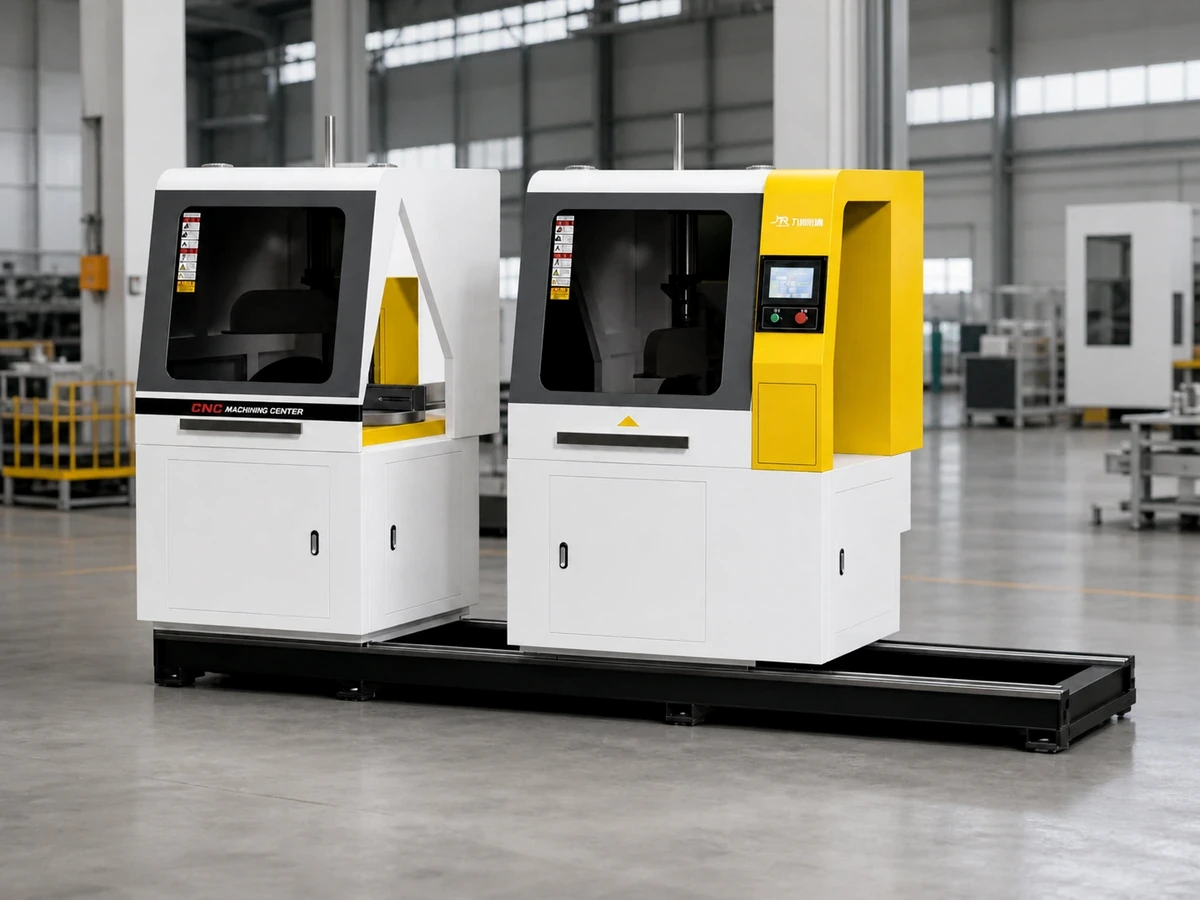
What should a service handoff contain?
Send the machine identification and configuration, the current profile drawing or section dimensions, blade and operating instructions, photos of the chip deposit before cleaning, and a short timeline. Note whether the pattern began after a profile, guard, tooling, collection or maintenance change. Mark the exact exterior location on a machine overview. Ask the supplier or qualified technician which inspection and restoration steps apply to that serial configuration.
After authorised work, repeat the agreed closed-guard observation under comparable operating conditions. Record the new exterior deposit, the internal collection condition and any remaining open item. A single clean photo or short run is not a guarantee for every profile or duty cycle; acceptance conditions should be agreed for the real workload.
Related JiurunCut machine video
The video below shows another JiurunCut aluminum saw in operation. It helps readers see a cutting-machine layout; it is not a demonstration of the enclosed machine pictured here, a chip-leak test, a guard modification or proof of collection performance.
Questions operators often ask
Can I keep cutting while chips escape through a door seam?
Treat chips entering an occupied area as a safety concern. Stop the operation and follow the site’s procedure; the responsible personnel should assess the guard and approve return to service.
Will a larger extraction unit solve the problem?
Not from this observation alone. Identify the actual exit route and verify the manufacturer’s intended collection arrangement before changing equipment.
What if chips appear only when I unload parts?
Document that timing. Have authorised personnel review where chips collect inside and how the approved unloading and cleaning sequence handles them. Do not reach into a hazardous area or use compressed air as an improvised fix.
Need a configuration review? Send JiurunCut the machine details, extrusion section and safely taken photographs. We can discuss the equipment path with the responsible site team; repair and safety decisions must follow the actual machine documentation and local procedures.