
EV charger pedestal aluminum post cutting is a narrow manufacturing question inside a larger charger installation. A drawing that says only “cut the aluminum post to length” leaves the base plate, cable path, charger bracket, finish sequence and inspection datum unresolved. An RFQ should identify the exact straight member to be sawn, its released profile and the assembly owner who will verify fit. A saw-cut blank is not a certified pedestal or an electrical installation.
There is a real product reason to make that distinction. Wallbox describes free-standing pedestals for single or dual charger mounting, while its Eiffel Pro technical datasheet identifies aluminum construction, stainless hardware, a base plate and supported charger models. Those references illustrate the different interfaces a pedestal may contain. They are not drawings for this article, a Jiurun project or proof that any generic square tube is interchangeable with a listed product.
1. EV charger pedestal aluminum post cutting starts with the purchased object
Ask whether the supplier is quoting a raw straight extrusion, a cut post blank, a machined and finished column, a base plate and column kit, or a complete assembled pedestal. Only a released straight aluminum member can be treated as a straightforward profile-cutting input. A base plate, welded joint, machined cable opening, bracket, coating and installed charger each need their own process and acceptance owner.
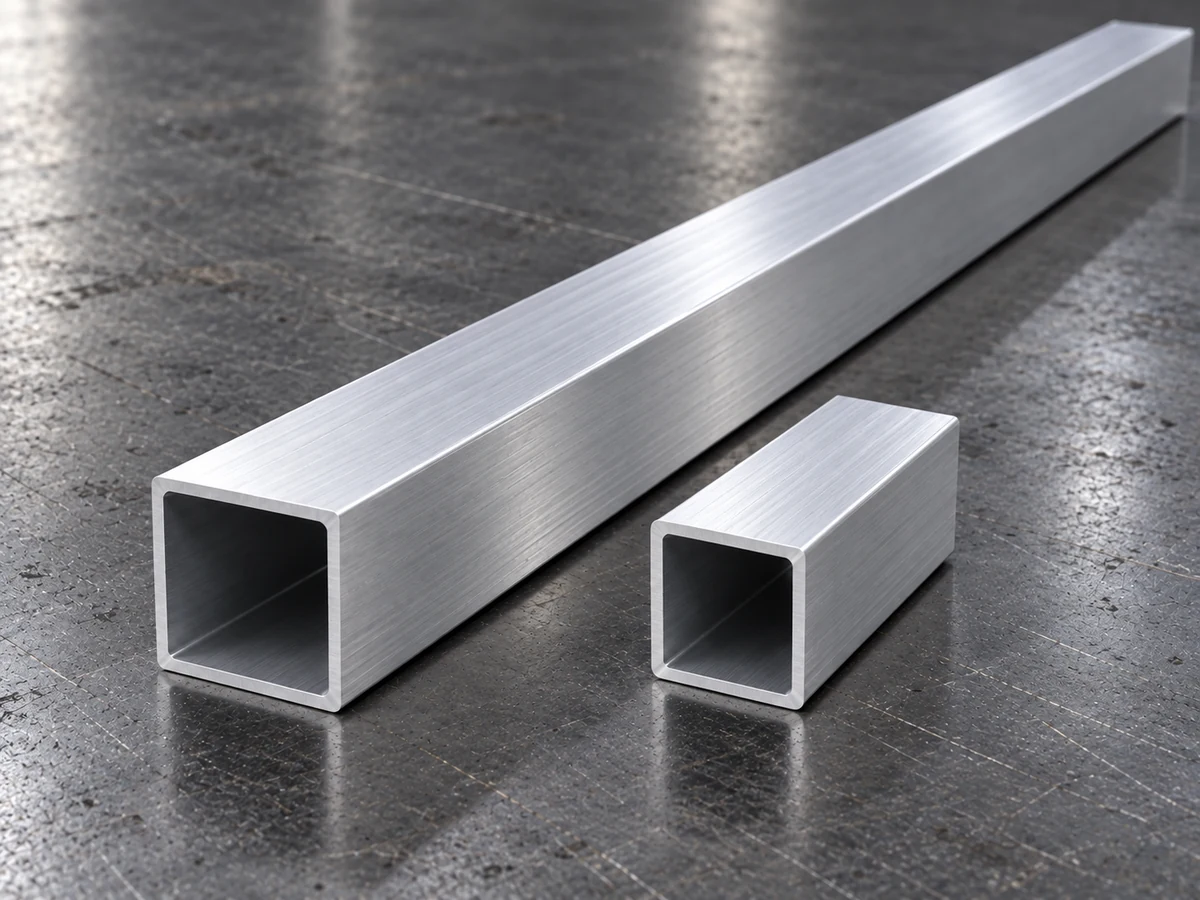
List the manufacturer or project drawing revision, the cross-section, alloy and temper, stock length, wall thickness, visible faces, cut quantity and required delivery condition. If the proposed post is custom, provide the actual extrusion sample or die drawing. Do not substitute a catalog square tube merely because its outside width seems close to the finished column.
2. Define both end datums and the base interface
For EV charger pedestal aluminum post cutting, a nominal overall post height is not automatically the saw-cut length. Identify the floor reference, base-plate thickness, any socket or insert engagement, top cap, charger bracket elevation and finish allowance. State whether the drawing dimensions the bare extrusion before assembly or the assembled height after the base and cap are fitted. If the base plate is bolted, welded or mechanically retained, name the resulting datum and the party who controls the joint.
For the cut blank, write down the measuring endpoints, length tolerance, end squareness and whether both ends require a finished edge. Do not invent universal values. The approved drawing and mating hardware should set them. Ask for a first-off measured part and assembly check before treating a batch of equal lengths as production-ready.
3. Keep cable routing and openings outside the cut-only claim
A free-standing charging pedestal may carry power and data toward a charger or holster. The cut end, internal chamber, cover and bracket may each affect that route. Obtain the released opening positions, exit direction, minimum clearances and edge-treatment requirements from the pedestal design owner. A saw can produce a straight blank; it does not prove that cable bends, glands, seals, electrical protection or service access are acceptable.
If the column includes a front cover or internal partition, list those as separate members with their own cut lengths and orientation marks. Confirm whether a top or bottom end must remain open for later assembly. Leave drilling, slotting and electrical design to the named downstream operations unless the supplier’s scope explicitly includes them.
4. Prove the actual post can be held and supported
A long hollow extrusion can twist, bow or mark if the fixture contacts a weak wall or a visible face. For a machine trial, record the real profile, the longest and shortest specified blanks, the reference face, support span, clamp-contact locations and saw direction. Check that the infeed and outfeed support the member through the complete cut. Compare the first and last piece from a representative stock length for movement and visible marking.
Do not use an unrelated demonstration cut as evidence for the RFQ. A successful trial must use the released section or a sample that the buyer has explicitly accepted as a surrogate, and the acceptance note must state exactly what that sample can prove.

5. Agree the finish and handling sequence
Specify whether stock is sawn before anodizing or powder coating, or whether a finished extrusion must be cut without unacceptable face damage. Protect the declared visible faces during loading, clamping, deburring, inspection and packing. A cut-through coated edge may require a separate approved treatment. Record who performs it; avoid assuming that the saw supplier delivers a weather-ready finished assembly.
For an outdoor installation, the pedestal designer and installer must approve corrosion protection, water management, anchors and structural loading under the applicable project requirements. A clean saw end does not establish any of those outcomes.
6. Make the first-off review specific
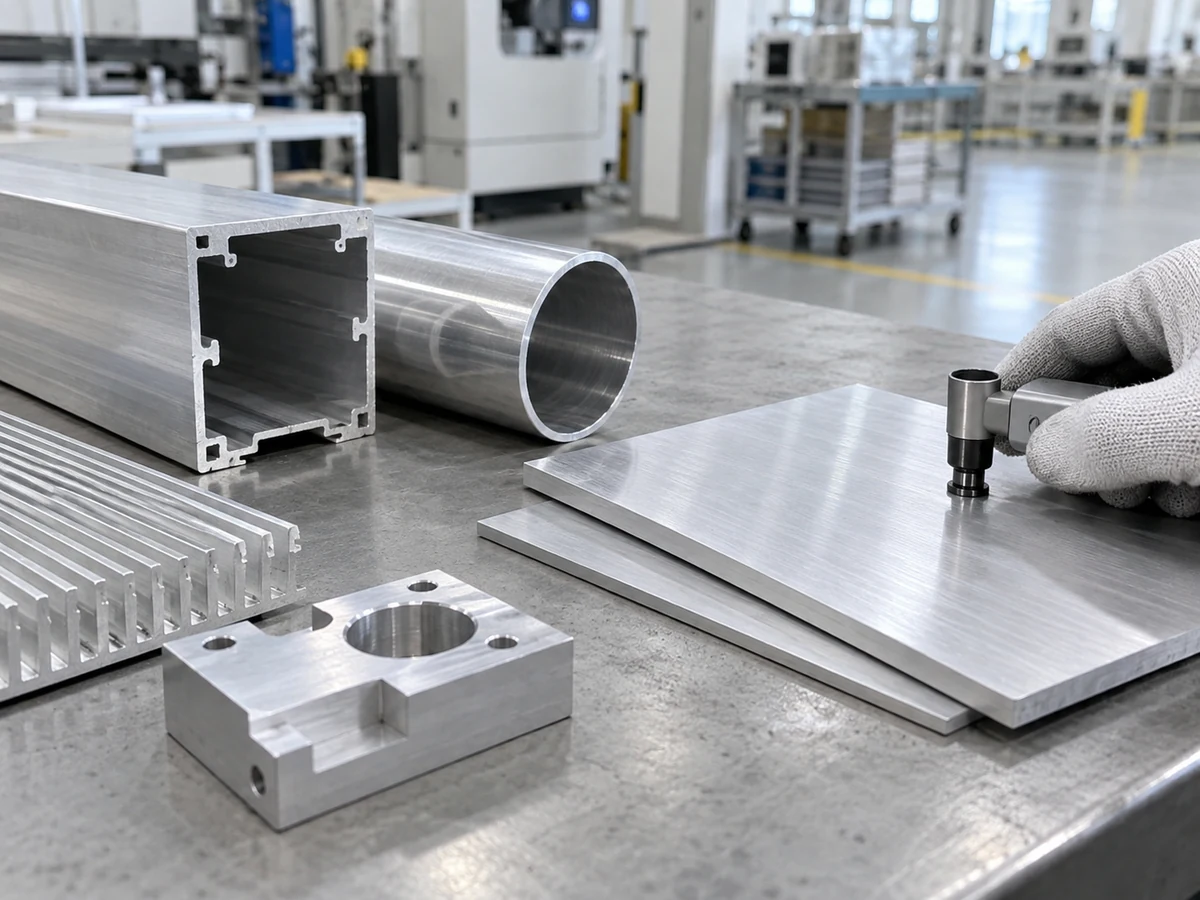
For EV charger pedestal aluminum post cutting, include one drawing-linked inspection sheet for the actual cut blank. It should identify the section and revision, stock batch, datum face, measured length, end-squareness method, burr criterion, visible-face condition and traceable first-off sample. Photograph the end and any mating base or cap interface. Then have the assembly owner test the first completed pedestal against the approved charger and base details. Record pass, rework or drawing change before authorizing a longer run.
An inspection bench image can explain this discipline, but it cannot substitute for a measured piece from the project.
7. Send an RFQ that can be tested
| RFQ field | What to supply | Approval owner |
|---|---|---|
| Part identity | Released post, cover and base drawings with revisions | Pedestal designer |
| Cut scope | Stock section, quantity, lengths, datums and end requirements | Cut-blank buyer |
| Fixture trial | Actual profile, reference face and longest/shortest samples | Saw supplier and buyer |
| Finish and pack | Visible faces, coating stage, edge treatment and protection | Finisher and buyer |
| Final fit | Base, charger bracket, cable route, anchors and assembly check | Pedestal system owner |
This separation also distinguishes a pedestal column from an EV charging cable arm, where reach and hinge interfaces control another parts list. Our broader charging-station manufacturing route covers shells, cooling and other components that are outside this post-blank RFQ.
See a general cutting-equipment demonstration
The following Jiurun channel video shows a general aluminum extrusion cutting machine. It does not show an EV charging pedestal, this post profile, a customer first-off or verified charger performance.
Request a post-blank cutting review
If your team has released aluminum post drawings, actual stock samples and a named assembly approver, contact JiurunCut with the straight-member cut list. State what the saw supplier is expected to deliver and who will approve the completed pedestal. That makes a trial measurable without implying that a profile cut certifies a charging system.