
ESD workbench aluminum frame cutting starts with a structural member, but the buyer is usually purchasing for a workstation that must later have an approved electrostatic discharge control path. A clean saw cut cannot by itself prove that the assembled bench is suitable for an ESD protected area. The RFQ should therefore define the cut blank precisely and name the party that will design, connect and verify the finished workstation.
This guide is for a workstation OEM or authorized fabricator buying straight, saw-cut aluminum frame members. It is not an ESD workstation design, an electrical installation instruction, or a claim that JiurunCut has tested the bench in the examples below. Use the released frame drawing and your ESD control plan for the actual product.
Why the ESD handoff changes the cutting RFQ
Aluminum-framed ESD workbenches are a real product category: Treston describes an aluminum-profile WB workbench with an ESD-protected option. However, the frame, work surface, wrist strap point and ground connection are separate elements of the finished station. The ESD Association describes common-point grounding and workstation verification. The saw supplier needs to know which cut-member faces, slots and downstream interfaces matter; the system owner must retain the ESD design and acceptance decision.
A particularly important purchasing trap is assuming that a metallic section guarantees an electrical path through every joint. A finish, cover, fastener or assembly method can change the intended connection. item’s workstation guidance describes the frame and its earthing connection as part of an ESD bench system. For one specific product, item describes an ESD fastening set whose screw breaks the anodized surface to make contact between two profiles. That example is not an instruction to alter another system’s coating or hardware; your released connection design controls.
Seven RFQ checks for ESD workbench aluminum frame cutting
1. Release the exact frame family and drawing revision
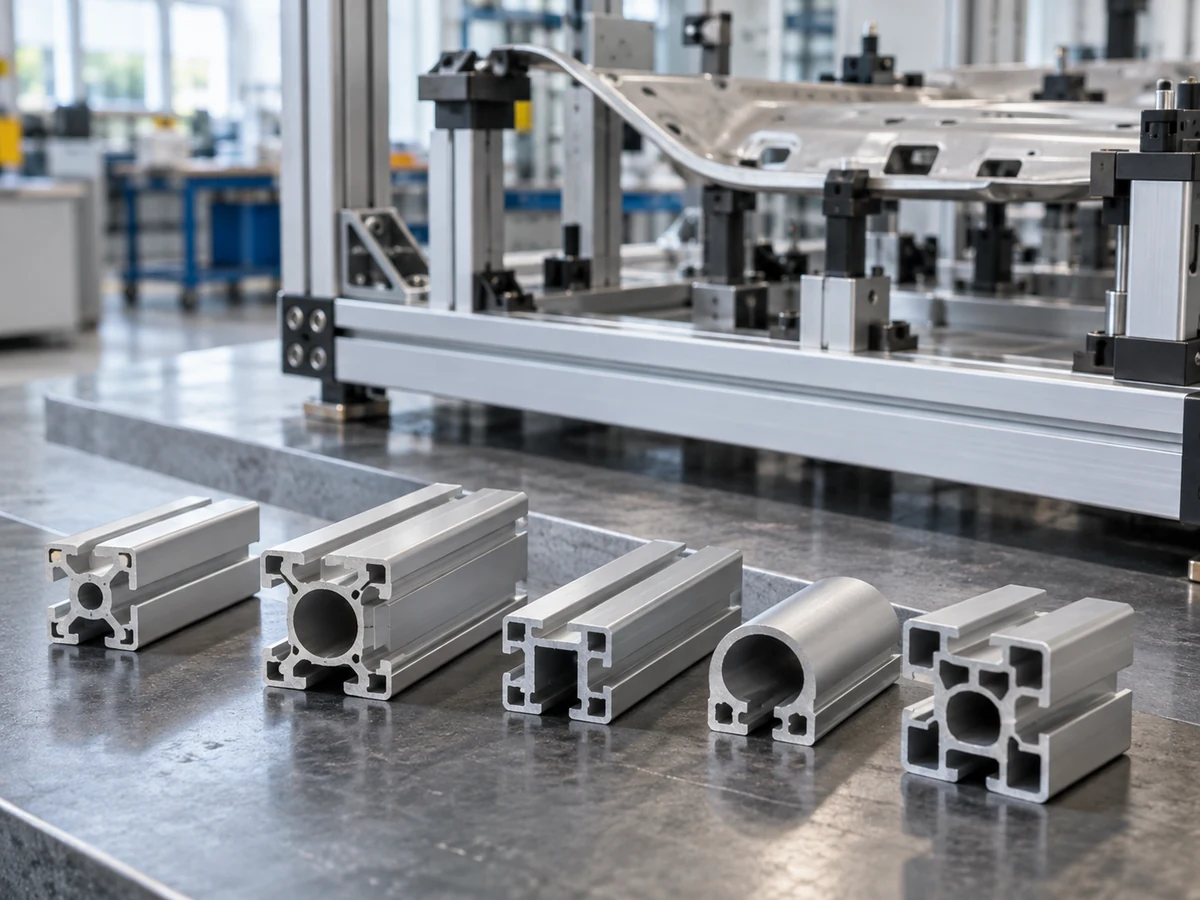
List the profile code, alloy and temper if specified, finish, cross-section revision and member location for every line item. Distinguish legs, cross members, overhead uprights, shelf supports and accessory rails. A T-slot profile with a similar outer size can still have a different slot or cavity arrangement. The RFQ should identify the approved section rather than ask the cutter to infer it from a bench photo.
2. Define the purchased cut blank, not the finished bench
State whether the supplier delivers a straight cut member only, a deburred blank, or a member with separately specified holes or hardware. Give the length between named end-face datums, cut angle, tolerance and any first-off sample quantity. A workstation width is not automatically a saw length: feet, corner connectors, end caps and joining gaps may change the cut list. Keep the approved cut schedule attached to the same drawing revision used for inspection.
3. Mark interfaces that the downstream bonding design uses
Ask the workstation designer to mark any face, slot, hole or end interface used later for a bonding or grounding connection. The cutter should know which surfaces must remain identifiable, clean and unaltered, but should not invent a contact point by scraping coating or modifying an anodized face. If the approved design requires a preparation operation after cutting, name its owner, drawing, process and inspection stage in the RFQ. The system owner should verify the assembled connection under its ESD program.
4. Protect the functional and visible surfaces during cutting
Tell bidders which slot lips, mounting faces, cable routes and visible edges must be free from clamp damage, trapped chips or unacceptable burrs. Ask how they will support the actual section, especially a hollow or thin-walled member. Agree on an inspection method for end squareness, burrs, finish marks and slot clearance. A generic clamp photograph or a trial on a different extrusion is useful for discussing method, but it is not acceptance evidence for your released profile.
5. Trial the cut on the actual stock condition
Supply the profile revision and finish condition that production will use. A representative trial should cover the shortest and longest released members that challenge support or handling, plus materially different sections if they share the order. Record the stop datum, support layout, first-piece length, end condition and any relevant slot or joint fit. If stock batches or finishes change, decide who authorizes a repeat trial. For a deeper mechanical trial checklist, see our industrial workbench frame saw-trial guide.
6. Keep ESD acceptance with the workstation integrator
Separate three decisions in the purchase order. The saw supplier can accept a cut member against its drawing. The frame builder can check joint fit and hardware. The ESD program owner can verify the completed workstation, including the work surface, common point ground and any intended frame connections. Do not treat a clean bare-aluminum end face, a continuity guess, or a machine demonstration as proof of an ESD-protected workstation. If the order includes electrical hardware or installation, add a distinct controlled acceptance document and qualified owner.
7. Label and pack members for the correct station and revision
Specify labels for profile code, drawing revision, finish, cut length, station or kit position, quantity and stock lot where required. Keep different members physically separated so a wrong-length cross member or a visually similar non-approved section cannot enter assembly unnoticed. Protect the approved contact and visible surfaces from handling damage without assuming packaging alone preserves electrical performance. At receipt, compare labels and first-off records with the released cut schedule before the integrator begins assembly.

Put the responsibility boundary into the quote
A concise RFQ can use the following fields. Fill them from your approved documents rather than copying another manufacturer’s dimensions or ESD claims:
- Cut member: released profile code, drawing revision, finish and kit position.
- Saw output: length datum, angle, tolerance, end condition, protected surfaces and first-off record.
- Downstream work: drilling, connector fitting, contact preparation, bench assembly and ESD verification owner.
- Delivery: label fields, lot segregation, packaging and receipt inspection.
For example: “Quote straight saw-cut frame members to the attached approved profile drawings and cut schedule. Preserve the marked slot and visible faces. Supply first-off measurements and separately labeled member kits. Bonding hardware, contact preparation, worktop installation and ESD workstation verification are outside the saw-cut blank acceptance and remain with the named integrator.” This wording is an illustrative scope statement, not a design approval. Replace it with your real drawing, acceptance criteria and responsibility matrix.
What the equipment video shows
The embedded video comes from Jiurun Machinery’s own channel and shows a general aluminum cutting machine. It does not show the ESD workbench frame, a grounding method, the cut-member trial in this guide or electrical-performance testing. Request a sample cut against your actual drawing before selecting a process.
Send a quote-ready frame package
Send the approved cross-section drawings, member cut list, finish condition, protected-interface map, mechanical first-off checks and the named ESD assembly owner. Ask each bidder to state what the quote includes and which downstream checks it excludes. Contact JiurunCut with your released aluminum profiles to discuss a representative saw-cut trial and machine fit. The finished workstation’s ESD acceptance remains with your qualified system team.