
Security screen aluminum frame cutting starts with the approved member schedule, not the overall window or door opening. A buyer may need straight aluminum cut blanks, a prepared frame kit, or a complete tested screen. Those are different deliverables. A saw quotation is meaningful only after the screen system owner identifies which frame extrusion, end form, finish state, and cut lengths the factory will actually retain.
A security screen is more than its frame. For example, Crimsafe’s commercial window specification describes an aluminum frame together with stainless mesh and a particular clamping and fastening system. Its door frame specification identifies a different frame application. These are examples of system-specific construction, not a claim that Jiurun supplies or qualifies either product. The buyer must use the current drawings and approvals for the actual system being produced.
Which item is the saw asked to produce?
Write the purchase scope in terms of the item that leaves the saw: a straight frame blank with an approved end, perhaps grouped with matching members. Mesh cutting, clamp installation, corner assembly, hinges, locks, installation and security testing belong to separate process or system scopes unless they are expressly included in another supplier’s quotation. A complete screen dimensions sheet cannot replace a cut-member drawing.
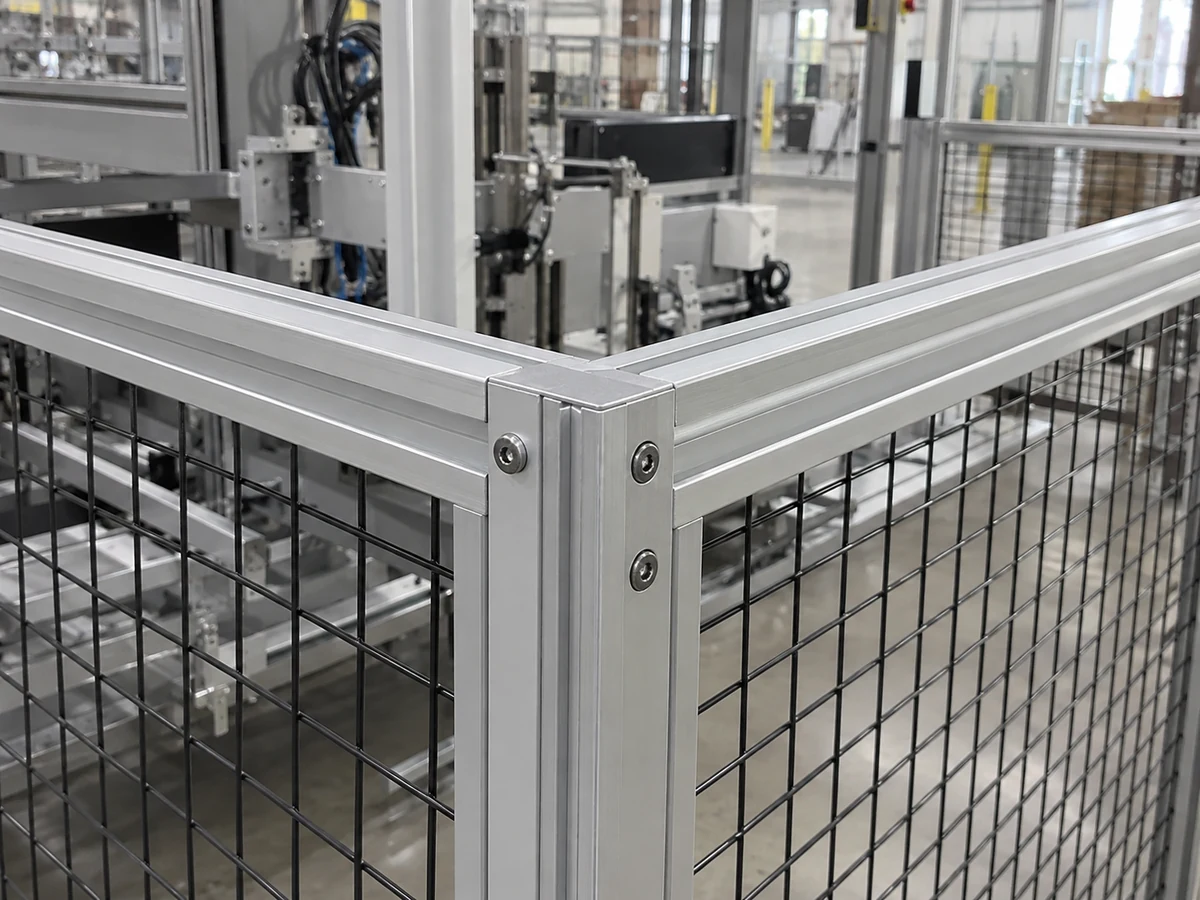
For a useful RFQ, classify each line as stock bar, saw-cut blank, prepared component, assembled frame, or complete screen. Ask the supplier to quote only the stage it can demonstrate. This prevents a cut-blank price from being compared with a frame or screen price that includes different work and liability.
Security screen aluminum frame cutting: seven RFQ checks
1. Identify the released system and exact extrusion
Provide the system owner, profile drawing number and revision, alloy and temper if specified, finish, and the intended window or door application. Do not substitute a visually similar window-frame extrusion because a photograph looks close. The mesh-retention feature, corner connection and mounting interface may depend on a specific section. If the supplied bars are proprietary or subject to approved sourcing, confirm that permission before arranging a saw trial.
2. Separate opening size from member cut length
An architectural opening, external frame dimension and individual saw length are not interchangeable. State the datum for every member and whether the drawing measures a long point, short point, outside face, inside face or square end. Name the cut angle and handedness where applicable. If a frame size is the only number supplied, request a system-authorized cut list rather than deriving a saw program from it.

3. Release the corner and end strategy
Show which members are mitered and which are square-cut. Identify corner keys, mechanical connectors or other joining features on the system drawing, but keep the saw’s acceptance limited to the assigned cut geometry. A clean miter alone does not establish corner strength, mesh retention or screen security. If later machining is needed for fasteners or drainage, list it as a separate operation and identify its owner.
4. Declare the incoming finish and handling state
Specify whether the machine receives bare extrusion, coated lengths, or stock with a removable protective layer. A finished visible face may need agreed contact surfaces, protective handling and cut-end appearance criteria. Record what may be marked, which surface is the datum, and whether cut ends are exposed after assembly. Never assume a saw trial on bare stock proves the finish quality of a coated production bar.
5. Test support and clamping on the actual section
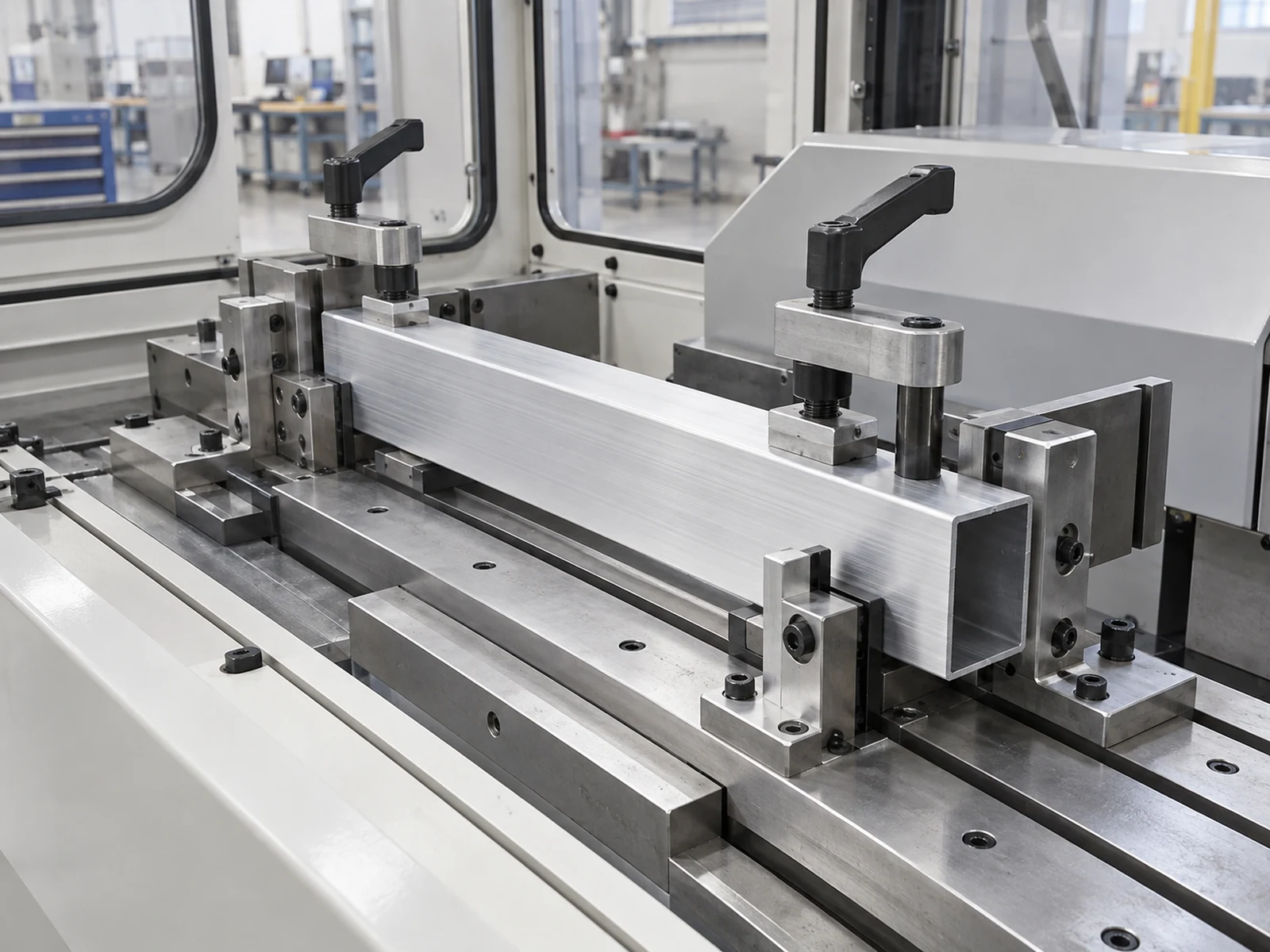
Send representative stock from the approved section family for a guarded trial. Observe long-bar support, feed stability, clamp contact, end condition and any visible section distortion. A hollow or thin-featured profile may require a different support approach from a solid bar. Request the proposed machine, blade and fixture configuration in writing; the generic equipment image below is only an illustration of the workholding question.
6. Inspect a first-off member set, not one attractive end
Check representative verticals, horizontals and any different section or angle family against the released drawing. Record length from the named datum, end angle, end-face condition, visible-face marks and part identity. Trial assembly by the screen system owner may reveal a fit issue, but that result should be traced back to the member and operation that caused it. Then agree how production batches are segregated and labeled by revision and opening type.
7. Keep security approval with the system owner
A saw supplier can demonstrate a cutting setup and measured cut blanks. It cannot infer impact resistance, mesh retention, emergency egress, installation suitability or compliance of the assembled screen from those blanks. The screen manufacturer or authorized system designer must own the complete product design, assembly instructions and relevant testing. Phrase acceptance accordingly: approve the cut member at the saw, and approve the screen under its separate system route.
What should the buyer send for a comparable quote?
- Approved profile section drawings and a revision-controlled member list.
- Actual stock length, alloy/temper and finish state for each family.
- Cut-length datum, angle, handedness and volume mix by member.
- Representative bars and a first-off inspection plan.
- Named owner of corner preparation, mesh and fastening operations, assembly and security approval.
- Required output stage: loose cut blanks, labeled frame kit or a separately sourced complete screen.
Quote the expected output at the same stage across suppliers. Include fixture and blade assumptions, trial scope, sample acceptance and any downstream work in the comparison. If you are still deciding whether to keep straight-member cutting in house, review our aluminum window frame saw-trial guide for a related approach to section-specific first pieces. A machine guard panel frame trial illustrates another frame-kit boundary; neither guide substitutes for a security screen system drawing.
Jiurun cutting-equipment video
The following Jiurun channel video shows another aluminum-profile cutting-equipment scene. It is general process context only. It does not show this security screen, an approved frame section, a customer trial or security performance evidence.
Common buyer questions
Can the saw quote use the finished opening width?
Only if the system owner has converted that opening into a released member cut list with clear datums and joint allowances. Otherwise, the opening width is a design input, not a saw setting.
Can a generic aluminum extrusion prove the frame will work?
No. It may help discuss support and clamping, but the accepted trial must use the approved profile and finish state or a specifically authorized representative sample. Screen compatibility and security remain separate approvals.
Should the RFQ include mesh and screws?
List them as separate deliverables or downstream responsibilities. A saw-only scope should identify the interface they impose on the cut members without silently pricing or certifying the complete screen.
Need a saw quotation for approved aluminum frame members? Send Jiurun the released profile drawing, cut list, stock and finish state, sample bar and acceptance criteria through our contact page. We can discuss a cutting trial for the defined blanks while the screen system owner retains full-product approval.