
Aluminum extrusion cut length after aging is a handoff question before it is a saw-setting question. A mill may saw a stretched extrusion before it enters an age oven, while a fabricator may cut that aged length again to the finished part drawing. If an RFQ says only “cut to length,” two suppliers can price different products and both believe they followed it.
The useful distinction is the length accepted at each handoff: a transportable mill length, an intermediate fabrication blank, or a finished member. The person who releases the final drawing must identify which cut controls the delivered length and who checks it. A saw photo or a general machine demonstration cannot establish the temper, cut stage, or tolerance of a particular order.
Two cuts can appear in one extrusion route
In a common process description, an extrusion is cooled, stretched and sawed to a chosen length, then aged. Hydro’s extrusion process guide also describes cutting and other fabrication as possible steps after adequate aging. Bonnell Aluminum describes sawing stretched extrusions before transfer to age ovens. These are process examples, not a universal rule that every order must receive two saw cuts.
The earlier cut can produce a shippable mill length or, where the agreed specification allows it, the final ordered length. The later cut can turn aged stock into drawing-length parts. The Aluminum Extruders Council’s process overview likewise lists cutting as a possible fabrication step after aging. Ask which route applies to the stock actually being quoted.

What the pre-aging saw cut does—and does not prove
A press-line or mill saw cut may make a stretched profile manageable for the next operation, storage or dispatch. Its nominal length can be chosen for the age-oven load, stock handling and later part yield. That length is an input for the next buyer unless the purchase order explicitly makes it the finished delivery dimension.
Do not infer drawing tolerance from a mill’s stock-length label. The supplier should state the measuring datum, permissible length range, end condition and whether any subsequent trimming allowance remains. If the mill sells finished-length profiles directly, its own certificate and inspection release should identify that scope. If the fabricator buys mill lengths, the fabricator needs enough usable stock after any required end crop, kerf and rejected sections. Our separate guide on the first-end crop and saw datum covers the start-of-stock allowance.
Aluminum extrusion cut length after aging: what changes?
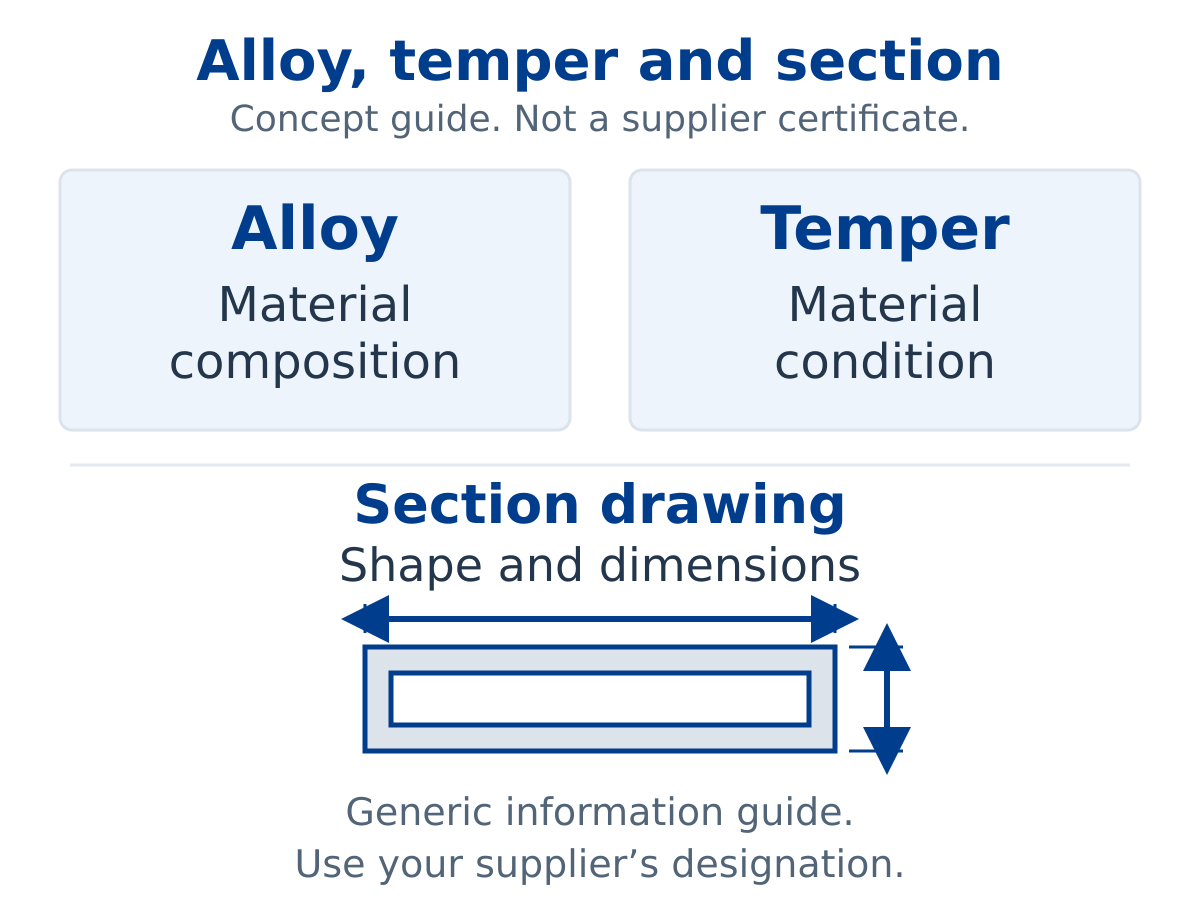
The aged profile is the saw input. Its alloy, temper designation, section, straightness, surface condition and available stock length must match the approved order before a machine trial is meaningful. A post-aging saw operation can then control part length and cut-end quality for the drawing, but it does not by itself certify the material temper. Obtain the material record from the responsible material supplier and keep it linked to the cut batch.
Place the acceptance measurement at the state in which the customer receives the part. If the part will be anodized, drilled or assembled after cutting, specify whether those downstream operations can change the relevant datum or require another check. For angled ends, distinguish overall length from the specified reference span. For a hollow or multi-cavity section, agree on the support face and how the end is held for measurement. The drawing, not the saw display, controls acceptance.
Who should own the final length?
Assign one party to each release point, then name the party that signs off the delivered part. Three practical arrangements illustrate the difference:
- Mill supplies stock lengths: the mill confirms the accepted extrusion and stock-length range. The downstream cutter owns the finished member length and its first-off inspection.
- Mill supplies finished lengths: the mill or its contracted cutting cell owns drawing-length acceptance. The buyer should still agree whether ends, burrs and packing are included.
- Buyer supplies aged stock to a saw shop: the buyer owns material identity and incoming release; the saw shop owns the cut process and the stated cut-part checks. The purchase order must describe how nonconforming incoming bars are handled.
These are commercial handoff examples, not claims about any JiurunCut installation or a customer contract. If two parties share inspection work, write the division into the quotation. “Supplier to check length” is too vague when the supplier could mean a stock bar, a first-off part or every delivered member.
A simple yield example exposes the gap
Suppose an RFQ asks for 600 mm members and the mill offers nominal 6 m aged bars. Dividing 6,000 by 600 suggests ten pieces, but that arithmetic is not a production yield. It ignores the accepted stock-length spread, first-end trim, blade kerf, tail reserve and any unusable surface or straightness section. Ask the cutter for a layout based on the actual incoming range and the approved first-off sample. State whether the quote is per accepted part or per input bar; otherwise scrap responsibility is hidden in the comparison.
For an exact-length order, do not silently transfer a mill-length tolerance to the finished-part tolerance. Put both numbers and their measurement methods on the same RFQ sheet. If the buyer may accept a cut blank for further machining, name that blank length separately from the later finished dimension.
Seven fields to put in the RFQ
- Delivery state: mill length, saw blank or finished member, with an explicit owner for the final cut.
- Material identification: approved alloy, temper, section drawing and revision; name who supplies and preserves the material record.
- Incoming stock: nominal and allowable bar lengths, straightness and visible surface limits, plus the disposition of unusable ends.
- Final geometry: part length, datum faces, end angle, permitted burr and any end-to-end or batch variation limit from the drawing.
- Process boundary: whether the quote includes end crop, deburring, washing, protective handling, drilling, finish or packing.
- Trial and inspection: representative stock, a first-off check, measurement tool and method, sampling plan and acceptance authority.
- Commercial basis: accepted parts per bar, scrap ownership, rework route, batch labels and the evidence delivered with the shipment.
For a saw purchase, provide the supplier with the hardest approved section and the real stock-length range. Ask it to show supported infeed, clamping, outfeed and a measurable first-off result on representative material. Do not treat a generic machine picture as a capacity guarantee or a trial report.

Use a saw demonstration for the right question
The following video from JiurunCut’s own channel shows a related aluminum saw in operation. It illustrates a cutting step only; it is not evidence of the material, temper, stock route, customer order, final tolerance or performance discussed above.
Decision before you place the order
Ask for one marked-up flow: extrusion and stretch, the mill saw cut, aging, any later fabrication cut, inspection and shipment. Put a responsible party and an accepted length at each handoff. This makes it possible to compare a stock-length quote with a finished-part quote without assuming they include the same work.
If you are assessing an aluminum cutting setup, send the approved profile drawing, alloy and temper record, actual stock-length range, finished cut list and required inspection method through the JiurunCut contact page. We can discuss the saw-cut portion and the sample trial needed to evaluate it; material certification and downstream part approval remain with the parties named in your order.