
A library book return sorter can look like one purchasing item, but the aluminum frame members around a return opening, conveyor, diverter, access door, and bin interface are only part of the system. If you need cut profiles for an OEM frame kit, a saw supplier needs a controlled member schedule and acceptance plan. If you need a working automated material handling installation, the scope also includes identification, transport, sorting logic, safety design, commissioning, and service. This guide helps a buyer define library book return sorter frame cutting without mistaking cut metal for a complete sorter.
Start with the equipment boundary
Published automated material handling descriptions from bibliotheca and Lyngsoe Systems describe return/check-in and sorting systems with configurable modules. Those descriptions are useful context for where structural members may sit, but they do not define a Jiurun project, frame drawing, or approved material. Ask the system integrator to mark the book path, service access envelope, load paths, conveyor or chute mounting points, and interfaces to bins before releasing a cut list.
A useful RFQ states whether the order covers loose cut members, a labeled cut kit, machined and drilled members, assembled frame modules, or the complete automation package. Jiurun supplies industrial aluminum and nonferrous metal saw cutting equipment; a saw purchase or cut-member plan does not include RFID/barcode identification, controls, guarding design, or system performance validation. Keep those responsibilities assigned to the appropriate system supplier and integrator.
Featured image: a general assembled aluminum equipment frame that illustrates possible structural-member interfaces. It is not a library return sorter, a customer installation, or an approved configuration.
Turn the layout into a member schedule
For each member, identify the extrusion drawing and revision, alloy and temper if relevant, profile orientation, finished length and datum, end geometry, hole or slot operations, quantity, and destination within the frame. A sorter can have visually similar rails with different interface duties. A conveyor support rail, service-panel upright, and bin-side crossmember may share a profile family yet require different cut lengths or end access. Name them separately on the cut list.
Separate the saw cut from later work. If a member requires drilling, tapping, milling, or assembly, say whether those steps are inside this RFQ or follow the saw operation. A drawing that only gives an overall frame envelope is insufficient to set individual member lengths: joint style, bracket thickness, corner treatment, and installed datum can change the blank length. Confirm the mating stack-up with the frame designer before requesting a cutting accuracy commitment.
Library book return sorter frame cutting: seven RFQ checks
- Profile identity: supply the section drawing, mass and wall details needed for holding and blade selection, and mark cosmetic faces that need protection.
- Part datum: define where length is measured, which end is the reference, and whether a miter, cap, or bracket changes the inspection point.
- Cut geometry: distinguish square ends from angled ends and identify left/right hand orientation where a pair is mirrored.
- Quantities and mix: show quantities per sorter module, expected batch size, repeat orders, and any spare members separately.
- Acceptance: state drawing-specific length, squareness, burr, and surface criteria. A published machine figure is not an automatic part acceptance limit.
- Identification: require part number, revision, module, orientation, and lot or batch reference on the kit label so similar rails do not get swapped.
- Delivery boundary: define protection, bundle order, included fasteners, and whether first article samples or assembled trial fits are separately required.
Plan the saw handoff around the longest and shortest parts
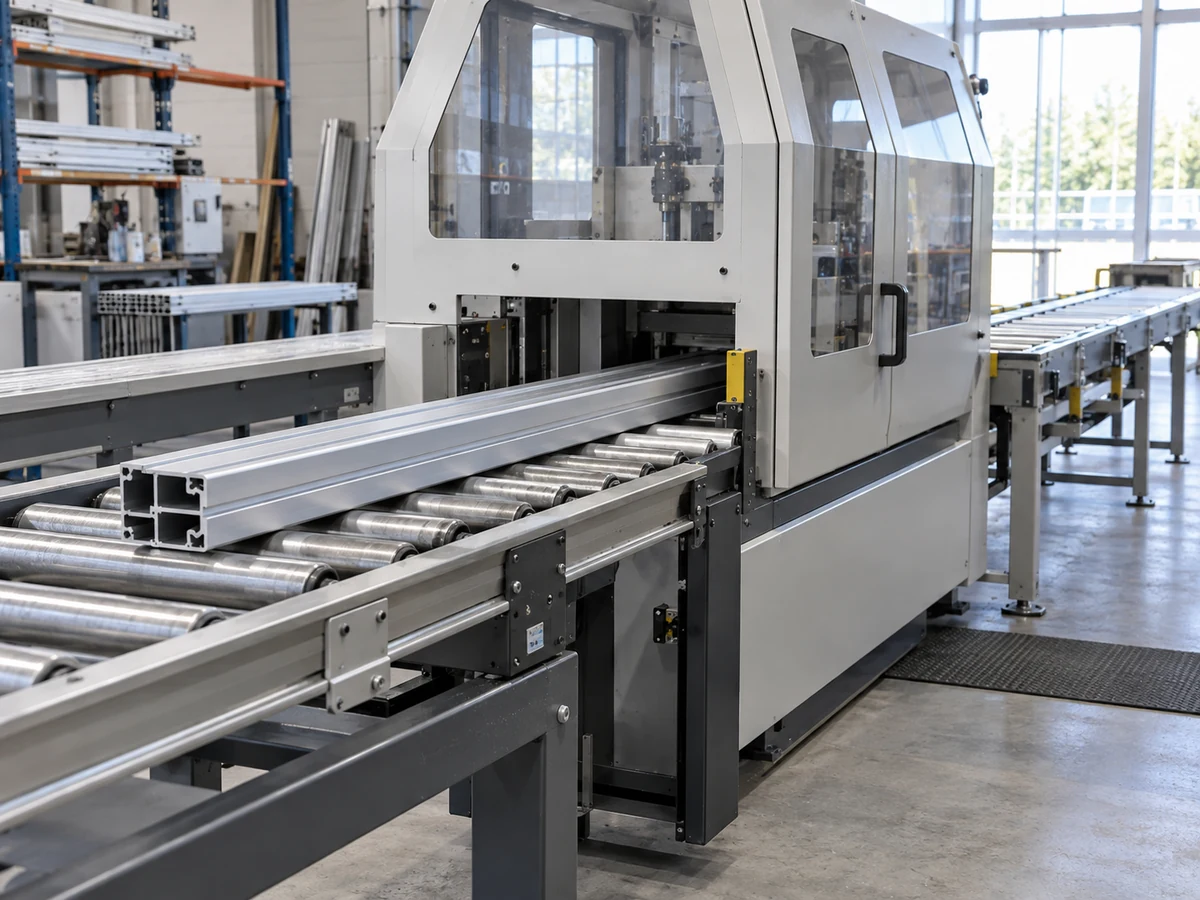
Check stock length, usable support span, feeding method, and outfeed handling against the actual profile and member list. Long rails need support through the feed and cut zone so that movement does not change the reference. Short crossmembers need a safe, repeatable hold and a defined offcut path. The buyer should send the real section and cut schedule for a supplier review or representative trial. Do not infer capacity, tolerance, cycle time, or material yield from a general equipment image or video.
For mixed modules, group cuts by section and setup where sensible, but preserve part identity through sorting and packing. If appearance matters near a patron-facing return, identify the exposed face and required surface protection. If a member is hidden inside a guarded machine envelope, its functional interfaces and maintainability may be more important than finish appearance. The purchase specification should make that distinction explicit.
Approve the first article and the fit separately
Measure the first article against its released part drawing, then check a representative mating joint or module build against the integrator’s frame drawing. Record the actual measuring datum, tool, result, part revision, and disposition. An acceptable standalone cut does not by itself prove that conveyor height, chute clearance, access-door swing, or bin alignment will be correct after assembly. Those are system integration checks.
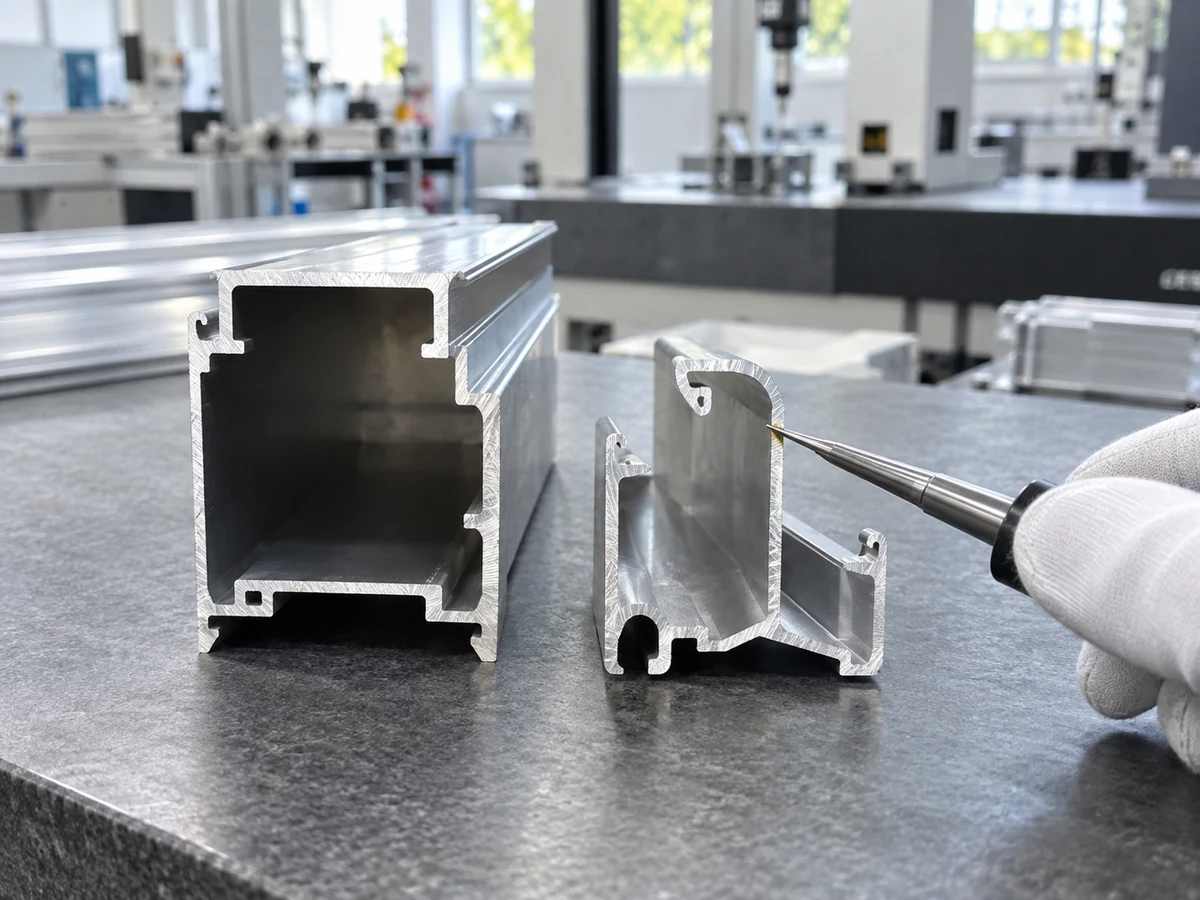
When a profile changes, a joint detail changes, or a supplier substitutes stock, repeat the relevant fit and cut checks before releasing a full kit. Retain drawing revision and approved sample identifiers in the purchase record. This reduces the chance that a later batch fits the old frame but not the revised sorter module.
How to compare a cut-kit quote with a complete sorter quote
Ask a cutting equipment supplier for the profile envelope, feeding/holding concept, cut geometry supported by the proposed configuration, sample-plan conditions, and scope exclusions. Ask the system integrator for book identification, conveyor and diverter design, guarding and risk assessment, controls, software, installation, commissioning, and acceptance tests. The two quotes solve different problems. The AMH product examples above show why a functioning return sorter includes more than structural members.
For a related equipment-frame saw selection discussion, see aluminum saw selection for industrial equipment frames. For another station-frame purchasing boundary, see parcel dimensioning station frame cutting. These examples inform RFQ structure; neither is a library sorter validation.
Related Jiurun equipment video
The following video from Jiurun Machinery’s YouTube channel is a general aluminum saw equipment and cutting-process example. It does not demonstrate a library book return sorter, the material or configuration in a particular RFQ, a customer installation, a trial result, or performance of a proposed system.
Send a useful RFQ
For library book return sorter frame cutting, send the released extrusion drawings, member schedule, module layout, cut-end requirements, tolerance and finish criteria, sample quantity, and the boundary between cut parts and complete automation to Jiurun Machinery. Ask for a review of the proposed saw setup against your real sections and part list. Confirm any promised result only after a documented trial with the agreed material, configuration, and inspection method.