
Rowing shell rigger aluminum cutting is a useful quotation topic only after the buyer identifies the straight aluminum members that actually remain to be cut. A finished rigger may arrive as a frame, a frame with oarlocks and pins, or part of a complete boat. Its visible wing shape and rowing span do not reveal the length of a raw blank. A saw quotation should name the released component and the handoff after cutting, not promise to make or certify the complete rowing assembly.
This guide is for rowing equipment manufacturers and component buyers comparing prepared parts with in-house sawing. It is not a rigger design, fit approval, rigging instruction or safety certification. The boat and rigger designers must approve the material, geometry, joining method, mounting interface and final use.
First decide which rigger is being bought
Published products show why the word “rigger” is too broad for a cut list. WinTech’s aluminium stern wing sculling rigger is offered as a frame only or as a complete rigger with oarlocks and pins. Its stern wing sweep version also distinguishes port from starboard and says backstays are sold separately. The WinTech International pair/double listing offers aluminium bow or stern wing options and carbon alternatives. These are product-architecture examples from another manufacturer, not Jiurun customers, drawings, trials or evidence that those products are made by sawing the pictured stock.
Mark the actual boat class, sculling or sweep use, bow or stern mount, side, rigger frame revision and supply route. Ask whether a factory cuts straight stock for the frame, trims an already formed member, purchases a complete frame, or receives a complete rigger with hardware. If no straight aluminum member enters the saw, a rigger-specific saw trial has no honest scope.
| Buying route | Possible cutting scope | Approval outside the cut |
|---|---|---|
| Complete rigger | Only separately released replacement or production blanks, if any | Frame geometry, oarlocks, pins, mounting and boat fit |
| Prepared frame member kit | Named straight members, end forms, quantities and cut inspection | Forming, joining, machining, coating and assembled frame acceptance |
| Long aluminum stock cut in-house | Section family, support, fixture, changeover and sample cut | Extrusion approval and every later rigger operation |
Seven checks for a rowing shell rigger aluminum cutting RFQ
1. Release a component-stage bill of materials
List each retained aluminum blank with its part number, drawing revision, supplied form, alloy or temper if controlled, quantity per rigger and receiving operation. Separate a main wing or arm from a brace, foot, mounting plate, backstay, pin and oarlock. Do not treat every metallic part in a finished-rigger photograph as a saw-cut aluminum extrusion. A carbon alternative may remove a presumed aluminum frame job entirely.
Identify sculling versus sweep, bow versus stern, and port versus starboard variants as separate lines when they differ. A sweep rigger’s side identity cannot be assigned from a generic symmetric sketch. The buyer should obtain the released drawing and variant map from the product owner before requesting equipment size, cycle-time or fixture advice.
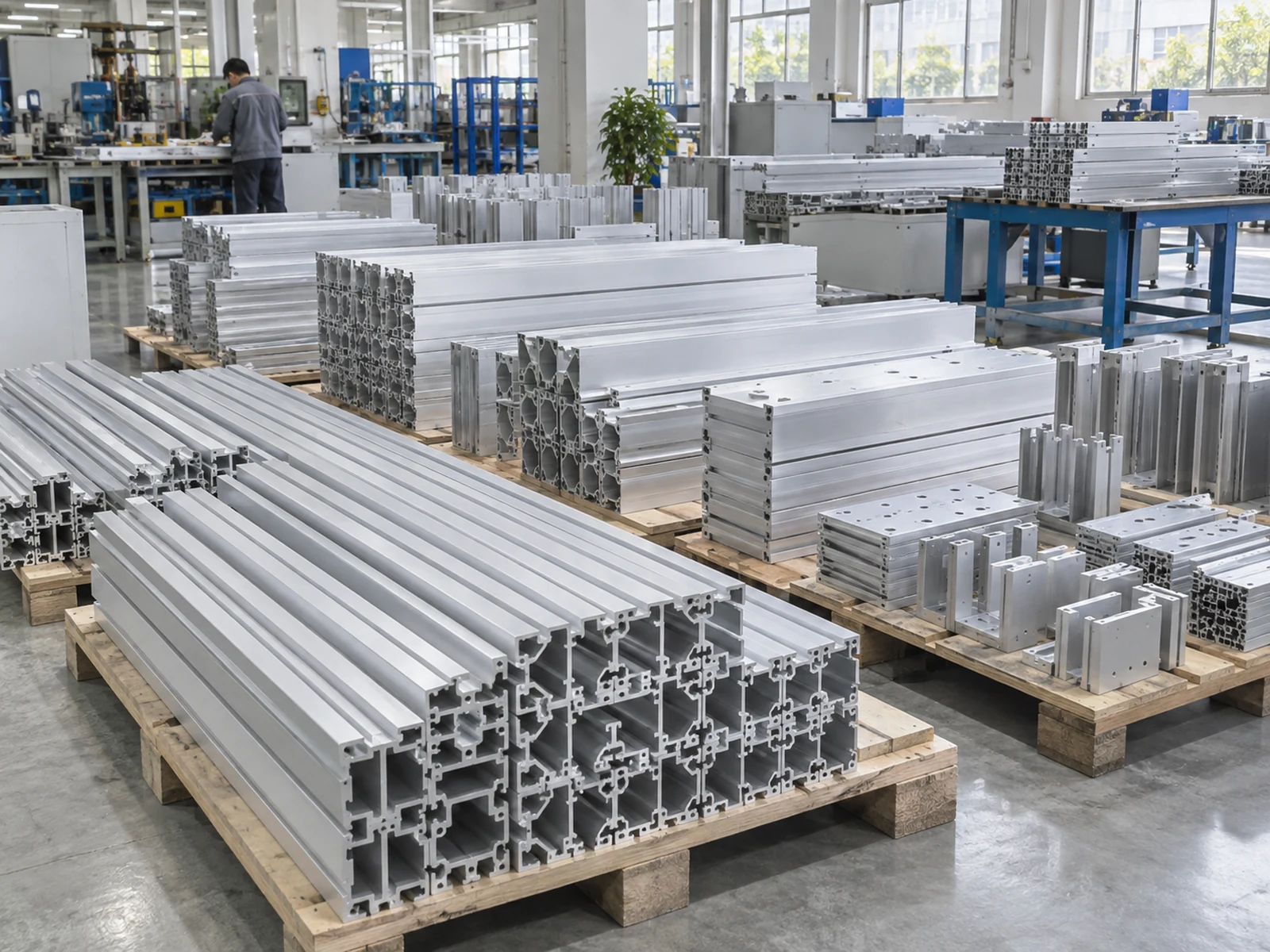
2. Verify the member section and how the wing is formed
An aluminium wing rigger can have a shaped, joined or otherwise specially made frame. The finished outline alone does not establish that a standard round tube, rectangular extrusion or simple planar miter is the starting material. Ask for the actual member cross-section, wall details, surface condition and the route from stock to the approved arm. The supplier should state which portions arrive as straight lengths, which are formed or pre-machined, and which are purchased as finished components.
Where a straight extrusion does exist, give a full section drawing and a physical sample long enough to show real handling. Define the face that may be located or clamped and the face that must remain unmarked. If the section has a flattened, airfoil-like or non-symmetric exterior, orientation can change how it sits in a fixture. The saw vendor should evaluate that released section, not infer compatibility from the word “aluminium” in a catalog listing.
3. Put the cut datum at the correct process stage
State whether the job is a pre-forming straight blank, a post-forming trim, or a replacement piece. A pre-forming blank length may include an allowance that the forming engineer controls. A post-forming trim may refer to a datum on a curved or joined member. Neither equals the visible span between oarlock positions, the distance between mounting points or the boat width. Those are system dimensions and may include offsets, bends and interfaces beyond the saw cut.
For each end, mark the measuring reference, orientation and required end form. If a cut end later becomes a drilling datum or a seating face for a connector, note that relationship explicitly. If the product owner has not released the developed length or trim reference, leave it as a drawing question rather than converting a photograph or assembled dimension into a saw setting.
4. Map mounting, oarlock and backstay interfaces
Rigger fit depends on more than blank length. Hull mounting points, pin and oarlock positions, foot geometry, braces, backstays and side-specific hardware can all affect the approved assembly. A straight saw cut does not make holes, slots, formed wings, welded joints or a rigging adjustment. Give the cutter the mating-part information needed to protect a reference face, then assign drilling, bending, joining and assembly to their actual process owners.
For a sweep version, confirm port and starboard identification and whether backstays are included or separate. For a sculling version, confirm that both oarlock-side interfaces belong to the same released frame revision. These checks belong to the rigger designer and assembly team. A clean sample cut does not prove the frame fits a shell, holds its intended geometry or meets on-water requirements.
5. Trial workholding on the real section and finish
Provide the actual longest stock, shortest part, most awkward section and finish state for a representative trial. A round hollow sample may need different support from a flattened or multi-cavity section. Check where the part touches stops and clamps, whether it can rotate or rock, and whether a visible face is protected. Observe the first-off setup and a normal changeover. Ask for evidence on length datum, end condition, burrs, marking and part identity under the agreed inspection method.
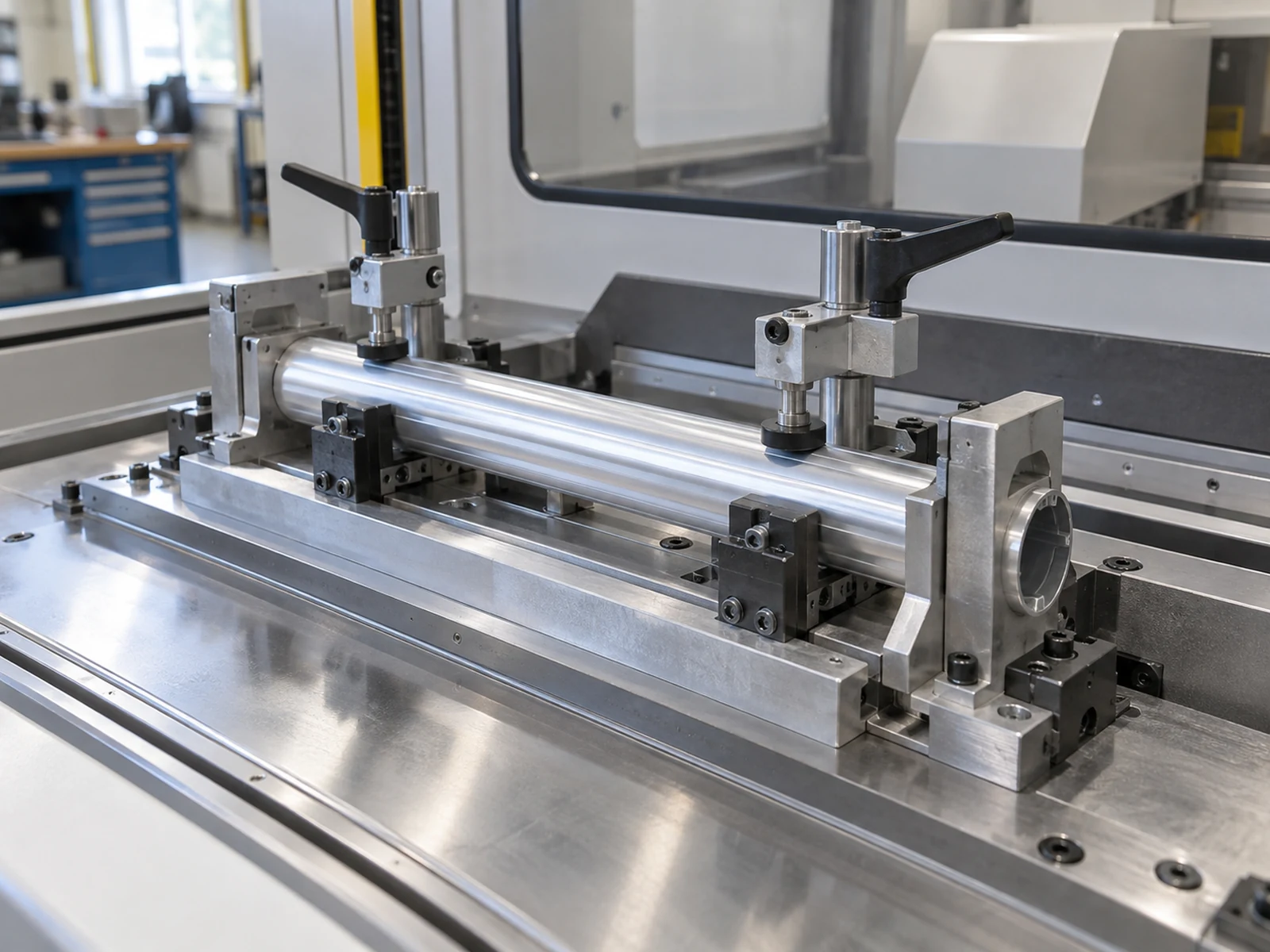
If the approved rigger member is not round, this photograph is only a reminder to test the real contact surfaces. It cannot qualify a shaped wing. Record which sample, drawing revision and configuration were actually used in any later customer trial.
6. Include full-length support and a defined handoff
Long stock needs a feed and receiving plan. Ask how the incoming length is supported, how an end reaches the stop, whether its weight changes alignment, and how a short cut piece is removed without damage. A table-top offcut cannot establish the behavior of a full production length. Include a piece after a typical stock change or setup reset so the trial checks repeatable locating rather than one carefully staged sample.
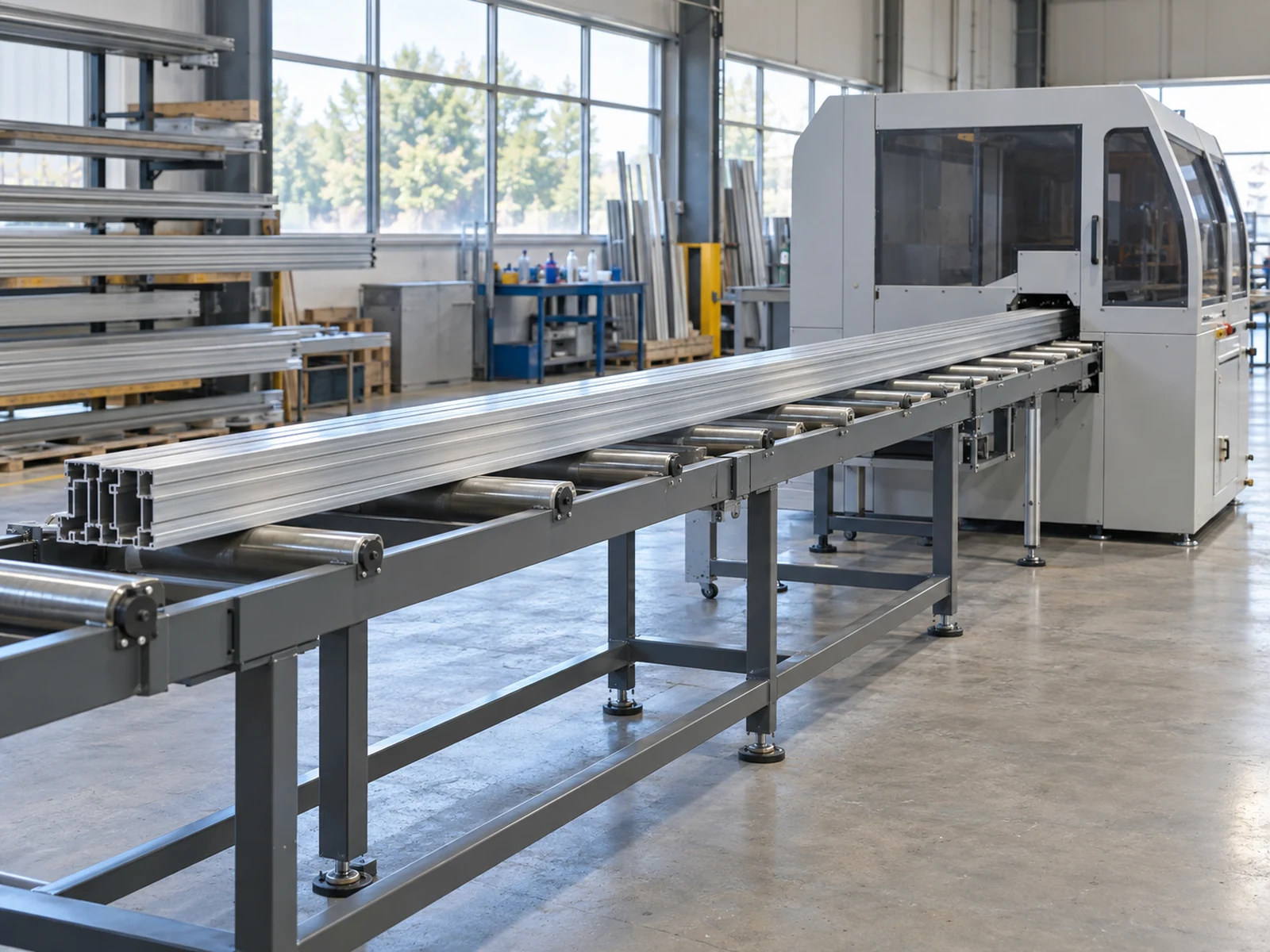
Define the accepted cut-blank package: part number, revision, side and mount position, quantity, protected surface, end orientation and inspection record. Keep suspect lengths separate. If the order is for a complete frame, write a different acceptance plan for forming, joining and fit rather than silently expanding saw-cut acceptance into an assembled-rigger guarantee.
7. Compare quotations at the same delivered stage
A complete rigger, a frame without hardware, a prepared aluminum member kit and an in-house saw are different purchases. Compare them at the same output stage. For a prepared kit, include stock supply, cuts, identification, first-off inspection, rejects, finish protection, packing and delivery. For in-house cutting, include material handling, fixtures, setup, changeover, inspection and the forming or assembly work that still follows. A raw saw-stroke price is not directly comparable with a frame ready for mounting.
Ask bidders to list exclusions: oarlocks and pins, backstays, hull-side hardware, bending, welding, machining, coating, assembled fit and product approval. A cheaper quote can merely move those operations to the boat builder. Request a representative cutting trial on the buyer’s released member stock before selecting a saw configuration; any capacity or quality claim should refer to that actual trial and its stated limits.
What the Jiurun video can show
The video below shows Jiurun aluminum cutting equipment in general operation. It does not show a rowing-shell rigger, the buyer’s released material, a selected setup, a customer trial or rowing-product performance. Use it to start a conversation about feed, clamping and cut handoff, then ask for a separate trial on the actual approved member.
General Jiurun saw demonstration only; no rigger material, customer, fit or acceptance claim.
Send this rigger-blank RFQ package
- Released boat and rigger architecture, mount position, side and drawing revisions.
- A component-stage list marking which aluminum members actually enter a saw.
- Each member’s real section, material, finish, stock length and permitted contact faces.
- Pre-forming blank or post-forming trim route, with cut datum and end form.
- Mating hull, pin, oarlock, backstay and hardware interfaces, with operation owners.
- Representative longest and hardest-to-hold stock for first-off and changeover checks.
- Accepted cut-blank inspection, labeling, surface protection, volume and quote exclusions.
For a wider process overview, read JiurunCut’s aluminum extrusion cutting guide and profile cutting machine overview. To discuss a retained aluminum rigger blank, use the JiurunCut inquiry form with the released drawing and real stock sample. Jiurun can review a suitable cutting route for those parts; the boat and rigger owners retain design, fit and final-use approval.