
Volleyball net post aluminum cutting starts with a narrower question than “Can this saw make a volleyball system?” The saw can prepare a released aluminum upright blank. It cannot by itself create the height-adjustment mechanism, net-tensioning assembly, floor sleeve, base, safety padding or approved installed system. A useful request for quotation identifies the exact post member that the buyer will still cut and the point at which that member leaves the cutting process.
This guide is for equipment manufacturers and component buyers comparing prepared post blanks with in-house aluminum saw cutting. It is not a post design, installation instruction or structural certification. The volleyball equipment designer must approve the member, its mating parts and the final assembly.
First identify the system before listing cut lengths
Published equipment examples show why a generic “volleyball pole” specification is incomplete. Porter’s outdoor post description identifies square anodized aluminum posts, a groove on the winch post, a separate tensioning reel and separately sold net, pads and ground sleeves. Porter’s portable system instead describes telescoping aluminum standards and padded ballast bases. Sports Imports’ aluminum indoor system identifies an engineered pole cross-section and a pin-stop height-adjustment route. These are examples of different manufacturers’ architectures, not Jiurun customers, equipment trials or specifications for the reader’s project.
Confirm whether the buyer will cut a one-piece fixed upright, inner and outer telescoping members, a replacement section or no upright at all because a finished system is purchased. The net height and the finished post height are system dimensions. Neither is automatically the saw length of one raw extrusion.
| Buying route | Potential saw quotation | Separate approval |
|---|---|---|
| Complete net system | Only individually released service or production blanks, if retained | Post, net, ratchet, pad, base or sleeve, installation and system performance |
| Prepared upright blank | Named aluminum section, cut ends, count, identification and agreed inspection | Machining, height mechanism, hardware, assembly and installed safety |
| Long extrusion cut in-house | Stock family, workholding, support, changeover and representative cut trial | Extrusion manufacture and all downstream post work |
Seven checks for a volleyball net post aluminum cutting RFQ
1. Release the exact upright member and supply boundary
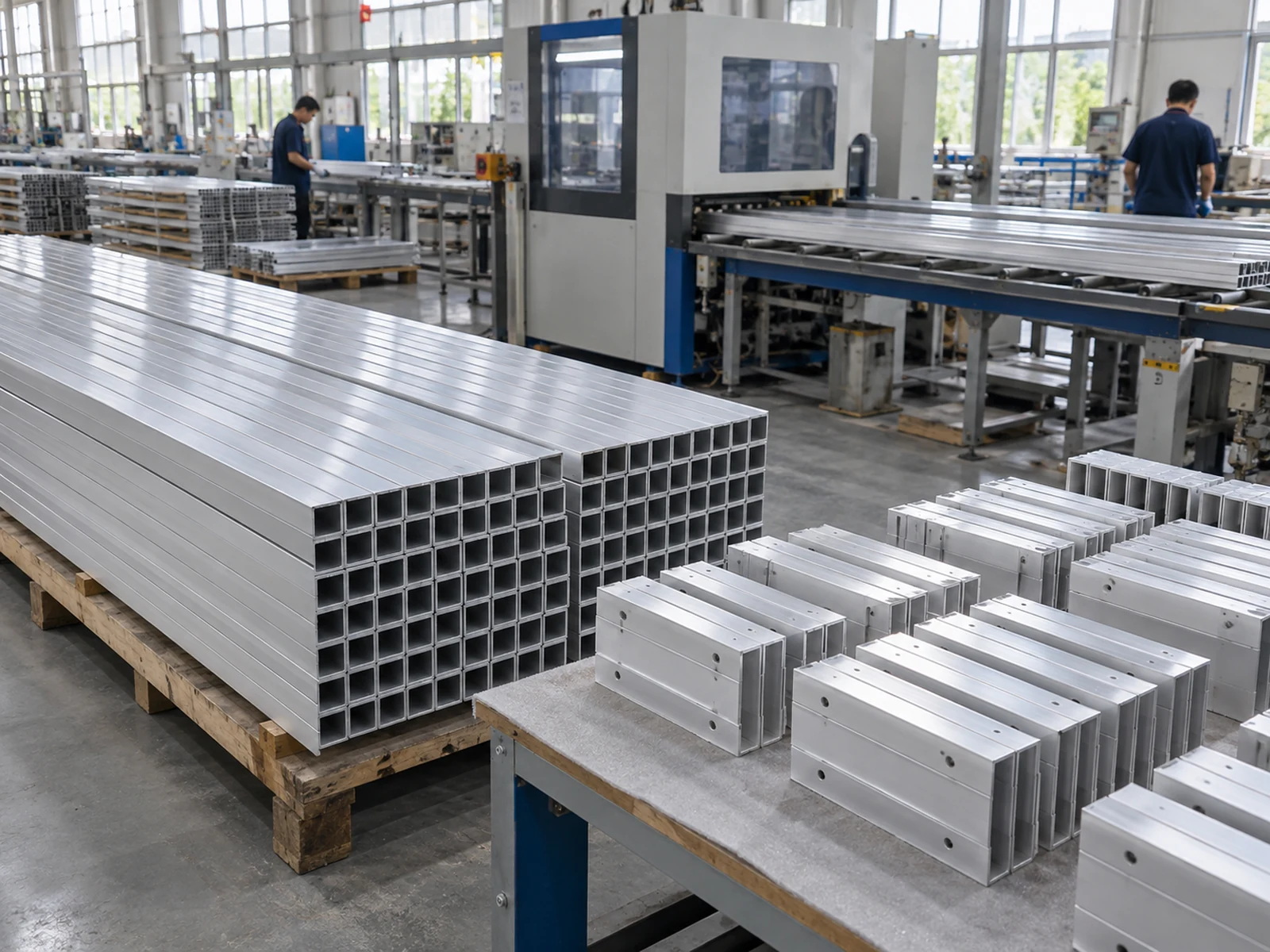
Send the current part drawing and revision for each retained aluminum member. State whether it is a fixed post, telescoping outer shell, telescoping inner section or an accessory rail. List quantity per system, left and right identity, normal batch size and whether the stock arrives anodized, painted, filmed or unfinished. Identify who supplies the winch, ratchet, cap, pin, sleeve, pad and net. A single “pair of aluminum posts” line cannot reveal which components enter the saw.
If one side carries the winch and the other side is a plain support, their profiles, cut orientation and later holes may differ. Do not assume a mirrored pair. The buyer should issue a part-by-part cut schedule rather than using a catalog photograph as a production drawing.
2. Give the real cross-section, not just an outside width
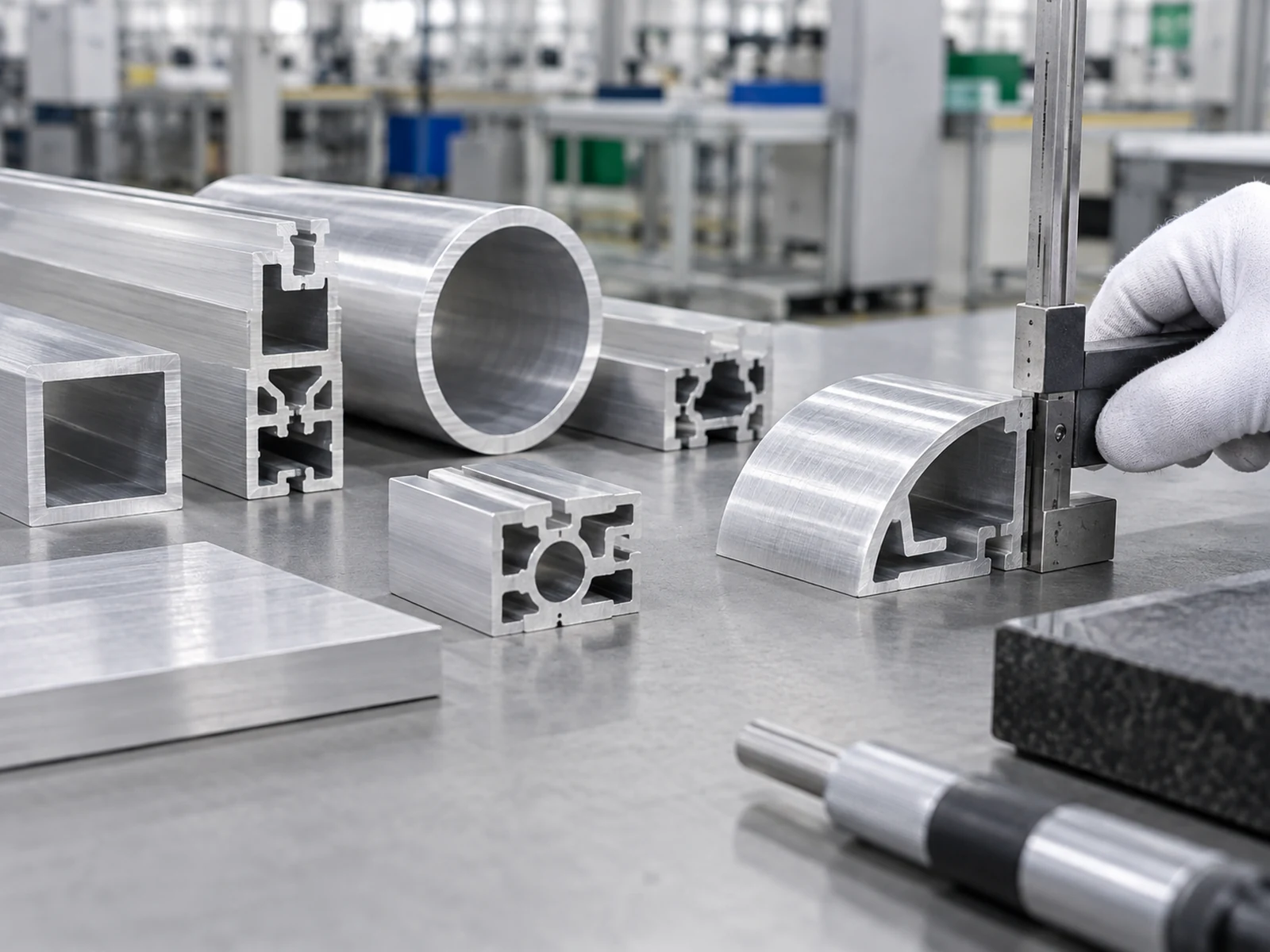
A post may have a square outside, a groove for hardware, internal ribs, a sliding interface or a particular visible face. Give the extrusion section drawing, controlled material and temper, wall details, and any allowable orientation. Where an inner member must slide, identify both approved sections and the mating interface. A generic square tube that happens to share an outside dimension may have the wrong wall, groove, surface or stiffness. The product engineer must approve the extrusion; the saw supplier should not substitute a section.
Mark the reference face that should contact a locator and the faces that may not be marked by clamps. If the stock is finished, agree whether protective film stays on for cutting, when it is removed and how its presence affects locating. A representative physical length is more useful than a small offcut for judging feed and support.
3. Separate installed height from the cut datum
Ask the designer to put the cut length on each member drawing, along with the two reference ends and the method of measurement. A fixed post may extend into a sleeve or adapter, while a telescoping outer and inner member overlap. Caps, plugs and adjustment hardware can change the visible height. None of these dimensions can be safely inferred from a net-height setting or an overall product listing.
Specify whether an end is square, angled or otherwise prepared, and which face is up when that end is cut. If one end later seats on a stop or receives a cap, show that mating part. If the cut end later establishes a drilling or slotting datum, say so explicitly. Record the acceptable length and end-form limits on the actual drawing instead of treating a saw maker’s generic positioning specification as finished-post tolerance.
4. Map hardware features and downstream work
Height adjustment, net tension and installation can require slots, pin holes, grooves, guides, anchors, plugs or machined interfaces. A saw cut does not produce those features. Tell the cutter whether it receives bare extrusion before later machining, a pre-machined length to trim, or a finished piece for replacement. Identify which end is the reference for each downstream feature and who owns that operation.
For a telescoping post, the product team should check travel and clearance using the actual approved inner and outer members. For a fixed outdoor upright, the product team should check the sleeve or anchor interface and installed height. Neither check is equivalent to a cut-blank inspection. Net tension, deflection, stability, anchoring and user safety need separate design and product acceptance.
5. Trial support and workholding on full-length stock
Long uprights present a handling problem that a small sample cannot show. Provide the longest and shortest stock lengths, actual cross-sections and finished surfaces. During a cutting trial, observe how the incoming length is supported, how it is located at the saw, where clamps contact it, and how the cut piece leaves the machine. Confirm that the section does not rock, twist or slide on an inappropriate reference face.
Ask for a first-off sample and a sample after a normal stock or length changeover. Inspection should cover the specified length datum, end angle or squareness, visible-face marks, burr condition and part identity. A generic machine demonstration is helpful for discussing workflow, but it cannot establish suitability for an untested post section.
6. Define the accepted blank and inspection record
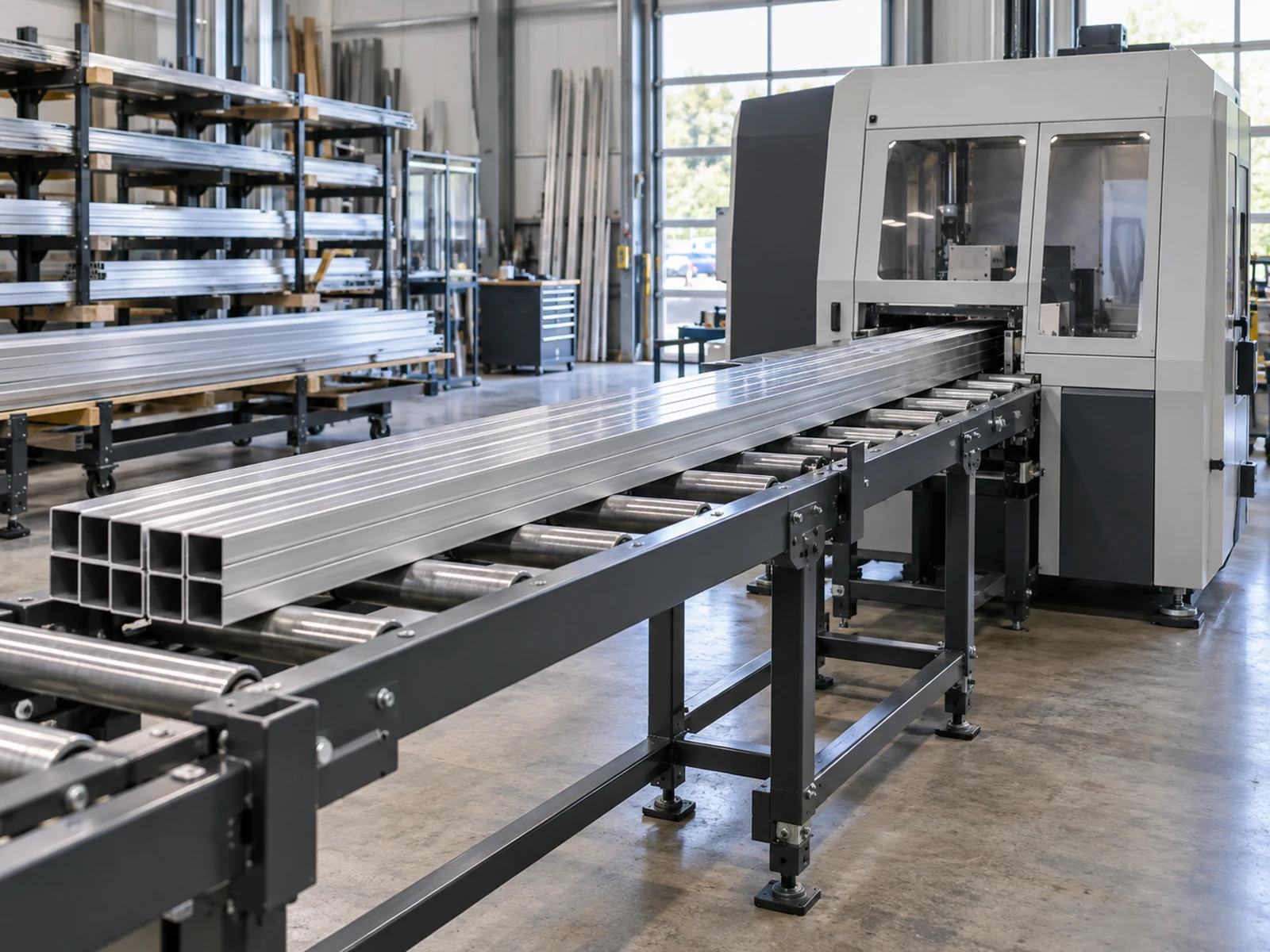
An accepted delivery should have more than a pile of lengths. Agree on part number, revision, outer or inner member identity, quantity, finish state, end orientation and packaging. Where a visible anodized face matters, specify the acceptable handling condition and separation between pieces. Keep rejected or suspect lengths out of the accepted kit and document the inspection method agreed for the cut stage.
If the customer wants an assembled post rather than blanks, ask for a separate assembly and product validation scope. A cutting supplier can report measured blanks against a drawing. It cannot certify the performance of a tensioned net system, ground sleeve, ballast base or user-facing pad on that evidence alone.
7. Compare bids at the same output stage
A complete net system, a prepared upright kit and an in-house saw are three different purchases. For a prepared kit, compare stock preparation, cutting, inspection, labeling, finish protection, rejected-part handling and delivery. For an in-house saw, include the real section family, support length, fixtures, operator handling, setup changes and downstream machining. Compare cost per accepted, identified member at a stated production volume, not the number of saw strokes against the price of a complete installed system.
Ask each bidder to list exclusions such as extrusion supply, drilling, slots, caps, winch hardware, sleeves, pads, installation and system approval. This makes a lower quote meaningful only when the omitted steps are accounted for by another supplier or the buyer’s own plant.
What the Jiurun saw video does and does not show
The video below shows Jiurun aluminum cutting equipment in general operation. It does not show a volleyball net post, an approved upright section, a specified machine configuration, a customer trial or post-system performance. Use it to start a workflow discussion, then ask for a trial on the buyer’s released stock and member drawing.
Send this upright-blank RFQ package
- Released post-system architecture and drawing revision; identify exactly which upright pieces remain aluminum cut jobs.
- Each fixed, outer or inner member’s section drawing, material, finish, visible face and quantity.
- Stock and cut lengths with reference ends, orientation, end form and inspection limits.
- Winch-side and plain-side differences, mating sleeves, caps and height-adjustment features.
- Full-length representative stock for feed, clamp, first-off and changeover review.
- Agreed cut-blank acceptance, identity, packaging and downstream operation owners.
- Quotation exclusions and expected volume at a comparable output stage.
For the general process, see JiurunCut’s aluminum extrusion cutting guide and profile cutting equipment overview. To discuss a volleyball-post upright blank, use the JiurunCut inquiry form to send the released section, member schedule, longest stock, finish and actual sample material. Jiurun can assess a suitable cutting route for those parts; the product owner remains responsible for the finished net system.