
Telescope tube blank cutting is relevant only when a manufacturer actually receives structural aluminum stock and prepares an unfinished tube or related metal member. A catalog listing for an aluminum optical tube does not tell a saw buyer whether that manufacturer cuts raw tubing, purchases a prepared shell, or buys a populated optical tube assembly (OTA). Start the equipment inquiry with the part that remains in your own factory. Then specify the incoming form, the receiving operation, and the evidence required for that handoff.
For context, Celestron describes its C6 as an optical tube assembly with an aluminum tube. Sky-Watcher likewise describes an aluminum tube on its Skymax 127. Those are finished-product descriptions, not disclosures of either company’s incoming stock, cutting process, saw supplier, or blank dimensions. The buying method below is a hypothetical production planning framework, not a claim about those brands’ factories.
Which supply stage reaches your factory?
Put the accepted incoming item on the purchase order before counting saw cycles. Four very different routes may all lead to a product described as having an aluminum tube:
- Structural stock: the factory receives an identified tube or other aluminum section and retains blank preparation.
- Cut blank: a supplier delivers an unfinished length already cut to agreed receiving criteria; the factory retains later features and assembly work.
- Prepared body: a supplier delivers a structural member with additional operations completed and accepted.
- Bought OTA: a supplied optical assembly arrives at an accepted assembly stage. Do not count its already completed tube preparation as a local saw job.
Do not infer that a visually similar round tube has the same alloy, wall, incoming condition, or released end geometry as a telescope member. A finished product’s aperture and focal length describe optical properties; they do not supply a raw tube cutting drawing. Metal named in an optical coating is also outside a structural bar or tube cutting workload.

Release the physical blank, not an optical specification
When structural cutting is retained, the saw quotation needs a physical input and an unfinished output. Name the stock form, approved section drawing, material and condition as supplied by the buyer, stock length range, blank length range, cut quantity, batch identity, and how the blank is supported and received. Define which faces are preparation faces and which later operations own the final interfaces. Record the inspection method and acceptance owner for each requirement. A blank end can be accepted for its own handoff without being presented as a finished cell seat, end-cap interface, or optical datum.
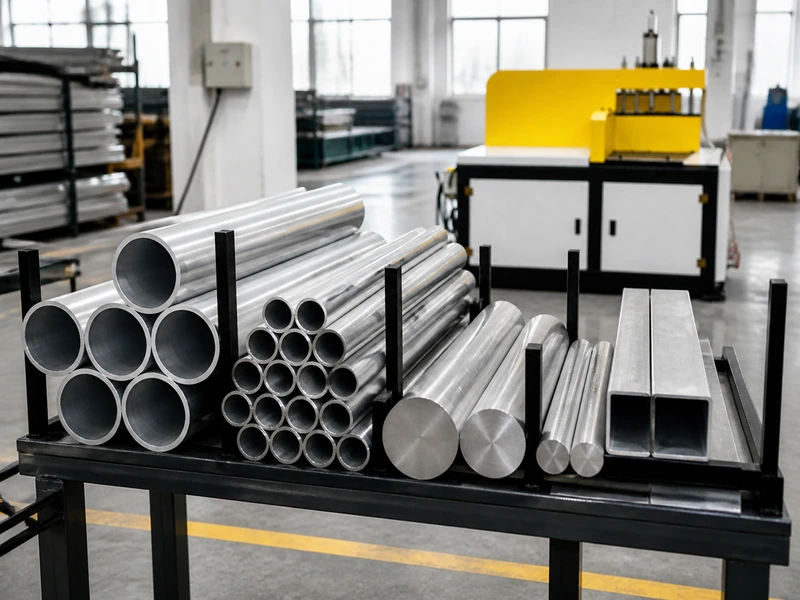
The illustration below shows several distinct aluminum forms. Its hollow round pieces are useful for discussing a possible tube route; the solid bars and rectangular sections show why the word “aluminum” is too broad for a machine recommendation. None of the pictured material is a telescope bill-of-materials item.
Keep structural and optical responsibilities separate
A cut structural blank may still require later machining, surface work, fastening features, separate bought parts, and assembly evaluation. Map each operation to the party that owns it. In particular, keep the structural body, its mechanical joining features, optical components, mounting parts, and complete instrument acceptance as separate release records. The saw inquiry should never be treated as authorization to recut a populated assembly or modify optical components.
Mechanical fit can matter where one metal member meets another, but it needs the actual mating-part drawing and an agreed measurement basis. Our guide to telescoping aluminum tubing fit checks shows a different application in which member identity and fit are kept explicit. It does not supply telescope tolerances. In a telescope project, the buyer must define its own structural drawing, revision, receiver, and acceptance method.
Telescope tube blank cutting: five questions for a useful saw RFQ
- What member is retained? Identify the structural tube or other aluminum component by family, part number, revision, and receiving operation. Remove bought bodies and assemblies from the local cutting count.
- What stock actually arrives? Supply the approved material, section, wall and length ranges, condition, and any batch traceability requirement. Do not derive these from an OTA product page.
- What is the blank handoff? Specify the unfinished length, preparation faces, quantity mix, inspection basis, and what later work remains. Separate blank acceptance from complete instrument evaluation.
- How will the work be presented? Describe handling, support, locating, clamping, changeovers, and ready receiving capacity for each real section. Ask for a trial on representative approved stock before treating an equipment proposal as a process result.
- Where is the constraint? Check whether later features, bought optical members, surface processing, or final evaluation limit accepted output. Extra cut blanks do not remove those constraints.
A feeder’s commanded repeat position is not itself proof of accepted cut length or finished assembly performance. Request evidence for the specified stock and blank criteria, with the measurement method and sample conditions recorded. Keep any machine capability statement bounded to that test.
Compare make and buy at the same accepted stage
For telescope tube blank cutting, compare two routes over the same period and the same accepted output. For retained structural work, count approved incoming stock, equipment and fixtures, setup, labor, handling, consumables, inspection, rejects, and remaining downstream operations. For a bought blank or body, include supplier price, transport, receiving inspection, lead time exposure, and the work still retained. For a bought OTA, include the assembly scope actually purchased and the remaining integration and evaluation obligations. Do not compare a raw tube price with a completed OTA price as though both deliver the same stage.
Useful capacity is the number of accepted members that reach a ready next operation, not merely the number of pieces cut. A saw may improve one structural step while an unavailable optical component or a later acceptance queue controls completed instruments. Keep those different measures visible in the decision.
Send the retained job, not a catalog telescope, for assessment
If your factory retains aluminum structural blank preparation, send Jiurun the approved stock section and condition, unfinished drawing, length and mix, receiving criteria, planned volume, and what the supplier already completes. State separately which optical or populated assemblies are bought. Contact JiurunCut with the bounded structural cutting inquiry so an equipment recommendation can be tied to the actual aluminum job. A quotation or sample review for that job does not certify an optical system or complete telescope.