
Aluminum saw for putter manufacturing is a purchasing question only after the factory identifies a metal member it will actually cut. A product name, head outline, or finished-club dimension does not show whether the buyer receives long aluminum stock, a prepared head body, a separate sole plate, or a complete assembly. Start with the retained work and its next receiver, then ask a saw supplier to assess a real input sample.
This guide is for manufacturing teams comparing a cut-blank route with purchased prepared parts. It does not prescribe putter design, milling, finishing, assembly, or play characteristics. The saw handoff described here is a separate, unfinished blank when that route is actually part of the factory’s scope.
Aluminum saw for putter manufacturing: begin with the bill of materials
Published products show why the metal boundary matters. TaylorMade describes the Spider ZT Max as having an aluminum body surrounded by separate heavy corner weights. Scotty Cameron lists the Newport 2 Plus as a 303 stainless steel head with a 6061 aluminum sole plate. These are different product constructions. Neither product description proves that a particular plant starts with bar stock or needs a saw for the aluminum component.
For each product family, name the member under consideration: body, plate, shaft-related part, or another separate piece. Record whether the factory receives that member as stock, a shaped unfinished body, a machined component, or a bought assembly. A quote for cutting straight aluminum stock cannot be transferred to a shaped casting or a finished head without a new process review.
Find the retained stock-to-blank step
A plausible saw job begins with a released, cuttable input such as a defined length of solid stock or an extrusion, and ends with a blank accepted by a named downstream operation. The input must be identified by its actual section, material condition, length range, surface requirements, and handling constraints. Do not infer any of these from the exterior size of a putter head. If a supplier already provides a shaped body or finished sole plate, the local straight-stock cutting step may have disappeared.
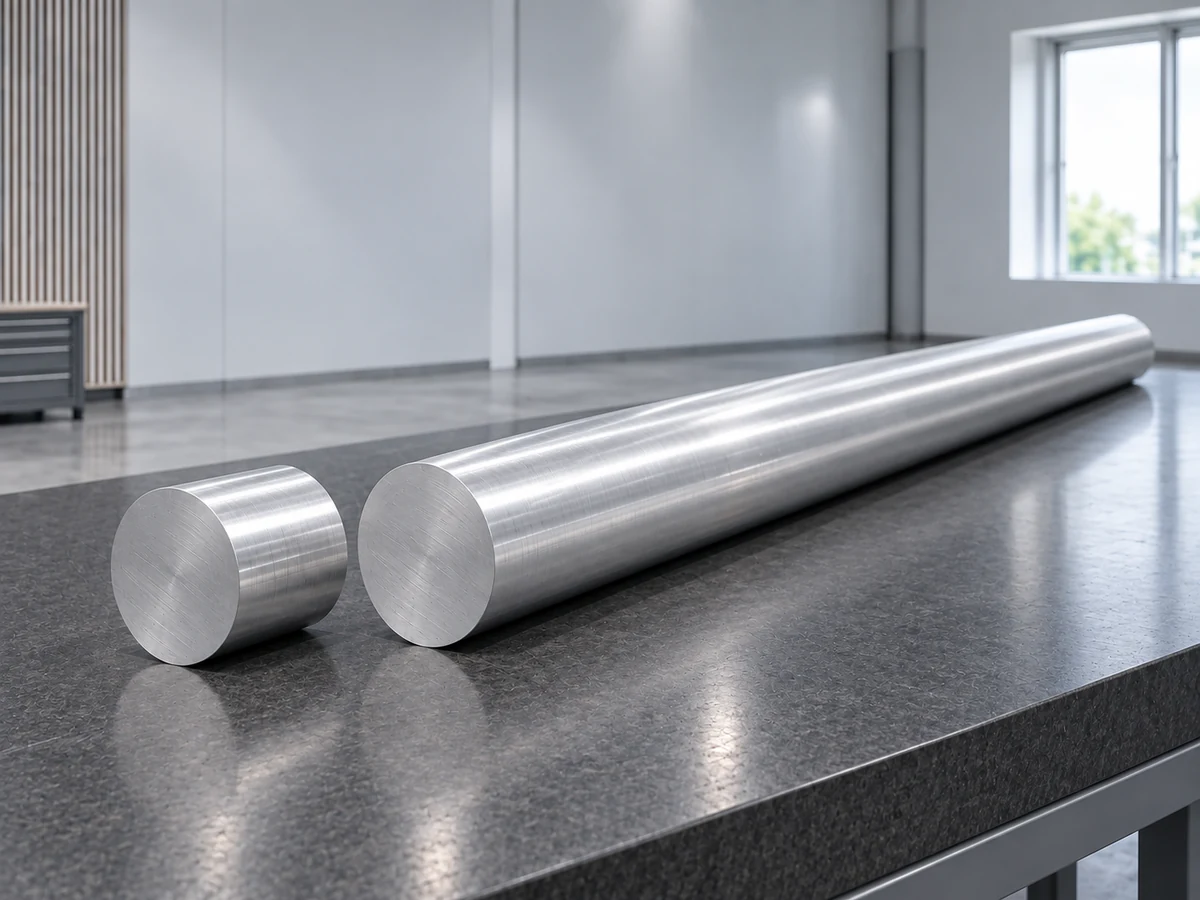
The useful comparison is therefore between two supply routes for the same accepted member stage: retain stock preparation and cut a blank in house, or purchase a prepared member. Compare the delivered work, later operations, inspection, and handling on both routes. A low quoted cutting time has little meaning if one route still requires substantial machining or an external process and the other does not.
Separate blank references from finished-product dimensions
Give the saw supplier a drawing or controlled sample that identifies the stock section, required cut plane, blank-length reference, and the face or end that the next operation will use. Record permitted variation for the cut blank as its own acceptance criterion. Finished head dimensions, loft, lie, shaft length, weight arrangement, and cosmetic details serve other decisions; they are not substitute instructions for a saw stop.
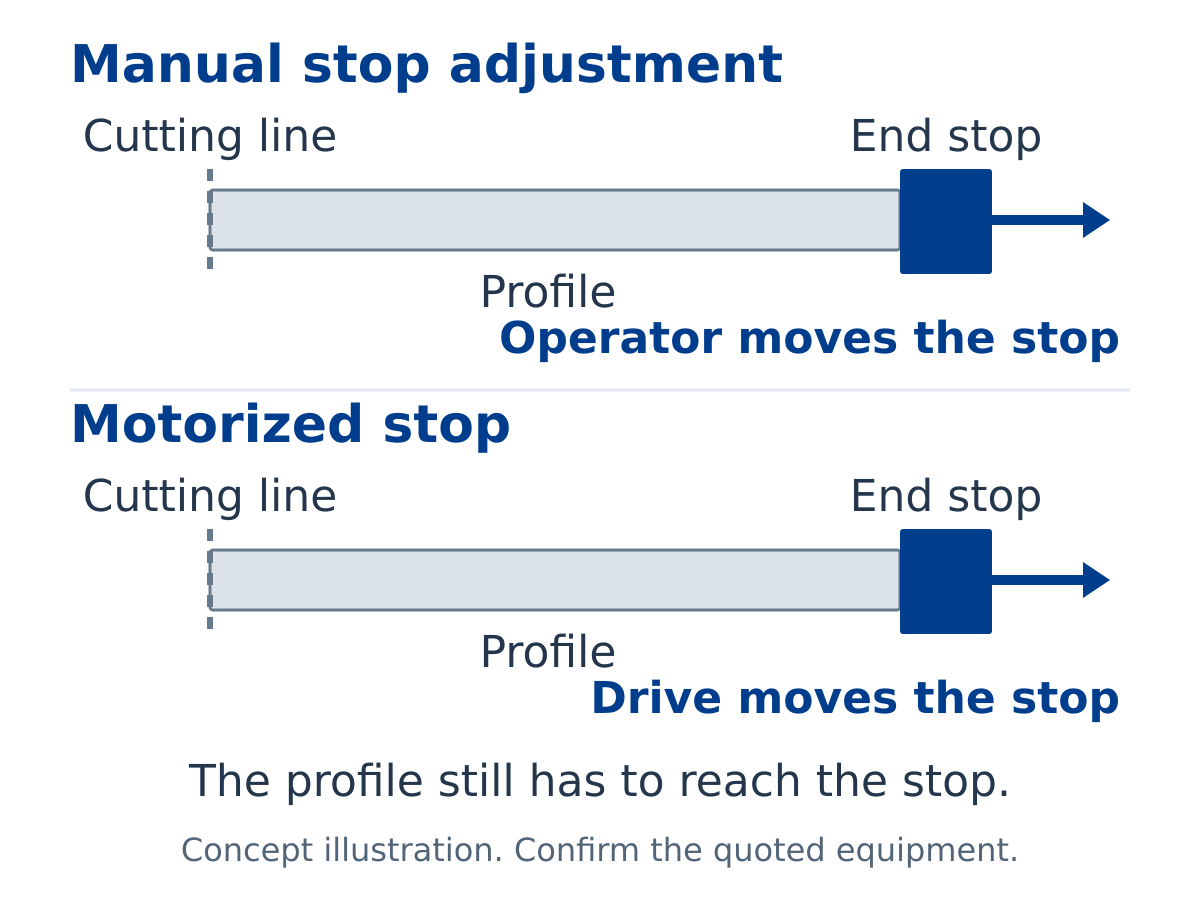
The positioning diagram illustrates a question to ask, not a recommendation for a particular drive. For the actual putter member, the supplier still needs to know how the real stock reaches its reference, how it is supported and held, what length range is required, and what the next receiver checks. A motorized stop alone does not establish that the workpiece is suitable or that the whole process is faster.
Use a real sample to discuss holding and inspection
Before accepting an equipment proposal, show the supplier the actual incoming stock and the requested blank. A sample review should expose the holding surfaces, feed length, support need, end orientation, and any surface that must remain protected. Ask what the supplier will demonstrate on that material, how the cut blank will be checked, and which later operations remain outside the saw’s scope. Keep any proposed trial tied to its sample, machine configuration, operator setup, and measured acceptance criteria.
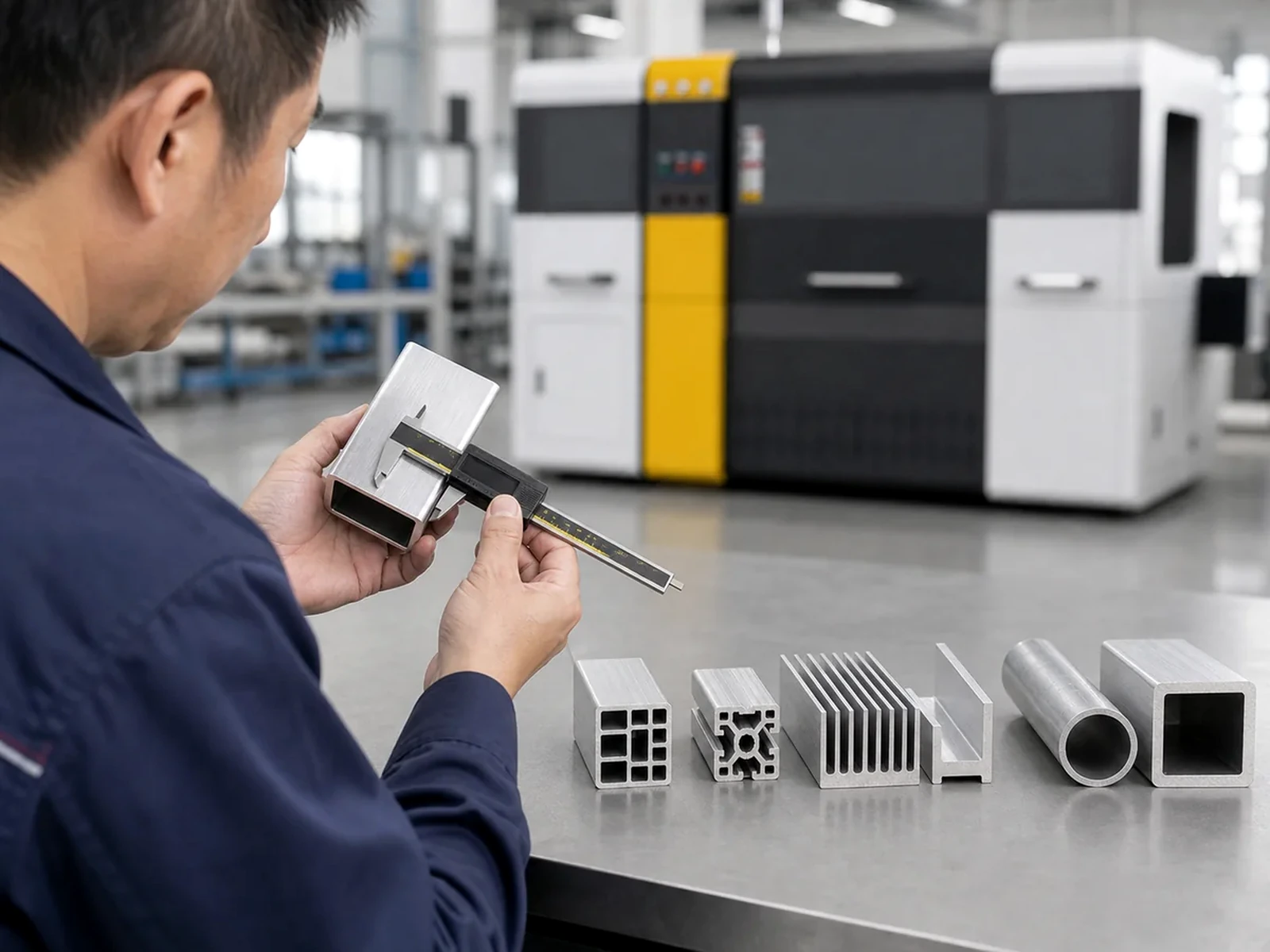
If the retained member is a solid round bar, an aluminum round bar cutting inquiry offers a useful starting list of stock and blank questions. Apply it only to an actual round-bar route. If the member is plate, extrusion, or a prepared shape, revise the holding and cut-plane discussion to fit that physical input instead of treating all aluminum as equivalent.
Put the receiver and purchased components on the same RFQ
A buyer evaluating an aluminum saw for putter manufacturing can send a compact, controlled package rather than a broad request to cut putter parts:
- Member identity: product family, revision, body or separate component, and the number of such members per finished unit.
- Supply boundary: what arrives as raw stock, prepared body, machined part, or complete assembly; identify bought weights, shaft, grip, and other parts separately where relevant.
- Actual saw input: material designation supplied by the buyer, section and length range, surface condition, and sample or drawing reference.
- Blank handoff: cut plane, length reference, quantity, cut-end and handling criteria, and the named downstream receiver.
- Evidence request: proposed machine and support arrangement, agreed sample review or trial scope, inspection method, and a record of what remains unverified.
- Route comparison: stock cost, cutting and handling resources, later machining and inspection, outsourced steps, scrap or rework assumptions, and prepared-part quotation on the same accepted member stage.
Keep the accepted member stage constant across offers. A stock-plus-saw estimate, a near-net body quote, and a complete-head quote deliver different things. Asking each supplier to state the exact handoff prevents a cheap price for an unfinished blank from being compared with a price for a ready-to-assemble component.
Decide whether the saw has enough retained work
Count only the members whose straight-stock cutting stays in house. Then calculate the work across the relevant product mix and period, including changeovers, material handling, inspection, and the next operation. A model with an aluminum part is not automatically a model with an aluminum sawing job. A supplier may deliver that part already shaped or finished, while another member of the same product family may still need local stock preparation.
Request a written scope statement from each equipment supplier: which input forms it has assessed, which blank criteria it will demonstrate, what accessories and support are included, and what remains for another process. Avoid converting a general equipment video or a sample cut on unrelated stock into a promise about a putter part.
General equipment footage, not a putter trial
The Jiurun video below shows a general saw and feed-stage view for discussing equipment and stock handling. It is not footage of putter manufacturing, a particular putter material or model, a customer order, or a validated cutting result.
Send the actual member question
If your factory is deciding whether to cut an aluminum putter member from retained stock, contact JiurunCut with the member drawing, incoming-stock description, required blank handoff, expected mix, and what is purchased ready-made. Ask for an assessment of that defined cutting step, including any sample and acceptance checks still needed before equipment selection.