
Landing net handle cutting starts with a question that a finished net photograph cannot answer: which straight metal members will this factory actually receive, cut, and hand to the next operation? A fixed handle, a sliding handle, and a telescoping handle create different part lists. Hoop size and extended reach describe the assembled product; neither is a cut length for an individual blank. An equipment inquiry should identify the retained aluminum work before asking a saw supplier for capacity or cycle time.
Frabill’s landing-net FAQ distinguishes fixed, sliding, and telescoping handles and notes that a hoop/net assembly can be bought separately. Its aluminum-handle wade net listing identifies an aluminum hoop and handle on that particular product. These are finished-product examples, not drawings for another manufacturer’s blanks, proof that every handle type uses aluminum, or evidence of any Frabill–Jiurun relationship. Confirm material and retained work for your own released family.
Identify the handle family before asking for a cut length
A fixed handle may have one retained straight member, but only an approved drawing can establish its end condition and receiving stage. A sliding design can put a moving handle member inside or alongside a hoop assembly; the folded product length is not necessarily the length of that member. A telescoping design can use nested sections and purchased locks. Its advertised extension range does not reveal each section’s stock length, overlap, insertion depth, or finished end. Those values need released member drawings and an assembly plan, not an estimate from a catalogue.
Make a separate part row for each family, position, revision, and sourcing route. A supplied handle assembly, a purchased hoop/net unit, a cut bare extrusion, and a complete net are different received items. If the factory buys a prepared handle, its purchased price includes operations that a saw quote for unfinished blanks does not. If the factory cuts one section but buys the lock, count the section only in the saw workload and put lock fit in a later verification step.
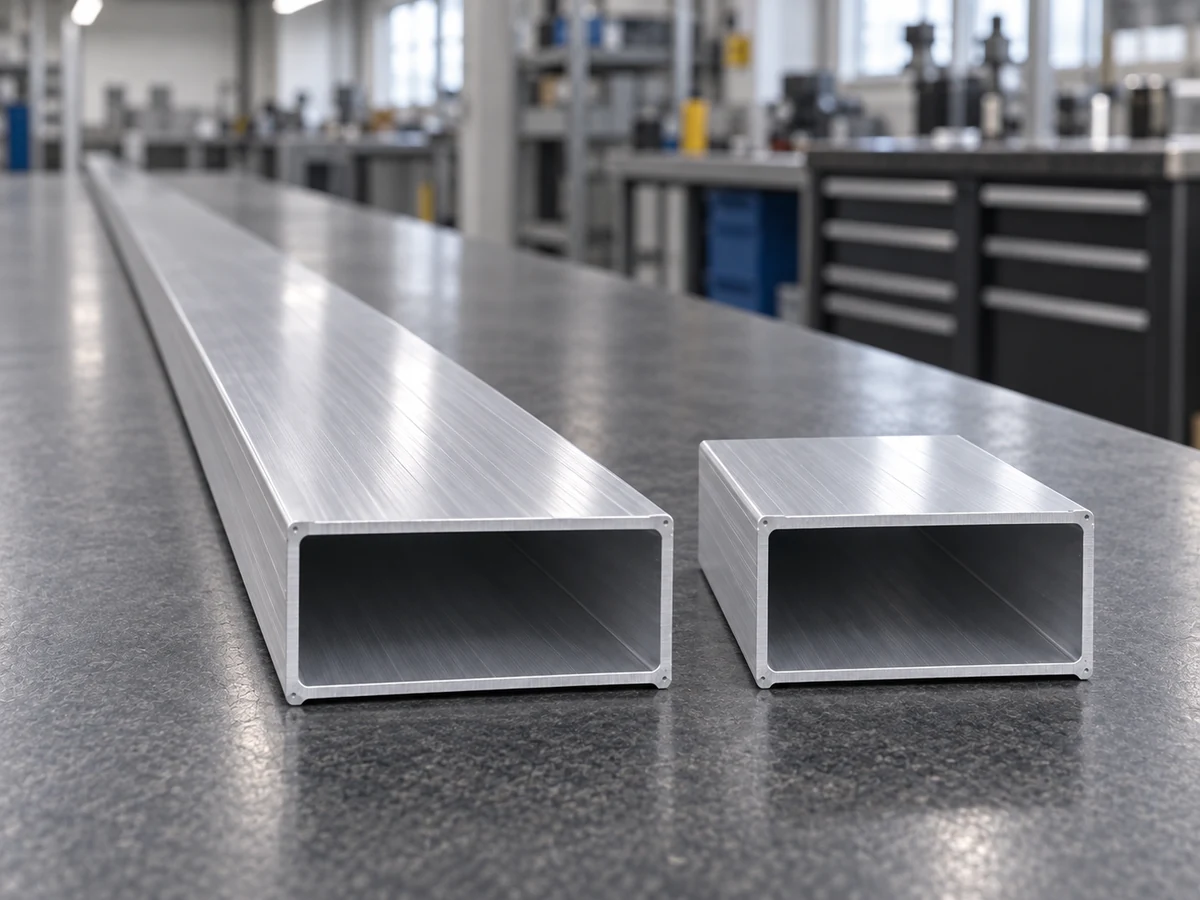
Separate the handle, hoop, netting, and bought mechanisms
The useful procurement unit is the item the receiving team can accept. For a handle blank, specify the approved incoming section and material state, the two physical ends at the saw handoff, and any surface that needs protection. For a formed hoop, record whether the factory buys the formed hoop or retains a separate straight stock and forming route. Netting, grips, locks, releases, end caps, and packed assemblies should be listed as bought or downstream work where applicable. Do not assign a saw responsibility for those functions merely because they appear on the finished net.
A supplier may offer complete nets, hoop/net assemblies, prepared handles, or raw lengths. Compare those offers at one receiving boundary. If one route delivers a ready handle and another delivers three uncut lengths, the quote sheet must add the missing cutting, deburring, forming or end preparation, coating, assembly, inspection, and replacement allowance as applicable. It is the accepted item and the remaining work, not the finished net’s retail description, that determines whether extra cutting capacity is valuable.
Send a member-level RFQ instead of a product dimension
Attach a table that a machine supplier can use without guessing the net’s internal construction. Where drawings are not released, mark the missing item as an open decision. The Jiurun guide to starting a saw inquiry without CAD explains how to state the known sample and unresolved boundary without inventing dimensions.
| RFQ field | Decision it supports |
|---|---|
| Net family, handle type, member position and drawing revision | Keeps fixed, sliding and telescoping blanks from being mixed into one length. |
| Actual incoming section, alloy or approved material, wall and surface | Defines what the proposed machine would support and clamp. |
| Stock length, saw-handoff datum, blank length and both end conditions | Separates straight cutting from deployed reach, folded size and hoop dimensions. |
| Purchased hoop/net unit, grip, lock, release and other supplied components | Shows which tasks remain outside the saw quotation. |
| Next operation, acceptance method, quantities and changeover mix | Lets offers be compared at the same receiving stage and planning period. |
Do not use the hoop’s width as the handle stock width, or the extended reach as the saw stop setting. Nor should a photographed lock or sliding joint become an assumed groove, drilled hole, or insertion allowance. Ask the product owner to release those features and identify which are produced before or after the cut. A saw proposal can then state its supported section, feed path, clamping concept and output boundary without pretending to certify the whole net.
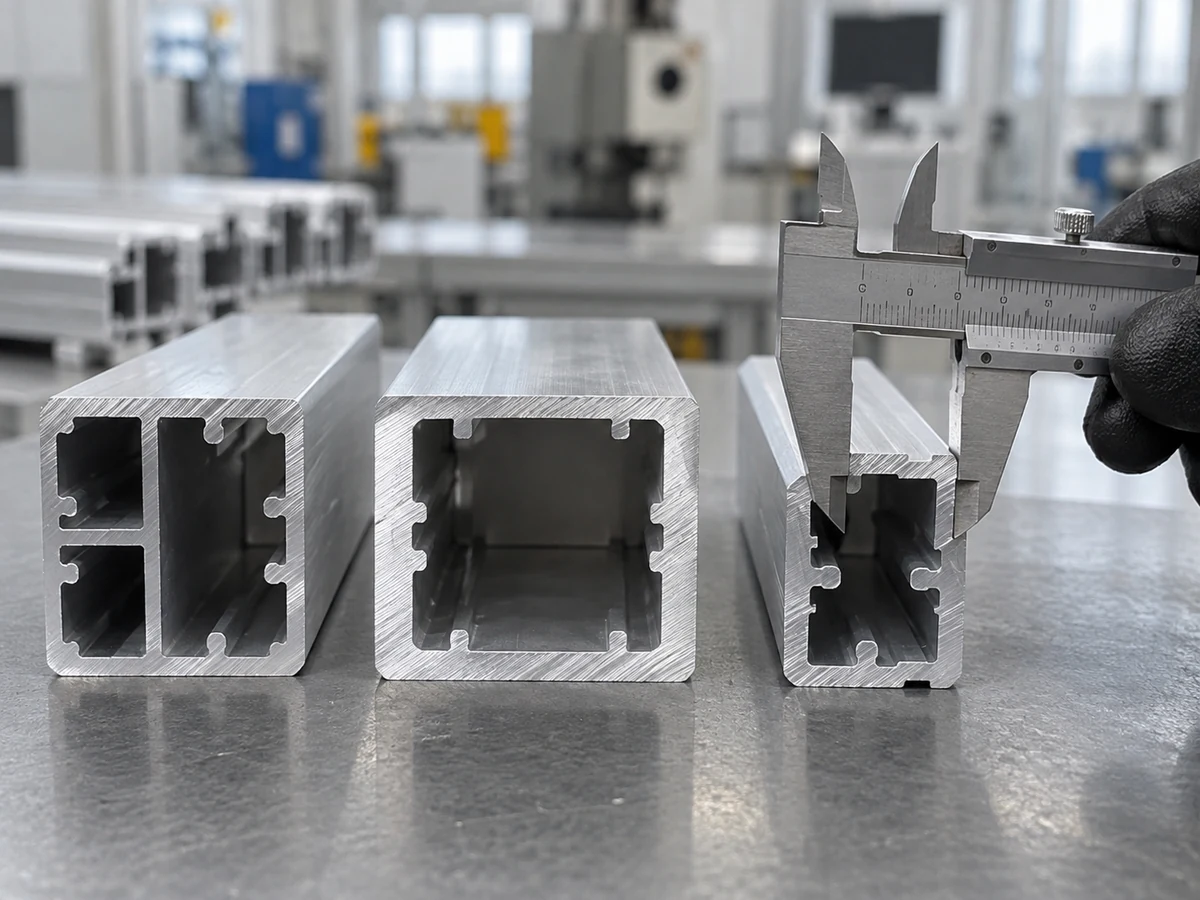
Make the saw trial representative of the retained work
Select submitted samples from the real retained handle-member families, not only the easiest bare length. Record the actual profile and surface, maximum and minimum stock lengths, end requirements, family changes, and the proposed feeding and clamping method. A thin or finished section can need different support and handling from a thick uncoated section. The machine reviewer should identify the configuration proposed for those samples and which claims remain conditional until a test is agreed.
For each sample row, agree who provides material, how many cuts will be made, what dimensions and end conditions will be measured, which drawing revision controls acceptance, and who signs the result. Report observed blank length and cut-end condition separately from feeding repeatability. A positioning value is not, by itself, proof of finished cut accuracy, clean ends, sliding fit, telescoping lock function, hoop attachment, corrosion resistance, or net durability. Those properties belong to later component or product checks.
Keep a trial that changes material state separate. A coated handle blank can be susceptible to contact marks even when a bare sample cuts cleanly. A preassembled handle may not be safe or sensible to clamp like plain stock. If the buyer is comparing bare blanks with purchased prepared handles, inspect and quote both routes as different inputs and outputs.
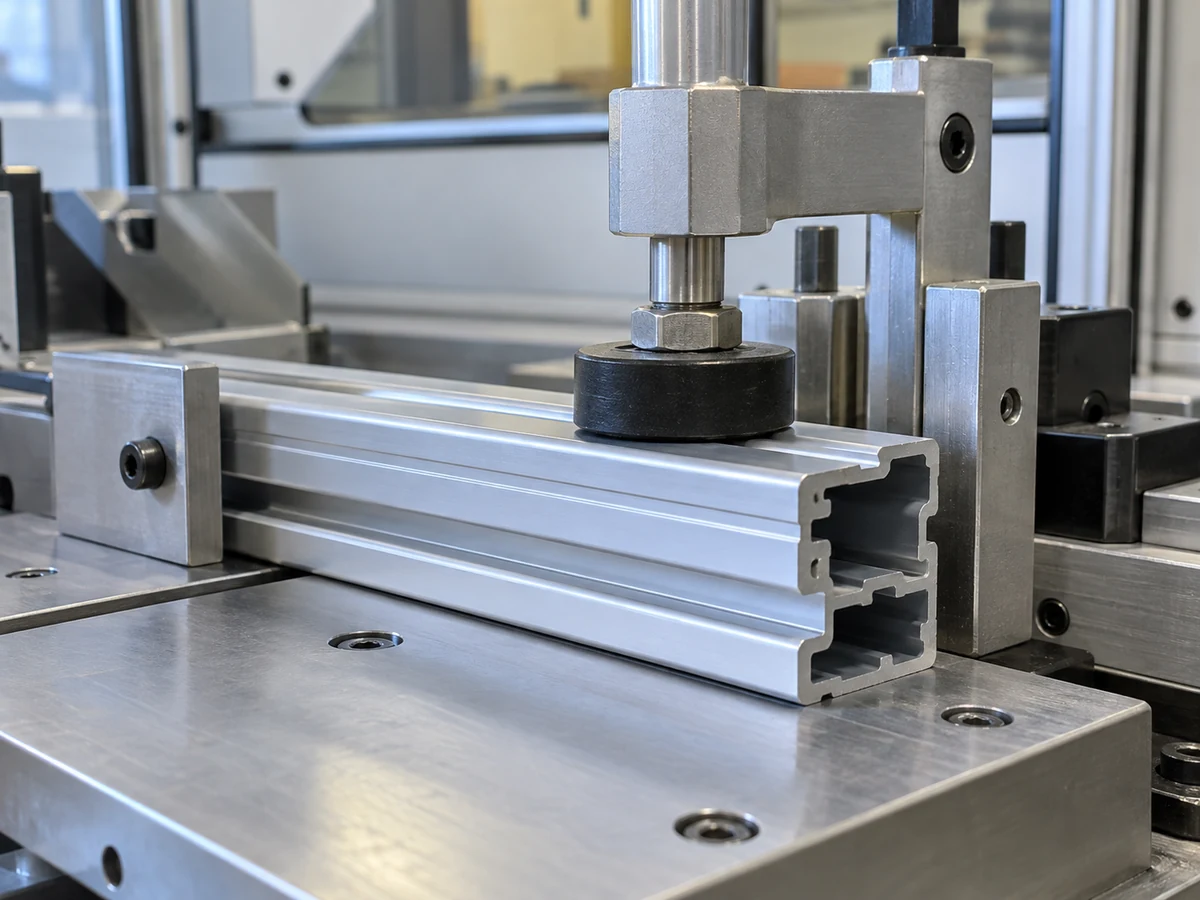
Compare accepted handle output over the same period
Estimate the number of straight handle members the factory actually retains over a common planning period. Include stock supply form, preparation, changeovers among families and sections, handling, consumables, inspection, scrap assumptions and maintenance. Then account for any forming, hole-making, surface treatment, lock or grip assembly, hoop/net purchasing, product verification and packing required before a saleable net is ready. A quote for blanks cannot be compared directly with a quote for assembled nets.
If the factory’s constraint is hoop sourcing or product assembly, buying a faster saw may leave completed-net output unchanged. If several approved aluminum handle-member families create a cutting bottleneck, a trial can be designed around their actual extremes. Both outcomes are useful purchasing decisions. The point is to identify a machine duty that can be checked at its handoff, while keeping net-level function with the responsible downstream process.
What the Jiurun equipment video shows
The following video is from Jiurun Machinery’s own channel. It is a general automatic aluminum saw and feed-stage example. It is not a landing-net handle demonstration and does not validate any handle section, model configuration, tooling, customer order, cut result, or completed-net performance.
Send a bounded landing net handle cutting inquiry
Send the handle-family list, released member drawings, actual input sections and samples, stock and blank references, end requirements, quantities, changeover mix, purchased components, and receiving-stage definitions. Ask the equipment reviewer to state exactly which parts and conditions were assessed, what configuration is proposed, and what still needs a sample trial or downstream check. If that package is ready, contact Jiurun for a drawing-led aluminum cutting review. The resulting offer can be compared against the handle blanks the factory actually makes, without turning a product reach or hoop measurement into a machine promise.