
Aluminum easel support cutting is easy to misquote when a buyer sends only a finished easel height, folded size, or canvas range. Those numbers describe how an assembled product works. They do not identify the straight aluminum members retained by the factory, the incoming section, the cut end, or the stage at which a saw must hand parts to the next operation. A useful equipment inquiry starts with the board-support member and its released drawing, then works backward to the stock and forward to the receiver.
A Jackson’s Art listing for an aluminum tilting field easel describes telescopic legs, a tilting arm, and metal supports that curve around a board or canvas. That finished-product example helps identify separate functions. It does not disclose the maker’s raw section drawings, blank lengths, or process route, and it has no stated connection to Jiurun. Your own approved member drawings and supply records must set those facts.
Separate the four references before asking for a cutting machine
An easel can be described by its working height, folded envelope, board or canvas fit, and an individual member’s physical ends. These are four different references. A telescopic arrangement may contain nested parts; a support that curves around a board may undergo forming or assembly after its straight stock is cut. The visible span of the finished easel is therefore not a shortcut to the length to enter at a saw stop.
For every candidate part, mark the two physical ends of the unfinished piece at the saw handoff. Then name the face, edge, or datum from which its drawing measures length. If the released drawing controls a later formed feature or assembled position, keep that requirement on the downstream operation. Do not invent bend allowances, insertion depths, clamp locations, or telescoping overlap to calculate a convenient blank length from a catalogue photo.
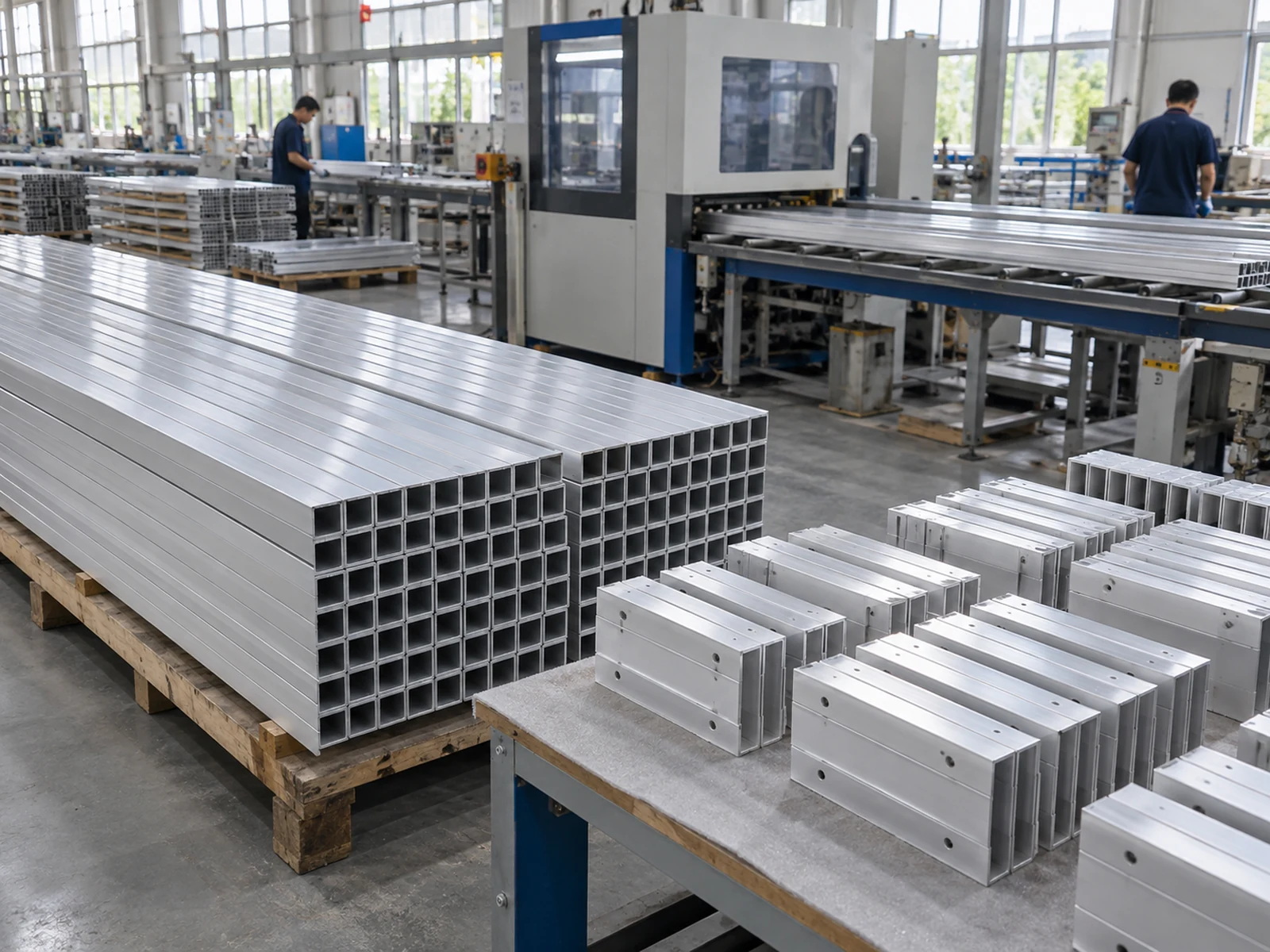
Aluminum easel support cutting: which members are retained?
List the upper support, lower ledge, tilting arm, cross member, brace, and leg section only where they exist in the approved product family. Do not assume every one is aluminum or cut in-house. A bought holder, populated telescoping unit, formed support, or complete easel removes a different amount of local work. A supplier’s quote for a finished holder cannot be compared with a saw quote for an unformed straight blank as if both delivered the same thing.
Make the receiving boundary explicit. A straight blank may still need deburring, forming, hole-making, coating, assembly with pads or clamps, and product verification. A prepared support may include some of those tasks but still require local fitting. A complete easel is a different accepted output. Label each quoted route by the first item the receiving team can actually accept, then carry every remaining operation and purchased component into the comparison.
For example, suppose a factory buys completed upper board holders but cuts its own straight lower support members. The upper holder’s finished board-fit information belongs in component purchasing; the lower support’s approved stock section and blank-end references belong in the saw inquiry. This is a hypothetical boundary example, not a description of any customer or Jiurun trial. Reversing which parts are bought changes the machine workload without changing the finished easel’s advertised height.
Build one member-level RFQ table, not one product-level length
The most useful attachment to an equipment RFQ is a small table tied to released drawings. Use one row per family, position, material state, and revision. Identify the actual incoming stock form: bare extrusion, cut-to-stock section, coated member, or a prepared unit. A populated or coated item can create handling and quality constraints that bare stock does not. Do not assume the same clamping plan applies to both.
| Field to send | Why the reviewer needs it |
|---|---|
| Product family, member position, drawing revision | Prevents a visually similar leg, arm, or holder from being treated as interchangeable. |
| Incoming material, section, wall, surface and actual stock length | Defines what enters the machine and what surfaces must be supported or protected. |
| Unfinished end drawing, datum, cut length and acceptance method | Defines the saw handoff independently of working height and board fit. |
| Next operation and accepted receiving stage | Keeps forming, drilling, finishing, assembly and product tests in the right scope. |
| Order mix, quantities, changeovers and replacement route | Shows whether useful throughput is limited by cutting or by another step. |
Where an engineering drawing is incomplete, ask the owner to release the missing member references before turning a product dimension into a machine promise. Our guide to starting a saw inquiry without a CAD file explains how to present the known sample and decision boundary while the detailed drawing is being resolved.
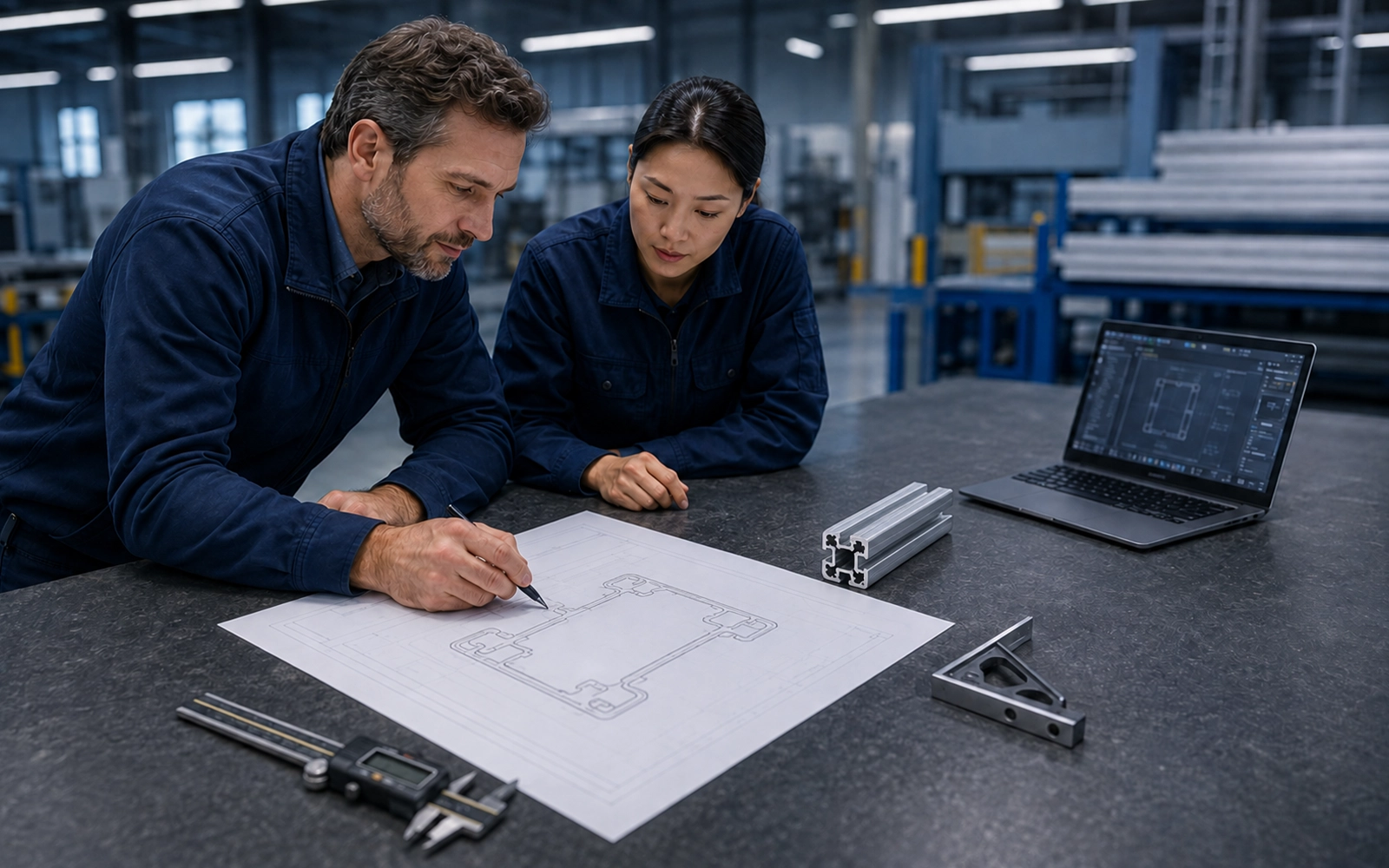
Choose the cut condition from the released member, not the easel silhouette
A tilted board does not prove that its aluminum stock needs a miter cut. A curved holder does not prove that a saw forms it. For each retained part, record whether the saw must produce square ends, an approved angle, or another documented end condition. Keep a later bend, profile joint, hole, notch, and clamp setting outside the saw’s stated duty unless the actual equipment scope and process plan explicitly include them.
Check the sample’s cross-section orientation as well as its end. Thin walls, open sections, protective finishes, or a projecting lip can change how a part is supported and handled. Those are reasons to inspect the real incoming piece and drawing; they are not evidence that a named Jiurun model already fits it. A supplier response should identify the proposed clamping and feed method for the submitted section and distinguish machine specification from the result of an agreed sample assessment.
Use a trial matrix that tests the hardest retained parts
Do not submit only the easiest tube. Select actual retained members that represent the extremes of section, wall, stock length, required end and incoming surface. If the family changes from a bare straight member to a coated or preformed item, give those states separate rows. Record the drawing revision and agreed measuring datum so the reviewer can relate an observed cut to the intended blank handoff.
For each trial, specify who supplies the stock, how many samples are agreed, what cutting condition is requested, and who measures the outputs. Define the acceptance criterion from the released requirement rather than an invented tolerance. Distinguish feed positioning repeatability from the measured finished cut. A repeat-positioning figure does not by itself prove cut-length accuracy, end quality, or finished easel function.
Inspection should stop at the agreed stage. Review blank length and end condition at the saw handoff; check formed support fit after forming; check canvas retention, adjustment, stability, and product life through separate product-level methods where applicable. A passing blank trial cannot certify those downstream properties. This separation makes the equipment quotation more useful because every claimed result has an owner and a test boundary.
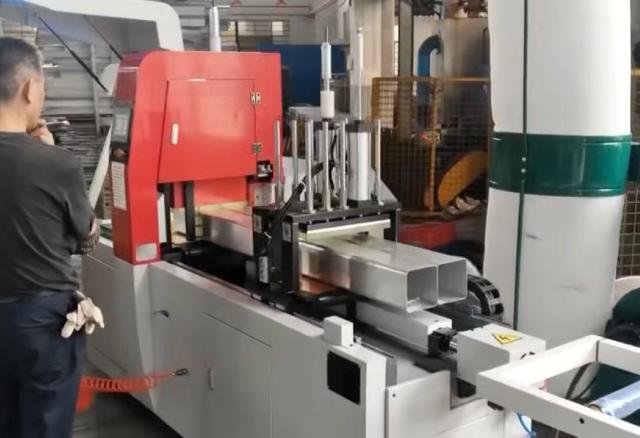
Compare accepted support output over one common period
Machine cycle time matters only inside the complete route. Estimate the retained straight members actually due over the same planning period, including family changes, setup, handling, blade and consumable allowance, maintenance, inspection, and scrap assumptions that the business can support. Then add forming, drilling, coating, bought clamps or pads, assembly, and separate product verification as applicable. Compare the cost and lead time to the same accepted receiving boundary in every option.
If prepared support units arrive faster than the factory can verify or assemble them, more saw capacity will not resolve the constraint. If blank cutting is the actual bottleneck across several released member families, an equipment review can focus on those samples and changeovers. Either conclusion is useful. The purpose of the inquiry is to locate the work retained by the factory, not to make an unfinished-part count look like finished easel output.
What the equipment video can and cannot show
The following video is a playable example from Jiurun Machinery’s own channel showing general automatic aluminum cutting equipment. It helps visualize a saw and feed stage. It is not an easel demonstration and does not verify a board-support section, tooling, customer order, model configuration, cut tolerance, or finished-product performance.
Send a bounded easel support cutting inquiry
Send the retained member list, released section drawings, actual input samples, blank-end requirements, family and revision mix, and the receiving stage you want quoted. Mark bought or externally processed supports separately. Ask the equipment reviewer to state what was assessed, which configuration is proposed, what remains for the factory or suppliers, and which acceptance checks still belong downstream.
If those references are ready, contact Jiurun about a drawing-led aluminum cutting review. A bounded inquiry can compare equipment options against the straight aluminum parts you truly retain while keeping board fit, adjustment, and complete easel performance in their own verification scope.