
Tray denester conveyor frame cutting begins with a boundary question: which aluminum members belong to the separately purchased support frame, and which parts belong to the denester, tray handling system or downstream conveyor? A tray denester separates trays from a stack and transfers them into a filling or packing line. The frame around that handoff may include supports, crossmembers and guard mounts, but its exact geometry depends on the integrator’s released layout. A saw quotation should therefore name the cut members and their acceptance criteria without claiming to qualify tray separation.
For a buyer, the practical output is a revision-controlled cut list and a short interface sheet. It lets the saw supplier price retained aluminum cutting, while the machine builder remains responsible for the denesting head, tray path, controls, guarding and line acceptance. The following five checks keep those purchases separate.
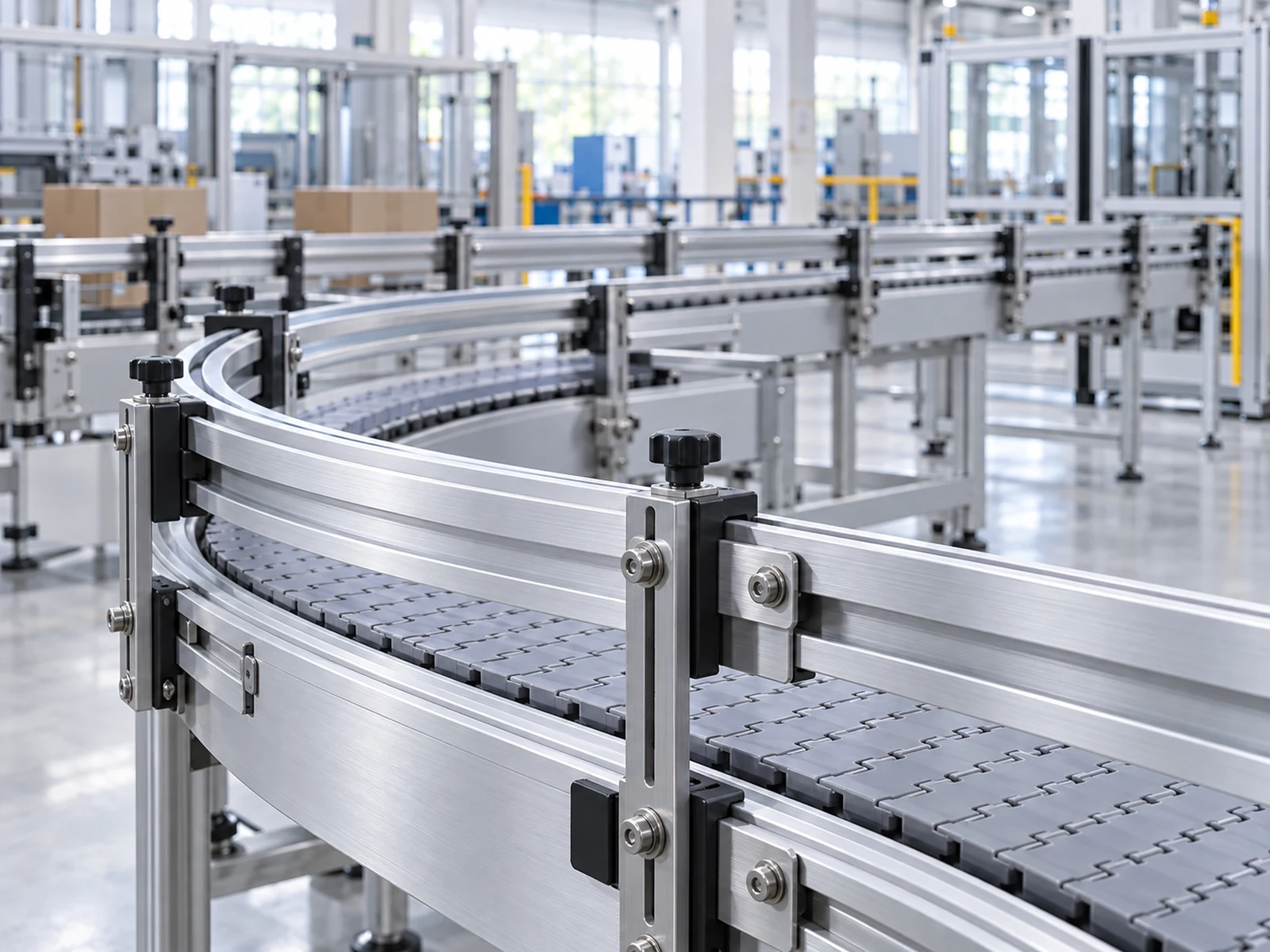
1. Locate the denester-to-conveyor boundary
Ishida describes a tray denester that separates trays from a stack and places them on a filling line. Its integrated Portion and Pack example combines a denester with a tray buffer and downstream handling. These examples show why the equipment boundary must be checked; they do not specify the construction of your line or prove that a particular aluminum profile is used.
Request a general arrangement showing the tray release point, conveyor datum, support feet, service access and ownership split. Mark the frame members that the buyer will supply separately. If a conveyor OEM supplies its own side rails or feet, exclude those from the saw bill of materials. If the denester maker supplies a complete guarded base, ask whether any auxiliary frame remains. A quotation for an undefined “denester frame” otherwise risks including the same structure twice.
2. Release each aluminum member as a cut part
Assign one part number and revision to each retained rail, upright and crossmember. Record the actual alloy and temper supplied by the buyer, section drawing, incoming stock length, quantity, finished length datum, end form, burr condition and protective-surface requirements. A profile family name alone does not identify a saw setup. Hollow chambers, slot openings and external ribs can each change support and clamp contact, so include a section view rather than relying on a photograph.
Define the finished length at a named face or centerline, especially where brackets, feet or conveyor plates occupy the ends. State whether the saw delivers straight blanks or end-prepared members. Hole making, tapping, milling and final frame assembly should be separate operations unless a supplier explicitly quotes and verifies them. Jiurun manufactures industrial aluminum and nonferrous circular saw cutting equipment; the article does not assume that a saw performs those later operations.
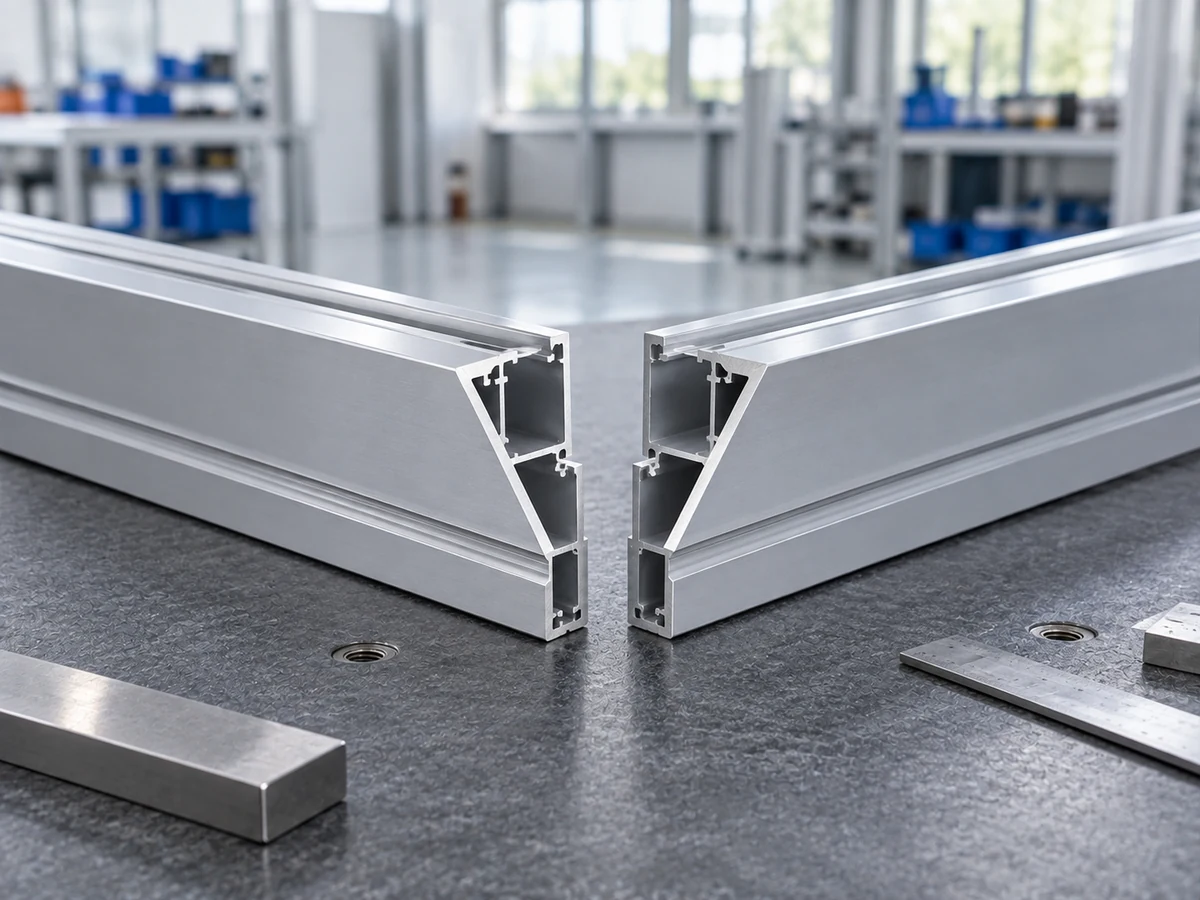
Corner and foot interfaces
At every corner, specify the chosen joint: square-cut butt joint, bracket connection, or a mitered meeting pair. Do not infer a miter from the finished frame’s appearance. State which component sets the outer envelope and which part is shortened by bracket thickness or overlap. For support feet, provide the base-plate drawing and height-adjustment range separately from saw length. A nominal frame width is not the same as the length of either member.
3. Put stack, tray and access loads in the right scope
The denester and buffer can impose dynamic and service loads on a support system, but those loads must come from the OEM or integrator. The saw supplier should not invent a frame strength rating from a cut-list drawing. Ask who checks vibration, leveling, anchoring, guarded access and cleaning clearances. If tray format changes require moving guides, brackets or a magazine, identify which parts are adjustable assemblies and which are fixed cut members.
A useful interface sheet lists the maximum equipment envelope, required access side, floor reference, shared conveyor datum and any no-obstruction zone. It also names the owner of each approval. This prevents a cut rail from being accepted merely because its length is correct while its location conflicts with a guard door, tray release path or maintenance reach. Conversely, do not send the saw supplier a full-machine performance requirement when the purchase is only cut aluminum blanks.
4. Match the saw trial to real stock and end conditions
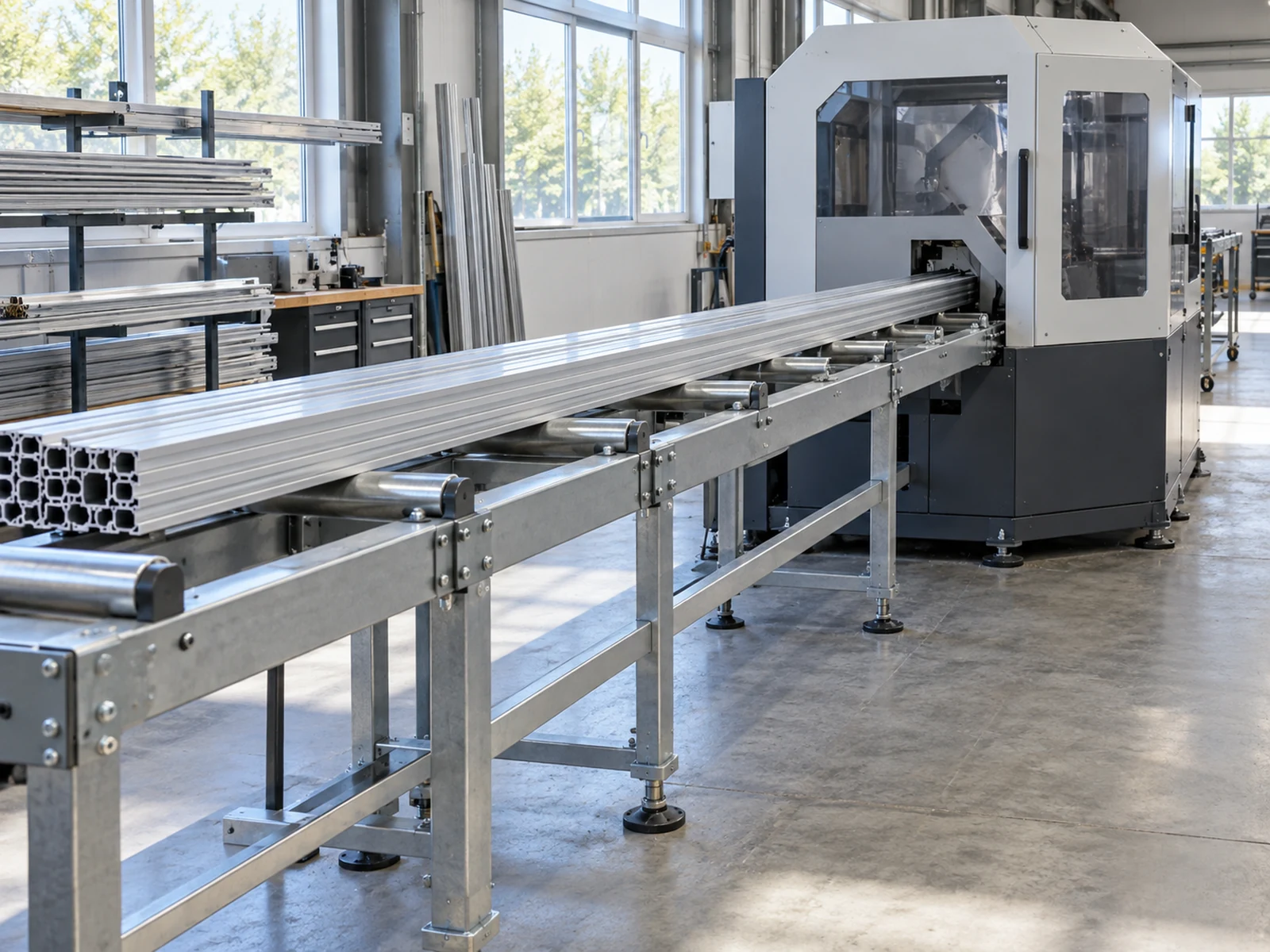
For tray denester conveyor frame cutting, evaluate the representative retained profiles, not a convenient generic bar. Send sample stock with the actual wall thickness, surface finish and extrusion tolerance, plus drawings for the longest and shortest pieces. Ask the supplier to explain infeed support, clamp contact, blade selection and first-off measurement against the released datum. A long rail may require upstream and downstream support; a thin-walled or slotted section may need a different contact plan. These are trial questions, not claims about any specific Jiurun model configuration.
Keep the inspection plan practical. For each sample, record part ID, stock batch, target length, observed length, end condition and any visible deformation or marking. Inspect the same face and measuring method that receiving staff will use. If a miter or special end is required, include its own drawing and verification method. Throughput estimates should use the complete workflow—load, clamp, cut, unload and inspect—rather than a blade-time figure alone.
5. Compare quotations on the same delivery stage
Separate three possible bids: raw saw-cut blanks, end-prepared members, and a fully assembled support frame. They have different acceptance points. For blanks, compare section, length, end quality, marking and bundle identity. For end-prepared members, add the secondary-process drawing and inspection. For an assembled frame, include joint hardware, squareness, leveling, guarding interfaces and responsibility for line fit. A lower saw-only price should not be compared with a complete installed frame price as though the scopes matched.
Ask each bidder to identify exclusions and handoff documents. Useful records include drawing revision, cut-list revision, sample approval, first-off sheet, inspection frequency and packing list by part number. Hold format-change parts under their own revision rather than mixing them with the base frame kit. Our aluminum saw output traceability guide explains the lot and bundle record handoff once a cut job is released.
What the equipment video can and cannot show
The Jiurun video below is an example of aluminum cutting equipment in operation. It helps a buyer discuss feed, clamping and cut-process questions for a released member. It is not footage of a tray denester, the article’s profiles, a specified Jiurun model configuration, a customer installation or a validated trial. It provides no tray-handling or cut-tolerance proof.
A compact RFQ handoff
Before asking for a saw recommendation, send the retained cut-part list, section and end drawings, representative stock, annual or batch quantity, longest and shortest length, datum and acceptance method. Name the denester OEM, conveyor OEM and frame integrator as separate interface owners. Include only the loads, adjustment zones and access clearances they have actually released. If the design is still provisional, request a process review and sample-cut plan rather than a guaranteed machine result.
For the machine purchase discussion, contact Jiurun with the released aluminum member drawings and trial stock details. We can discuss saw cutting of eligible aluminum or nonferrous sections. The equipment builder and integrator must validate tray separation, conveyor transfer, guarding and finished-line performance.