
Bottle unscrambler outfeed frame cutting is a narrow purchasing task, not a specification for the whole bottle handling machine. A rotary or linear unscrambler may arrive with its own exit conveyor, bottle guides and format hardware. A separate straight aluminum member is a valid saw-cut RFQ only when the machine builder or line integrator has released a drawing for that member at the downstream interface. Start by deciding who owns the transfer. Then give the cutting supplier a part definition that can be measured without asking it to certify bottle orientation, line speed or machine safety.
POSIMAT says its MASTER unscrambler is delivered with guides for transfer to the filling-machine infeed conveyor. Its manufacturer overview describes different discharge conveyor arrangements according to the bottle or line. These are examples of OEM scope, not evidence that your line has the same design. Ask for the actual general arrangement, interface drawing and format list before treating a generic aluminum rail as a purchased spare or retrofit.
Bottle unscrambler outfeed frame cutting: assign the interface
Mark the last component supplied by the unscrambler maker and the first component supplied by the downstream conveyor or filler integrator. The exit belt, vacuum conveyor, star wheel, guide, adapter and supporting frame can fall on different sides of that boundary. Record the transfer point, elevation, direction of travel, attachment face and maintenance access on the released layout. If the OEM guide already spans the handoff, do not add a second cut rail to a bill of materials just because an aluminum profile appears possible in a photograph.
For bottle unscrambler outfeed frame cutting, the purchase choice should be explicit: buy the complete OEM transfer package, buy an integrator-designed adjoining conveyor assembly, or buy only named straight aluminum blanks for later machining and installation. Each route has a different acceptance test. A saw shop can check cut length and end condition on a defined extrusion. It cannot approve the bottle path, synchronize conveyors or validate a new guide geometry.
2. Identify the frame member and its job
Separate a structural frame upright, crossmember or mounting rail from the contact guide that actually touches bottles. Also separate a guide support from the adjustable format part attached to it. A single dimension such as “outfeed width” cannot define all three. Give each cut member its own part number, material and section drawing, orientation, length datum, finish and quantity. If the assembly uses left and right sides, release handed parts separately; a correctly sized section cut to the wrong orientation may not accept the bracket pattern.
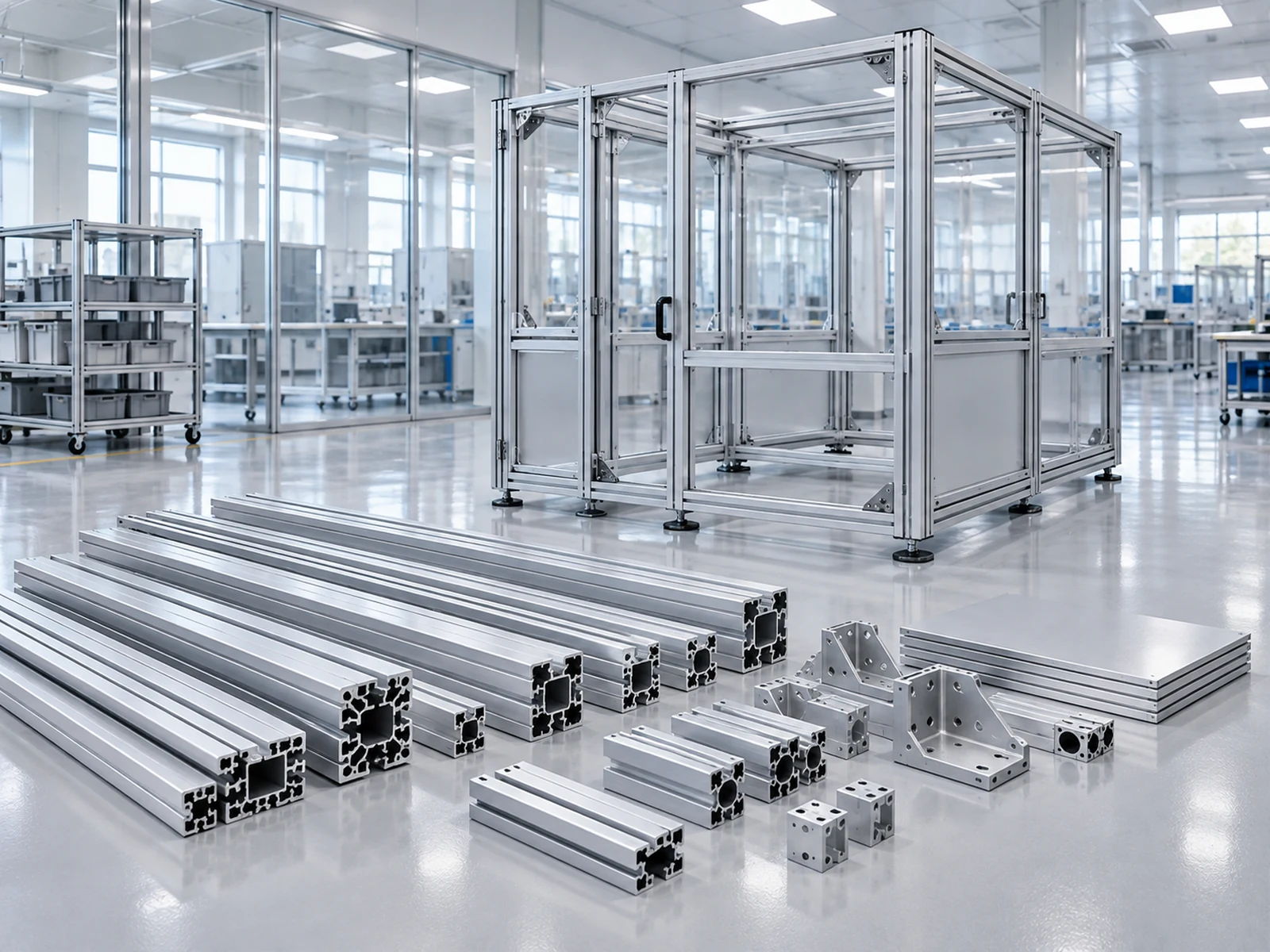
Specify the function in the drawing notes: for example, a bracket mounting member on the adjoining conveyor, subject to integrator approval. Avoid calling the entire bottle handling path an “aluminum frame.” The actual machine may use other materials and its exit components may be engineered as a complete unit. The drawing, not the illustration, decides whether aluminum is allowed at the proposed location.
3. Freeze bottle formats and the changeover envelope
A line may process more than one bottle diameter, height, base shape or container material. Note each approved format and the route used to change between them. The guide-support member must leave room for the required adjustment travel, hand clearance and tool access. A rail cut to fit one bottle at a static setting may obstruct a bracket or a changeover stop for another format. Ask the machine team for the smallest and largest released operating positions, not a single attractive photograph of the current setup.
Pace describes a customer-conveyor discharge interface for its OMNI-IR linear unscrambler; that manufacturer example reinforces the need to identify the customer-owned portion of the line. It does not define your bottle size, transfer speed or guide material. Put format-dependent hardware, control settings and transfer trials in the machine integration scope. Keep the saw order tied to the same revision of the structural member drawing.
4. Release section, datum and end condition before pricing
A buyer should state alloy and temper if known from the approved drawing, the actual extrusion supplier or supplied stock, section dimensions with tolerances, straightness requirement, surface protection and the datum used for length. Explain whether the quoted length is a saw-cut blank dimension or the final dimension after drilling, facing or finishing. If one end is a service opening or a locating face, say so. Describe allowable burrs and edge treatment in terms the drawing or sample can verify; do not substitute an unsupported universal numerical tolerance.
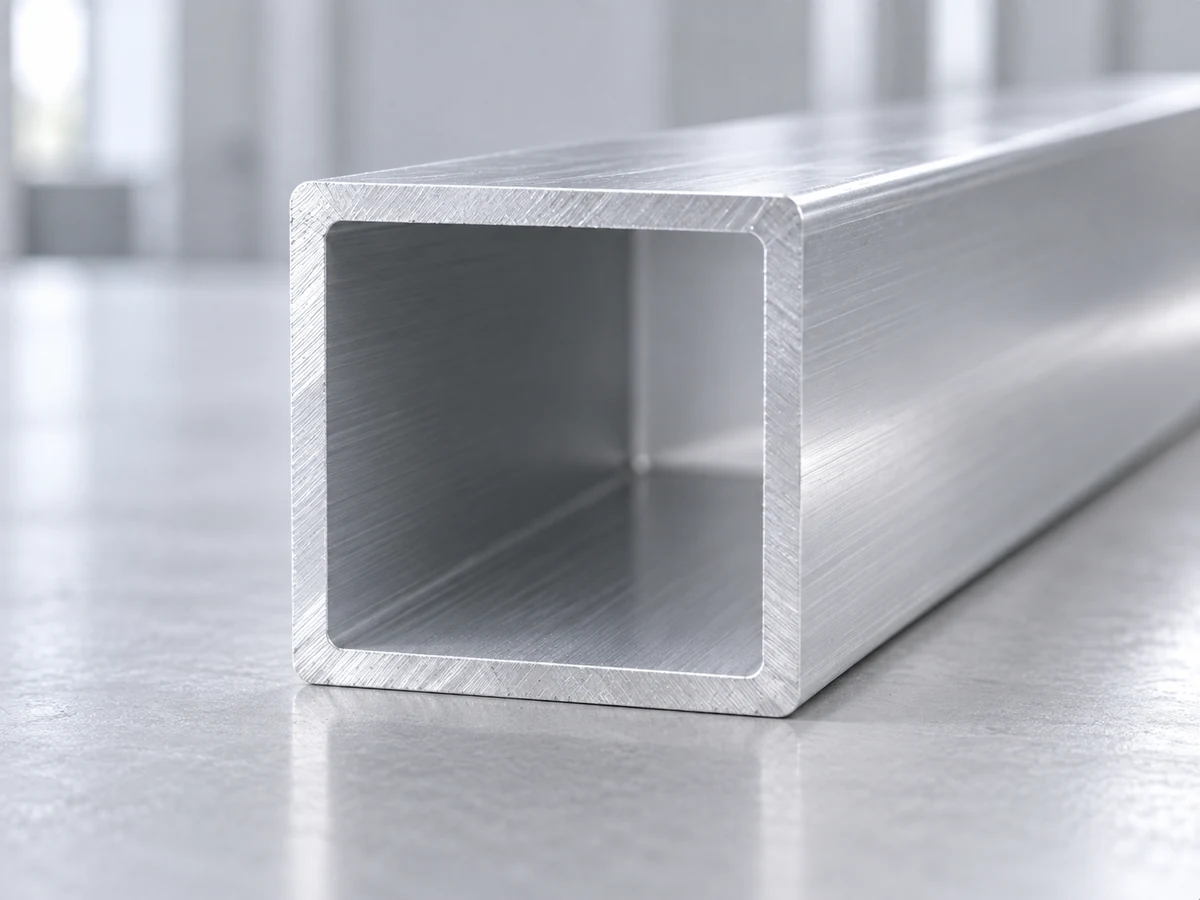
If an installer needs a miter, notch, hole, slot, insert or threaded connection, put those steps on the manufacturing route and price them separately from straight saw cutting. Check whether they are performed by the extrusion supplier, saw shop, fabricator or site integrator. A blank can pass its cut inspection while the completed bracket still fails to locate the guide. Keep a drawing revision on the label so old and new format kits are not mixed at receiving.
5. Protect access, cleanability and guarding
The outfeed area can need cleaning, adjustment and removal of a bottle jam. Ask the equipment owner to confirm that the proposed member and its fasteners do not block doors, guards, inspection points, washdown access or the bottle path. Do not describe a profile in a clean industrial photograph as food-grade or pharmaceutical-grade equipment. Material suitability, surface finish, cleaning method and any regulatory compliance depend on the actual line specification and must be approved by the responsible parties.
A rigid frame member may support a guide while a separate contact strip is selected for bottle handling. If the contact material or wear strip needs replacement, the frame should not trap it. Conversely, a cut extrusion must not be used as an unreviewed substitute for a machine guard. Record these interface checks on an assembly drawing and commissioning checklist; a saw trial cannot establish the machine-level result.
6. Run a representative cutting trial for the released section
For a bottle unscrambler outfeed frame cutting trial, supply stock from the approved section or a clearly identified equivalent only if the buyer authorizes it. Record stock orientation, support points, fixture contact and the first-off cut. Inspect length from the designated datum, end squareness or specified angle, visible damage, burr condition and label legibility. Where the member has a protected face, record how it is kept clear of clamp marks and transport abrasion. The trial is evidence about the sampled cut and handling route, not proof that bottles will transfer without tipping or that an unscrambler will achieve a target rate.
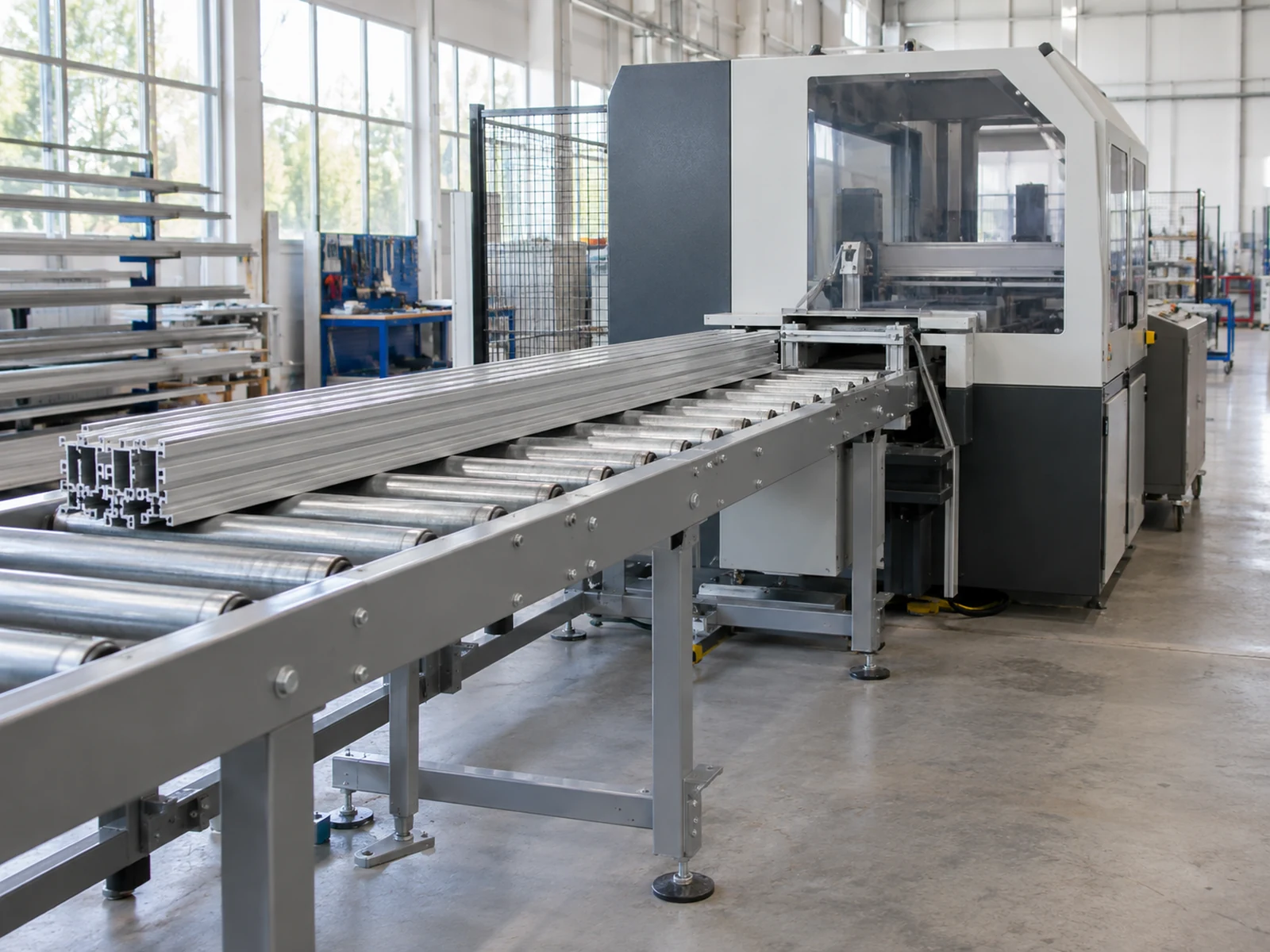
Jiurun’s own-channel video is a general aluminum cutting equipment example. It does not show this bottle unscrambler, the buyer’s extrusion, an approved fixture, a customer trial or the performance of an outfeed assembly.
7. Compare quotations at the same delivery stage
Compare an OEM transfer package, a completed integrator assembly and a bundle of saw-cut blanks on a common scope sheet. For each offer, list who supplies stock, brackets, contact guides, holes, inserts, finish, labels, packing, installation and the transfer trial. State what happens when a drawing revision changes after stock has been cut. A low blank price does not include the machine interface engineering or the hours required to fit an assembly at the line.
For repeat orders, require bundles by part number, handed side, station and revision. Define what the buyer checks at receipt and how a disputed piece will be traced to its stock lot and first-off record. Our aluminum saw output traceability guide explains the record handoff between a released job and cut bundles. The physical fit and bottle run remain separate approvals.
RFQ checklist for a separate aluminum frame kit
- Released interface drawing naming the unscrambler OEM boundary and downstream integrator boundary.
- Part numbers, revisions, handed sides, quantities and approved extrusion sections for each straight member.
- Length datum, end form, cut-face acceptance and downstream machining or finish ownership.
- Format envelope and bracket positions supplied by the line designer, without assigning bottle-flow certification to the saw shop.
- First-off sample plan, inspection record, protection, packing and label requirements.
- Separate prices for cut blanks, machined members, assembled guide supports and installed transfer acceptance.
Frequently asked questions
Does an unscrambler always need a separate aluminum outfeed frame? No. The machine or line supplier may provide the complete outfeed. Buy a separate cut kit only when a drawing releases it.
Can the square tube pictured here be used as the bottle guide? The image is an illustrative hollow section. The actual profile, contact material, attachment and adjustment must come from the approved design.
Does a clean first-off cut prove bottle stability? No. It verifies only the sampled member against its specified cut criteria. The OEM and integrator must test bottle transfer over the approved format range.
Next step
If your integrator has released a separate aluminum frame or guide-support member at the unscrambler outfeed, send Jiurun the drawing and cut requirements. Include section, length datum, quantity, first-off checks and delivery stage. The machine builder and line integrator retain responsibility for the bottle path, guarding and completed transfer acceptance.