
Stretch wrapper control cabinet frame cutting is a narrow purchasing task. A wrapping system may include conveyors, a rotating arm or turntable, film handling, guarding, and control equipment. The saw buyer should quote only the released aluminum frame members that the machine builder has actually specified. A photograph of a wrapper, or a cabinet outside dimension, is not a cut list. This guide shows how to separate that member kit from the electrical cabinet, safety design, and wrapping machine itself.
As an example of machine architecture, Orion describes a fully automatic rotary stretch wrapper with infeed, wrap-zone and outfeed conveyance, a film carriage, wire-mesh guarding, interlocked doors, a light curtain, and separate high- and low-voltage cabinets. Those features describe Orion’s system, not a Jiurun configuration or evidence that any particular cabinet frame is aluminum. The buyer must establish the material and scope from its own approved documents.
First decide what the purchase order is buying
A control cabinet can be bought as a complete wired enclosure, a prepared empty enclosure, or a kit of cut frame members. The difference controls who owns the door fit, sealing, wiring, safety interfaces, and final acceptance. If the builder buys a complete cabinet, ordering duplicate saw-cut rails adds handling without creating a usable assembly. If it retains frame fabrication, the saw inquiry should describe the exact blanks that pass to the cabinet assembler.
- Complete cabinet: the cabinet supplier owns the enclosure and its specified electrical package. A separate extrusion saw quote may have no role.
- Prepared empty enclosure: panels, doors, openings, and mounting provisions are already supplied to the agreed stage. Ask which, if any, loose aluminum members remain.
- Cut member kit: the buyer supplies or specifies approved extrusion and accepts identified straight or angled blanks. Assembly, drilling, machining, sealing, electrical work, and certification remain separately assigned unless expressly contracted.
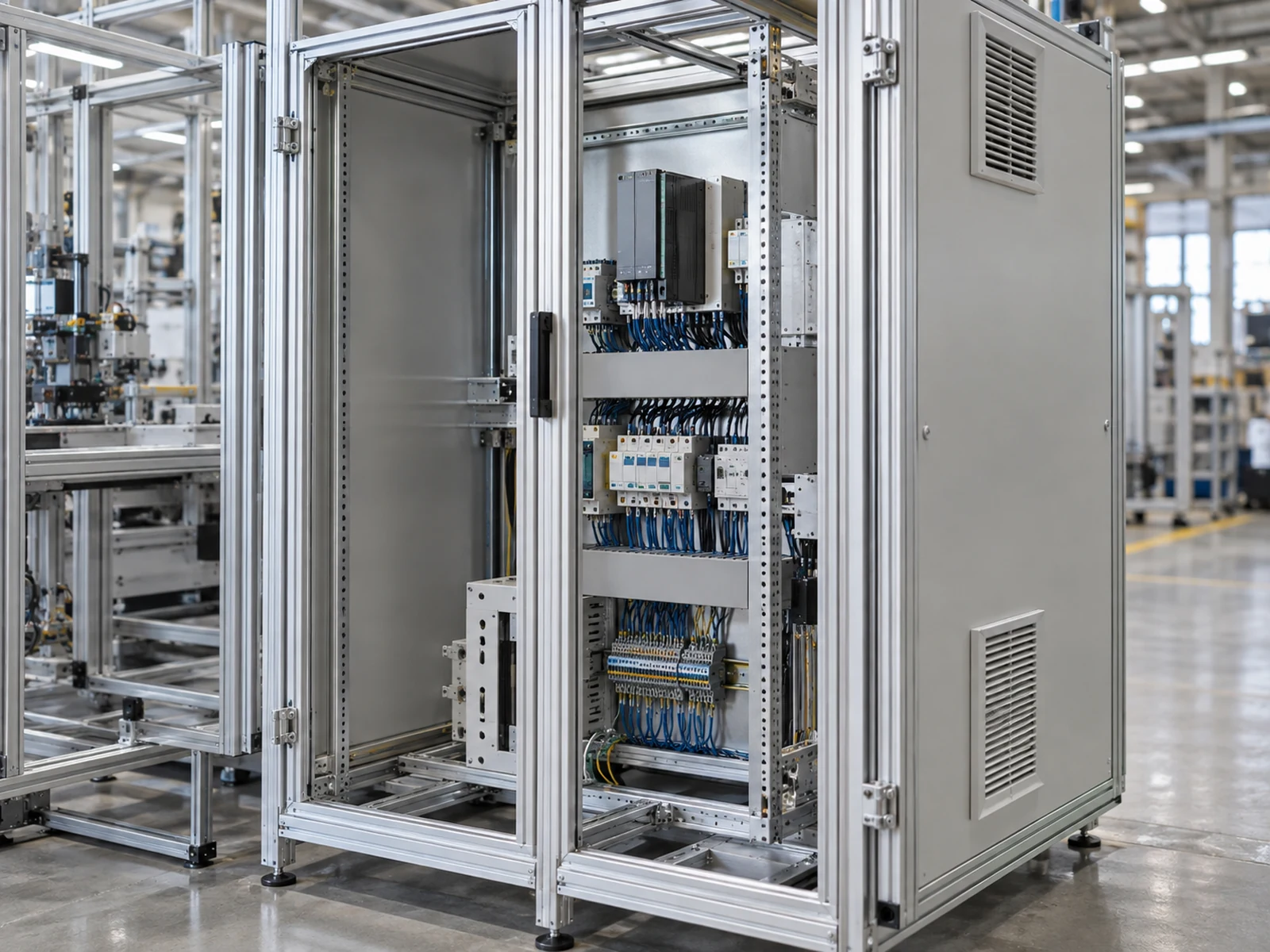
Release a member schedule before asking for a saw price
For stretch wrapper control cabinet frame cutting, the useful starting document is a revision-controlled member schedule, not a drawing of the whole wrapper. Identify the cabinet or subassembly, then give each cut member a unique part number, profile cross-section, material and temper if specified, finish condition, quantity per cabinet, and purchase quantity. Mark the cutting datum and state whether length means overall, long-point, short-point, or another drawing-defined reference. Do not let a vendor infer that a nominal outside cabinet width equals the length of its top rail.
List each end condition separately. A square end, a miter, and a handed feature need different inspection instructions even when their nominal lengths match. Show the profile orientation at the saw and the visible face that must be protected. If holes, slots, tapped ends, hinges, grounding points, or cable openings are required later, label those as downstream operations and name their owner. A circular saw cut does not create a completed cabinet interface by implication.
The schedule should also say whether the quotation is for buyer-supplied stock or supplier-sourced stock, how offcuts are handled, and whether parts are shipped loose or as labeled sets. For a mixed cabinet family, separate each cabinet size and revision. One pooled list without revision control can produce correctly cut pieces that will not assemble into the intended door opening.
Keep cabinet interfaces and machine safety with the right owner
The cabinet frame interfaces with panels, door hardware, mounting feet, cable paths, and service access. It may sit close to the conveyor or guarding, but those surrounding machine dimensions do not become a saw acceptance criterion until an approved drawing translates them into a member dimension or fit check. Ask the cabinet designer to define panel rebate, door swing clearance, gasket compression route, and mounting reference. The cutting supplier should then verify only the cut features within its agreed scope.
A wrapper’s safety enclosure is a separate engineering package. Orion describes wire-mesh guarding, interlocked doors, and a light curtain on its automatic rotary system. Handle-It describes steel-based guard rail protection kits for pallet wrappers. These examples show why a buyer must not convert every perimeter or impact part into an aluminum cut item. Interlock selection, light-curtain placement, structural guard adequacy, electrical protection, and validation belong to the machine builder and its qualified safety team. A saw trial cannot certify them.
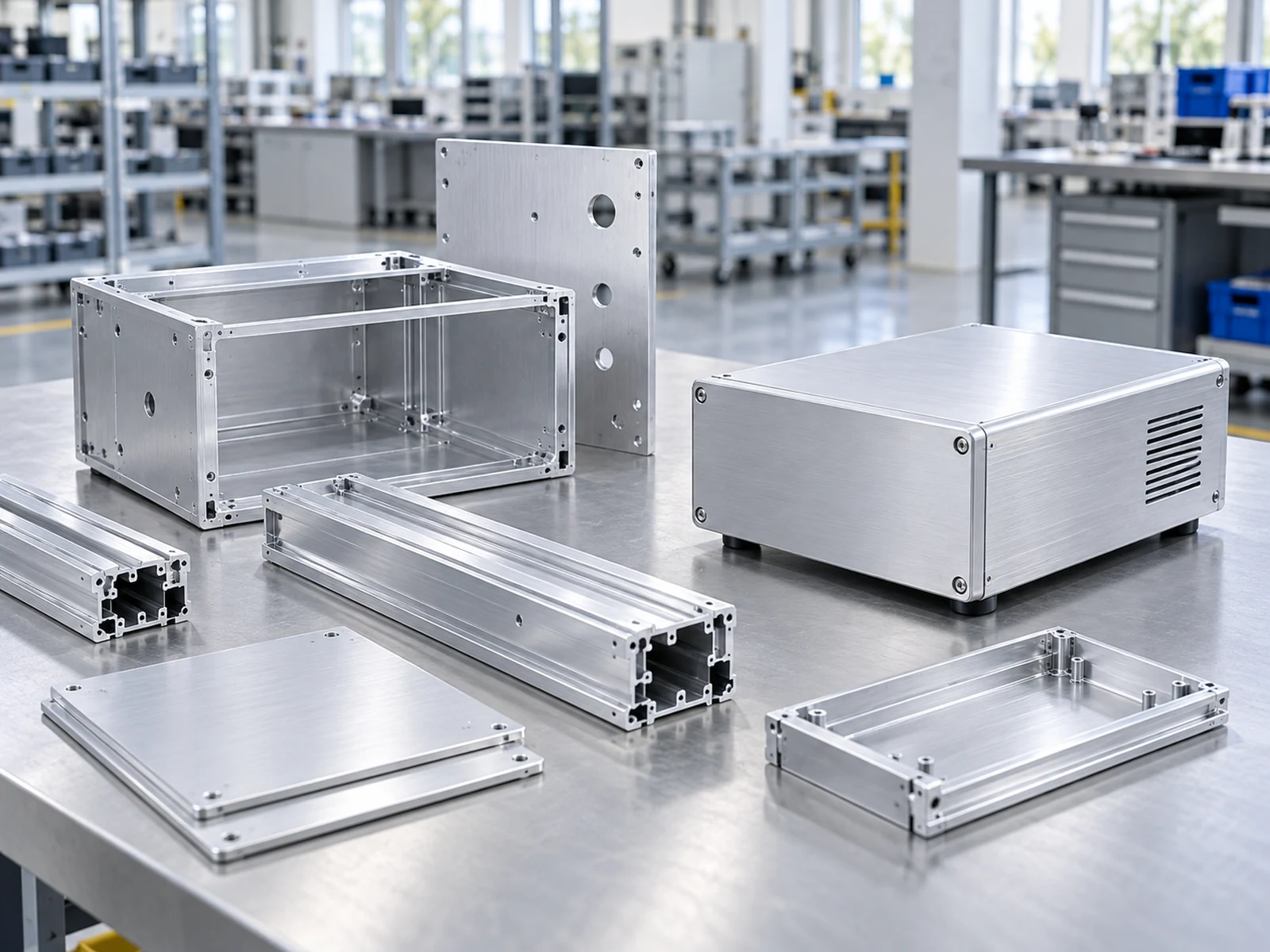
Run a cut trial around the real profile and handoff
A trial is valuable when it represents the released cabinet member, its stock condition, and the intended receiving process. Give the saw supplier a representative profile section and identify its supported and clamped faces. Thin walls, open channels, projecting flanges, or finished visible surfaces may change the fixture and handling plan. Do not request a generic “aluminum cut” demonstration and treat it as proof for an untested cabinet section.
Agree the inspection method before cutting. Measure length from the drawing datum, check the specified end angle or squareness, inspect burrs and deformation at the critical mating faces, and confirm that any protected finish remains suitable for the downstream process. Record the sample’s profile ID, drawing revision, stock lot, saw setup, and observed result. If the panel or door fit is the buyer’s concern, assemble a representative corner or frame with the approved connectors and the actual receiving parts. That assembly check belongs to the buyer’s acceptance plan; it is not an automatic machine-performance guarantee.

Compare quotes at the same supply boundary
A low price for bare straight blanks cannot be compared directly with a quote that includes stock sourcing, angled ends, protected packing, labeled kits, and a sample assembly. Put every quotation against the same approved member schedule and mark inclusions and exclusions line by line. Ask the supplier to identify any setup charge, minimum batch, material allowance, scrap assumption, inspection record, and packaging method. These are commercial questions for the RFQ; the answers depend on the actual job and are not universal machine specifications.
- Input: approved profile drawing, source and condition of stock, quantity by cabinet revision, and any restricted substitution.
- Saw output: member ID, number of ends, end geometry, tolerance and datum, burr and visible-face acceptance, and trial sample count.
- Receiving output: labels by kit and revision, protective separation for visible faces, inspection record, and who checks corner or door fit.
- Excluded package: electrical components, wiring, cabinet sealing, guarding, anchoring, and wrapper commissioning unless another contract assigns them.
If two production routes are under consideration, cost them at the same accepted member stage. A supplier that ships finished cabinets carries different responsibilities from an in-house line that cuts extrusion blanks. Include the remaining drilling, assembly, inspection, and material movement in the internal route. Do not claim a saw saves labor or improves throughput from the cut time alone.
An RFQ example the buyer can adapt
“We need straight and mitered aluminum extrusion blanks for a released stretch-wrapper control-cabinet frame. Please quote the attached revision B member schedule, with profile IDs, stock supply route, lengths and datums, end conditions, visible faces, quantities by cabinet, labeled kit packing, and sample inspection. Identify your supported and clamped faces for the listed sections. Quote drilling, panel preparation, door hardware, electrical work, guard work, and assembly only as separate options if you offer them. We will approve the sample and cabinet fit criteria before series release.”
That request gives the saw supplier a testable output. The buyer should attach drawings rather than rely on this paragraph as a substitute for dimensions or safety design. If the cabinet supplier has already released a complete enclosure, request the approved replacement or finished enclosure instead of opening a second blank-cut purchase order.
Frequently asked questions
Does a stretch wrapper necessarily have an aluminum control-cabinet frame? No. The machine example above establishes that cabinets can be separate packages; it does not establish their material. Confirm the approved cabinet construction before issuing an aluminum cut request.
Can a saw supplier decide where the light curtain or interlock goes? No. The machine builder’s safety design governs those components. A cut-part supplier can work to released dimensions and inspect agreed member features, but it cannot replace safety validation.
Should the RFQ use the cabinet outside dimensions as cut lengths? Only if the approved drawing explicitly defines them that way. Profile joints, connectors, miter references, panel rebates, and door clearances can make a member length different from the enclosure outside dimension.
What should be sent to Jiurun for a useful machine discussion? Send the approved profile sections, member list, material and finish conditions, cut datums, end forms, quantities, and sample acceptance criteria. Jiurun can then discuss a cutting setup against the real workpiece. For a related fixture planning example, see the control-cabinet frame saw-trial guide.
Next step
If your wrapper builder retains aluminum cabinet-frame cutting, prepare one revision-controlled member kit and a representative sample plan. Contact Jiurun with the section drawings and intended cut output. We can discuss the saw and fixture route without assuming that the cabinet, electrical package, or wrapper safety system is in the saw scope.