
Case erector aluminum frame cutting begins with a question a machine footprint cannot answer: which approved aluminum members are actually being bought as saw-cut blanks? A case erector feeds flat corrugated blanks, opens and squares them, folds or seals the bottom, and hands formed cases to the next station. Its magazine, forming mechanism, closure equipment, guards and controls are not one interchangeable frame. If a builder wants aluminum extrusion members, the part drawings and receiving stage must be clear before anyone prices a saw or promises a cut kit.
Machine construction varies. Packway describes one horizontal-infeed erector with an aluminum frame and acrylic safety doors. By comparison, Pearson’s CE15 brochure lists mild-steel or stainless-steel construction. These are other manufacturers’ machines, not Jiurun projects or interchangeable bills of material. Their contrast is the reason to ask for the buyer’s own released extrusion drawings rather than assume every visible rail is aluminum.
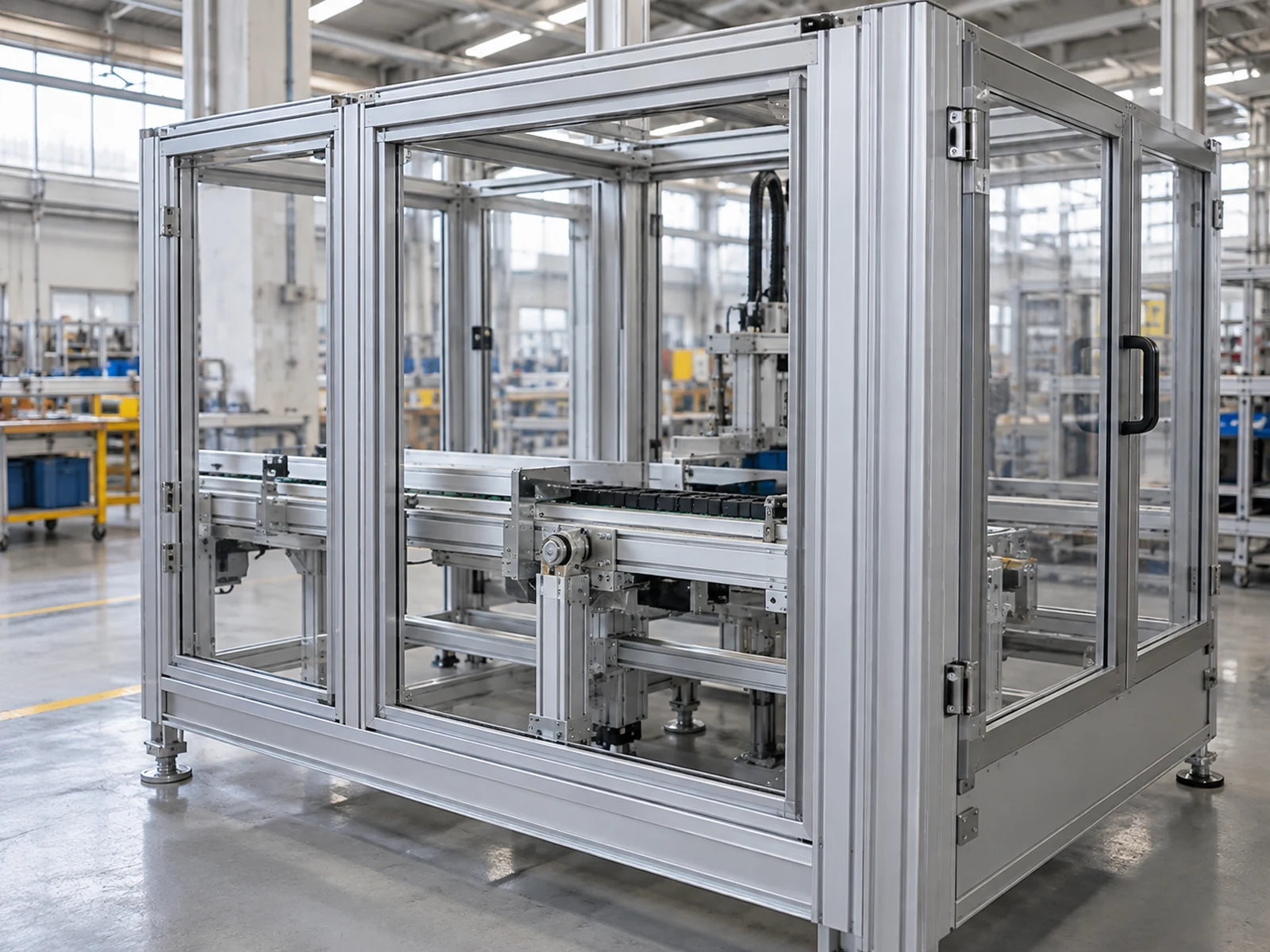
Case erector aluminum frame cutting: separate four physical zones
Start at the blank magazine. It may have an adjustable support, stops and a pickoff interface. Next is the forming zone, where a blank is opened and held square. Closure hardware and the discharge path follow, while a guard perimeter surrounds access points. Wexxar’s WF30 product walkthrough distinguishes the magazine from the forming section; Pearson’s brochure separately identifies its magazine, vacuum opening, folding, flights and sliding guard doors. Those examples show why one overall dimension is not a saw-cut schedule.
On the builder’s general arrangement, mark each approved aluminum cut member in its own zone. Possible candidates include a magazine support rail, a fixed guard-frame upright, a door perimeter member or a discharge support. Do not assign the vacuum pickoff, belt, servo flight, tape head, acrylic panel, interlock, control cabinet or finished machine to a blank-only saw quote. A gray rail may be steel, a bought extrusion assembly or a formed part. Confirm its material, section and supply route from the part drawing.
Give each zone a responsible design owner. A rail that carries an adjustable magazine guide may need interfaces and travel clearance that a passive perimeter post does not. A guard member may be part of a safety assembly whose panel retention, access distance and interlock behavior are approved by the machine builder. Sawing the post to length cannot approve that system. The RFQ should say which cut blanks are delivered, which features another processor adds and who validates the complete erector.
Release a member schedule, not the machine envelope
For every proposed cut blank, request the part number and revision, section drawing, alloy and temper where specified, stock condition, incoming bar length, quantity per machine, finished length, measurement datum and required end form. Separate left- and right-handed positions even when their nominal lengths are equal. Show the shortest finished piece as well as the longest rail; a saw that accepts the long stock may still need a specific support or stop strategy for the short last piece.
Put the adjustment range and carton sizes on the assembly document, not on the cut-blank dimension by inference. The location of a magazine guide, drive or folding arm may change with case style, but that does not make the overall carton width equal to an extrusion length. Ask the design owner to release the actual cut length and any later hole, slot, thread, miter or bracket operation. If the extrusion is supplied only as a plain square-cut blank, state that those later features are excluded.
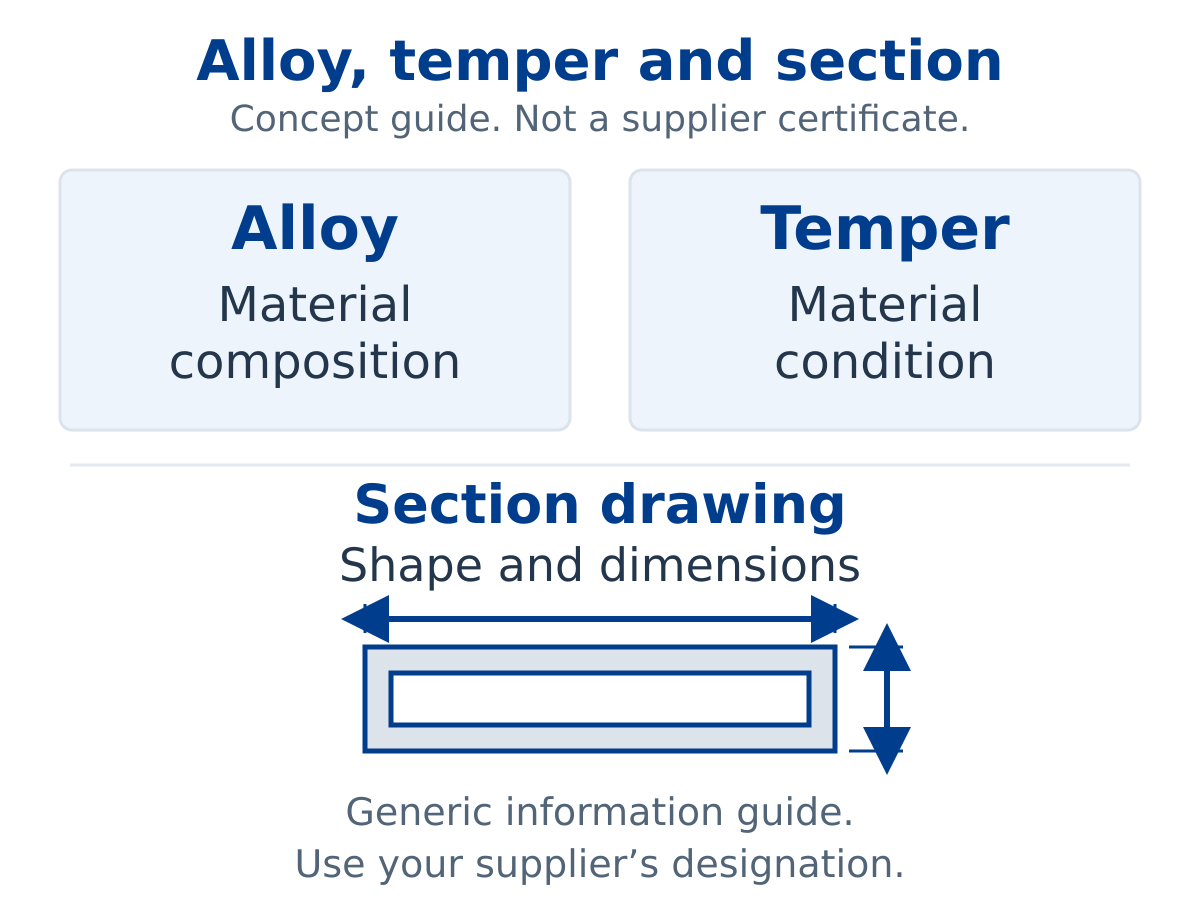
Decide whether the buyer supplies stock or expects the saw shop to source it. If the buyer supplies bars, state how the stock lot, visible surface and reusable offcuts will be recorded. If the supplier sources bars, ask how section identity and material condition will be verified against the approved drawing. Do not substitute a visually similar T-slot profile for a released guard or magazine member without written design approval. Frame connection hardware and panel grooves can depend on details invisible in a broad photo.
Keep magazine and guard interfaces on separate acceptance paths
A magazine support may need a precise position relative to blank pickoff and a guide that moves through its approved range. The cut blank can be checked for length, end orientation and surface condition, but the system builder must confirm how guides, stops, belts and vacuum pickoff operate together. Record the interface holes or joining features as a later operation if the saw quotation does not include them. A trial cut does not demonstrate singulation, case squareness or changeover time.
For a guard frame, list the approved member, its receiving assembly and its panel or door interface. Do not let a cut-to-length quote imply that the guard is compliant or ready to install. Acrylic or polycarbonate panels, door hardware, interlocks, fixings and risk assessment remain with the responsible machinery designer unless a separately defined complete module is bought. If the buyer is considering a complete replacement guard, compare that module with a member-only kit on the same accepted delivery stage; a low blank price excludes assembly and validation.
The discharge interface also deserves a separate line. Identify whether the erector’s outfeed meets an existing conveyor, a newly supplied conveyor or an integrator’s transfer module. Height and footprint belong to the approved layout. The saw vendor can quote the specific aluminum rail or bracket blank that drawing calls out, while the integrator retains responsibility for handoff of formed cases.
Trial the actual profile and inspect the cut output
Send the saw supplier the released section or an explicitly labeled representative sample. Include the longest rail, the shortest member, any thin wall or open side, and a finished face that must remain unmarked. Ask how the chosen stock is located, clamped and supported at the cut and outfeed. The supplier should propose a feasible blade, clamp and support arrangement for the actual section; do not copy an arrangement from another product photograph.
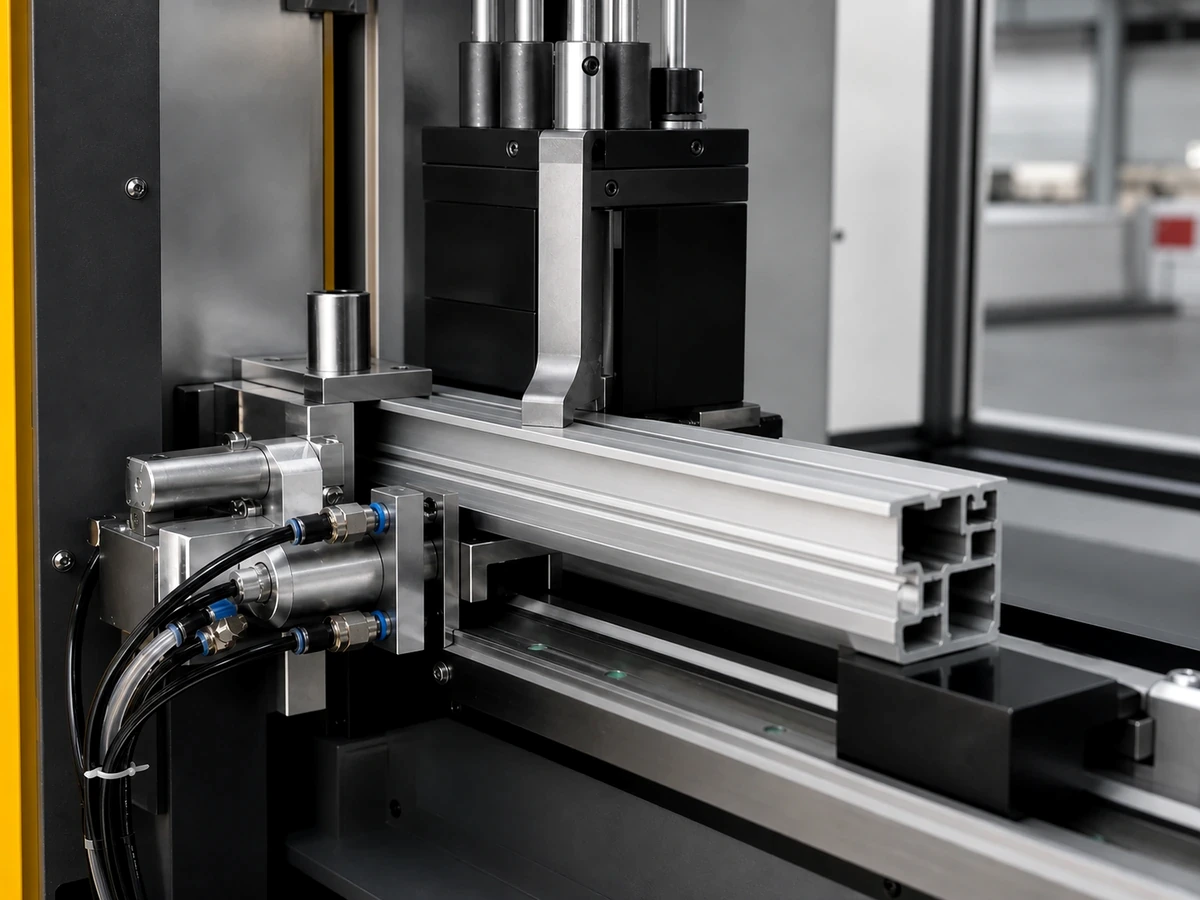
Set receiving criteria before cutting: length from the agreed datum, end squareness or angle if specified, burr location, visible surface marks, deformation and any downstream connector fit. Record the instrument and method used. Check a first-off part and repeat after a stop change, stock change or variant switch. A feeding-position number is not the same as finished-part accuracy; a single good sample does not qualify every section or length in the kit. Hold any disputed pieces by part number, revision and stock lot instead of mixing them with accepted output.
The decision after a trial should be explicit: release this stock-and-part combination, change support or fixture and repeat, or use another process. Do not convert an acceptable cut face into a claim that the magazine feeds reliably, boxes square correctly or guards meet a safety requirement. Those are complete-machine acceptance questions for the builder.
Compare a cut kit with a ready-to-install module
Ask each bidder to price the same drawing revision and accepted output stage. A cut-blank quote covers specified material, end condition, inspection and marking. A prepared-member quote may add holes, threads, special ends, coating or other operations, each assigned to a supplier and receiving check. A ready-to-install magazine or guard module includes assembly and bought components. Comparing the unit price of a loose rail with a fully assembled module will hide the cost of processing, parts and system responsibility.
Package blanks by zone, machine variant, part number, revision and quantity. Do not combine similar-length magazine and guard rails in one unmarked bundle. The receiving team should reconcile the kit with the approved schedule before drilling or assembly. Keep replacements and engineering-change parts separate. If a carton format or machine hand changes, review the affected members and already-cut inventory before reusing them; the same overall length does not prove that the interfaces match. Our saw output traceability guide details job-to-bundle handoff, and the carton-sealer frame guide covers a different machine stage after cases are formed.
Seven questions for a case erector frame RFQ
- Which approved parts are aluminum saw-cut blanks, and which components are steel, bought modules or complete assemblies?
- Who owns the magazine, forming, discharge and guard drawings and their current revisions?
- What section, stock condition, datum, end form, length and quantity apply to each member?
- Which joining, holes, guides, panels, doors and interlocks are excluded from the blank quote?
- Which long, short and difficult-to-clamp sections will be used in a representative saw trial?
- Which first-off dimensions, surface conditions and traceability fields will release a batch?
- How will each kit, replacement and revision change be labeled and accepted by the machine builder?
Related equipment video
The following clip from the Jiurun Machinery channel shows general aluminum saw activity. It does not show this case erector, the approved member stock, an offered configuration, a customer project, a witnessed trial or verified performance.
Need a case erector cut-member quote? Send the released aluminum part drawings, member schedule and representative extrusion through our contact page. We can discuss sawing and inspecting the specified blanks while the machine builder retains complete erector design and acceptance.