
Robotic palletizer aluminum frame cutting is a useful RFQ only after the machine builder has identified the aluminum members it actually intends to buy as saw-cut blanks. A palletizing cell also contains a robot, end-of-arm tooling, infeed handling, controls and a safeguarding concept. A cut extrusion is one input to that system. It is not a robot base approval, a validated guard, or proof that the cell can stack the buyer’s products.
Real palletizer architectures show why the supply boundary matters. ABB describes a compact palletizing cell with a robot and suction gripper, while Schmalz separates robot flange, gripper and connection accessories in end-of-arm tooling. These are examples from other suppliers, not Jiurun projects or evidence that their parts are made from the buyer’s extrusion. The approved palletizer drawings, not a photograph or an industry label, decide the cut list.
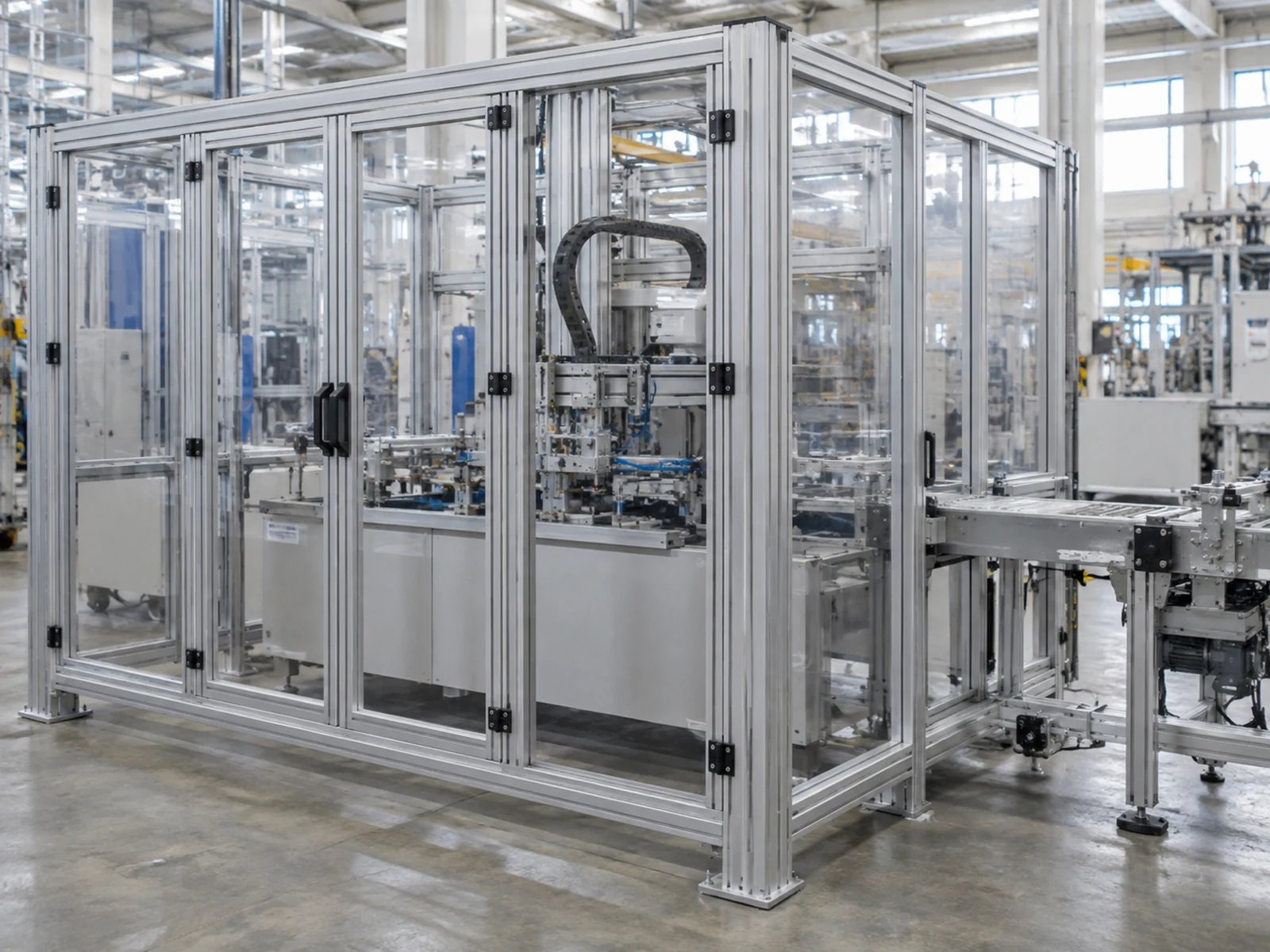
Robotic palletizer aluminum frame cutting: define the member boundary
Take the cell general arrangement and mark each mechanical zone before asking for a saw quotation: product infeed, pallet location, robot working area, operator access, controls and any nearby equipment. Then color only those positions for which the design owner has issued a separate aluminum extrusion part drawing. A perimeter upright, conveyor support rail or sensor support may be a cut-member candidate. A cast robot pedestal, welded steel foundation, fabricated bracket, guard panel, vacuum tool and electrical cabinet may follow entirely different procurement routes.
Do not turn a visual silver-colored frame into an assumed aluminum cut job. Confirm the material and whether a visible member is a standard extrusion, a bought module or a finished assembly. Identify the design owner, approved drawing revision, receiving assembly and responsible installer. If a member is part of an engineered safety barrier, its length and end preparation must come from that owner; a saw supplier should not infer barrier strength, access distance, interlock performance or regulatory conformity from a generic cut sample.
Use three separate RFQ columns: cut blank supplied, later processing or assembly by another party, and complete palletizer function owned by the integrator. This keeps the saw quote comparable and prevents a supplier from seeming to promise a working cell when it has priced only extrusions.
Build a drawing-controlled cut schedule
For every released member, provide the part number and revision, section drawing, alloy and temper when specified, stock surface condition, blank quantity per cell, finished cut length, length datum, end form and allowed handling marks. Distinguish left and right parts even when their lengths match. Record whether the part arrives as a loose blank, a labeled group for one module, or a prepared kit with additional operations explicitly included. Do not hide drilling, tapping, milling, welding, coating, glazing or wiring inside the phrase “cut to size.”
Show the longest incoming bar, the shortest accepted member, the number of lengths in a batch and any special stop or support requirements. A saw that can cut one long rail does not automatically handle the short member after the final feed. If the buyer supplies extrusion, state how stock lots and remaining material are identified and who owns scrap and reusable offcuts. These details change the production route and the receiving record.
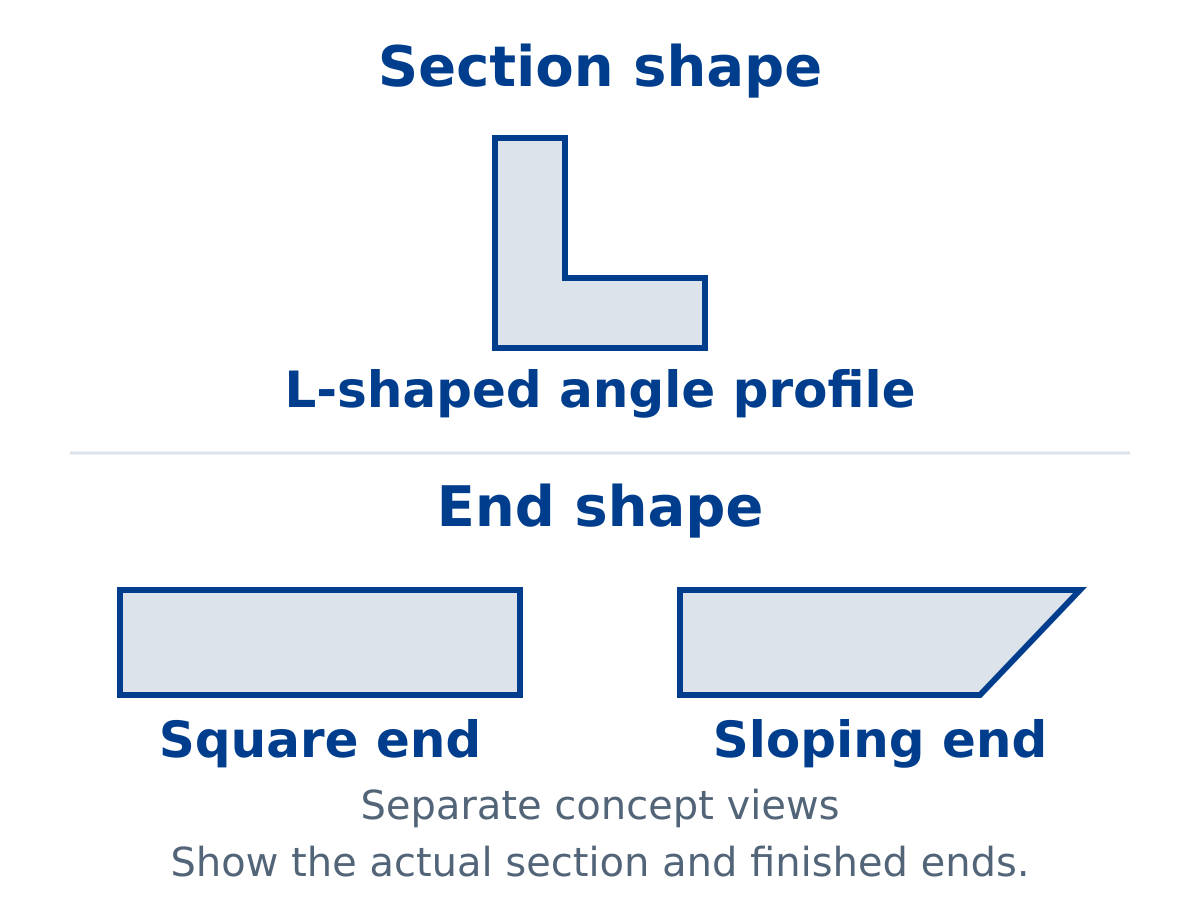
An assembly drawing often names the overall frame size, while the saw needs the blank length and measurement face. For a miter, say whether the number on the print is the long point, short point or another datum. For square-cut uprights, identify the end face that locates against the base or cap. Agree how the receiver will measure each part before production begins. Otherwise two shops can both report a “correct” length while using different references.
Keep the robot and infeed interfaces with the system owner
The robot or end effector may require mounting plates, flange patterns, stiffness checks, dynamic clearances and cable routing. Those are not established by sawing a nearby aluminum rail. Ask the integrator to mark the interface points where a cut member meets a bought module or a later-machined bracket. If an interface hole, slot or fastener pattern must be present at delivery, assign that operation to a named supplier and an inspected drawing. A blank-only RFQ should say plainly that it does not include it.
Likewise, a palletizer infeed frame might meet an existing conveyor, a separately ordered conveyor or a new line. Put the incoming height, support location and connection responsibility on the assembly drawing rather than inferring them from the cut list. The saw vendor can discuss whether an extrusion section can be gripped, supported and cut to the specified blank geometry; it cannot validate the complete material flow or pallet pattern through a cut trial.
Guarding deserves its own approval path. The exact access gates, panels, interlocks, stopping behavior and restart sequence are safety-system decisions for the machinery builder and site risk assessment. The aluminum cut-member quote should identify any guard-frame pieces and their revisions, then state who designs and validates the complete barrier. For a separate buyer discussion of restart observations, see our aluminum saw emergency-stop trial guide; it addresses the saw itself and does not certify a palletizing cell.
Witness a representative saw trial, then inspect the right result
Give the saw supplier the actual approved extrusion or a clearly labeled representative sample, with its section, finish and quantity. Include a long member, a short member and any difficult end orientation. Confirm the permitted blade and clamp arrangement for that exact section with the equipment supplier; do not transfer a setup from a different profile by assumption. During a witnessed trial, record how the stock is located and supported, whether the chosen datum remains accessible, where contact marks appear and how the cut parts leave the machine.
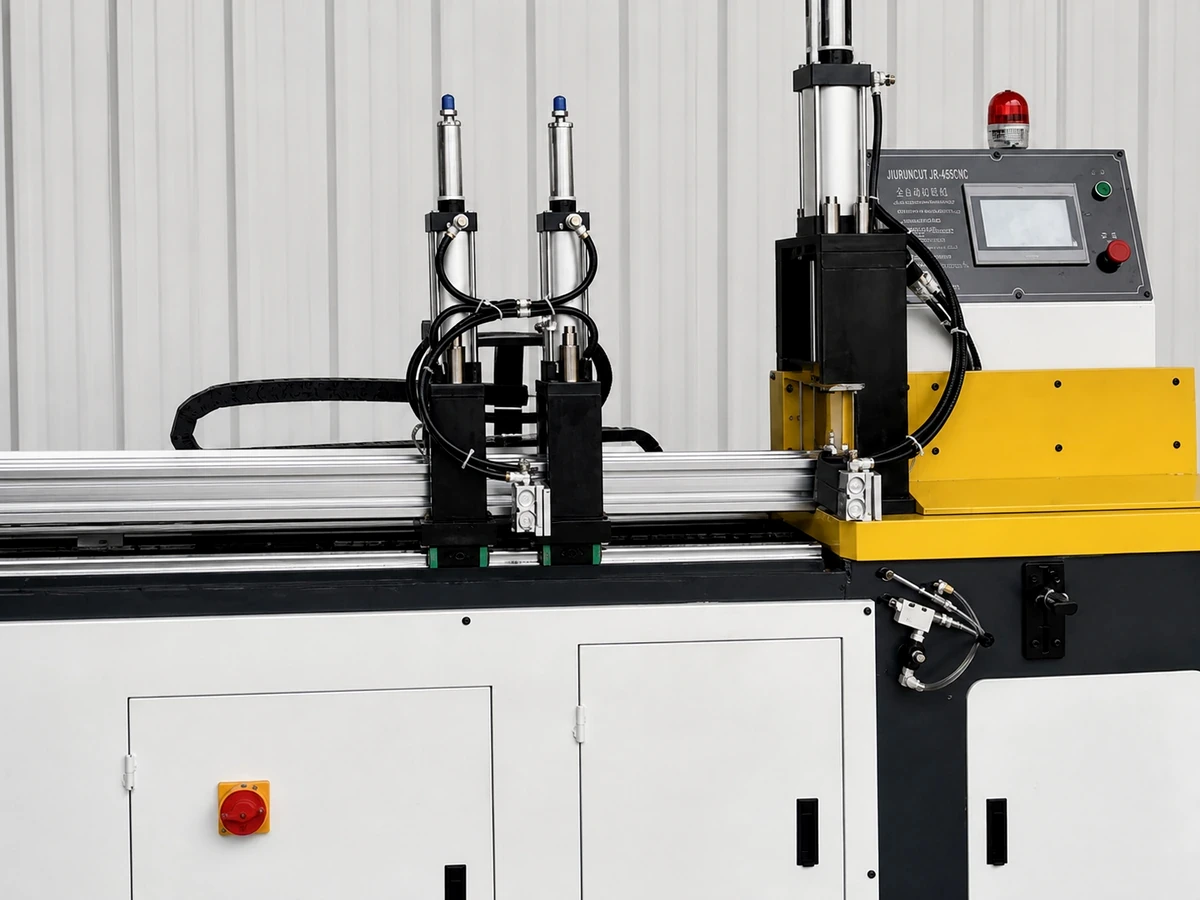
Inspect the first-off blank against the released part drawing: length from the agreed datum, end form, face condition, burr location and any visible deformation or finish damage. Do the same after a batch change or stop adjustment. The buyer must set its own tolerances and sample plan; do not claim a universal precision figure or treat the saw’s feed positioning specification as finished-part accuracy. Record instrument, method, operator, stock lot, blade identification and accepted or held quantities so that the result can be traced to the exact trial.
A good trial ends with an actionable decision: accept this stock-and-part combination, change the fixture or support and repeat, or move the part to another process. It does not establish robot reach, gripping success, pallet stability, guarding compliance or the final cell cycle rate. Those outcomes require system-level tests by the responsible integrator.
Make receiving and change control part of the quote
Request packaging by cell, module, part number and revision. Long rails need protection from bending and surface damage; short pieces need a way to stay segregated by hand and length. Ask who labels each bundle, how a mixed-length pack is reconciled, and whether replacement members can be ordered individually. The receiving team should be able to count and measure a lot without guessing which profile belongs at which station.
If the palletizer layout changes, pause the affected member schedule and identify what has already been cut. Compare old and new drawings before reusing stock; matching overall length does not prove that the end orientation, datum or later interface is compatible. For the broader process of linking cut bundles to released jobs, see our saw output traceability guide. The palletizer-specific question is which cell and module each accepted blank belongs to.
When comparing two quotes, align the same drawing revision, stock condition, number of variants, sample-trial obligation, inspection method, packaging and downstream exclusions. A lower unit price for unmarked, mixed blanks is not equivalent to a controlled module kit. Conversely, do not pay for a complete-machine scope when only straight cut members have been released. For wider equipment choices, our industrial aluminum profile cutting overview describes the machine family rather than this cell’s approval.
Seven questions for a palletizer frame RFQ
- Which exact aluminum members have approved part drawings, and who owns the complete palletizer design?
- What part number, revision, section, material condition, datum, finished blank length, end form and quantity apply to each position?
- Which robot, gripper, conveyor, guard and electrical interfaces remain outside the cut-blank supply?
- Which long, short, finished and difficult-to-support samples will be witnessed on the proposed saw setup?
- What first-off and batch inspection results will release a lot, and how will nonconforming pieces be held?
- How will parts be packed, labeled and traced to one cell, module, stock lot and drawing revision?
- Who approves any changed member, later machining operation or complete-cell acceptance test?
Related equipment video
The following Jiurun Machinery channel clip demonstrates general aluminum saw equipment activity. It is not footage of this palletizer, its approved members, the offered model configuration, a customer job, a witnessed sample or performance proof.
Preparing a palletizer frame cut-member quote? Send the released extrusion drawings, member schedule and a representative section through our contact page. We can discuss cutting and inspection of those blanks while the system builder retains responsibility for the robot cell and its acceptance.