
Carton sealer aluminum frame cutting begins with a narrow purchasing question: which released frame members, if any, will be supplied as saw-cut extrusion blanks? A carton sealer is a working machine with a body, tape or glue unit, drives, guides, controls and guarding. Cutting a profile to length does not make a complete sealer or establish its box range, seal quality or operating safety. The buyer needs a controlled member schedule before asking a saw supplier or cut-part subcontractor for a price.
Case-sealer layouts differ. SOCO SYSTEM describes a modular case-sealer family with machine bodies, tape dispensers, support modules, side drives and pillars that can be combined for a specific line. Hualian describes one case-sealer variant with an aluminum frame. These are other manufacturers’ examples. They do not establish the material, extrusion drawing or construction of the buyer’s machine, and they are not Jiurun installations. Use the actual approved assembly and part drawings for the RFQ.

Carton sealer aluminum frame cutting: set the drawing boundary
Start with the machine builder’s approved general arrangement. Mark the sealer body, infeed and discharge conveyor interfaces, tape or glue head, side drive, flap-folding hardware, guide adjustment, control cabinet and guards. Then identify only the aluminum extruded members that have an issued manufacturing drawing. A straight saw-cut rail may be a feasible blank; a formed sheet guard, bought tape head, welded base, machined plate or electrical assembly is a different supply route.
Do not infer that a visible silver frame is a raw aluminum extrusion. The part may be a finished bought module, a fabricated section, a coated steel piece or a replacement supplied only with its mounting hardware. Ask who owns the part design and who authorizes cutting it. Record the drawing revision and the receiving assembly for every proposed blank. If no aluminum cut members are released, the correct quote is for the approved complete module or another supplier route, not an invented saw job.
Build a member schedule that a saw shop can quote
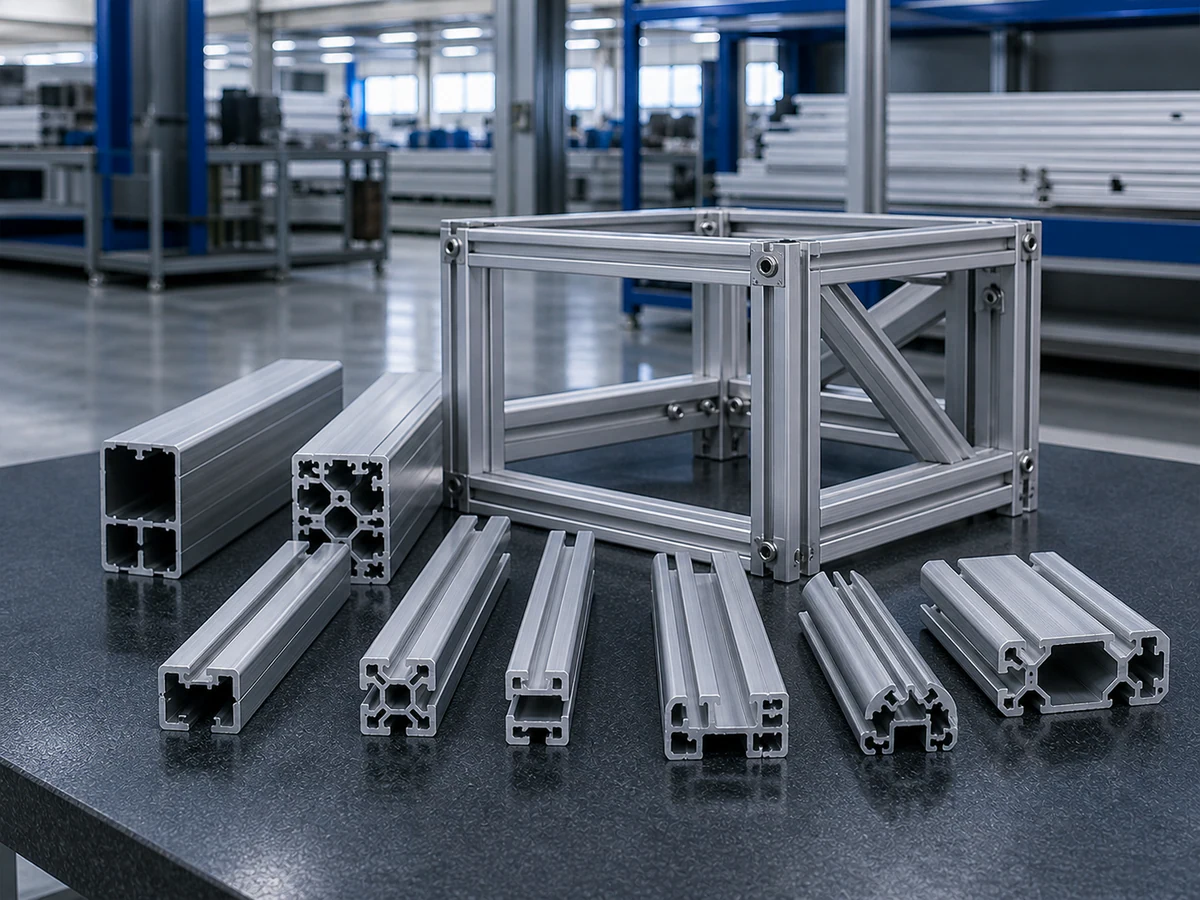
A useful schedule identifies each machine variant and each frame position. Separate base crossmembers, uprights, overhead support rails, guide-support members and any optional conveyor-interface rails. For each member record the approved section drawing, alloy and temper if specified, surface condition, stock length, quantity per machine, finished blank length, end form, datum face and downstream operation. Note whether left- and right-handed pieces share a cut length but differ later. A single total length for the whole machine hides those decisions.
Show the longest incoming bar and shortest accepted blank, including realistic short offcuts and repeat quantities. State whether the cut face is a final receiving surface or merely stock for drilling, tapping, milling, joining or finishing elsewhere. If a bracket needs a slot or a rail needs a mounting hole, label that feature as later work unless the quoted supplier has expressly included and demonstrated it. A saw trial alone cannot approve the completed frame assembly.
Separate cut blanks, prepared members and complete modules
Three prices are often confused. A cut-blank quote covers an approved section, length and end condition. A prepared-member quote may add holes, slots, threads, labels or finish, each with its own acceptance record. A complete module quote includes assembled interfaces and bought components such as tape heads, drives, guides or controls. Put these stages on separate RFQ lines so a low blank price is not compared with a ready-to-install unit.
For a line change, ask whether the sealer manufacturer will supply a replacement body or an approved extension module. Cutting new rails from a similar extrusion does not prove the new body will fit the tape head, side belts, box path or guarding. Record the responsible designer’s approval of the modified assembly. For a new-build program, compare bought prepared frame kits with in-house blank production using the same accepted output stage. Count stock, labor, tooling, inspection, offcuts, marking, outsourced features and the parts that still have to be bought.
Use a representative profile for the saw trial
A saw RFQ should include physical examples of the thickest and thinnest wall sections, the largest outside envelope, an open section if present, the longest stock and the smallest accepted piece. Ask the saw supplier to explain where each member contacts the infeed, stop, clamp and outfeed supports. A profile with a wide open slot can distort if pressure is applied to the wrong face; a thin wall can mark under a fixture that works for a solid rail. Trial pieces should match the actual approved stock family, not an unrelated catalog section.
For each trial, record the orientation, support arrangement, blade selection, first-off measurement method and operator acceptance criteria. Check end-face condition, burrs, length from the stated datum, squareness or angle where required, surface marks and fit with the specified connector. Keep the measured result with the exact part revision and stock lot. If the drawing does not yet give a tolerance or surface criterion, have the machine builder issue one before treating a demonstration as acceptance.
Release the complete frame kit without claiming a complete sealer
Label bundles by project, machine variant, drawing revision, member ID, quantity, handedness and receiving station. Keep spares separate from the production kit. A frame kit should not be called complete when one crossmember or a unique guide support is missing. The receiving team should be able to compare the physical bundle with the released schedule before drilling, fastening or installing it. Our saw output traceability guide explains this handoff.
The sealer builder still owns the fit of the tape or glue unit, box guides, drives, guards, controls and the line interface. A cut kit can pass its own dimensional receiving check while the complete sealer has yet to be commissioned. See the industrial equipment frame saw guide for broader make-or-buy comparisons; use this article’s module boundary and variant schedule for the sealer-specific quote.
Seven RFQ checks to send to the supplier
- Which sealer variants have released aluminum extrusion member drawings and which frame parts remain bought modules?
- Who approves the frame design, drawing revision and any change to the box path, tape head or guard interface?
- What are the exact section, stock condition, datum, blank length, quantity and end form for each member?
- Which features and finish steps belong to the cut-blank supplier, another processor or the sealer builder?
- Which representative stock and short-piece cases will be used for a witnessed saw trial?
- What measured first-off results and connector-fit checks will the receiving team accept?
- How will complete kits, handed members, replacement spares and revision changes be marked and reconciled?
Related equipment video
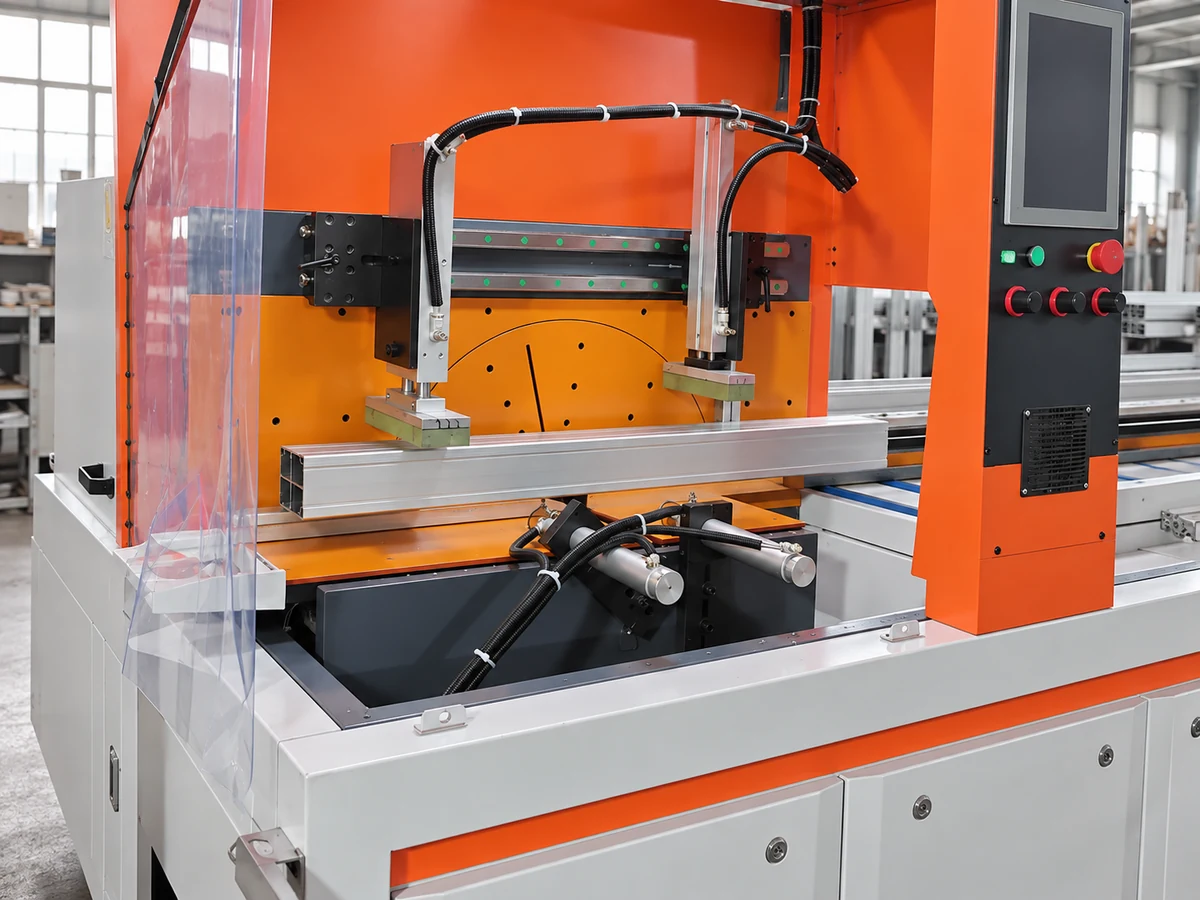
The following Jiurun Machinery channel video shows general aluminum saw equipment activity. It does not document this carton sealer, the buyer’s frame material, offered configuration, customer project, trial result or performance.
Need a frame-cutting proposal? Send the released carton-sealer member schedule, section drawings and a representative profile through our contact page. We can discuss a saw trial for those blanks while the machine builder remains responsible for the complete sealer.