
An aluminum saw emergency stop trial should answer a buyer’s practical question: what does the offered machine actually do after a person operates an emergency stop, and what has to happen before another cut can begin? A red button in a photograph cannot establish the stop function, stopping behavior, guard response, or safe restart logic. Ask the supplier to demonstrate the exact quoted configuration with your intended stock and cycle, then have a competent machine-safety professional assess the installation and applicable requirements.
This is a procurement and acceptance framework, not an operating instruction or a claim that any pictured Jiurun model has a particular safety architecture. Emergency stop, normal stop, guard interlocking and energy isolation serve different purposes. Keep those questions separate in the RFQ and trial record.

1. Identify every place a person may need to stop the saw
List the operator loading position, control station, outfeed, maintenance approach and any integrated conveyor or transfer position in the proposed layout. Ask the supplier to mark emergency-stop devices on the actual layout and explain which hazardous movements each one affects. For a long line, a stop at one end may need to address equipment outside the saw enclosure; the answer must come from the supplied system boundary, not a general product video. Record who is responsible for the upstream and downstream interfaces.
OSHA’s metalworking-equipment interpretation says emergency-stop actuator suitability depends on equipment, application and operator concerns. It does not prescribe a single button shape for all metal saws. Use that as a reason to request a machine-specific risk assessment rather than guessing from a catalogue photo.
2. Record what happens to blade, clamps and feed when stop is actuated
Have the supplier demonstrate an agreed, safeguarded test on the actual offered machine. Observe blade motion, feed motion, clamp state, material support and any automatic restart demand. The important result is the whole machine response, including what remains energized or moving after the command. Do not reach through a guard to test a stopping blade. Let the supplier and competent safety personnel select the test method and measurement points.
The ISO 13850:2015 overview describes principles for the emergency-stop function, while explicitly distinguishing it from functions such as shielding and braking that may be involved in a particular design. Do not infer a brake, stop category or stopping time from the presence of an emergency-stop device. For a separate buyer question about the blade’s actual run-down and access time, see our blade run-down checklist.
3. Aluminum saw emergency stop reset must not start a cut
Ask for a demonstration of the full sequence: stop actuation, fault/status indication, deliberate reset, separate normal start command and completion of the next intended cycle. Record what the operator must check before restarting. Releasing or resetting a red actuator should not be treated as permission for automatic blade or feed movement. The UK HSE’s machine-safety guidance describes manual emergency-stop reset followed by use of normal operating controls to restart.
Repeat the observation from each relevant emergency-stop device. If the machine is part of a line, agree which station may restart each linked section, and show that one station’s reset does not unexpectedly launch another section. Note the actual indicator messages and whether the operator can tell which stop remains active.
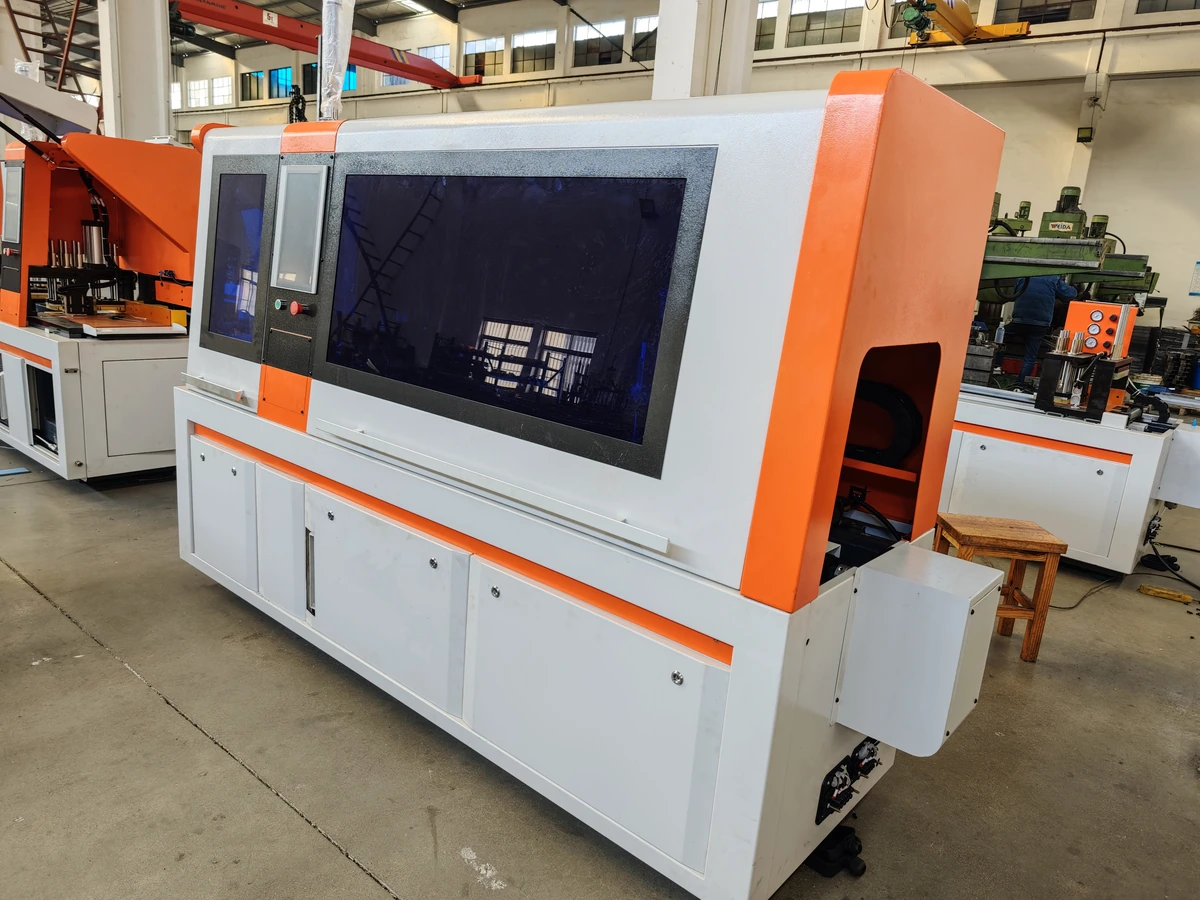
4. Separate emergency stop from guard interlocking and isolation
Ask what prevents a hazardous cycle when a movable guard is open, and what conditions must be met after it closes. Record whether any guard lock or access delay is part of the quoted machine and require the supplier to demonstrate it. OSHA’s machine-guarding guidance links safeguard location to stopping time and reach to the hazard. An emergency stop is not a substitute for a suitable guard or interlock.
For blade changes, jam clearance and electrical or pneumatic service, specify the actual isolation points and site procedures separately. Our energy-isolation buying guide addresses that handover. A stopped machine can still have stored or supplied energy; do not use an emergency-stop pushbutton as proof of isolation.
5. Test the return from a representative interruption
Choose a realistic cutting job and write down the point in the cycle at which the supplier will conduct a controlled stop trial. Then observe how the partly cut workpiece, clamp, feed count and job record are handled before any restart. Decide whether that part is rejected, held for inspection or reprocessed under an approved method. Do not let the machine silently count an interrupted piece as accepted output.
Repeat only the scenarios that the supplier’s safe trial plan permits: for example, before feeding, during the cutting sequence and after the blade has returned. A logged result should name the scenario, machine configuration, material/profile used, observed state and person accepting the result. Never improvise access, defeat a guard or use a production operator as a test sensor.
6. Demand evidence for the supplied configuration
Request the applicable manual, control and safeguarding description, risk-assessment handover, emergency-stop and restart test record, training plan, and any site-specific interface drawing. Identify the model, control revision, guard option, blade and auxiliary equipment in the record. If the supplier changes the controls or line interfaces between quotation and delivery, repeat the affected acceptance checks. A demonstration of a different machine can be useful context but cannot approve the purchased unit.
For semi-automatic operation, also document the normal cycle-start position and operator handoff; our cycle-start buyer checklist covers that separate decision. Ask the competent safety assessor to decide which tests and standards apply at the installation site. This article does not assign a universal stopping-time limit or safety performance level.
7. Write a clear pass, hold or correction decision
For the aluminum saw emergency stop trial, make the purchase record actionable. Pass only the specific configuration and test scenarios demonstrated. Hold acceptance when an actuator cannot be reached from an intended work position, the machine response is unexplained, reset causes motion, status is ambiguous, or guarding and integration documents are missing. Request the supplier’s corrective action, revised documentation and witnessed retest; do not convert a verbal promise into a passed safety trial.
For the RFQ, include a short table with the station, initiating device, controlled equipment, observed blade/feed/clamp response, reset owner, independent restart command, evidence file and acceptance sign-off. This turns a vague “emergency stop included” line into a reviewable scope. The final design and safe operating method remain subject to the actual machine, local rules and qualified assessment.
See an equipment demonstration
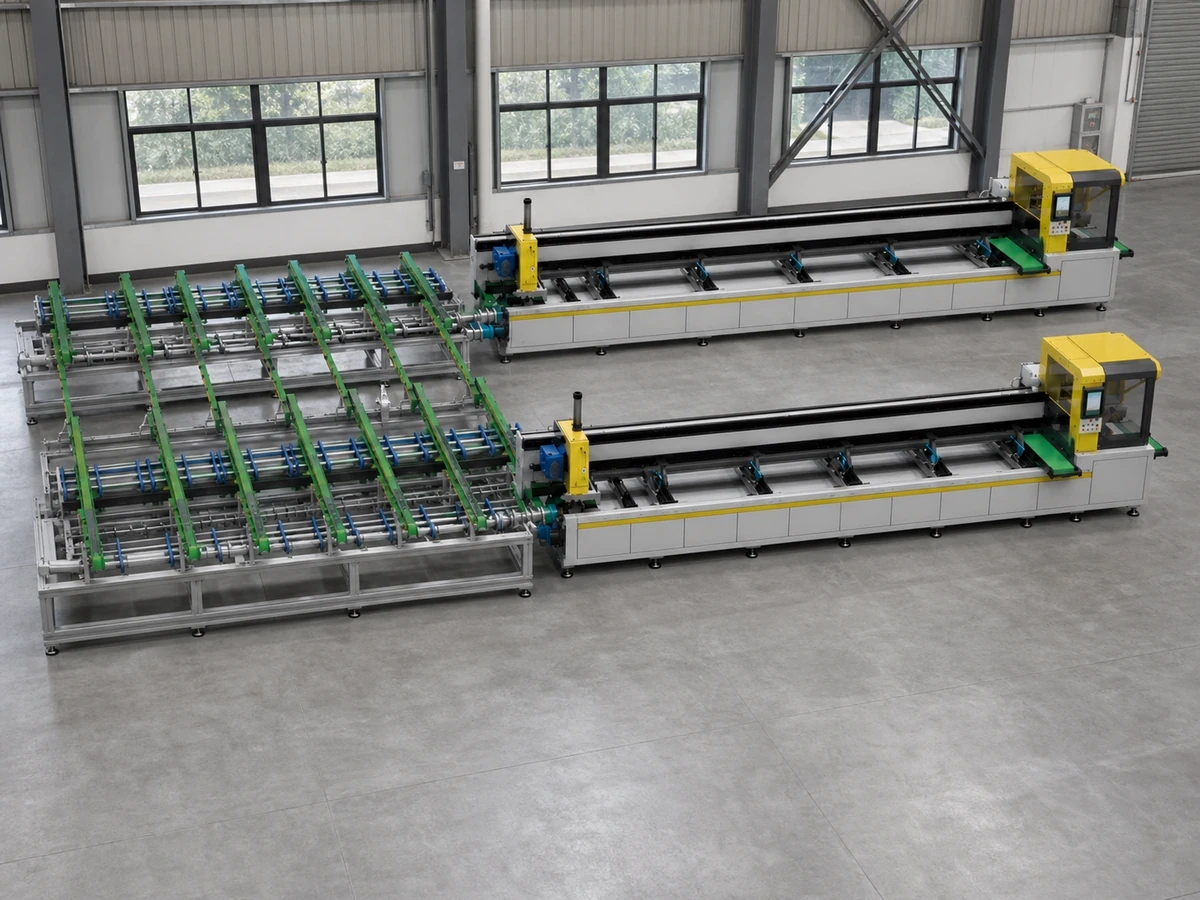
The following video comes from Jiurun Machinery’s own YouTube channel and shows a general aluminum-saw cutting scene. It does not demonstrate the emergency-stop checks in this article or prove the safety functions of a particular quotation. Request a witnessed trial of the exact offered equipment.
Send a useful RFQ
Send your profile drawing, stock form, cut-length range, expected cycle, site layout and the people and stations that must be protected. Ask Jiurun to identify the proposed saw configuration and to plan a witnessed emergency-stop, reset and restart demonstration with the responsible safety team. That evidence gives procurement, production and EHS a common basis for acceptance.