
Water filtration skid aluminum frames can be a useful cutting brief only after the equipment builder identifies which members are actually approved as aluminum. A water-treatment skid may include filter vessels, pumps, pipework, controls and a structural base. A saw-cut extrusion is none of those finished systems. This guide covers the released cut members for an OEM-approved, nonwetted auxiliary frame, such as an equipment guard or control-panel support. The OEM must separately approve material, loading, corrosion exposure, joints and the primary skid structure.
Skid-mounted water-treatment packages are real equipment categories: Veolia describes modular skid-mounted media pressure filters. That example establishes the application context, not an aluminum construction requirement. In fact, many water-treatment packages use steel or stainless steel for core structure and wetted components. Do not infer a suitable extrusion, coating or section size from an illustrative photograph.
Define the aluminum frame’s boundary before the saw quotation
The first drawing should divide the package into the primary skid, any secondary guard or panel frame, mounting interfaces, and field services. Label each cut member with a unique part number and state whether the saw supplier delivers an unmodified blank or a prepared component. A request that says only “cut the skid frame” hides critical decisions: Is the frame carrying a vessel? Is a pump bracket welded to the base? Are panels fitted later? Which party checks installed alignment? The answers determine whether an aluminum saw-cutting quotation is even the right quotation.
| Supply boundary | What the cutting shop can quote | What remains with the OEM or fabricator |
|---|---|---|
| Cut extrusion blank | Released profile, end type, length, quantity and inspection rule | Hole making, joints, load approval and installation |
| Prepared frame kit | Only the explicitly listed secondary operations and part marking | Final assembly acceptance and skid integration unless separately contracted |
| Complete water-treatment skid | Outside a saw-only scope | Vessels, piping, pressure integrity, controls, water quality and commissioning |

Release a cut list that preserves assembly references
For each approved aluminum member, record the profile drawing revision, alloy and temper specified by the buyer, stock length, part ID, finished blank length, datum end, end angle, orientation, quantity and allowed deviation. State whether the dimension is measured to an outside corner, inside corner, centerline or the long point of a miter. For unequal sections, a mirrored part is not automatically interchangeable. Mark the viewing face and the end that locates in the fixture.
Add a disposition rule for damaged or ambiguous stock. An extrusion may have twist, bow or dimensional variation before cutting; the Aluminum Association’s extrusion tolerance guidance explains why these are distinct measurements. The purchaser should specify which incoming checks matter to the assembly and which deviations are acceptable. A precise saw stop cannot correct an out-of-spec profile or a drawing with an undefined datum.
Match the saw trial to the released members
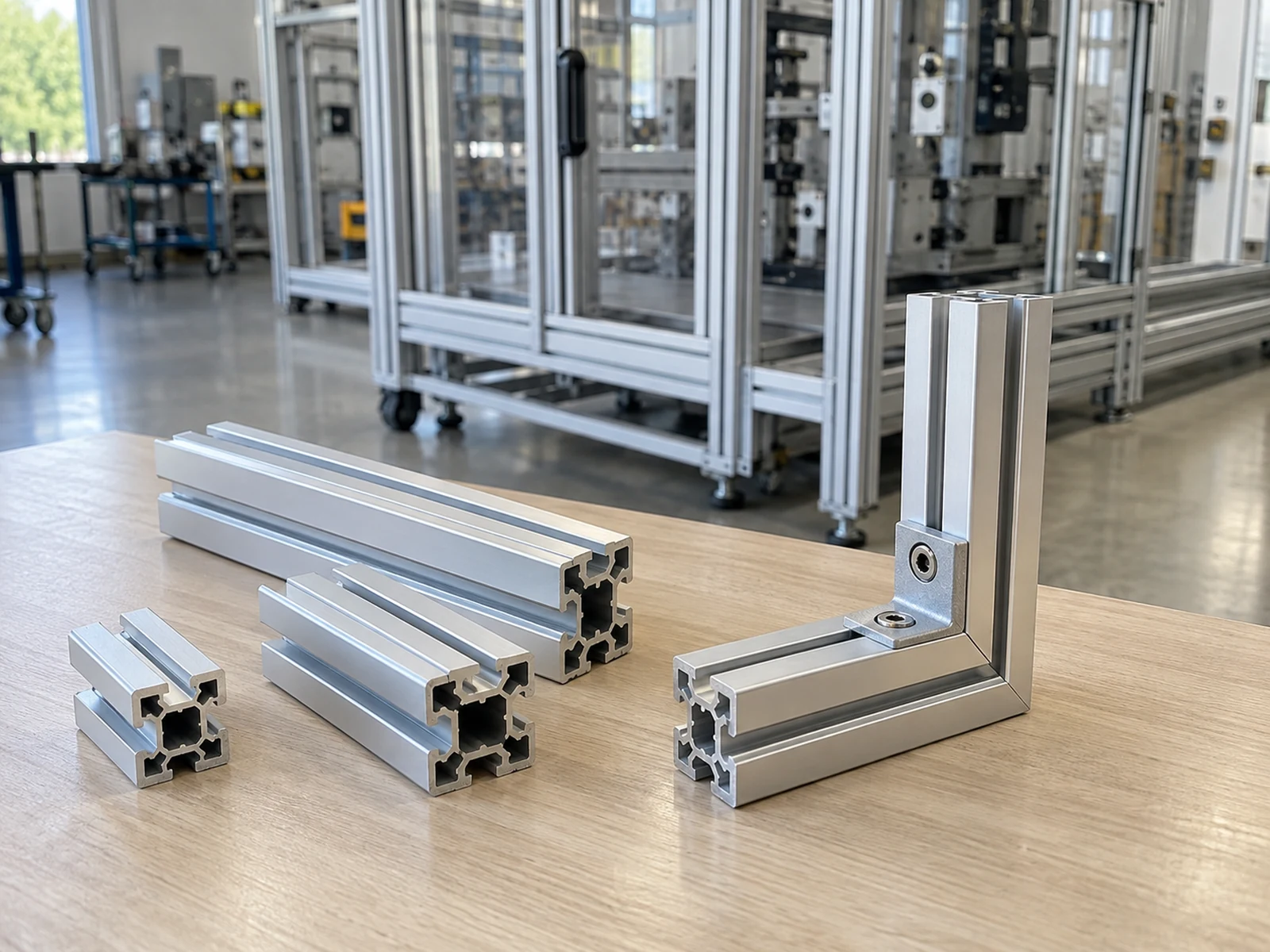
Supply the candidate saw vendor with a sample or controlled drawing of the actual approved extrusion. List its maximum width and height in the chosen cutting orientation, wall and cavity shape, end angle, longest and shortest blanks, and expected batch mix. Ask how the profile is supported and clamped without marking a visible face or deforming a thin wall. If a fixture bears on only one lip, the trial may look satisfactory while a production batch shifts when the stock varies.
A meaningful trial checks several pieces across a production-like sequence, including short and long lengths where applicable. Measure from the released datum using the specified method; inspect end squareness or miter angle, burr condition and damage to critical faces. Record stock batch, blade and clamping setup, material orientation, measured results and who accepted them. Do not translate a feed-axis repeatability figure into finished-part tolerance, and do not treat one clean sample as a validated production capability.
The Aluminum Association’s processing overview describes cutting as a common first fabrication operation before punching, machining, bending or welding. If the kit needs holes, drains, gaskets or joined corners, list those as separate operations with separate acceptance criteria. A circular saw does not create a sealed joint or verify the pressure and water-quality duties of the filtration system.
Check interfaces that the cut blank cannot certify
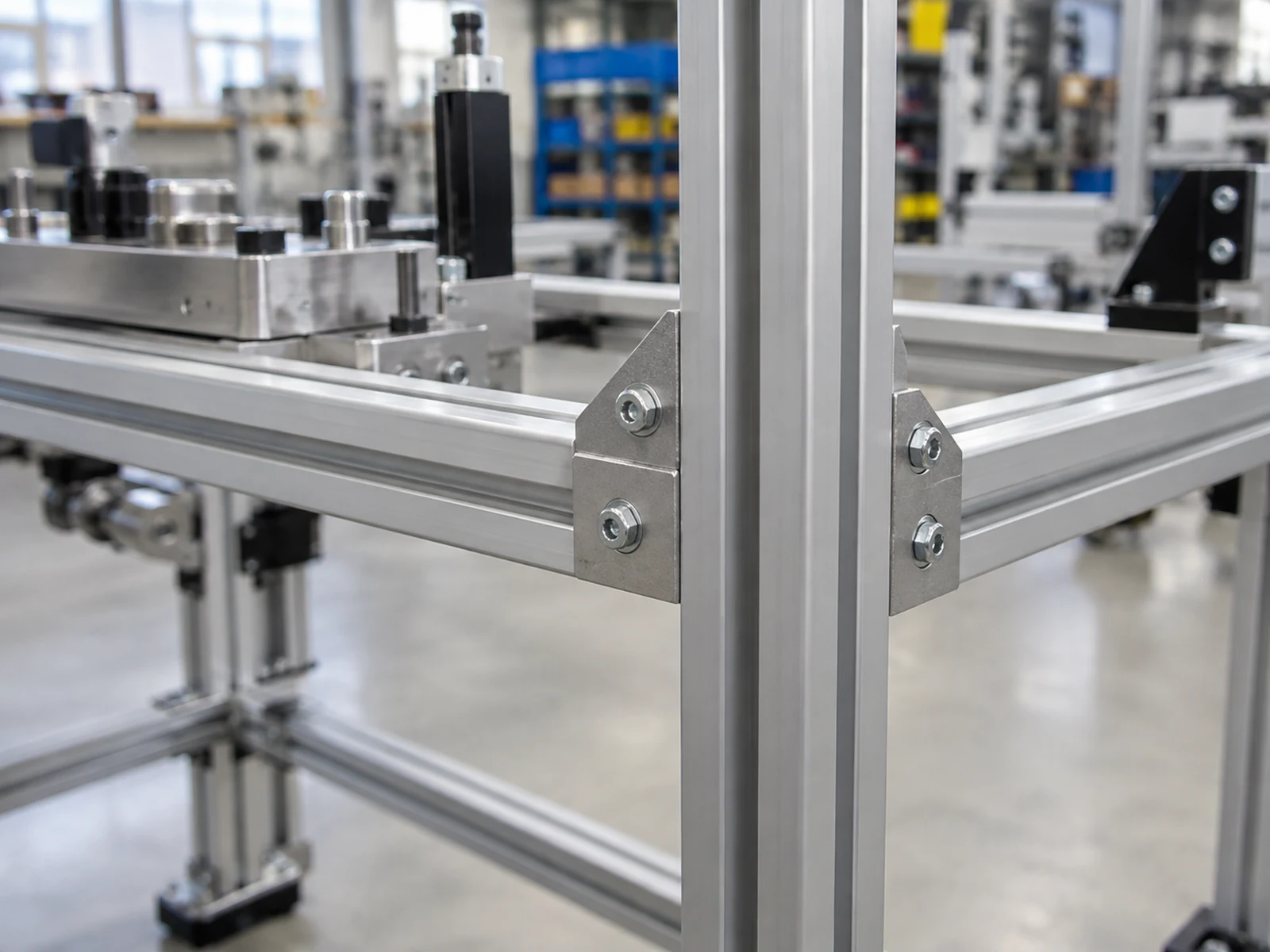
On a filtration package, access can matter as much as the nominal frame opening. The OEM may need room to remove a filter element, reach valves, open a control cabinet, route electrical cables or isolate a pipe joint. A released support-frame drawing should therefore show clearance zones and the parts that the cut members must not obstruct. Veolia’s skid-mounted ultrafiltration overview illustrates how modules and maintenance functions coexist in a compact package; it does not supply dimensions for this article’s proposed frame.
Specify how the aluminum frame joins dissimilar metals and whether the installation environment includes washdown, chemicals or outdoor exposure. Material compatibility, galvanic isolation, anchorage, structural capacity and electrical bonding belong to the project’s qualified design review. Cutting accuracy by itself establishes none of them. If the OEM has not approved an aluminum member in that location, hold the cutting request until the design owner resolves the material and duty.
A practical RFQ handoff for water filtration skid aluminum frames
- Controlled assembly and profile drawings, revision, approved material and finish.
- Member-by-member cut list with datum end, orientation, angle, length, quantity and inspection tolerance.
- Clearly defined supply level: blanks, prepared kit or separately contracted assembly.
- Stock samples for any profile whose cavity, wall or visible face makes clamping uncertain.
- Named assembly interfaces and clearance zones for service and installation.
- Trial acceptance sheet showing the actual measurement method, sample sequence and disposition of nonconforming pieces.
When comparing suppliers, ask for a written explanation of profile support, measurement and part identification, then compare it against the same released drawing. A lower unit price is not comparable if it omits burr removal, batch segregation or the required inspection record. The neighboring enclosure-rail cut-list guide expands the same blank-versus-assembly distinction for a different application. For filter media frames rather than a skid’s auxiliary equipment structure, see the air-filter-frame buying guide; its subject is a different component.
Questions buyers should settle before ordering
Can aluminum extrusions replace the skid base?
That is an engineering decision for the skid designer. This article addresses only aluminum members already approved for a defined auxiliary frame. It provides no load calculation, corrosion qualification or basis to substitute material in a primary base.
What should a saw-cutting trial prove?
It should show that the proposed setup can locate, clamp, cut and measure the released member under agreed sample conditions. It does not prove joint strength, filtration performance, pressure integrity or suitability for field installation.
When is a prepared kit a better purchase unit?
When the buyer needs named secondary operations, part marking and grouped delivery to a controlled assembly station. Specify each added operation and its acceptance point; “kit” alone is not a test specification.
For water filtration skid aluminum frames, the useful purchase unit is the one the released drawing actually defines. Next step: Send the approved profile and cut-list revision, stock sample, required end geometry and acceptance sheet through JiurunCut’s contact page. Ask which saw and fixture configuration can be evaluated against those actual members. Keep skid design approval, field integration and process performance with the responsible equipment builder.