
Stage deck aluminum frame cutting is a purchasing decision about a defined member package, not a shortcut to certifying a finished platform. A deck builder may buy a complete approved deck, a prepared frame kit, or loose cut aluminum members for later joining. Each route puts a different job on the saw supplier. The seven checks below help a manufacturer describe the actual cut work, compare machine trials, and receive the right parts without confusing cut blanks with an accepted stage system.
Real stage deck systems use different constructions. Prolyte describes its StageDex BasicLine as using a special extruded aluminum profile with a top board joined to the frame. Its GM5 product page identifies an aluminum frame and a sandwich top board. These are examples of system variation, not specifications or approvals for a Jiurun customer. Use the deck owner’s released drawings and acceptance plan for the product actually being made.
Stage deck aluminum frame cutting: seven RFQ checks
1. Define the purchased deliverable
Write the purchase order around the product boundary. A complete stage deck includes more than aluminum edges: panel, corner details, leg interfaces, joining method, finish, and system acceptance belong to the deck owner or its authorized supplier. A prepared frame kit may include joined corners or secondary operations. A cut-member order covers only named blanks with agreed end and identification requirements.
List which work remains at your factory and which work is bought in. If the panel, legs, connectors, or corner reinforcements come from other suppliers, record those routes separately. The cutting saw should be evaluated only against aluminum members it will actually process. A quotation for “one deck frame” is too vague if the supplier does not know whether it means four loose rails, an assembled rectangle, or a finished platform.
2. Release a member matrix for every deck variant
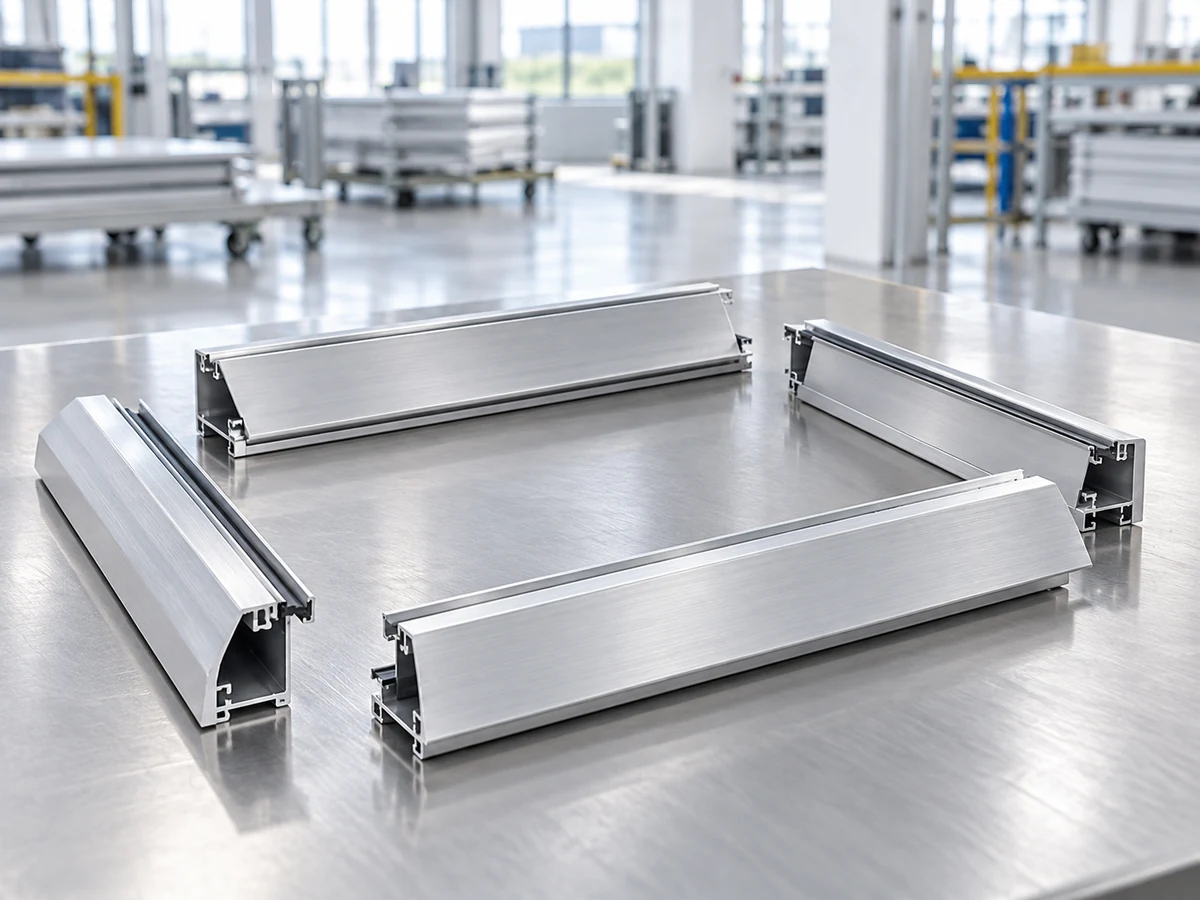
Create one controlled row for each eligible aluminum member: part ID, deck model and revision, profile drawing, stock specification, blank length, quantity per deck, end condition, finish state, and next operation. Do not use the outside deck dimension as a substitute for individual cut lengths. The board may overlap or sit within the frame, and a connector may change the relationship between overall size and a rail blank.
Separate long edges, short edges, special corners, cross-members, and any leg-interface metal only if they actually appear on the approved bill of materials. Some product families use different perimeter profiles or formed parts; do not assume every item belongs on the same saw. Mark left/right or handed members, nonrectangular variants, and parts that are supplied as prebuilt assemblies. The matrix should let the operator and receiving team count a complete kit without guessing from a photograph.
3. Put the datum and end geometry on the drawing
For each cut member, show the length reference and the face that contacts the stop. Specify whether the measured length runs along the long edge, short edge, centerline, or another approved datum. Show any miter orientation with a drawing view, not only a single angle number. When the two ends differ, identify them as end A and end B. Record which visible or mating faces must be protected during clamping and stacking.
The cut-face requirement should come from the downstream joining method. A mitered frame, a butt joint, and a welded or mechanically connected corner may need different blanks and inspection points. If a profile contains a panel groove or leg-pocket feature, its orientation can matter as much as the length. Ask the design owner to resolve ambiguous corner allowances before a saw program is made; a saw operator should not reverse-engineer them from the finished deck size.
4. State the real stock and finish condition
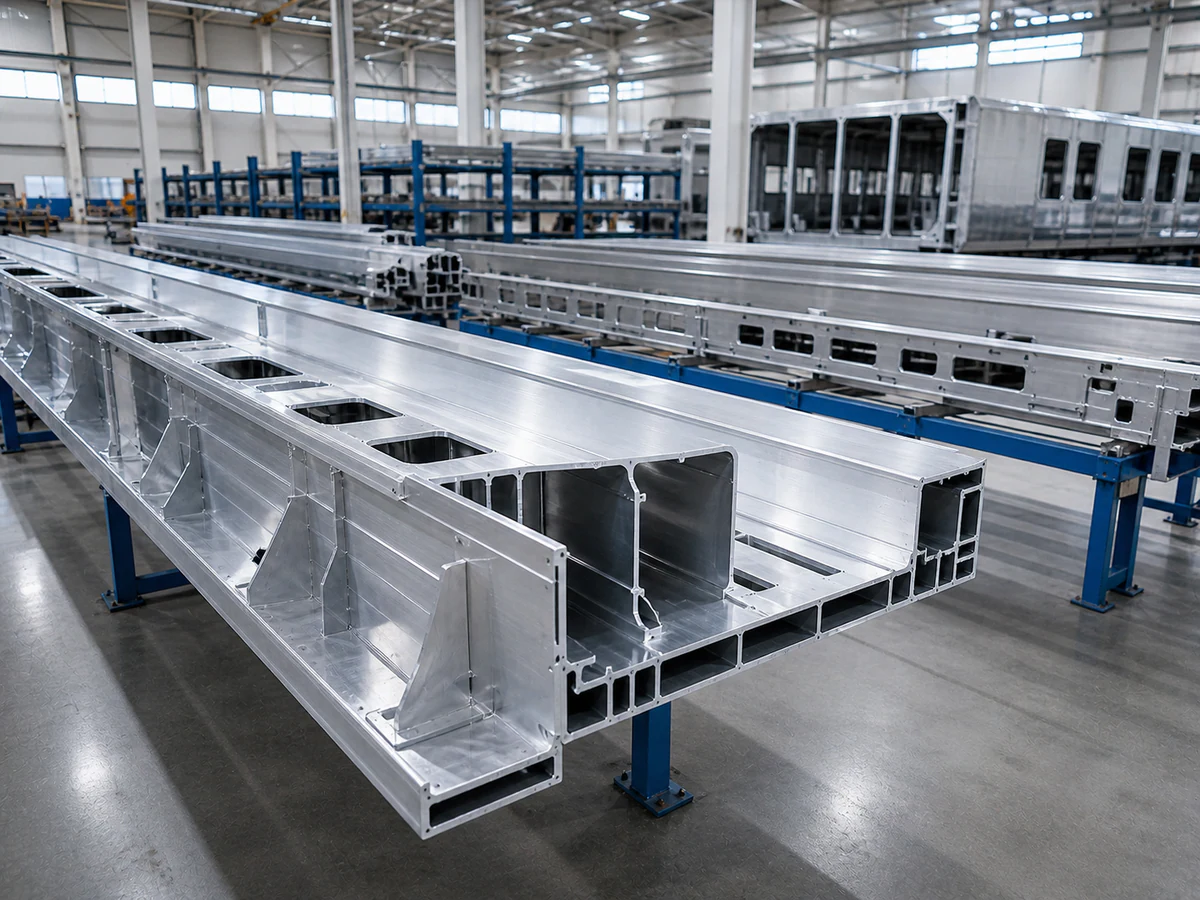
A saw trial needs the physical input, not a generic material label. Send a current profile cross-section, actual alloy and temper if controlled, maximum section envelope, wall and projection details, and the stock length range. Say whether the part arrives mill-finished, anodized, painted, or already fitted with an insert. If the profile is fragile, hollow, coated, or has a narrow visible edge, identify where the vise may safely touch it.
Agree what happens after cutting: deburring, drilling, welding, corner joining, panel bonding, coating, marking, and packaging may be separate factory steps. Protecting a prefinished surface could require different contact pads and handling than cutting bare stock. Do not transfer a result from one finish or section to another without a new check. The accepted blank should be described in terms that both the saw shop and the assembly team can inspect.
5. Trial the actual section and the whole cut mix
Ask the machine supplier to use an approved sample of the longest and most difficult relevant member, plus a short repeat part if both occur in production. Check guarded opening clearance, feed and outfeed support, clamp contact, end orientation, and safe collection. The trial record should state the stock identity, machine setup used, length measurement method, first-off result, visible-face condition, and any rejected pieces. A clean generic demonstration cannot establish suitability for an untested stage-deck profile.
Compare the complete work cycle, not just the blade crossing the metal. Include loading, changeover between member families, first-off inspection, label application, lot segregation, and removal. If a machine cannot handle a reinforced corner extrusion or a formed part, route that item outside the saw scope rather than silently omitting it from the purchase comparison. Ask for a sample evaluation against your acceptance criteria before committing to production quantities.
The Jiurun video below shows a related industrial aluminum angle-saw example from Jiurun’s own YouTube channel. It is equipment footage only. It does not show this article’s stage deck material, approved member geometry, customer order, quoted configuration, actual trial, or structural performance.
6. Receive a complete identified kit
A batch of correct individual lengths can still be an incomplete deck kit. Define a kit identifier tied to the deck model and revision, then list the required quantity of each member. Keep batches, handed pieces, and finish states separate. At receiving, check the part count, cut-end identity, dimensions sampled under the agreed plan, visible-face protection, and any required stock or process documents.
Decide who owns rework when a miter is reversed, a profile is dented, a finish is damaged, or a part is missing. A receiving record should distinguish “cut to released blank drawing” from “joined frame accepted” and “finished deck accepted.” The stage system owner remains responsible for panel connection, leg fit, load assessment, installation instructions, and applicable compliance. A saw first-off is evidence about a cut member only.

7. Compare purchase cost at the same boundary
Ask every quotation to name what it includes: machine and tooling, fixture and contact surfaces, feed support, chip management, installation, training, trial material, and any required change parts. Compare the same deck member matrix, the same stock range, and the same annual or shift mix. If one supplier proposes only the easiest straight rails while another includes reinforced corners and short repeats, the prices are not comparable.
Record the bought-in route as well. A complete deck or prepared frame kit may reduce the retained saw work, while in-house cutting can offer control over revisions and short runs. Include labor for material handling, programming, changeovers, inspection, rejects, and downstream assembly when assessing total cost. Do not convert a cut-rate estimate into a promise of deck output, load rating, or site installation capability.
Copyable RFQ list for a stage deck frame saw
- Released deck model, drawing revision, and the exact purchased boundary: cut blanks, prepared frame kit, or finished deck.
- Part-by-part aluminum member matrix, profile drawings, stock specification, section envelope, length range, and quantities per deck.
- For each member: datum, end A/end B geometry, handed orientation, cut-face requirement, and inspection method.
- Input stock and finish state, protected faces, permitted clamp contact, and downstream operations that remain.
- Representative trial members, batch mix, changeover expectation, first-off approval, and rejected-part disposition.
- Kit identification, receiving checklist, traceability documents, packaging protection, and rework owner.
- Quotation scope for machine, tooling, fixtures, support, training, and the same-period full production resources.
Common buyer questions
Does a successful cut prove a stage deck is safe? No. Cut length and end quality are component-level observations. The responsible deck manufacturer controls the completed platform design, structural evaluation, connection system, instructions, and compliance.
Must every frame edge be mitered? No. The approved product drawing and joining route determine whether a member has a miter, square cut, formed end, or secondary process. Specify each end rather than assuming one corner style.
What should a first inquiry include? Send the released profile drawing, member list, stock samples, cut length range, end geometry, finish state, and expected batch mix. Flag any missing drawing approval so the supplier can scope a sample trial without inventing production requirements.
If your stage deck aluminum frame cutting project has released cut-member drawings, send Jiurun the profile, member matrix, and trial requirements. We can discuss the aluminum cutting operation and a sample evaluation plan. For a related setup decision, see our guide to guarded opening checks for tall profiles and cutting before anodizing. The deck system owner retains responsibility for the completed platform.