
Aquarium LED aluminum housing cutting begins with a scope decision: are you ordering an approved bare metal blank, a prepared housing, or a tested finished light? A saw can make a released aluminum member to length. It does not by itself establish the fit of a lens, end cap, seal, mounting bracket, cable exit, heat path, or electrical enclosure. Treat those interfaces as separate acceptance work owned by the light maker.
That distinction is visible in real products. Fluval describes an aluminum-alloy frame and extendable brackets on its Aquasky 3.0; AquaIllumination describes a heat-sink design and several mounting arrangements for its Blade. These are examples of finished-product architectures, not evidence that either brand buys Jiurun-cut housings or uses the same cross-section. A buyer still needs its own released drawing and assembly plan before asking a cutting shop to quote.
Start with the approved light family and supply stage
An aquarium fixture length in a catalog can include bracket adjustment, end caps, or an installed envelope. It is not automatically the saw-cut metal length. Name the actual light family, revision, profile drawing, finish, and receiving stage on every RFQ line. If different variants use distinct extrusion sections or lens-retention details, quote them as separate members until engineering confirms interchangeability.
A complete purchased fixture may be the right route for a low-volume or highly integrated product. A prepared housing kit can shift cut length, secondary features, finish protection, and component matching to a specialist. Bare extrusion or cut blanks give the light maker more control, while leaving lens, seal, end-cap, electrical, and test work in its own process. Compare offers at the same accepted stage; a cheap blank is not comparable to a finished light without the remaining work.
The RFQ should explicitly state whether the shop receives raw extrusion, prefinished stock, a preassembled housing, or a loose kit. Identify any inserts or electronics that must remain outside the saw operation. Do not ask the cutting supplier to infer the supply boundary from a marketing photograph of a complete lamp.
Release the metal length from the assembly drawing
The useful cut reference is the pair of approved metal end faces. The finished fixture may gain length from end caps or bracket extensions, and a lens or diffuser may use a different cut schedule. Record the nominal metal cut length, datum face, length tolerance, end-face form, and any allowance for a later machining or finishing step. Let the light maker determine those values from the approved assembly; do not derive them from tank width alone.
For a kit with multiple rails, a housing and a separate lens, list each component by part number and revision. State whether the lens is bought cut to length, trimmed in another operation, or supplied as part of a completed module. The saw quotation should only include parts and operations actually assigned to the saw supplier.
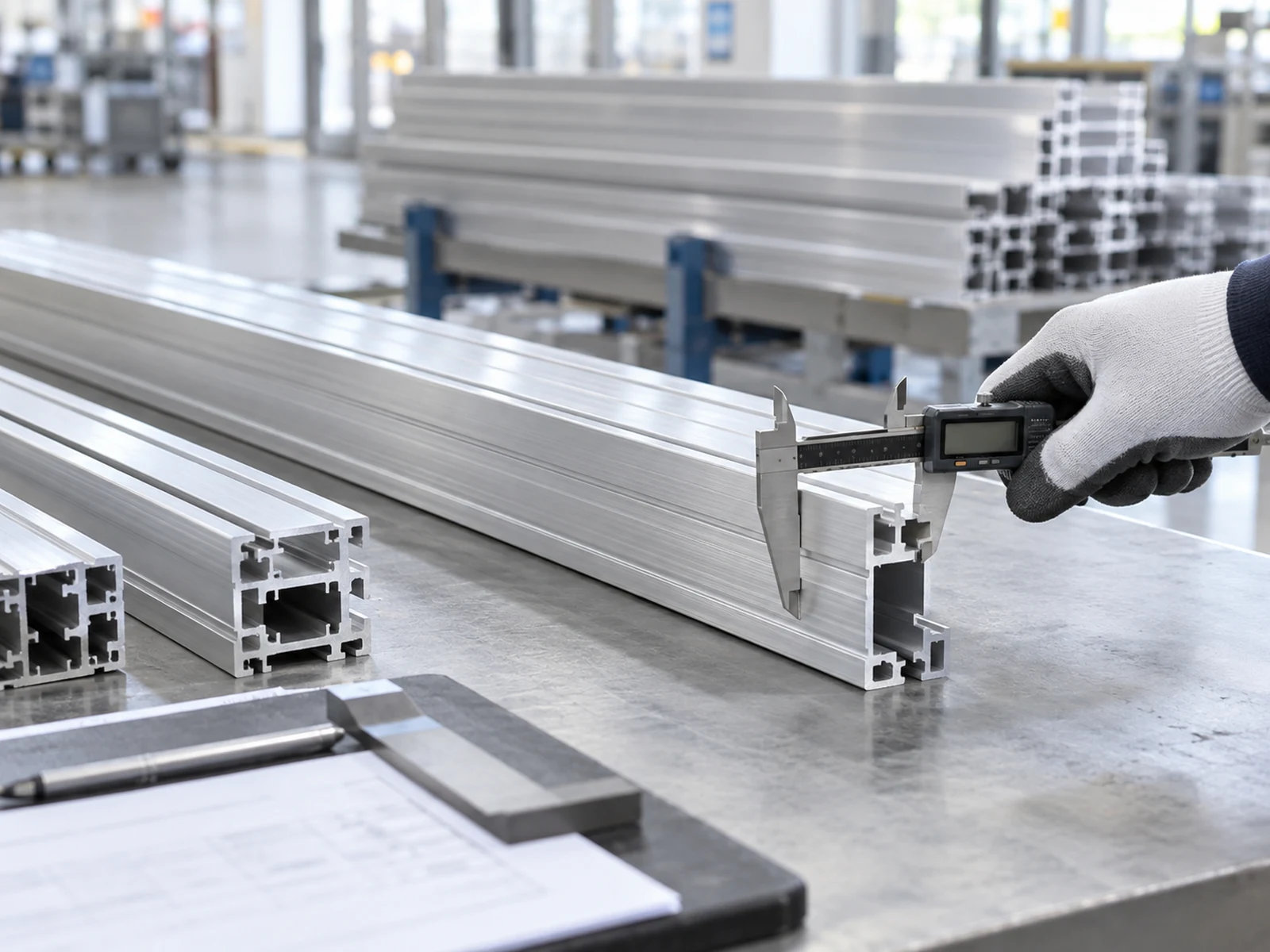
Visible anodized or coated faces deserve a handling plan. Ask which surfaces may touch supports, clamps, measuring tools, and packing material. A trial should inspect for dents, scratches, burrs and a damaged lip at the cut edge. The inspection criteria belong in the purchase specification rather than being inferred from a general machinery brochure.
Inspect support, cut end and component fit as separate checks
Thin lips and fins can deform if a fixture contacts the wrong surface. Before choosing a machine configuration, present the actual section, stock length, finish and cut schedule for a stopped setup review. Agree on accessible support faces, a stable reference, clearance for protrusions, and a safe method of collecting the part. The machine builder can then demonstrate a configuration on a representative sample; a catalog capacity number alone does not prove it suits this profile.
Keep three acceptance questions separate. First, did the cut metal meet its length and end-face drawing? Second, do the approved lens, end cap and mounting parts fit a sampled housing after the specified downstream operations? Third, did the finished fixture meet its own sealing, electrical, thermal, and product-release requirements? A successful saw trial answers the first question and may support the second; it cannot replace the finished-product tests.
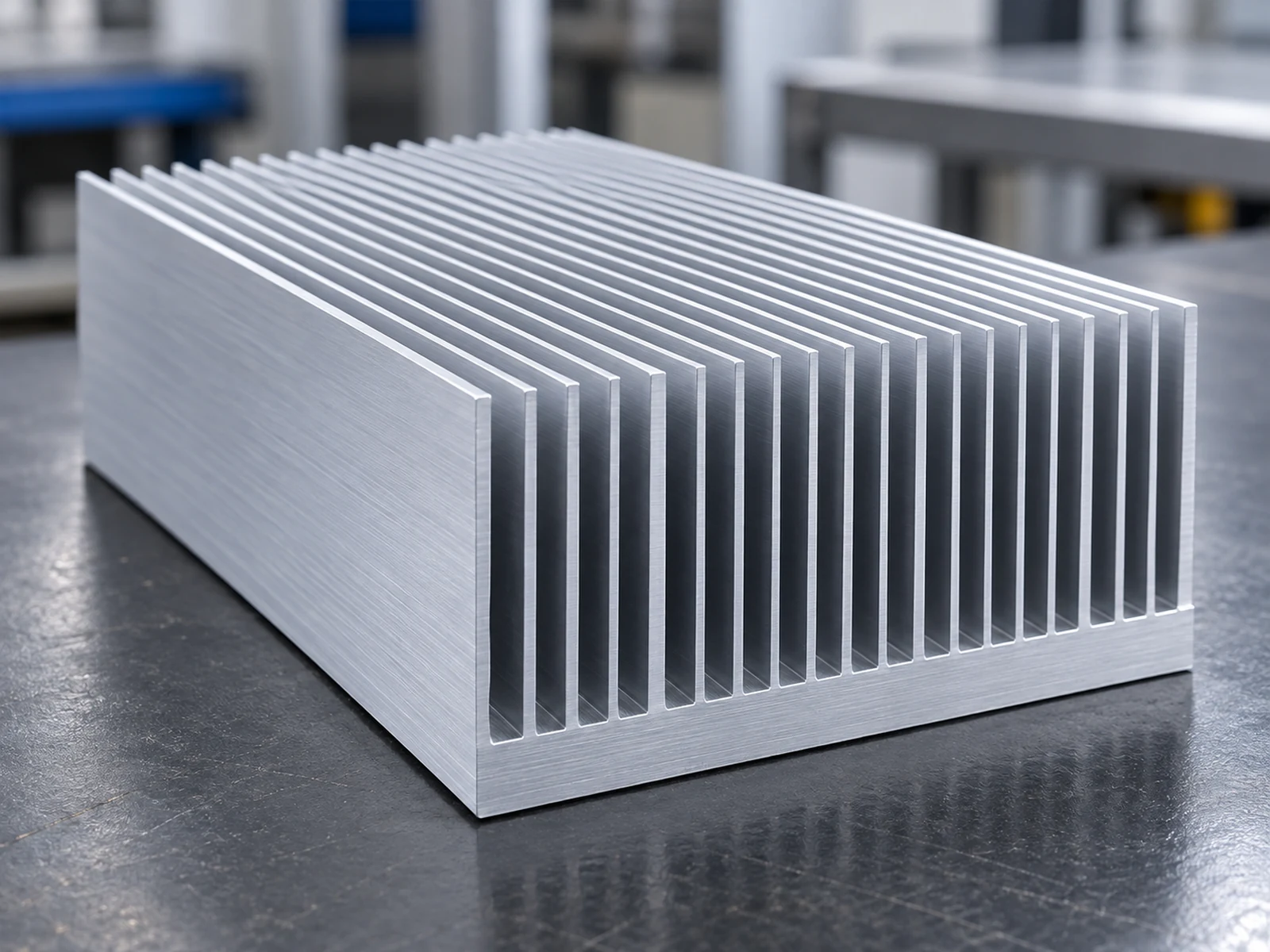
It can be helpful to keep an approved first-off set at the bench: a cut blank, the matching lens and end cap, and a dimensioned record. The sample is a fit check for that revision, not a universal acceptance for other light families. If the design changes the channel lip, end-cap seating length or cable-end features, reassess the cut and downstream process together.
Protect the cross-section without claiming a finished enclosure
A metal housing can contribute to heat spreading or shielding, but the final fixture’s water resistance and thermal behavior depend on its complete design, parts and validation. The cited Fluval and AquaIllumination products illustrate why housing geometry, lens and mounting systems matter; their published product ratings are specific to their own assembled products. A cut aluminum blank must not be marketed as having those ratings.
State whether fins, slots, lens tracks, screw bosses and end-cap seats arrive in the extrusion or require subsequent work. For every remaining feature, assign the responsible supplier and inspection step. If the cut end is later machined, coated or sealed, define which stage owns the final dimension and appearance. Keep saw-trial records separate from water-ingress, electrical or thermal qualification records.
Compare supply routes at the same handoff
For each route, write the receiver’s required condition first. A raw blank quote may omit deburring, face protection, end features, anodizing, paired lens lengths, end caps, labelling and packing. A prepared kit quote may include some of them, but should spell out which. A complete fixture quote belongs to a different approval path because it includes optics, electronics, enclosure assembly and product tests.
A useful comparison records the same family mix and period of demand for every route. Count accepted housing sets rather than theoretical saw strokes. Include trial scrap, changeover and fixture effort, outsourced secondary work, kit shortages, and receiving inspection. If the production mix changes frequently, measure elapsed time for a representative batch with short and long members, not just one easy straight cut.
Do not assume that cutting every length internally is best. When only a few replacement housings are needed, a verified prepared kit may reduce revision and fit risk. When repeated released members justify control of cut timing and stock, a factory saw route may be worth testing. The decision depends on the actual drawings, accepted stage and total resource use.
Aquarium LED aluminum housing cutting: first-off RFQ evidence
- Released housing drawing, revision, material and incoming finish, plus the actual supplied stock length and section.
- One member schedule for each light family: cut-face datums, lengths, quantities, end condition and visible-face rules.
- Lens, end-cap and mounting interfaces needed for a first-off fit check, with the approval owner named.
- Remaining features and processes, including who owns deburring, machining, coating, sealing, assembly, electrical and environmental tests.
- Representative long, short and mixed batches; agreed inspection method, permitted scrap and receiving records.
- Offer stage: bare cut blanks, prepared housing kits or another explicitly defined handoff, with complete cost boundaries.
Ask the machine supplier to identify the exact saw model and configuration used in the trial, the profile support and clamp arrangement, and which acceptance observations were actually demonstrated. Jiurun supplies industrial aluminum cutting machines; a general machine video or a model name does not prove performance on this housing without a matching trial. See the separate LED housing saw-trial checklist for a broader lens and end-cap fit discussion, and the mixed-length kit guide for order-line handoffs.
Related machine-process video
The video below shows a Jiurun aluminum-cutting machine in operation as a related equipment example. It does not show a verified aquarium LED housing, the cited manufacturers’ products, a specific configuration approval, or a performance test for this application.
RFQ decision and next step
If the receiver needs only an approved metal blank, quote the released cross-section and end-face criteria. If it needs a matched housing, lens and end-cap set, specify the kit and inspect fit at that stage. If it needs a finished aquarium light, use the complete fixture’s product-qualification route. A buyer can then compare qualified routes without treating an untested saw cut as a waterproof or thermally proven lamp.
For a Jiurun saw discussion, send the approved housing section, stock condition, length schedule, first-off fit criteria and production mix through the contact page. Request a trial against that actual material and receiving boundary before committing to a cutting-machine configuration.