
Aluminum aviary frame cuts are a useful saw-purchase question only after the enclosure manufacturer has released a panel system and a member list. A saw may prepare square-tube uprights, rails or approved mesh-retaining profiles. It cannot choose a bird-safe enclosure design, select mesh, create a finished door, install connectors or certify an assembled aviary. The first RFQ decision is the accepted output: loose cut blanks, prepared members, complete panel kits or finished panels.
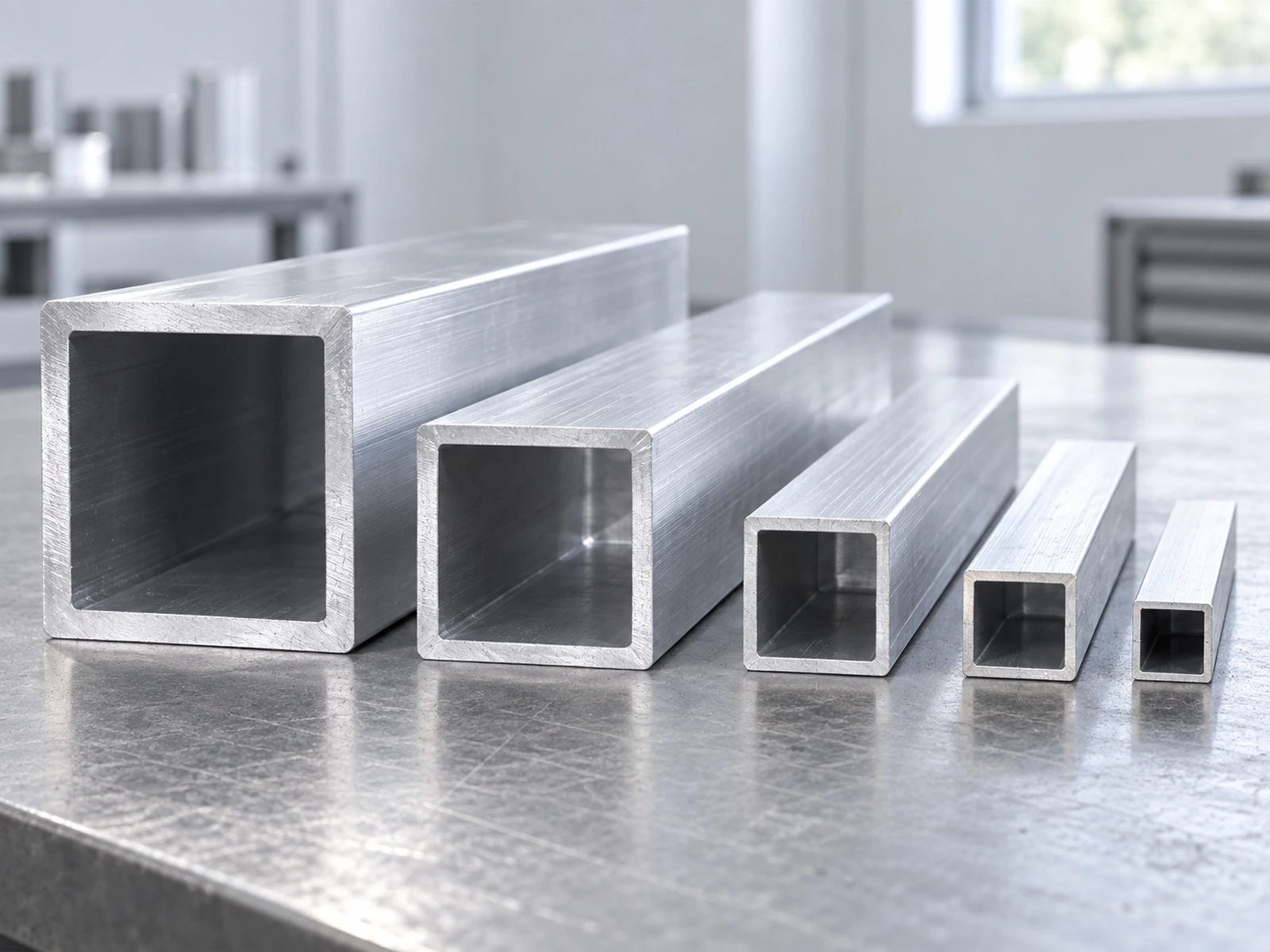
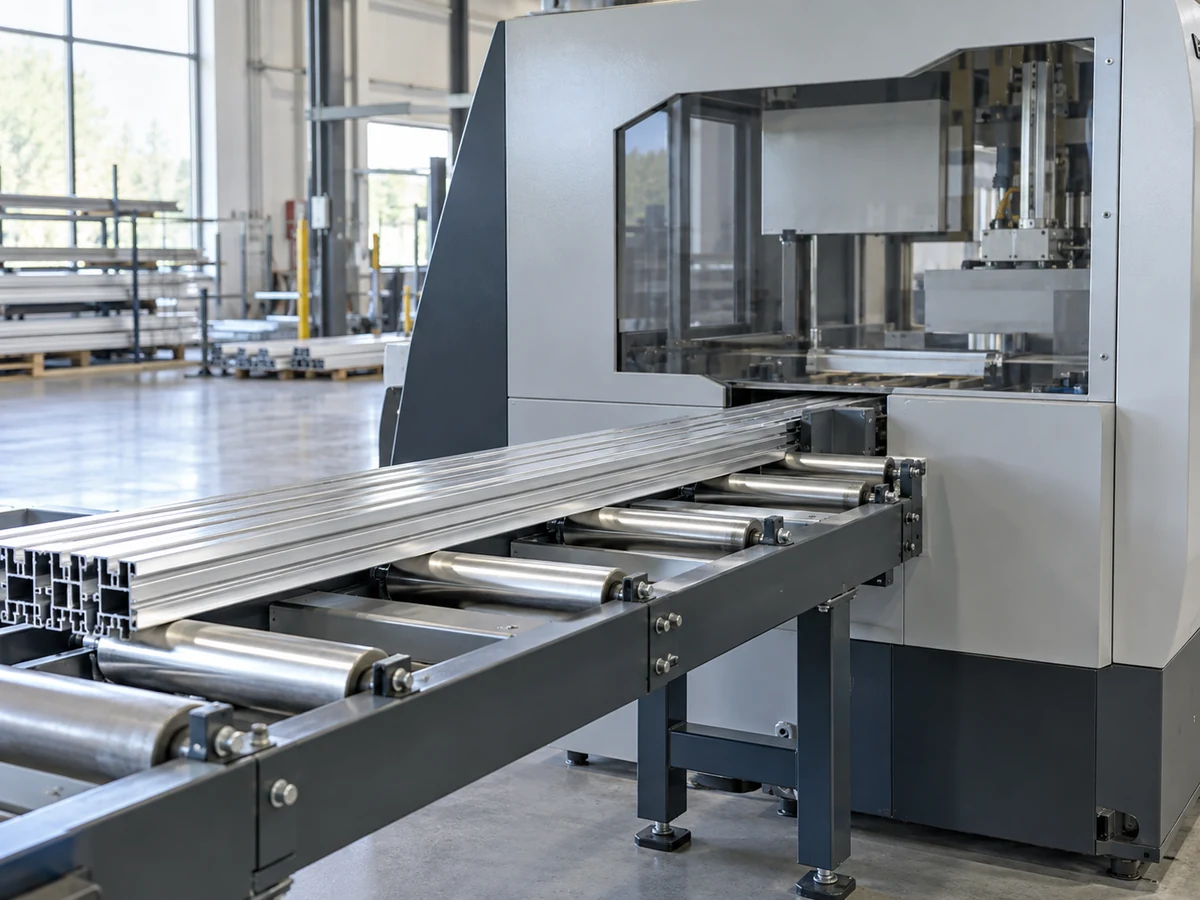
This guide is for an aviary-panel manufacturer or component supplier comparing in-house cutoff with purchased prepared parts. It uses published product examples to show why section type and system interface matter, then gives seven checks for a representative saw trial. The photographs are related industrial aluminum and machine scenes; none identifies an aviary project, approved animal enclosure, customer order or validated trial.

1. Release the panel family before calculating aluminum aviary frame cuts
Start with the product owner’s approved panel schedule, not a finished enclosure’s overall width and height. Record straight wall panels, corners, roof or top elements, door leaves, fixed sections above or beside doors, and any project-specific service panels as distinct identities. A modular kit may reuse nominal panel sizes while changing connector locations or mesh-retaining details. A custom build may have unique member lengths for each bay. Neither case justifies a saw stop setting from a sales-page dimension.
For context, ALUSTECK describes modular aluminum aviary systems, while MAD-PARROT describes assembled aluminum frames and doors. These are examples of different product supply routes, not specifications for a JiurunCut machine or your design. Give each panel family a drawing revision, panel position, orientation and receiving unit before estimating annual cut demand.
2. Separate standard square tube from mesh-retaining profiles
“Aluminum frame” does not describe one cut surface. A plain hollow square tube, an open channel and a purpose-shaped profile with lips for mesh may have different locating faces, exposed edges and support needs. BLECHA’s aviary-profile catalog shows both square tubes and special profiles intended to retain mesh. Its product examples demonstrate variety; they do not establish that a particular aviary uses those profiles or that a listed size fits your panel.
For every retained member, supply the cross-section drawing, actual alloy and temper, wall distribution, straightness condition, visible surfaces and any feature that must remain undamaged. Mark whether a lip or groove is functional for a later mesh or connector operation. Ask the material supplier to identify the as-delivered condition, including any protective film or finish. Do not substitute a generic stock photograph for a controlled section drawing.
3. Define the deliverable after cutoff
A straight blank is not a finished panel member. The next operation may drill or machine connector holes, prepare a miter, install inserts, deburr an exposed end, finish the surface, or assemble mesh and hinges. Put those steps on a routing sheet with named owners and inspection points. If a supplier quotes a complete panel or a prepared door frame, compare that offer with the same accepted stage of in-house production, including mesh, hardware, joining and packaging. Otherwise a cheap cut price can hide the work needed to make a usable panel.
Use four distinct quantities: pieces cut, accepted prepared members, complete panel kits and finished panels. A factory buying preassembled aviary panels may have no reason to buy a saw for those same members. A manufacturer buying long extrusions and controlling all downstream work has a different case. Keep the scope of an aviary project separate from the scope of an aluminum cutoff cell.
4. State the blank length, datum and joint condition
The finished panel’s outside dimension is not automatically its rail cut length. A rail can fit between uprights, overlap a connector, meet at a miter, or include a processing allowance. For each member, record the controlled blank length, cut angle, measurement datum, tolerance, end identity and whether the value applies before or after finishing. If the joint design is unresolved, treat the first set as a trial and ask the panel designer to release the final length; a saw supplier should not invent it.
Pair left and right members where orientation matters. Some square sections look symmetric until a connector hole or visible face is added later. For mesh-retaining profiles, the retaining side may determine which end is left and which is right. A traveler should carry part number and revision through cutting, secondary work and panel assembly. This avoids a mixed bin of individually accurate but incorrectly oriented parts.
5. Protect the accepted faces and finished stock
The RFQ should identify stock that arrives bare, anodized, powder-coated or otherwise finished, and where clamp or conveyor contact is permitted. A protective surface is only useful if it survives the entire handling route. Ask whether film is removed before cutting, how chips are cleared without scratching a visible face, and how short members are separated from long stock. The article does not prescribe a cleaning method or an animal-contact material; those decisions belong to the product owner and its applicable requirements.
Include packaging in the comparison. A cut tube that passes length inspection can still be rejected if its face is damaged or if an unprotected corner deforms in transit. Define the inspection stage and packing unit: one member, one revision-matched panel kit or a complete enclosure set. A generic finish claim or photograph cannot replace incoming and outgoing condition records.
6. Trial the actual section, workholding and panel fit
Ask the saw supplier for a trial using the released section and material state, not only a convenient demonstration extrusion. The trial should include the longest and shortest relevant blanks, representative tube and special-profile sections, the specified cut angles, and the most sensitive visible or functional faces. Record the clamp-contact plan, support arrangement, blade and program identification, stock lot and measured results. A hollow tube may need different support from a profile with protruding mesh lips.
Inspect more than one sample end. Check length from the agreed datum, squareness or angle, burr condition, end deformation, face marks and part identification across first and later pieces. Then have the aviary-panel manufacturer dry-fit a representative panel with its actual connectors and mesh-retention process. Saw acceptance and finished-panel approval are separate gates; a clean cut alone proves neither mesh fit nor animal safety.
7. Quote accepted kits across the real order mix
Compare the full mix of panel sizes and revisions over the same period. Include raw-stock lengths, kerf and remnant policy, setup changes, inspection labor, rejected pieces, secondary machining, finish protection, kit sorting and any bought-in connectors or panels. A fast cut on one straight tube does not establish throughput for an order containing square tubes, mesh-retaining sections, door members and changing lengths. Request a quote per accepted member or complete kit at a clearly stated receiving stage.
Ask for a trial report that identifies the tested stock and makes limitations visible. If the special profile is not yet available, the supplier can discuss a possible approach but should not call a trial on a different extrusion an acceptance of the eventual aviary part. For another outdoor enclosure supply route, see our greenhouse manufacturing saw-scope guide; for a door and frame boundary, see the access-panel manufacturing guide. Those guides address different finished products and do not replace the aviary drawings.
Send a controlled aviary-frame RFQ
- Panel family, kit or member deliverable, part numbers, orientation and drawing revisions.
- Actual square-tube and special-profile sections, alloy/temper, incoming finish and protected faces.
- Blank lengths, datums, angles, tolerances, stock lengths, quantities and mix.
- Separate owners for connector features, mesh, hinges, joining, finishing and finished-panel approval.
- Representative trial pieces, inspection limits, dry-fit method, identification and packing unit.
Send JiurunCut the released sections and cut list for a discussion of an appropriate aluminum-saw trial. The relevant machine configuration and achieved cut quality must be established with your actual stock, drawings and acceptance method.
Watch a general aluminum-profile sawing example
This video from Jiurun Machinery’s own YouTube channel shows aluminum-cutting equipment. It does not show an aviary frame, this article’s profile sections, an approved machine configuration, a customer project, an accepted trial or finished-panel performance.