
Bakery sheet-pan rack aluminum cuts are a component-production decision, not a shortcut to specifying a complete mobile rack. A saw can prepare identified aluminum uprights, runners, crossmembers or tube blanks from approved drawings. It cannot decide whether the rack is end-loading or side-loading, establish tray fit, make a welded frame, add casters, or release a finished foodservice product. The first useful RFQ question is therefore: which members will your factory actually cut, and at what stage must they be accepted?
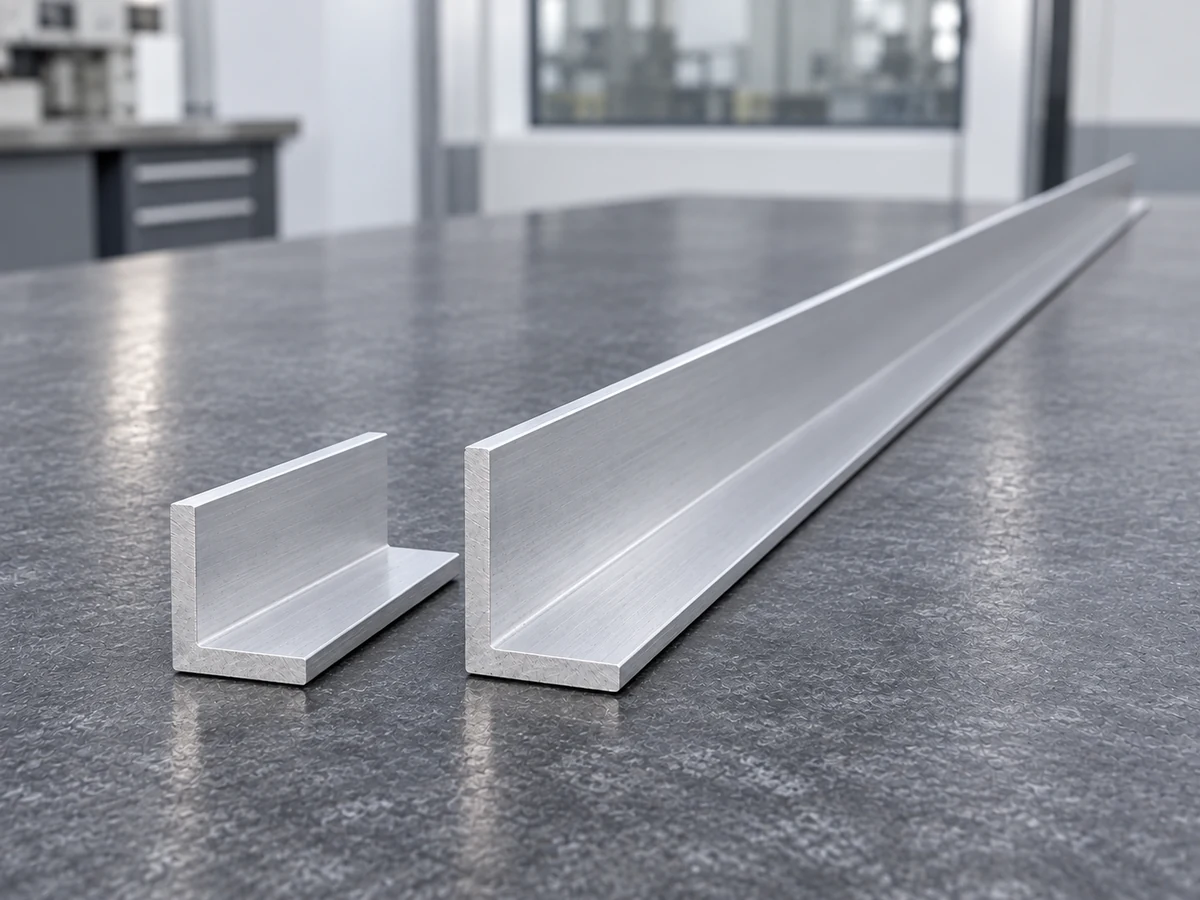
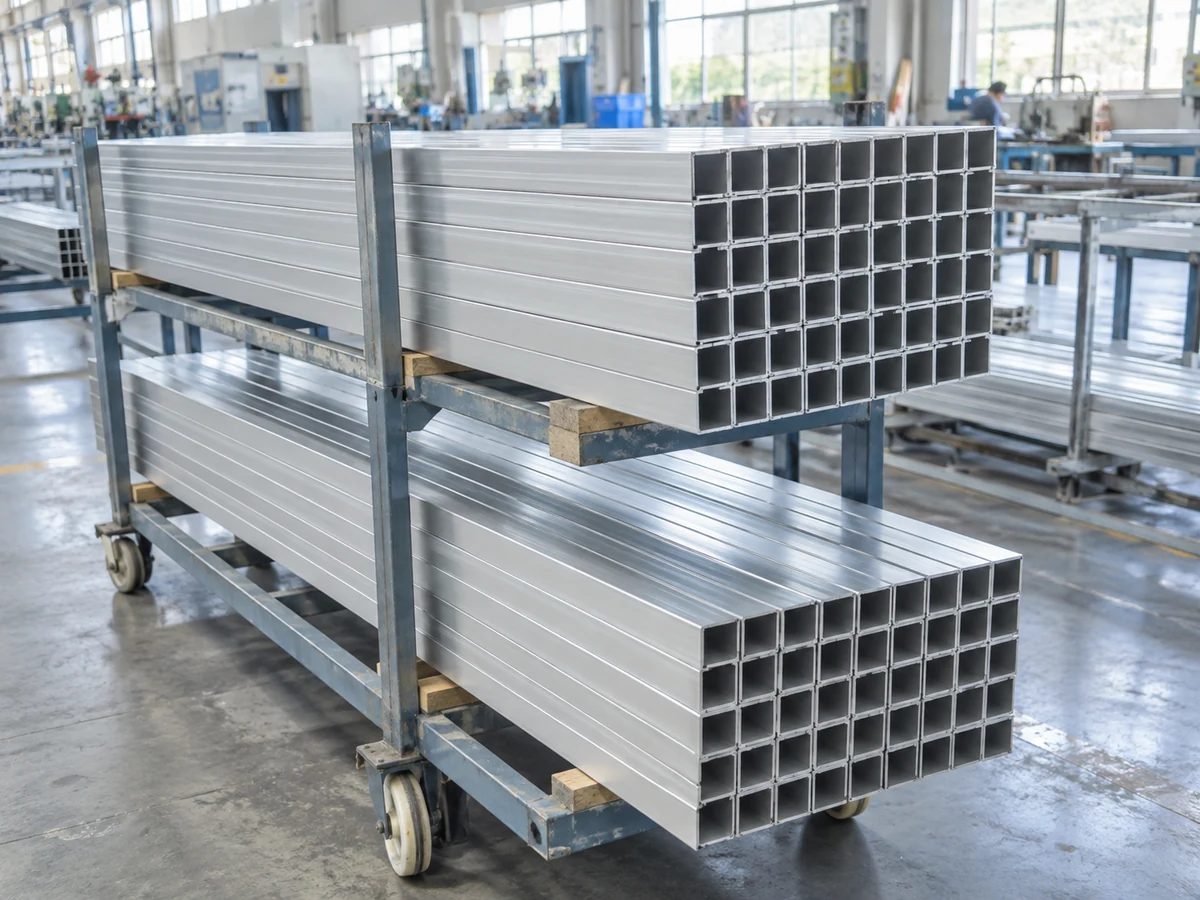
This guide is for a rack manufacturer or its component supplier evaluating a cutting route. It compares supply stages, then sets seven checks for a meaningful saw trial. The photographs show related industrial aluminum angle, square-tube stock and saw positioning. They are illustrative scenes, not identified bakery-rack parts, a customer order or acceptance evidence.
1. Define bakery sheet-pan rack aluminum cuts by rack family
Start with the product owner’s current model list and bill of materials. For bakery sheet-pan rack aluminum cuts, that list decides which members are actually retained in house. Catalog examples show why “pan rack” is not one cutting duty: Winholt lists end-loading and side-loading all-welded aluminum racks, half-height units, and channel-runner versions. Some product families use angle runners; others use a lipped channel. Those catalog configurations are examples of market variation, not JiurunCut machine specifications or a substitute for your drawings.
For each approved rack family, record the loading direction, tray format, overall assembly revision, upright and runner part numbers, and whether the frame is welded, knockdown or purchased as a finished unit. The number of trays in a sales description is not a cut-list quantity. A different loading direction may alter member lengths, end conditions, fixture access and assembly sequence. Do not infer a blank dimension from a finished rack’s outside dimensions; the frame may include joints, stops and caster mounts.
2. Separate the saw output from the finished foodservice rack
Define exactly where cutting ends. The accepted output might be a straight cut blank, a deburred member, a drilled and prepared runner, a sorted frame set, or a joined subassembly. Those are different products with different inspection and costing duties. A circular saw can address the cut, but downstream welding, fastening, drilling, cleaning, caster installation, tray testing and final rack release need named owners and separate evidence.
This boundary matters to a buyer comparing in-house cutting with a prepared-member supplier. A low quoted cut cost has little meaning if the factory must still rework ends, mix lengths, or recover missing mating members. Conversely, a complete bought rack may eliminate local sawing even when the product contains aluminum. Ask the purchasing and production teams to agree on the receiving stage and the accepted unit before comparing machine quotations.
3. Identify angle runners and square-tube frame members separately
Use an actual section drawing for every member that reaches the saw. A runner angle, lipped channel and hollow upright do not share the same support faces or cut-end inspection. The tray-contact face may be visible and functional; an upright may have a later weld or bracket datum. Record alloy and temper only as released by the product owner, together with wall or leg dimensions, finish state, incoming stock length and any required protective film. Do not turn an illustrative catalog runner size into a universal rack specification.
Give each member its own part number, drawing revision, datum and orientation mark. If multiple rack heights use a common tube but different runner positions, the tube’s physical cut length still needs its own approval. Our aluminum angle cut-to-length guide discusses stock-versus-prepared-piece purchasing in general. This rack RFQ adds the need to pair every runner with the approved frame family and tray-loading direction.
4. Name the cut datum and later joint preparation
For each member, specify which end is measured from, whether the end is square or angled, and which allowance belongs to later joining or machining. Runner pairs must be described by the approved assembly drawing, not by a guess from tray width. If a tray slides between two rails, the controlling relationship is the assembled pair and its mounting references. A saw-length check alone cannot prove the final running clearance, level or retention.
Mark what happens after cutting: holes, slots, notches, bends, welds, inserts, guards or end caps. If the cutting supplier also performs a secondary step, list it as a separate routed operation with its own drawing and acceptance method. If another shop performs it, protect the cut member’s identity through the transfer. A dry-fit or fixture check on the actual rack family can reveal a wrong datum sooner than a carton of nominally equal lengths.
5. Trial clamping on each real section, not a convenient sample
A practical saw trial must include the released angle or channel runner and the actual hollow frame member. Show the proposed support surface, clamp contact, feed reference, outfeed support and operator access for each. Thin legs can mark or deflect if clamped on an unsuitable face; hollow tubes can move or distort under an untested contact. The right fixture choice depends on the real section and finish, so an equipment video or generic sample photograph cannot approve it.
Ask the supplier to record the trial stock identity, setup changes, measured lengths, end squareness where specified, burrs, deformation, finish damage and rejected samples. A saw that makes one good upright does not automatically process a lipped runner or a shorter half-height variant. State how the sample represents the full member mix and what would trigger another trial. Keep any claimed throughput tied to the demonstrated batch and handling sequence, rather than an unsupported machine-wide number.

6. Assign end treatment, cleaning and joining responsibility
A cut runner can leave a sharp edge or chips; a hollow tube can retain chips inside. The product owner should specify whether the supplier delivers as-cut blanks, deburred members, cleaned parts or assembly-ready components. The handoff should name who inspects end condition, who removes chips, who protects visible surfaces and who verifies the parts before welding or fastening. If anodizing or another finish happens before or after sawing, note the effect on exposed ends and handling protection.
Foodservice product claims require care. A neat saw cut does not establish sanitation, cleanability, tray capacity, safe caster behavior or conformity of the finished rack. The manufacturer responsible for the rack must control those requirements and any applicable product certification. The machine purchase decision should remain limited to whether a specified saw-and-fixture process can prepare specified aluminum members under observed conditions.
7. Receive complete member sets, not anonymous lengths
Organize the accepted parts by rack model, revision, member type, orientation, material lot, finish and inspection status. Keep trial samples and rejects separate from released production. For a runner pair, count the left and right members according to the actual design; for a frame, check that uprights and crossmembers arrive as an intelligible kit. Our square-tube batch guide addresses count and packing generally. A bakery-rack order adds product-family and assembly-stage identity.
Set protective packaging around the real end and finish risk. A bundle that keeps square tubes aligned may be useful, but it does not prove the assembled tray slide is straight. Agree on a first-article record that connects cut inspection to the receiving assembly lot. If the rack later fails fit-up, this record helps distinguish a cutting issue from a joining, bending or drawing-revision issue.
Compare the three supply routes on the same accepted unit
Buy complete racks: compare the delivered approved rack and supplier documentation, with no local blank-cutting duty unless a separate repair or variant route is released. Buy prepared members: compare approved runner and frame-member sets at the agreed receiving stage, including deburring, labels and packaging. Cut in-house: include stock procurement, saw and fixtures, changeovers, inspection, rejects, downstream processing and kit handling. Compare these routes for the same rack family and period; do not compare a raw blank price with a finished rack price as if they were equivalent.
For a mixed portfolio, count how many distinct runner and upright sections, lengths and finish states will truly be retained in house. A high rack-unit volume does not necessarily mean one repeatable saw job. Conversely, common members across approved variants may support a stable cutting campaign if traceability keeps their later assignments clear.
What to send for an equipment-fit discussion
Send the released rack-family list, member drawings and revisions, physical stock samples, incoming and accepted material states, annual and campaign quantities, and a route map showing the next operation after sawing. Identify which members are angles, channels or hollow tubes, plus finish and visible-face restrictions. Ask for a witnessed trial matrix and a quote that lists the saw, fixture, feed and outfeed scope separately. JiurunCut can discuss an aluminum circular-saw route against those inputs; a specific model or configuration recommendation requires review of the actual parts.
Source boundary: Winholt’s end-loading rack range, side-loading range, and channel-runner range illustrate real product variation. They are not specifications for a JiurunCut machine or your factory’s bill of materials. Use the product owner’s current drawings for design, acceptance and quote decisions.
Watch a general aluminum-saw example
This Jiurun Machinery video shows general aluminum cutting equipment. It does not show a bakery pan rack, this article’s actual stock, a specified machine configuration, a customer project, an accepted trial or finished-rack performance.