
Projection screen frame cuts start with a released aluminum member kit, not a diagonal screen size. A fixed projection screen is specified by its finished viewing geometry, but an aluminum saw accepts a particular profile and delivers individual cut members. Those are different purchasing objects. Before asking a saw supplier to quote a machine or run a trial, the screen manufacturer should release the exact frame system, member list, incoming stock condition, end geometry and receiving check. This guide is for factory buyers evaluating retained aluminum frame cutting. It does not prescribe a screen design, wall installation or projection performance.
First decide which frame work your factory actually retains
Compare three supply routes at the same receiving point. A completed frame or complete screen may arrive ready for the next assembly step. A prepared member kit may already contain cut and finished profiles. A stock-to-member route leaves your factory responsible for sawing approved extrusions before downstream joining, wrapping and screen-material assembly. Only the last route creates a continuing saw-cut demand. Do not count every screen order as raw-stock cutting if some orders arrive as kits.
Screen Innovations describes a fixed screen with an aluminum extrusion frame that ships unassembled, while Elite Screens lists horizontal and vertical frame parts, joints and screen material separately in a fixed-frame guide. These examples show why a buyer must distinguish frame members from connectors and viewing material. They do not establish the stock, saw, joint or finish route for your own product. See the Screen Innovations fixed-frame specification and Elite Screens assembly guide for the cited product examples.

Release projection screen frame cuts from the approved system, not the diagonal
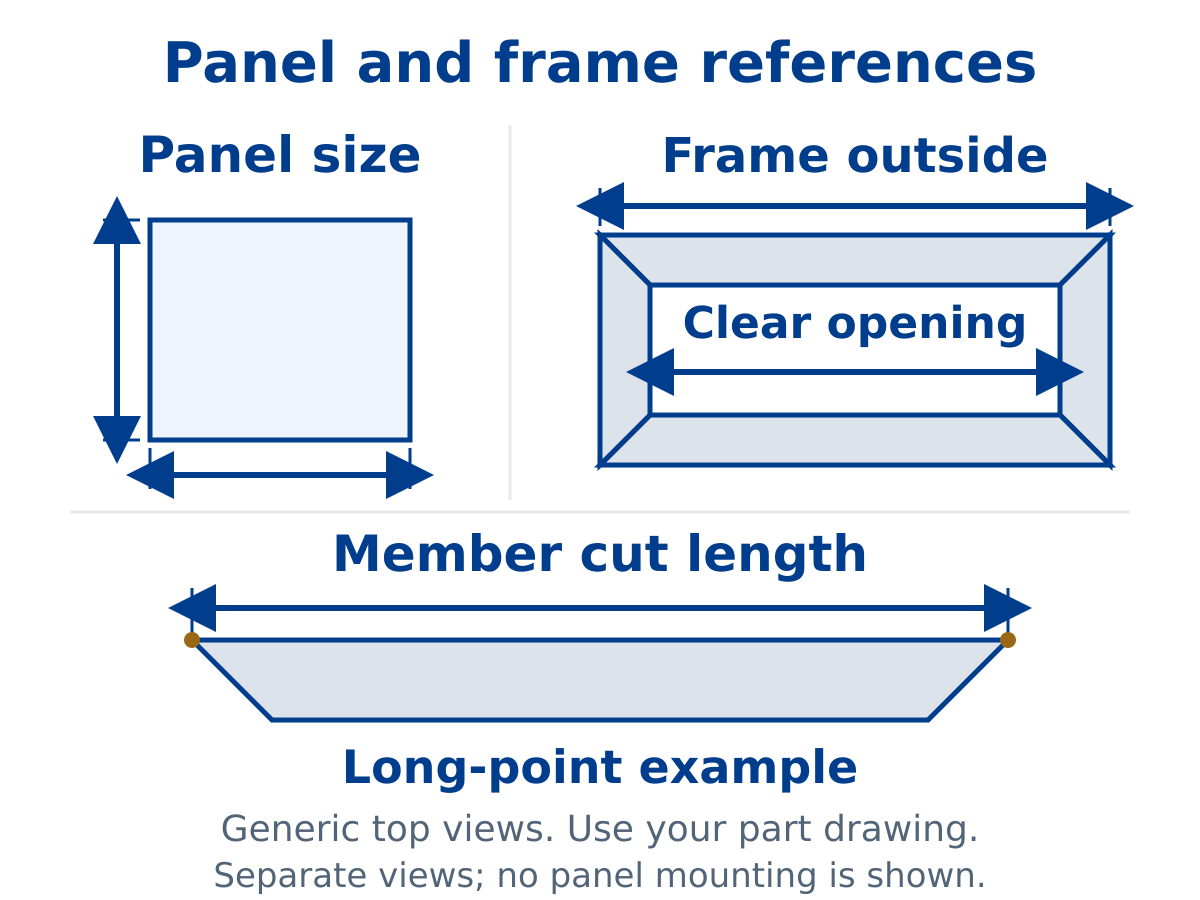
Screen diagonal, aspect ratio, visible opening, frame outside size and saw-cut member length must be identified separately. A product size or image width is not itself a cut-list datum. A single horizontal side may use one member or several joined members; the approved system decides where those joins fall. The buyer should obtain a released member schedule with profile code, revision, orientation, quantity, cut-end reference, length datum, finish state and the next receiving operation for each part.
For a mitered member, specify whether the drawing dimension refers to the long point, short point or another designated feature. Show the datum and both end orientations on the released drawing. Do not infer a cut length by subtracting a generic bezel width from the advertised screen size. If a product family uses a center joint, treat that joint and the two mating ends as a separate review item rather than assuming a continuous rail. The diagram below is only a conceptual reminder to keep the dimensions distinct; use the actual system drawing for all production values.
Identify the incoming profile and the surfaces a saw must protect
Ask the system owner to identify the actual incoming aluminum section, alloy and temper if required by the purchase specification, straightness and finish condition, protective film, and any existing channels or visible faces. A profile that looks similar from the outside may have a different connector cavity or screen-material retention feature. Record which face can contact the support and clamps, which face will remain visible, and which end condition the next operation accepts. Trial stock should be the approved profile in the actual supplied state, not merely a convenient generic extrusion.
The source products above illustrate different downstream treatments, including a velvet-wrapped frame in one product and tensioning hardware in another. A saw trial cannot stand in for approval of wrapping, screen-material retention or assembled flatness. If a finish or wrap is applied after sawing, specify whether the saw receives bare or prefinished stock and who inspects damage before the next process. If an already wrapped profile is proposed for cutting, get explicit approval for that route and its surface-protection criteria before requesting a machine recommendation.
Trial the mating ends and a complete representative member set
A short isolated cut can show an end face, but it cannot prove that a released frame kit will assemble. Select representative long and short members, at least one actual corner or center-joint condition where the product uses it, and the profile orientations that challenge support and clamping. The trial record should name stock lot and finish, drawing revision, saw setup, cut datum, member identity and the measured result. Check each cut end against the drawing, then have the screen-system owner assess the joint with the approved connector. The acceptance record should distinguish saw-cut conformance from later frame and screen assembly approval.
If a corner appears open, inspect the member datum, end geometry, connector seating and assembled alignment before automatically recutting. Our mitered-frame corner gap checklist explains that diagnostic boundary for a generic frame. The image below shows a related aluminum miter sample, not a projection-screen section or evidence that this geometry will fit your joint.

Keep the machine demonstration in its proper evidentiary role
The Jiurun video below shows a general aluminum saw scene. It helps a buyer see the equipment context, but it does not show a projection-screen extrusion, a specified machine configuration, a customer job, an accepted frame kit or performance on the article’s proposed parts. Ask for a separate trial on your released member set before making a process or purchase decision.
Compare quotes at the same accepted output
Price a retained cutting route against prepared member kits or completed frames at the same receiver stage. For a factory-cut proposal, request a list of included machines, blade and fixture assumptions, stock loading and long-member support, changeover steps, inspection equipment, operator and maintenance scope, scrap treatment and packaging for identified members. Add the downstream joining, wrapping, material attachment and assembly work that remain outside the saw quote. If a supplier offers only a short sample, ask how the proposed station will handle the longest approved member and the actual order mix.
A practical RFQ packet contains the released frame-system drawing and BOM; the member cut list with datums and revisions; physical stock samples in the supplied finish; joint and visible-face acceptance criteria; representative order mix; trial witness and record owners; and the precise handoff expected after sawing. Put any unknowns on a named open-issue list. A quote based only on a nominal screen diagonal or a generic aluminum profile is not equivalent to an accepted member-kit route.
Buyer decision for projection screen frame cuts
Proceed to a saw trial when the product owner has released a real stock-to-member scope, the part drawings and receiving checks are available, and the trial can include the mating conditions that matter to this frame family. Otherwise, compare the prepared-kit or completed-frame supply route while those inputs are resolved. For a Jiurun cutting-equipment discussion, send the approved profile drawings, cut list and trial requirements through the contact page; Jiurun can then discuss equipment fit against the actual material and required output, without assuming a screen-system approval or a guaranteed result.