
An aquarium stand is sold as furniture or as a complete tank-and-cabinet system, but the saw receives individual members. An aquarium stand aluminum frame RFQ should identify exactly which approved profiles arrive as stock, which lengths leave the saw, and which operations turn those blanks into a released frame kit. A tank size or cabinet outside dimension alone cannot specify the cut list.
For example, Innovative Marine describes modular aluminum-profile stands with integrated hardware, while Waterbox describes an aluminum framework within aquarium cabinetry. Those are examples of product architecture, not specifications for Jiurun equipment or evidence that either maker uses a particular saw. The seven checks below help a frame manufacturer or cut-part buyer request a trial and a comparable quotation without confusing a blank with a structurally approved stand.
1. Name the member set and the accepted supply stage
Start with a model, revision and bill of materials for each stand family. Separate top perimeter members, vertical posts, lower rails, crossmembers and any local supports. Indicate whether the purchase is for raw cutoff blanks, drilled or machined members, a labeled frame kit, a partly assembled frame, or a complete cabinet. A saw quotation covers only the work it actually performs. Hardware, doors, panels, leveling feet, padding and final assembly need their own owners and acceptance criteria.
Do not derive every member from the nominal aquarium length. A side-panel opening, foot position and connector can change the frame-member list even where two systems fit tanks of similar size. Give each blank a part number, orientation, quantity per frame and drawing revision. If the kit contains bought-in members, mark them as such so a saw supplier does not quote an imaginary full-frame workload.
2. State the actual incoming profile and condition
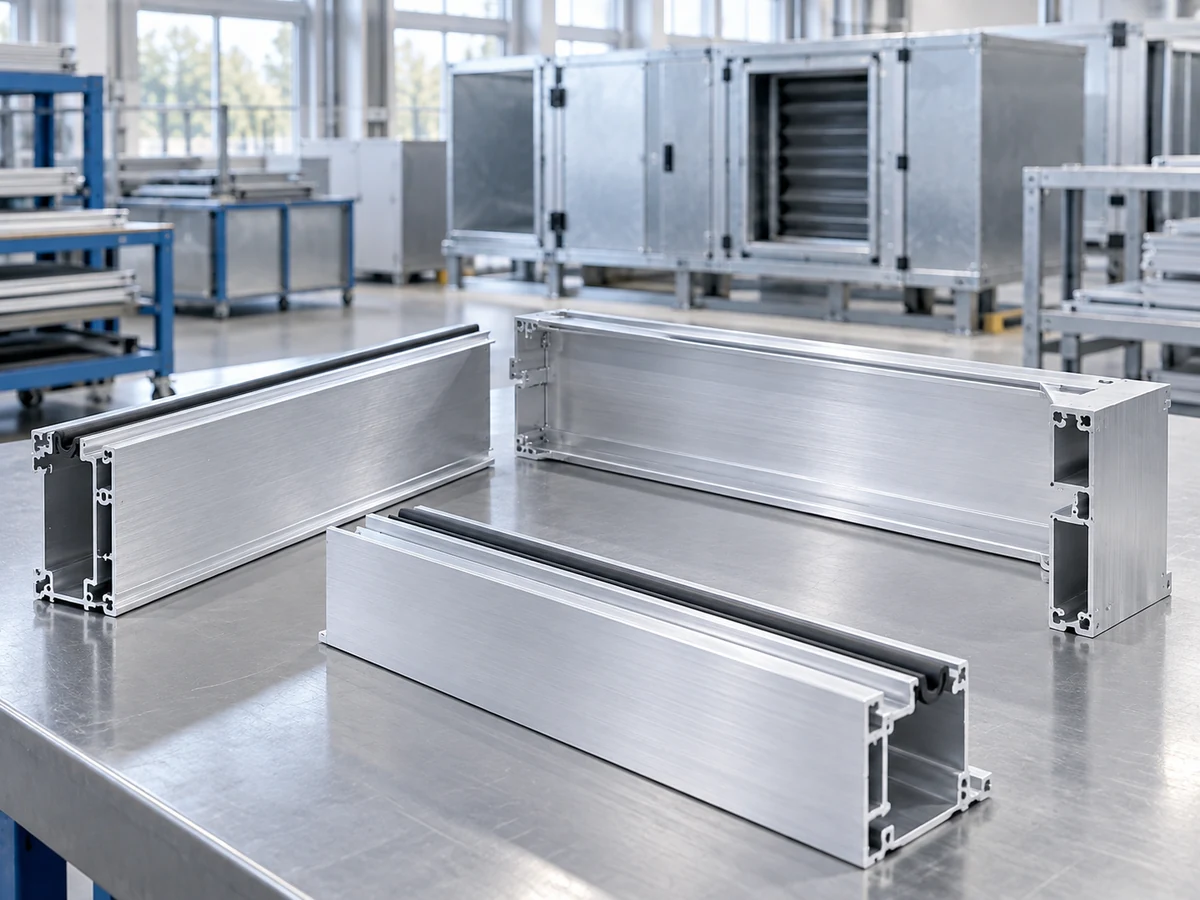
Send the section drawing or a traceable sample for every candidate stock profile. Include material designation and temper only when approved by the frame designer, plus actual envelope, wall layout, visible faces, protective film, finish state and incoming length. A hollow section may need different support from a solid bar; an anodized face may need different handling from unfinished stock. The saw vendor should evaluate the received profile, not a generic “aluminum frame” label.
Also identify the supply boundary. Are long extrusions delivered to the cutting shop, or are pre-cut lengths delivered for only a secondary trim? Are connector slots, grooves and hardware interfaces already present in the extrusion, or made later? A cutting trial on a different section can test a general setup idea, but it does not validate the released frame profile or the final joint.
3. Define cut length, end orientation and datums
For each member, show the drawing dimension between named datums, the end condition at both sides, the permitted length variation and the method of identification after cutting. Distinguish square end, approved miter and any asymmetric end. A cabinet width is an assembly result; it is not automatically the programmed stop length. If one end must face a connector or a visible corner, mark the member orientation before a batch begins.
Ask how the supplier will check the first and last piece of a representative run. Record which face rests against the stop and how a burr or damaged corner affects a measurement. If drawings are not yet complete, use our aluminum-saw inquiry checklist for incomplete CAD to organize sample-based questions, but do not substitute a sample for the final released drawing.
4. Ask how the real section will be supported and clamped
A long, hollow or grooved profile can move or mark when it is supported in the wrong place. Request a trial using the actual section and incoming finish. Observe stock presentation, clamp contact, cut position, outfeed support and removal of the cut piece. Note whether the same setup works for the shortest and longest members in the expected mix. Do not infer a machine’s capacity or cut quality from a photograph of a different profile.
For an aquarium stand aluminum frame, the most useful outcome is an agreed setup window for the released sections, not a universal claim that one clamp setting handles every stand. Where a visible face or connector groove must be protected, specify that before quoting fixtures or batch speed.

5. Keep saw-cut ends separate from joint preparation
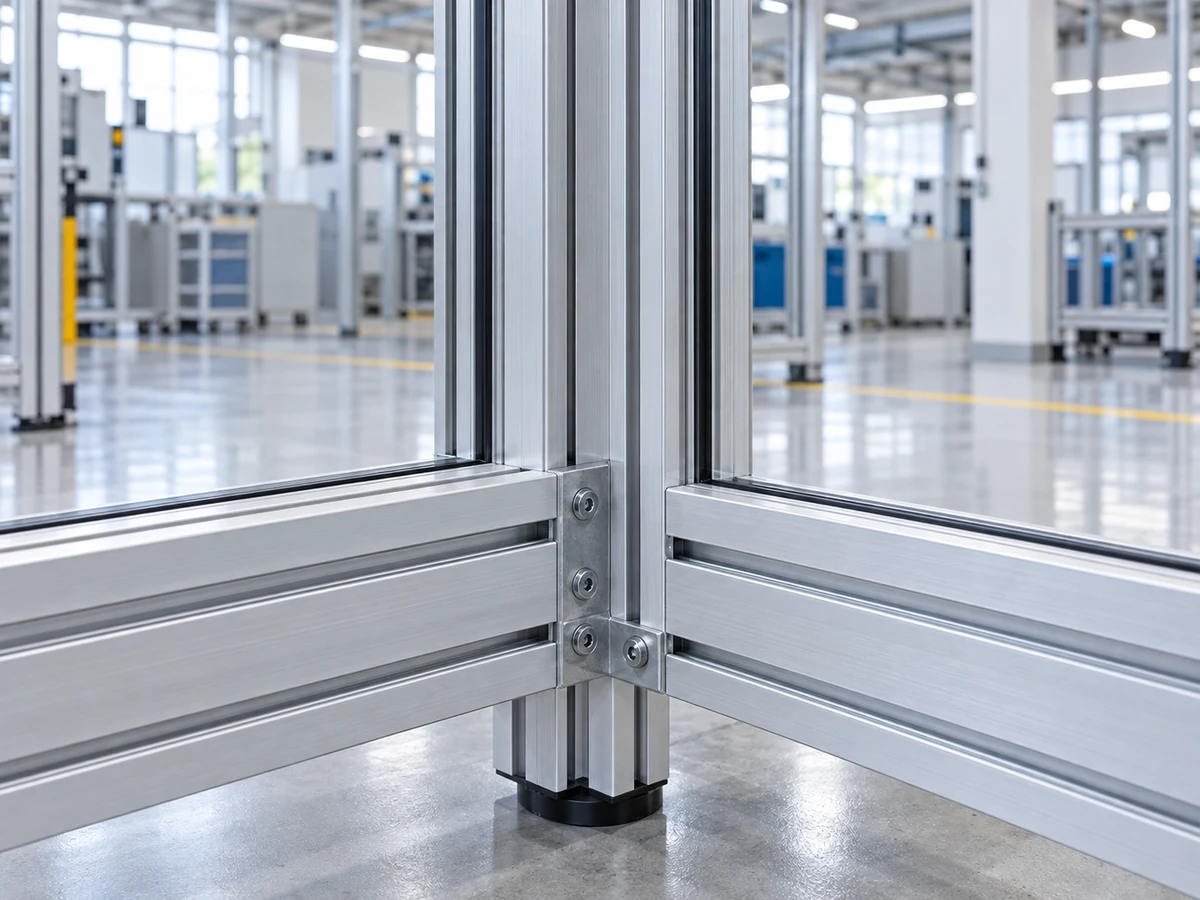
A completed frame joint may require holes, tapping, slots, corner connectors, fasteners or other preparation after cutoff. List which features are already extruded, which are cut on the saw, which are made in a later operation, and which arrive as purchased hardware. If a visible corner is assembled with a bracket, show the released connector and inspection method; do not assume a neat saw end guarantees fit.
Run a small first-article set through the actual downstream route. Check part identity and joint fit after the specified secondary work. Any rework, drilling or rejected component belongs in the cost comparison. The frame designer must separately approve the completed support structure for the intended aquarium and cabinet; a saw-cut trial alone cannot establish load capacity, stability, corrosion resistance or installation safety.
6. Preserve finish, identity and kit completeness
Agree on the incoming and outgoing surface state. If cut blanks are finished before assembly, who protects exposed faces and who decides whether the cut end needs treatment? If finishing follows cutting, who removes burrs and controls contamination before that step? Specify packaging by stand model, revision, member position and quantity. A collection of accurate individual pieces can still fail receiving if left and right members are mixed, one crossmember is absent, or a finish is scratched in transit.
For mixed orders, ask whether a changeover affects tooling, supports, first-piece inspection or labeling. Quote accepted complete kits or identified members, not only theoretical cuts per hour. Do not treat a generic statement about aluminum’s corrosion behavior as proof that this particular stand design is suitable for a wet or marine environment.
7. Compare supply routes with a representative first article
There are at least three commercial routes: buy finished cabinetry or a complete stand, buy a prepared and labeled aluminum frame kit, or retain cutoff of actual stock and outsource or perform the remaining steps. Compare each at the same accepted stage. Include stock procurement, setup, fixtures, operator work, scrap and remnants, secondary features, protection, inspection, packaging and the consequences of incomplete kits. The cheapest nominal cut is not necessarily the cheapest accepted member set.
For a saw trial, submit at least one real long member, one short member, the most difficult approved section and a representative joint-critical end. Ask the supplier to record the material and finish received, setup used, measured blank results, visible-surface observations, changeover and the tasks excluded from the machine offer. When an additional profile is outside that trial, label it unverified rather than transferring the result across the whole stand family.
What to send with the RFQ
- Approved stand family, model and drawing revision, with a numbered member list and quantities per frame.
- Actual stock section drawings or samples, incoming lengths, material and finish state.
- Cut length datums, both end conditions, orientation and stated inspection criteria for each member.
- Joint and secondary-feature ownership, including purchased connectors and later drilling or machining.
- Expected order mix, accepted output unit, batch labeling, surface protection and packaging.
- A representative first-article set and the frame designer’s separate assembly-approval path.
Request a scope-specific cutting review. Send Jiurun the released member drawings and actual profile samples, then identify the lengths and finish states to be cut. We can discuss an appropriate equipment trial and quotation boundary for your aluminum members. Final aquarium-stand engineering, assembly qualification and site use remain with the responsible product team.
Related equipment video
The following video from Jiurun Machinery’s own YouTube channel is a general saw-equipment demonstration. It does not show an aquarium stand, the frame sections pictured above, a customer trial, a recommended configuration or verified performance for this RFQ.