
An aluminum saw for bleacher manufacturing should be specified from the members a factory actually releases, not from a photograph of a finished stand. A seat plank, a footboard, a riser, a guardrail member, and a support part may reach different workstations in different forms. Some are cut from aluminum stock, some arrive as prepared parts, and others are steel or purchased assemblies. A buyer who puts all of them into one saw-capacity number risks paying for work that the saw will never do while missing the handoffs that control real orders.
The practical decision is whether the proposed cutting cell can serve the retained aluminum portfolio at the required mix and transfer each accepted part to the next operation. The following six checks turn a broad equipment inquiry into a testable purchasing brief. They are production-planning checks, not instructions for structural design or a claim that a particular Jiurun model is qualified for a bleacher system.
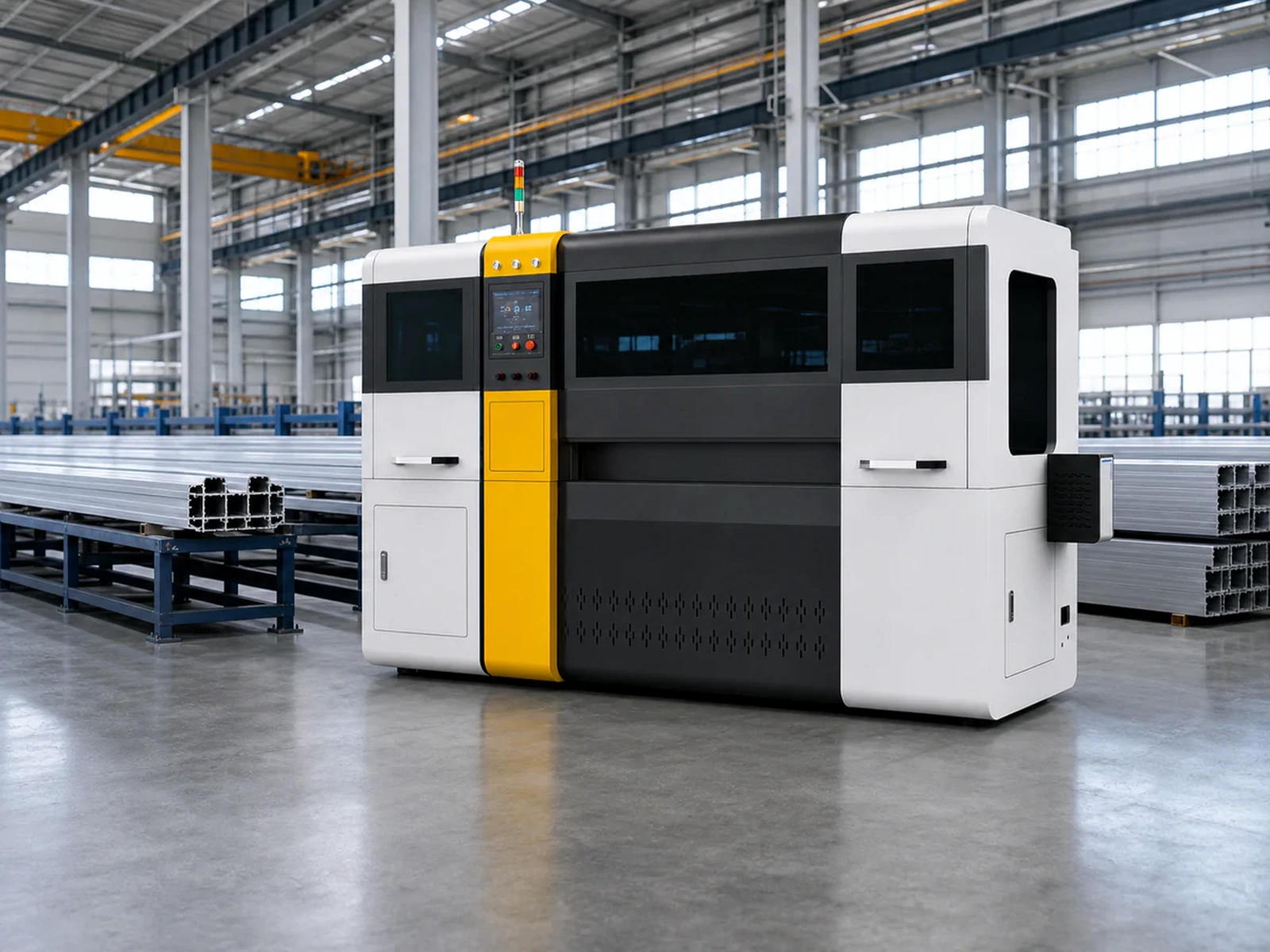
Image note: The featured image shows related long aluminum stock near sawing equipment. It is illustrative and does not depict this article’s bleacher members, a selected Jiurun configuration, a customer job, or a verified cut result.
1. Release the member portfolio before asking for a saw model
Start with the current bill of materials and drawings for each product family: new-build bleachers, replacement seating, refurbishment kits, and any special access or railing options. Mark which items are aluminum profiles or planks, which are steel, and which are bought as finished components. Do not assume the same routing for every order. A supplier example can help identify possible categories: Southern Bleacher describes aluminum seats, treads, risers, and rails alongside a galvanized steel framework in one angle-frame product family. National Recreation Systems also lists seat, foot, and riser planks and an angle understructure for a specific product. Those descriptions show why component boundaries matter; they do not define your factory’s released design.
For each aluminum item, record its drawing revision, alloy or supplied stock identity where known, profile or plank section, finish, incoming length, cut orientation, required cut length definition, end condition, and the operation that follows sawing. Separate members that merely look alike. A change in cross section, protective film, or downstream hole pattern can change how a part is located and checked even when the nominal cut length is similar. Ask engineering to sign off which representatives belong in the machine trial rather than handing sales a mixed pile of unidentified pieces.
2. Decide which work stays in-house and what arrives prepared
The purchase case changes if the factory buys full lengths, precut planks, drilled members, complete seating kits, or assembled modules. Map the current and expected route for every family. Where a purchased component already arrives at accepted length and condition, do not count its volume as saw throughput. Where the factory retains cutting, identify whether operators receive long stock, short blanks, or salvageable replacement pieces. A refurbishment job may demand a different setup and traceability path from a scheduled production batch.
Ask purchasing and production to compare at least three quotations on the same delivered basis: stock plus in-house cutting, supplier-prepared parts, and a mixed route. Include the handoff after the saw: identification, segregation by order and revision, surface protection, inspection, and transport to drilling, assembly, or packing. The least expensive cut price can lose its advantage if mixed members require repeated sorting or if a missing piece stops a complete seating kit. If trial stock is supplied by either party, agree who provides, consumes, and returns it before the test; our trial-material terms guide offers a separate checklist for that agreement.
3. Define the cut and acceptance interface for each retained member
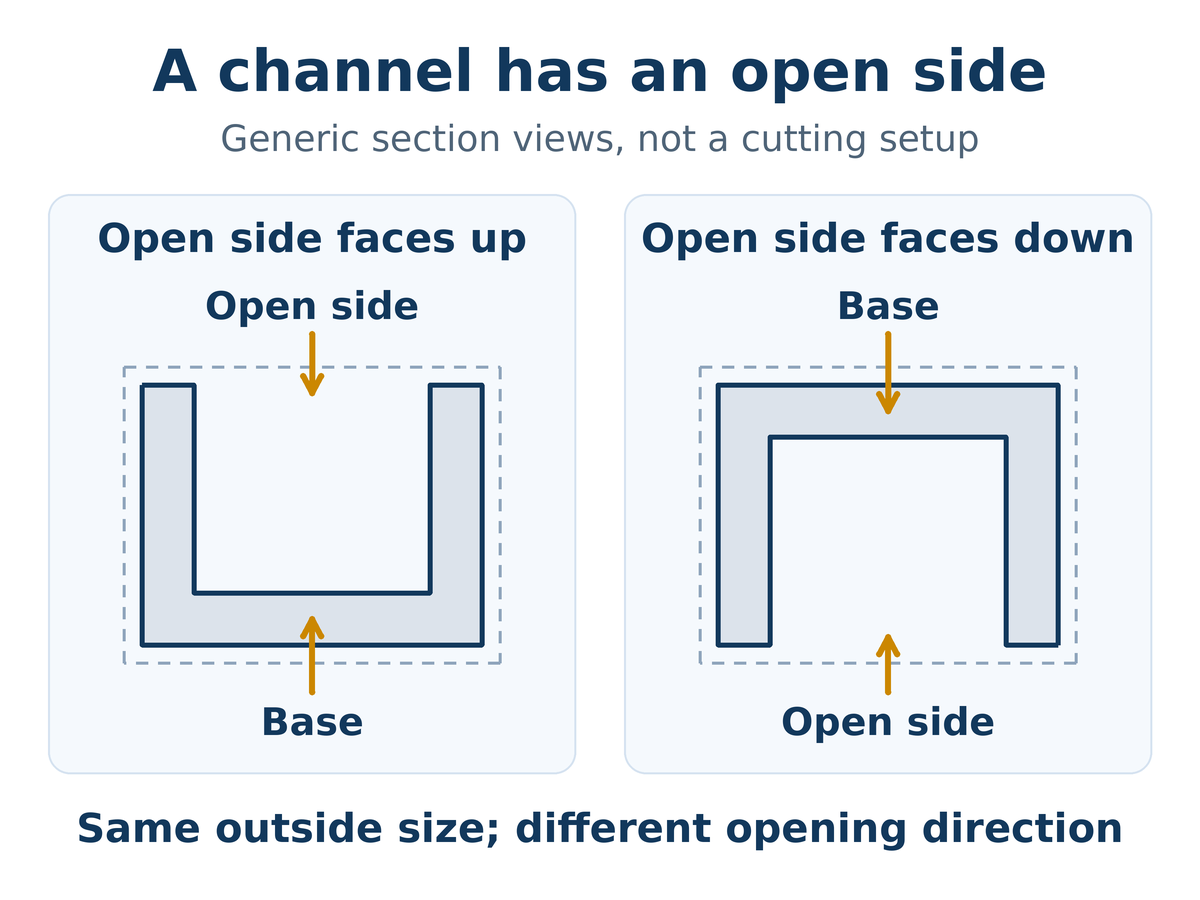
A useful inquiry shows the supplier the real section and the surfaces an operator may touch. For a long seat or foot member, confirm which face may rest on supports, which face must remain protected, and how the end is referenced on the released drawing. For a rail or trim member, identify any asymmetric section or visible finish. For a short replacement part, specify the minimum practical stock or part length and how it will be identified after cutting. The drawing owner should define the inspection datum and acceptance method; a general machine feeding repeatability statement is not finished-part dimensional evidence.
Make a part-by-part acceptance sheet rather than a universal tolerance promise. It should say how length is measured, whether the cut face or burr condition matters to the next operation, which visible surfaces require protection, and what constitutes an accepted sample. State whether drilling, notching, punching, bending, or final fit checks are outside the saw trial. A saw trial can demonstrate how the proposed setup cuts particular supplied stock; it cannot certify the finished bleacher or replace the manufacturer’s own design, code, load, installation, and site approvals.
4. Compare cells on the mixed order, not the fastest single cut
The relevant capacity is an order mix that resembles the factory’s planned work. A cell that cuts one straight member quickly may still lose time changing support, clamping, blade, length stops, labels, or handling for a different family. Give vendors a representative sequence that includes a long plank-like member, a different section, and a small replacement batch if those routes are genuinely retained in-house. Record changeover tasks and who performs them. Note where protective film, finish, or packaging must remain intact.
Compare the proposed equipment within the actual floor layout: inbound stock support, safe loading and unloading, finished-part staging, scrap removal, and inspection access. Ask whether the quotation includes the fixtures, support tables, guards, extraction arrangement, and operator training needed for the specific trial plan. Treat these as quotation-scope questions, not assumed standard features. Calculate the commercial case from accepted parts and complete kits delivered on time, not a theoretical maximum strokes-per-hour figure. The relevant loss may be a kit delayed by one missing member rather than the average seconds of a cut.
5. Run a witnessed trial with released stock and a written result sheet
Choose representative physical stock from released or clearly identified sample material. Log its section, finish, length, drawing revision, lot or sample identifier, and any pre-existing damage. Have the vendor record the exact quoted machine configuration, blade, fixture, support arrangement, operating sequence, and any setup changes. The buyer should watch first-article checks and subsequent pieces from the same setup. Record rejects, rework, surface marks, end quality, and the time required to sort accepted parts into their next-operation groups. If the trial uses surrogate stock, label the result as a process observation and list what still needs confirmation on production material.
The video below shows general Jiurun aluminum-cutting equipment footage to illustrate a machine operation. It does not show a bleacher seat, tread, riser, the proposed configuration for this inquiry, a customer order, or verified trial performance. The actual purchasing decision still needs the witnessed sample and acceptance sheet described above.
Do not confuse a successful cutting demonstration with qualification of the assembled seating system. Structural design, anchorage, egress, accessibility, site conditions, and installation approval belong to the responsible system owner and applicable authorities. Request a supplier correction plan if any sample fails the agreed cut-part criteria, then retest the affected route before treating the machine configuration as accepted.
6. Put the aluminum saw for bleacher manufacturing into a release-ready RFQ
Send a concise RFQ pack: released member list with quantities and mix, actual drawings and revisions, representative stock photographs, incoming length and condition, cut-end and visible-surface criteria, trial samples, downstream operations, floor layout, shift assumptions, and the required delivery state of cut parts. Ask for a quotation by machine configuration and option, with fixtures, supports, blade selection, installation, training, service, and consumables separated. Require the vendor to identify unsupported member families and processes that need a different machine or external supplier.
The response should specify who labels and segregates accepted pieces, what record accompanies a batch, and where responsibility changes from the saw supplier to the bleacher manufacturer. If parts travel to another site, define packaging and receipt evidence as well; our cut-part transit evidence guide explains why the dispatch and receiving record matters. Compare vendors on the same retained portfolio, same acceptance sheet, and same boundary between cut parts and completed system. A price without those boundaries is not a comparable offer.

To assess an aluminum saw for bleacher manufacturing with Jiurun, send the released aluminum member drawings, stock and finish details, expected order mix, and the operations you will keep after sawing through the contact page. We can review the cutting inquiry against the supplied information and agree what a meaningful sample trial would have to show. Do not send only an overall bleacher photograph and expect a machine recommendation to establish finished-system suitability.
Product-family examples: Southern Bleacher angle-frame bleachers and National Recreation Systems 10-row product. Their published components illustrate possible portfolio categories only; dimensions, compliance statements, and designs on those pages are not Jiurun specifications or guarantees for another manufacturer.