
A delivery labeled “ladder parts” is not automatically a kit that an assembly line can use. Rails may arrive in the right overall quantity while one hand, length, hole pattern or revision is missing. Rungs may be cut cleanly yet belong to a different assembly. Aluminum ladder kit receiving is the point where a buyer turns loose components into a traceable, released rail-and-rung set. The decision is whether to release, conditionally hold or reject a defined batch before assembly consumes it.
This guide is for ladder manufacturers and component buyers specifying saw-cut aluminum members. It covers purchase scope, identification, sample checks and exception handling. The ladder manufacturer remains responsible for its approved design, joints, finished-product tests and market-specific compliance; a saw cut or this receiving checklist does not certify a ladder.
Define the kit before a purchase order is placed
Start with the finished ladder assembly and work backward. Give each rail, rung and separately sourced fitting a part number and drawing revision. State whether the supplier is quoting raw extrusion, saw-cut blanks, machined components, a picked kit, or an assembled ladder. These are different deliverables. A buyer who prices “one kit” without that boundary cannot fairly compare quotations or know what the incoming team should count.
For each purchased member, record the profile section and alloy/temper specified by the approved drawing, cut length and its drawing tolerance, end condition, handedness or orientation, and any downstream holes or notches that are included in the supplier’s scope. Record which surfaces require protection in transit. Put the assembly quantity next to the part number: for example, a two-rail assembly can still contain different left and right rails. Do not infer interchangeability from similar-looking extrusions.
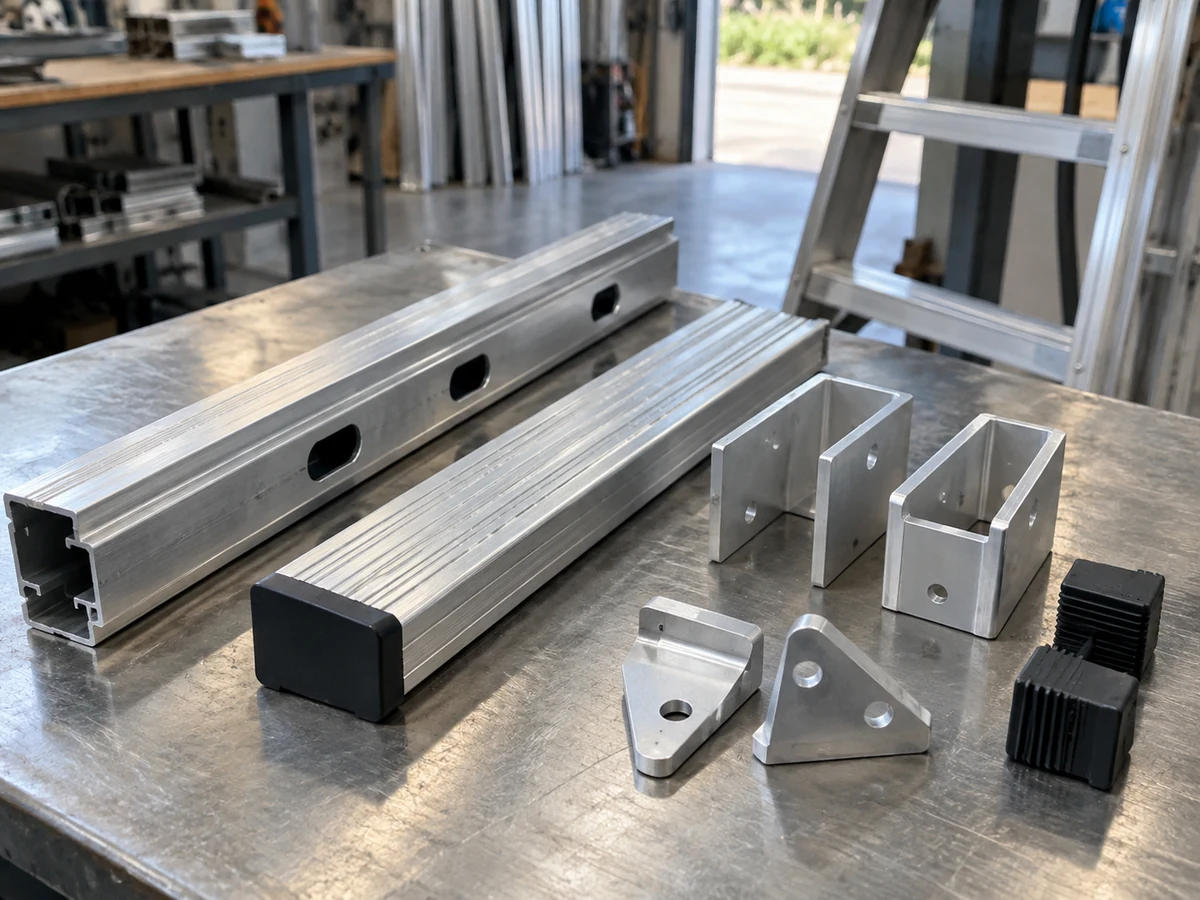
A useful purchase-order line names the unit of supply and the evidence that travels with it: part and revision labels, quantities by kit or bundle, batch identification, and the agreed inspection record. If surface finish or pre-assembly operations belong to another supplier, say so. The receiving decision should follow the actual contractual scope, not assume every visible feature was promised by the saw-cutting supplier.
Aluminum ladder kit receiving: part number, revision and assembly group
Before opening cartons, compare the delivery note to the purchase order: supplier, purchase order, part numbers, revisions, lot or batch references, promised quantity and actual packages. Keep packaging identifiers with the parts until the checks are complete. If several ladder variants share a rail profile, separate their locations at receiving. A visually similar profile is not sufficient identification.
Count both the total pieces and the number of complete assembly groups. Ten extra rungs cannot release a shipment missing one specified rail. Where the supplier ships loose bundles, the receiving team can use a simple pick sheet with columns for assembly variant, rail-left, rail-right, rung type, fittings, expected per kit, received, accepted and held. If the quotation covers only cut members, label the set “cut-member batch,” not “complete ladder kit.”
When a drawing revision has changed, compare the delivery’s revision to the released build revision before mixing stock. A superseded component may be acceptable only through the manufacturer’s documented concession or engineering change process. A receiving operator should not silently substitute it because the length appears close.
Inspect the features the supplier actually controls
Use the approved drawing, inspection plan and agreed sampling method. Select representative pieces across bundles and any distinct batches; increase checks when identification is unclear or damage is visible. Check the profile identity against its section drawing, then the specified cut dimensions and angle using suitable gauges or a controlled sample method. Look at cut-face burrs, deformation, visible-surface marks and end squareness where those attributes are defined in the order. Protect the traceability of each inspected sample.
Do not convert a machine feed-position figure into finished-part accuracy. Actual acceptance depends on the part drawing, measurement setup, stock behavior, clamping, blade condition and agreed trial. For saw procurement, a trial should compare measured cut members against the drawing’s critical characteristics, record rejects and allow repeat checks at planned output. Our separate aluminum ladder saw trial checklist addresses that upstream equipment decision; receiving checks the delivered batch.
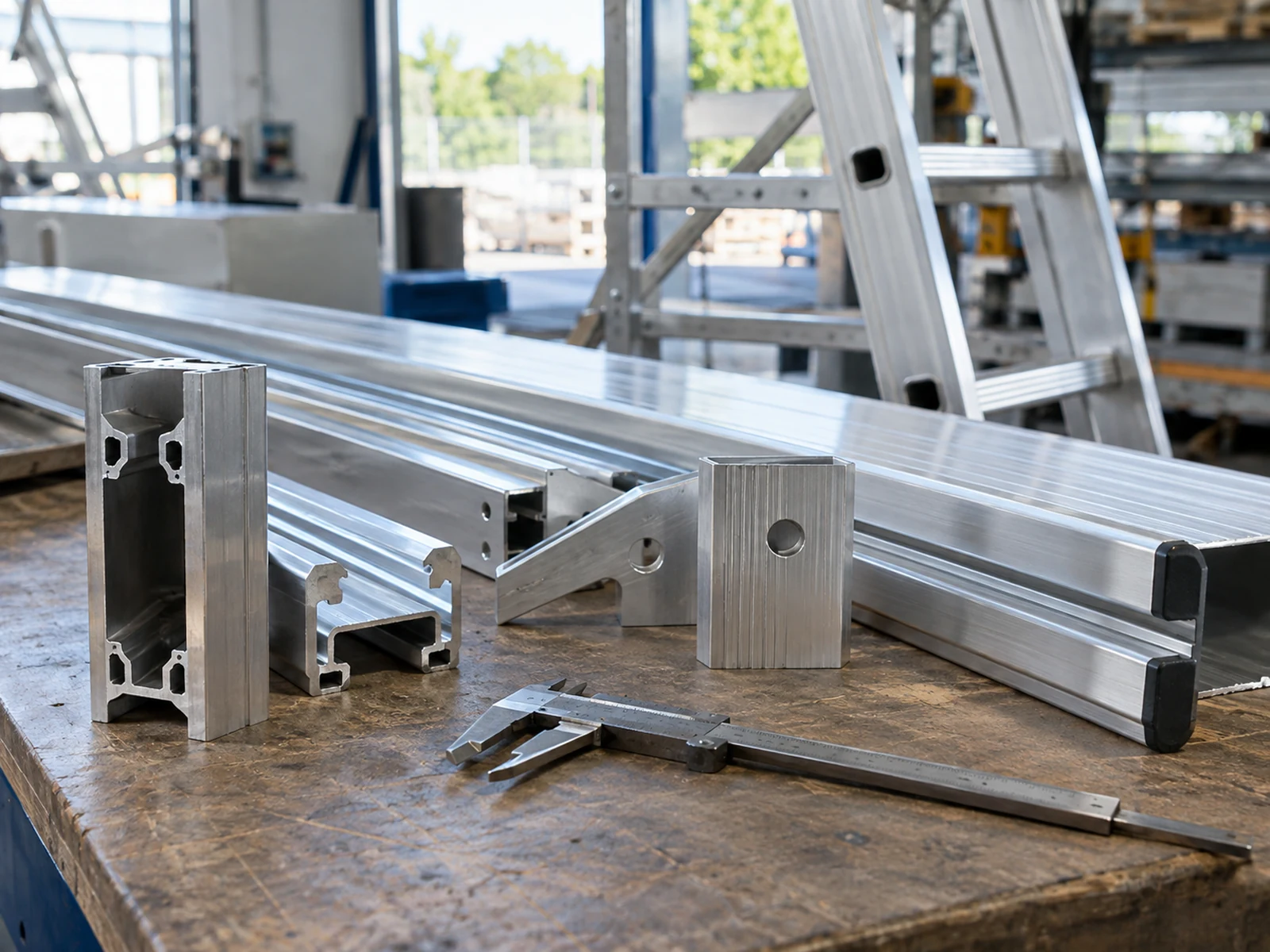
If drilling, punching, riveting or tread attachment is outside the saw supplier’s scope, inspect those operations at the stage that owns them. A clean cut face does not establish rung-to-rail joint strength, slip resistance, load performance or safe use. The manufacturer must apply the relevant finished-ladder requirements for its target market and product type. For context, the Ladder Association’s standards overview lists UK/European ladder standards, while OSHA’s ladder rule addresses ladders used at US workplaces. Neither turns a component-saw trial into product approval, and neither should be assumed to govern every destination.
Hold exceptions without losing production visibility
Record an exception against the part, revision, batch and measured or observed feature. Photograph a representative condition where useful, but keep the marked physical sample and measurement method available for engineering review. Quarantine affected stock so an assembler cannot use it while the disposition is open. Possible dispositions include supplier replacement, rework under an approved instruction, a documented concession by the design owner, or rejection. Receiving should not decide a safety-critical deviation from appearance alone.
Release unaffected stock only if traceability and the approved plan permit separation. A single mixed, unlabeled pallet may require a wider hold than one identified damaged bundle. Log the disposition and the actual assembly groups released, rather than simply changing the purchase-order quantity to “received.” This prevents shortages from appearing only when the line starts building.
What a buyer should put in the RFQ
- Scope: raw profiles, cut blanks, drilled members, picked rail-and-rung set, or another agreed deliverable.
- Controlled inputs: part and drawing revisions, material specification, stock section, finished cut geometry and critical appearance surfaces.
- Packaging: label format, kit or bundle separation, protection for visible surfaces and traceable batch references.
- Evidence: inspection points, measurement method, sample frequency agreed by the parties and records supplied with the shipment.
- Exceptions: who may authorize a deviation, how held stock is identified and how replacement timing affects the build schedule.
- Capacity: mix of variants, batch size and required throughput, especially when assessing a cutting machine rather than purchasing components.
For machine procurement, distinguish the number of pieces per shift from the number of complete sets the downstream assembly line needs. A saw that produces the easiest rail quickly may still leave a rung or handed rail bottleneck. Our rail-and-rung kit scheduling guide explains that upstream planning question. Receiving closes the loop by checking that the planned mix actually arrived and can be released.
Equipment footage and its limits
The video below is general Jiurun machinery footage of long-profile feeding and cutting. It does not show these pictured ladder parts, a ladder-specific trial, an approved kit, a customer batch, finished-ladder compliance or measured performance. Use it only to understand the type of saw operation that may sit upstream of a controlled receiving process.
The release decision
Aluminum ladder kit receiving is complete only when the batch’s commercial scope, identity, revision, quantity, specified sampled features and exception records meet the agreed plan. Mark any short or held assembly groups explicitly. That gives purchasing a credible supplier follow-up, engineering a traceable deviation and production a usable count. It also keeps two decisions separate: whether the incoming cut members meet their purchase requirements, and whether the finished ladder is safe and compliant after the manufacturer’s own assembly and validation.
If you are selecting a machine to cut released aluminum ladder rails or rungs, send JiurunCut your profile and part drawings, cut requirements, variant mix and output target. We can review the cutting application and discuss a sample trial against your specified cut-member criteria. Your product team retains approval of the ladder design and finished assembly.