
An aluminum angle cut-to-length order can look simple until the same drawing is quoted in three different forms: full stock lengths for the buyer to cut, loose pieces cut to a schedule, or labeled sets ready for the next operation. The section may be identical in every quote, yet the buying decision changes who controls cut length, end condition, sorting, inventory, and the last inspection before a piece reaches assembly. This guide helps a manufacturer specify that boundary before buying a saw or accepting a cut-piece quotation.
Here “angle” means the L-shaped extrusion, not necessarily a mitered end. If the job also needs a miter, state the end angle and its reference separately. Our angle-profile versus angled-end guide explains why those two questions should never share one ambiguous line on an RFQ.
Identify the angle before comparing supply routes
Begin with a controlled section drawing or an approved supplier part number. State both leg dimensions, wall or leg thickness, inside and outside corner form, alloy and temper, and required surface finish. Also identify the revision and whether one leg becomes a visible, locating, or mating face. A buyer who asks only for “aluminum L-angle” risks receiving a section that looks close in a photograph but changes clearance or assembly fit. Hydro’s aluminum angle overview distinguishes equal and unequal legs and describes architectural and structural corner forms. Use the actual approved drawing to define the order; a catalog description is background, not proof of interchangeability.
Separate the extrusion’s section and straightness requirements from the cutting operation’s length and end requirements. The Aluminum Association’s extrusion-tolerance guide treats twist, straightness, and cross-sectional dimensions as distinct characteristics. It does not grant a finished-part length tolerance to any particular saw. Specify how each characteristic will be measured and which party will accept it.
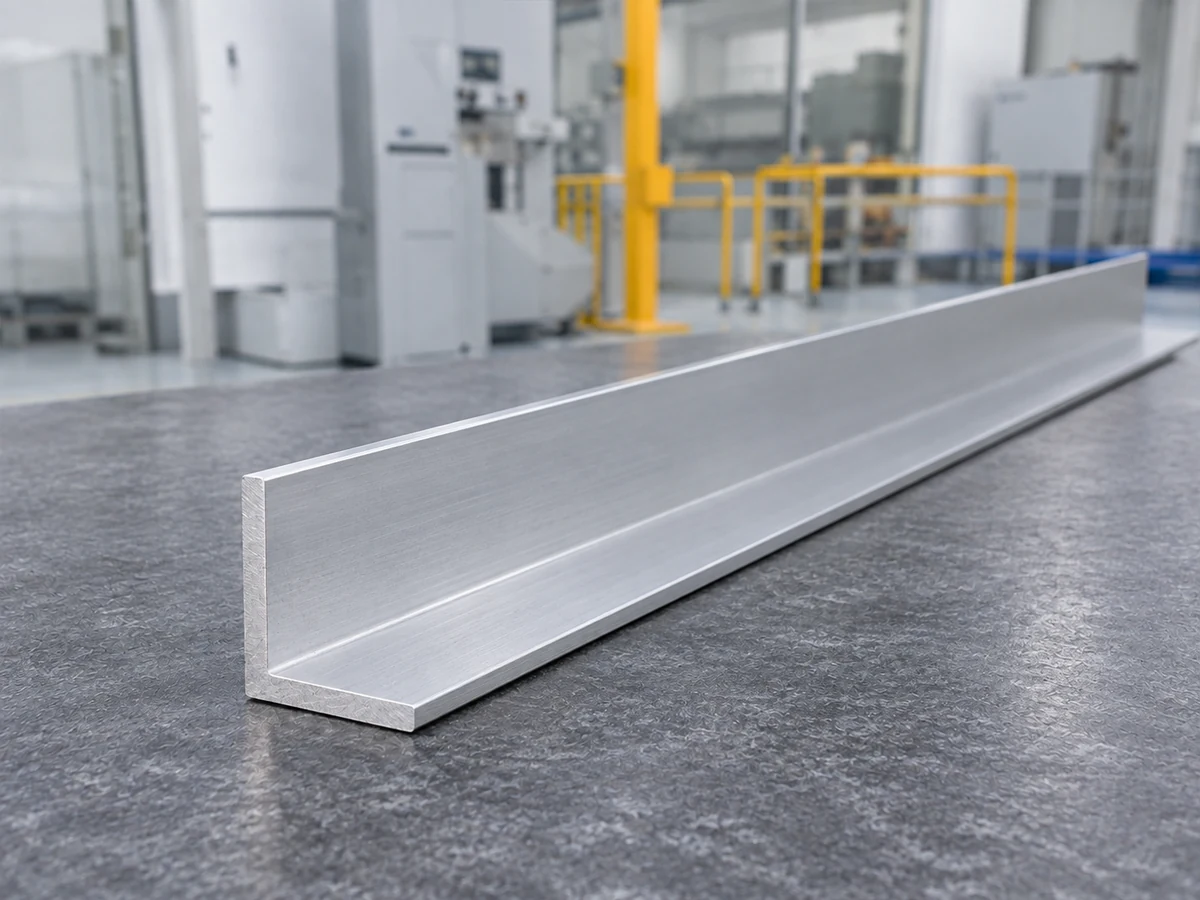
Route 1: buy stock bars and cut them in-house
Stock-length purchasing gives the buyer direct control over cut sequence, urgent changes, and reuse of suitable offcuts. It also transfers cutting capacity, trained handling, end inspection, maintenance, and part identification to the buyer. Compare this route only if your shop can receive and store the actual stock length safely, locate the correct section, support both legs without marking critical faces, and inspect the resulting parts. A saw quote should be tested with the real incoming section and the smallest, largest, and most awkward lengths in the expected mix—not accepted from a catalog envelope alone.
Ask the supplier what stock form and length range it will actually ship, how bars are bundled, and whether the nominal length includes any unusable ends. Build a cut list that identifies finished length from a named datum, quantity per part number, end form, visible faces, and the disposition of short remnants. Do not assume every remnant can be used later: the remaining length, surface condition, revision, and traceability all matter. If the order mix changes often, record setup and first-piece approval time along with run time; blade time alone understates the internal work.
Route 2: buy cut-to-length pieces
For aluminum angle cut-to-length, supplier-prepared pieces move the sawing operation to the supplier, but they do not automatically become finished or approved assembly parts. The order must define who owns length verification, cut-end burr limits, edge protection, labels, and rejection or rework. A short length on a packing list cannot substitute for an actual end-to-end measurement method. Where the angle has a visible finish, define protected faces and the packaging condition at receipt. Hydro’s architectural angle guidance notes that exposed finished surfaces may need special packaging; that is a reason to specify your own receiving criteria, not a claim that these illustrated pieces meet them.
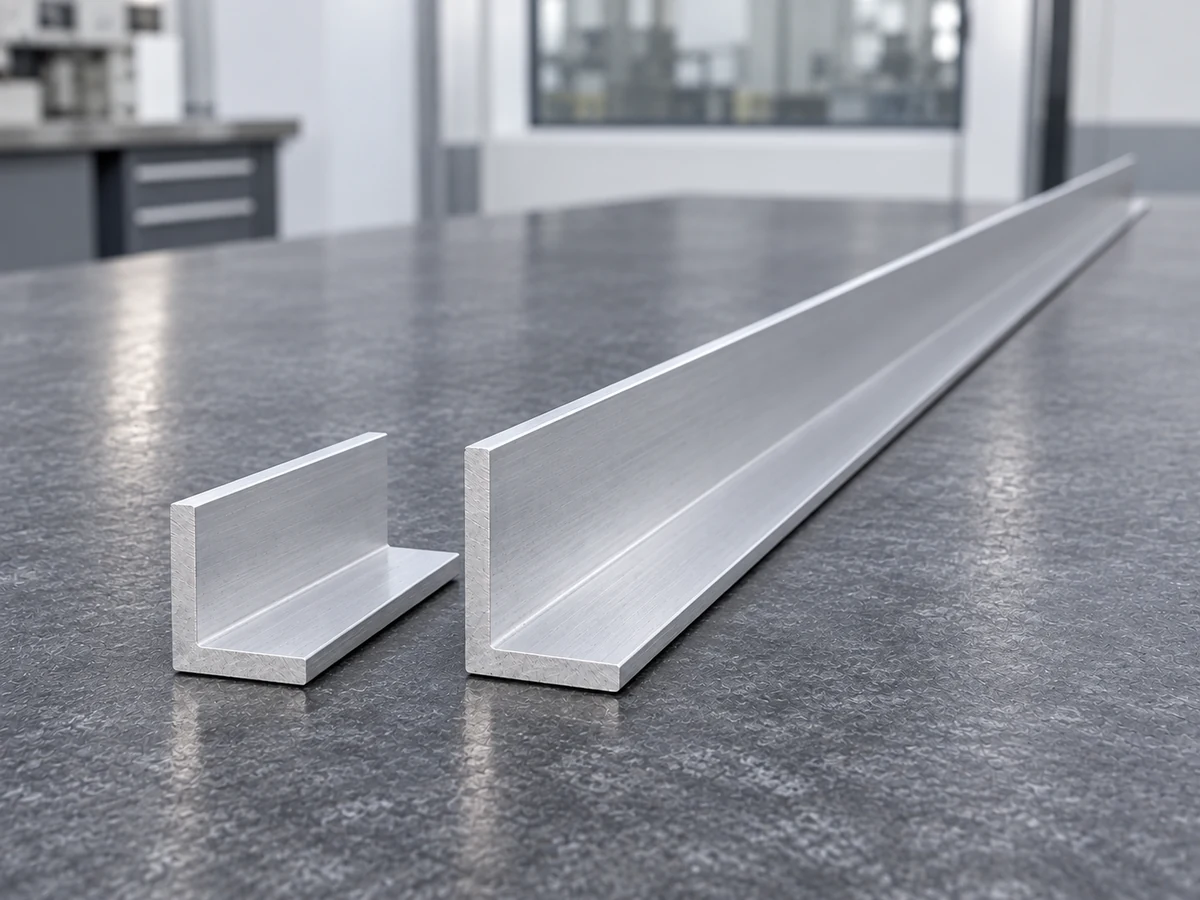
Cut-piece buying is useful when the supplier can hold the approved section and finish, document the cut acceptance, and deliver a stable release quantity. It becomes less attractive when demand shifts faster than the supplier can change the schedule, when cut pieces are mislabeled, or when the buyer still performs substantial sorting and reinspection. Request a sample against the actual drawing and approve the sample’s acceptance record before treating a volume quote as equivalent to internal cutting.
Route 3: split work between stock and prepared pieces
A hybrid can reserve repeat, predictable lengths for supplier preparation while retaining a limited stock buffer for changes and repair demand. Define the boundary by part number and revision, not by a vague percentage of volume. The same section can exist as a bar and a prepared piece, but the two inventory records need different units, identifiers, and release rules. Keep ownership of inspection explicit: a supplier-approved piece and a shop-cut emergency piece must both satisfy the same part-level requirement before use.
Do not let a hybrid route hide duplicate costs. Count both the supplier’s cutting charge and the buyer’s remaining saw setup, inspection, storage, offcut control, and expedited replenishment. A small emergency bar inventory may be justified by an actual response-time requirement; it should not be treated as “free” because the bar was already bought.
Compare quotes at the same accepted stage
First choose the comparison point: for example, identified, dimensionally accepted angle pieces ready for the buyer’s next named operation. Then price and schedule each route to that same point. The table is a decision worksheet, not a claim that one route always wins.
| Decision item | Stock bars plus buyer cutting | Supplier cut pieces | Hybrid |
|---|---|---|---|
| Section identity | Approved bar drawing and incoming lot | Approved piece drawing and supplier lot | Linked bar and piece identities |
| Cut acceptance | Buyer’s first-piece and lot checks | Supplier’s recorded checks plus buyer receipt | Two cutting sources, one part requirement |
| Change response | Depends on available bar and shop capacity | Depends on supplier revision and delivery lead time | Define which part numbers the buffer covers |
| Remaining work | Cutting, sorting, labeling, inspection | Receiving, verification, any later operations | Both workflows and controlled segregation |
| Cost evidence | Material, saw resources, scrap and inventory | Piece price, freight, packaging and receipt work | Both sets without double-counting |
Use one forecast period and the same accepted quantity for every comparison. State expected order frequency, length mix, batch size, anticipated changes, working days of cover, and the consequence of a shortage. For in-house cutting, include operator time, setups, blade and maintenance resources, inspection, handling, offcut disposition, and the capital or capacity commitment of a saw. For prepared pieces, include unit price, minimum order, packaging, freight, receiving inspection, and the cost of a late or incorrect release. Keep unknowns visible; a made-up cycle time or generic yield percentage creates false precision.
Release a sample and receiving plan before volume
For a candidate cut piece, retain a drawing revision, part number, section supplier and lot when required, finish designation, cut-length datum, end-condition acceptance, sample identifier, and sign-off owner. Mark the viewing side or functional leg if orientation matters. If there are different lengths from one extrusion, label the piece or its bundle so the receiving team can distinguish them without measuring every part. Define the sample size and inspection method with the responsible buyer and supplier; this article does not prescribe a universal tolerance or sampling plan.
For stock bars, ask what evidence connects the incoming section to the approved drawing, then conduct a trial that records how the actual angle is supported and where the cut length is referenced. Examine the first part and a representative later part, including end condition and visible-face handling. The trial is about this buyer’s material and acceptance criteria. General machinery footage below is only a process illustration and cannot replace that evidence.
Video: a general cutting-equipment example
The following video from Jiurun Machinery’s channel shows general aluminum cutting-equipment operation. It does not show or prove the angle section, alloy, finish, dimensions, model configuration, customer order, trial cut, cut quality, or performance discussed in this article. Request a separate trial and written acceptance for your own parts.
Send a quote package that keeps the routes comparable
Send the same approved section drawing, finish and orientation notes, cut-piece schedule, forecast period, revision rules, packaging request, receiving location, and acceptance criteria to every bidder. Ask each to identify the exact supply boundary: raw bar, loose cut piece, labeled set, or additional fabrication. If considering a saw, include a physical sample and ask the saw supplier to quote the tested feeding, holding, cutting, and inspection scope for that sample. A machine able to cut some aluminum shapes is not automatically validated for your particular angle and finish.
For replenishment logistics across several part numbers, our line-side cut-kit replenishment guide addresses the separate question of where kits should be made and staged. Here the decision is whether a defined aluminum angle section should arrive as bar stock, approved cut pieces, or a controlled mix.
Need a saw quotation for your angle section? Send JiurunCut the section drawing, representative physical sample, length and quantity schedule, protected faces, required end condition, and your acceptance method through the contact page. We can discuss a suitable equipment trial and quote boundary; the final fit and performance decision requires results from your actual parts and agreed checks.