
Line-side aluminum cut-kit replenishment is a promise to deliver the right approved members to an assembly station when it needs them. Buying a saw can shorten the distance between stock and that station, but it also transfers cutting, inspection, scheduling and shortage risk to your team. Buying precut kits transfers some preparation work to a supplier, while leaving your team responsible for release information and receipt. Compare those routes against the same accepted kit, not a machine cycle against a supplier unit price.
The buying question is specific: can an in-house saw cell repeatedly prepare the released mix of aluminum members, identify each batch and deliver complete kits at the line-side handover? If the answer is unclear, a fast demonstration of one easy profile does not settle it.
Define the line-side handover before comparing equipment
Start with a representative assembly family and write down what the station actually receives. Is it loose cut lengths, labelled bags of members, a complete frame kit, or a ready-to-assemble set that also contains purchased connectors? Name the receiving owner, the release revision and the point at which quantity, identity and cut-end condition are accepted. A saw quote covers only the cutting-stage work it explicitly includes; labelling, deburring, packing, transport and final assembly may be separate work.
Use a kit record with profile identity and supplier grade, drawing revision, member orientation, cut length reference, end geometry, quantity per kit, label and receiving location. Mark any subsequent drilling, milling, tapping or assembly as a separate step unless a quotation explicitly includes it. An aluminum profile system can combine many members and connectors, as the Bosch Rexroth aluminum framing overview illustrates. Its catalog is background for defining a system; it does not prove that a particular Jiurun saw can finish every feature in a kit.
Line-Side Aluminum Cut-Kit Replenishment: Choose a Route by Part Family
Do not assume that every member needs the same supply rule. Repeated, stable members may justify a replenishment stock and a clear reorder trigger. Rare variants and drawing-sensitive parts may be safer as order-specific kits. The Lean Enterprise Institute description of pull production explains the replenishment idea; its discussion of high-mix work also cautions that runners and irregular parts often need different flows. These are process principles, not a promised saving for your plant.
Compare three practical routes at the same receiving boundary. With a supplier-precut kit, the supplier cuts and identifies approved members, and your plant verifies each kit at receipt. With a central in-house saw, your team controls cutting but must move finished members to assembly and protect them during storage. With a saw close to assembly, transport may be shorter, but floor space, raw-stock delivery, offcuts, noise control, guarding, maintenance access and staffing become local constraints. A line-side location is not automatically better than a controlled central cell.
For each route, ask who owns shortages, substitution approval, revision changes and traceability. If the supplier delivers loose cut members while the in-house comparison assumes labelled complete kits, the prices are not comparable. State the accepted output first, then identify each missing operation and its owner.
Build demand from released kits, not from a headline cycle time
Collect a recent mix of released assembly orders. Count kit families, profile shapes, member lengths, end types and quantities; separate recurring runners from infrequent variants. Note when the assembly station requires the kit and when the latest approved drawing and stock are actually available to cutting. A forecast is useful for sizing a scenario, but it is not an order or an accepted part count.
Run a simple route sheet for one normal period and one difficult period. For each kit, record cut preparation, profile changeover, batch identification, inspection, packing, internal movement and line-side receipt. Include rework and incomplete kits as observed losses rather than assuming a perfect cycle. A machine demonstration may show a cut; your purchasing case needs the full released-to-received path. Keep an explicit place for stock length utilization and offcuts, without asserting that a saw produces zero waste.
Where the line uses a pull trigger, define the physical or digital signal, maximum and minimum kit quantity, response owner and what happens when a drawing changes while stock is already cut. For irregular variants, use a named order and release rather than forcing a replenishment bin to hold obsolete pieces.
Trial the complete cut-kit handover
Give a prospective supplier the real profile drawings, approved stock samples and a representative kit list. Include a long member, a short member, the awkward section, any orientation-sensitive face and at least one changeover between families. Require them to identify the exact saw and quoted configuration they propose. Test only what the offered machine and its installed fixtures can actually do; do not infer capacity from a different machine or video.
During the trial, record the incoming stock condition, datum and support plan, clamping contact, operator setup, cut sequence, label placement and finished-member inspection method. Measure the criteria on the released drawing using the agreed instruments and record the actual results. Check whether the accepted kit arrives complete, correctly identified and protected at the receiving point. A good cut end on one specimen is not proof that the entire replenishment system works.
Repeat the trial when it matters: a second kit or a return to the first profile after a changeover reveals setup and identification work that a single continuous run can hide. If the order changes revision, quarantine earlier cut stock and document who may release or scrap it. The appropriate trial size and acceptance limits come from your product requirements, not from a generic number in an article.
Compare the full cost of each accepted kit
Price the routes at a common handover. For purchased precut kits, include supplier preparation, minimum order, change fees, inbound freight, inspection, buffer stock and the cost of a late or incomplete kit. For in-house cutting, include the quoted saw and fixtures, installation, floor area, stock handling, blades and consumables, planned maintenance, operator and inspection time, internal transport, offcuts, rework and the working capital held in raw and cut stock. Keep costs that are unknown as open questions; do not fill them with an invented return-on-investment percentage.
Then stress the comparison with the actual variant mix. A cell that looks economical on the highest-volume member may struggle if every shift brings short runs and new profiles. A supplier kit may reduce local cutting work but make an urgent revision expensive. State the switching rule: which released families stay with precut supply, which move in-house, and what evidence would change that decision.
Send one usable RFQ, then compare like with like
Attach the released kit schedule, drawings and physical stock references to the RFQ. Ask each machine supplier to list the exact machine, feed and clamping arrangement, blades and supports, achievable operations, excluded downstream work, installation needs, training, maintenance access and spare-part scope. Ask a precut-kit supplier for the accepted member specification, labels, packing, revision-change process, lead-time basis and shortage response. Both should quote against the same receiving test and identify assumptions.
Ask for a witnessed trial using your approved material and criteria. Keep feed positioning and finished-part acceptance separate: a machine feed specification does not establish the measured cut length or assembly fit of your parts. If a quotation relies on optional fixtures or a particular profile orientation, make those terms visible in the configuration and trial record.
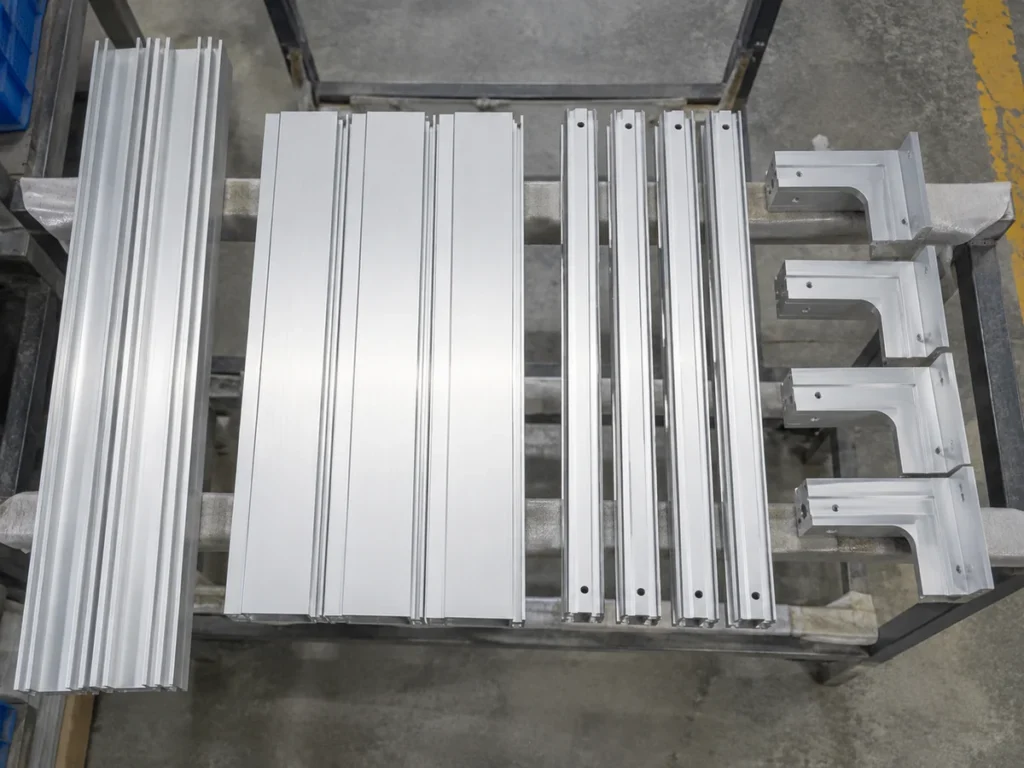
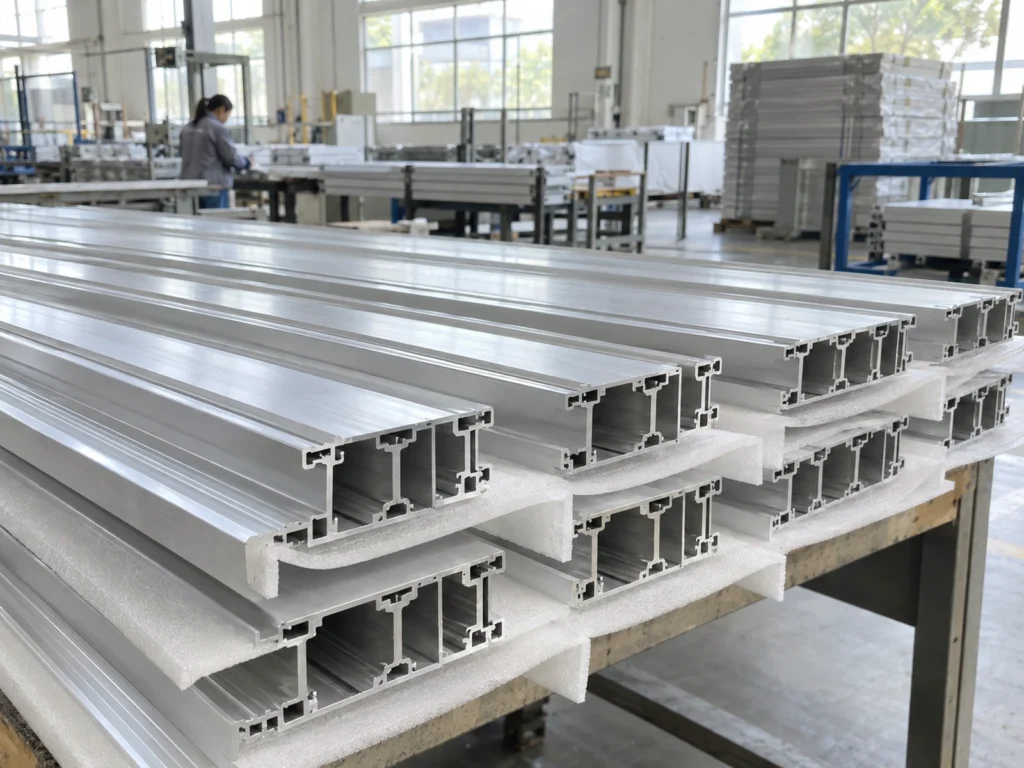
The images in this guide illustrate three different steps: raw profiles at a saw infeed, grouped cut members and protected profile bundles. They do not document a named customer’s line-side system or an accepted kit. The Jiurun video below shows general angle-saw equipment footage. It does not prove the material, replacement or replenishment program, machine configuration, customer, trial result, cut quality or performance discussed here.
Decision and next step
Choose an in-house saw when the released demand, available stock, space, staffing and complete-kit trial support the whole replenishment route. Keep buying precut kits when supplier-controlled preparation better protects irregular variants or when your team cannot yet own the inspection and handover. A hybrid route may fit a mix of stable runners and occasional specials, provided every family has a clear owner and revision rule.
To discuss a Jiurun cutting-stage option, send the JiurunCut team a representative kit list, drawings, actual profile samples, required receiving checks and expected order mix. We can discuss a configuration and a relevant trial plan against that evidence; later processing, assembly and line-side logistics should be scoped separately.