
A buyer comparing a standalone aluminum saw vs auto-loading line should begin with the complete route from identified stock bar to accepted cut part. Both quotations may say “automatic feeding,” yet that phrase can mean different things. A saw can advance a bar through its own cutting station while an operator still selects, stages and loads each new bar. A line may add a magazine or rack, bar transfer and coordinated discharge. Neither label proves that the proposed package handles your profile families, order changes or downstream work. Define those boundaries before comparing price or claimed pieces per hour.
This guide is for an industrial aluminum-profile cutting purchase. It compares procurement questions and trial evidence, not a promised capability of any named machine. Jiurun lists CNC saw families and automatic feeding solutions; the offered model, loading arrangement and controls must be identified on the actual quotation.
Standalone aluminum saw vs auto-loading line: define the boundary
Draw the material route as six distinct events: release the correct stock identity, present a bar at the infeed, transfer and position it for cutting, remove cut pieces, identify accepted output, and dispose of or segregate the remaining end. Mark who or what performs each event. A standalone CNC saw can automate movement inside the cutting cycle without including automatic selection of the next bar from a rack. Conversely, a loading rack does not automatically solve finished-part sorting, inspection or packing.
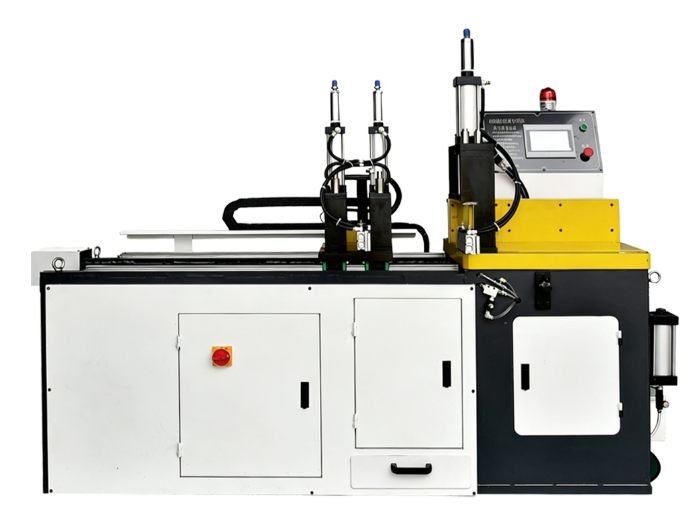
Ask each supplier to draw its quoted boundary on the same flow. List the stock-storage point, operator touch points, safe access, controls handshakes, infeed support, outfeed destination and any buyer-supplied equipment. If a sales photo includes two lanes, a rack or a conveyor, do not infer that every pictured item is included. The signed equipment list and layout control the comparison.
Match the purchase to the bar mix, not just the peak batch
A repeated order using one approved profile and stable cut list can keep a loading arrangement occupied for longer runs. A workshop that changes section, finish, drawing revision or order priority frequently may spend more time identifying stock, clearing remnants and releasing the next job. The relevant question is whether the proposed loader can present each approved bar family correctly and whether the extra loading steps remain useful across the actual schedule.
Build a representative job portfolio before requesting a demonstration. Include the common high-volume order, the shortest routine batch, a difficult profile family and an urgent order that interrupts the schedule. For each, record input form and length, finish protection, approved orientation, cut-list revision, required accepted count and what happens to the last bar. Do not substitute a conveniently uniform demonstration bar for an untested production mix.

Compare accepted output across the entire shift
A line proposal should be judged at the receiving point after cutting, not solely at the saw cycle. Record the operator time for replenishing stock, selecting the right profile, confirming the program, clearing exceptions, removing accepted parts and handling offcuts. Also identify who inspects the first part, what triggers a hold and how the next process receives the correct order. A fast cycle that produces an unlabelled pile can transfer cost to inspection and sorting.
Use one common reporting unit, such as accepted and identified pieces for the approved orders during a representative staffed period. Keep rejected pieces, rework, changeover time and waiting for downstream removal visible as separate fields. For a fair comparison, use the same stock condition, blade basis, acceptance criteria and operator boundary. If the quoted line adds a second station or an external pack-out team, state that difference rather than treating it as free automation.
Two buying situations that lead to different tests
Mixed-order workshop: the weekly work alternates between multiple extrusion families, finishes and small releases. The buyer first tests whether a standalone saw with clearly planned staging can meet accepted output. The line option must then demonstrate bar identity control, changeover and recovery from an interrupted order. Its value cannot be inferred from a long run of one easy profile.
Repeat-family plant: a substantial share of work uses the same approved stock family and stable output destination. The buyer tests replenishment, transition to the last bar, unattended intervals permitted by the agreed operating rules, and the actual downstream capacity. The loader may remove a recurring manual presentation step; this is still a trial question, not an assumed labor saving.
Specify the acceptance trial before choosing the route
Give both suppliers the same released cut list and a written trial record. Separate machine demonstrations from a purchase acceptance test. The record should identify each stock bar, program revision, start and end of every batch, planned changeover, accepted quantity, exceptions, operator interventions and offcut disposition. Measure the cut parts against the agreed drawing and inspection method; feeding-position repeatability is not finished-part dimensional accuracy.
For the line, add a bar-selection challenge: mix clearly identified approved stock families in the planned rack positions and observe how the quoted arrangement prevents the wrong bar from entering the job. Include a normal replenishment and an empty-position event. For the standalone route, observe the actual staging and load sequence rather than assuming the operator can always deliver the next bar without delay. In both cases, verify the receiving handoff, first-part release and end-of-batch reconciliation.
What a comparable quotation needs to include
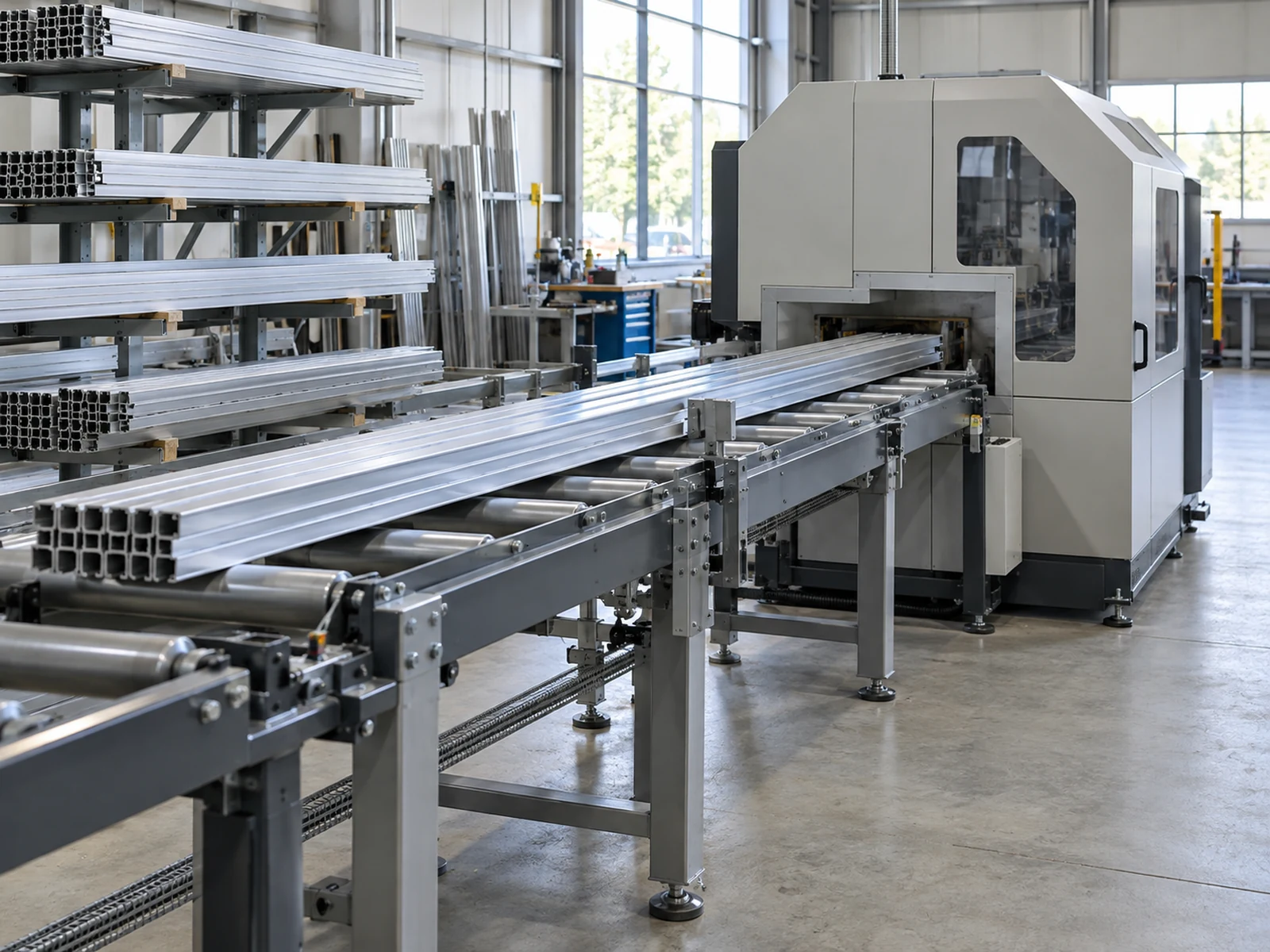
Request a line-item scope for the saw, magazine or rack, bar transfer, infeed support, discharge, guards, controls interface, installation, trial material, training and service access. Identify the responsible party for upstream stock delivery and downstream removal. Draw the proposed footprint with usable service and material-handling space, then have the site team check the real bay and utilities. A “fully automatic” label cannot replace these boundaries.
For the financial comparison, place the quoted capital cost beside expected accepted output, operator and material-handling time, maintenance and service scope, changeover losses, floor-space cost and any extra downstream labor. Treat claimed savings as a hypothesis to test. A useful decision sheet has three columns: measured on the buyer’s trial, supplier-stated but not yet demonstrated, and excluded from the quote. Keep those columns separate until the purchase gate.
Video: general equipment-process example
This video is from the Jiurun Machinery YouTube channel and shows general equipment and process footage. It does not prove the material, exact model or supplied loading configuration discussed here, nor any customer result, trial outcome or performance figure. Use it only to visualize the type of feed and cutting activity that your own trial must define.
Decision rule and RFQ handoff
Choose the smaller boundary that demonstrably meets the released order mix and receiving requirement. A standalone saw is a valid choice when planned manual bar presentation, identification and outfeed can support accepted demand. An auto-loading line becomes a stronger candidate when the representative bar mix, replenishment pattern and downstream handoff allow the added equipment to remove a proven constraint. If either route fails a mandatory profile, access or acceptance condition, resolve that condition before scoring convenience or payback.
Send suppliers the actual profile drawings, stock lengths and forms, cut-list mix, finish protection, expected batch and changeover pattern, accepted-part criteria, desired staffing boundary, site layout and intended receiving point. Ask them to return a marked scope drawing, exclusions, representative trial plan and acceptance record. For a deeper line-specific trial, see JR-650CNC bar selection and single-profile feed; for discharge, see loading-line outfeed removal. The manufacturer’s saw-family list and feeding-system overview provide product context, but the agreed quote and witnessed trial determine what your installation can do.
Next step: Contact JiurunCut with a released cut list and a sketch of your stock-to-pack route. Request separate standalone and loading-line scope responses where both options remain feasible, then compare them against the same accepted-output record.