
A mixed-order aluminum saw trial should resemble the work that creates the purchasing risk: a short run of one customer order, a switch to a different extrusion and cut list, then a return to the first order. A machine may make acceptable cuts in a single uninterrupted demonstration and still leave buyers with unanswered questions about setup, first-piece approval, part identity, and accepted output after each restart. Before asking for a quote, define those handoffs as part of the trial rather than treating the saw cycle alone as the result.
This guide is for plants that run several small aluminum extrusion orders through one cutting station. It does not assume that a particular Jiurun model has automatic program recall, barcode scanning, sorting, or a given changeover time. The supplier should state which functions are included in the proposed configuration and which steps remain with the operator or your production system. For general profile setup questions, our profile cutting changeover guide is a useful companion; the decision here is whether the complete order-switch route can keep accepted parts and records separated.
Build a mixed-order aluminum saw trial with A–B–A
Choose two real jobs that differ in a way that matters to the saw. Order A might use one extrusion section and drawing revision; order B might require another section, finished length, datum face, or cosmetic requirement. Then repeat A after B. The return pass exposes a risk that a single A-to-B changeover misses: whether the original setup, program, measuring method, and order identity can be restored without assuming that yesterday’s first piece still proves today’s output.
For each pass, provide the supplier with the current drawing revision, stock section and incoming length, alloy and temper where relevant, required part length and quantity, end-use checks, and the destination for accepted parts. Mark any protective film or visible face. If the trial uses substitute material, label that substitution and leave the real material and finish unqualified. The point is a controlled comparison, not a dramatic demonstration on whichever profile happens to be available.
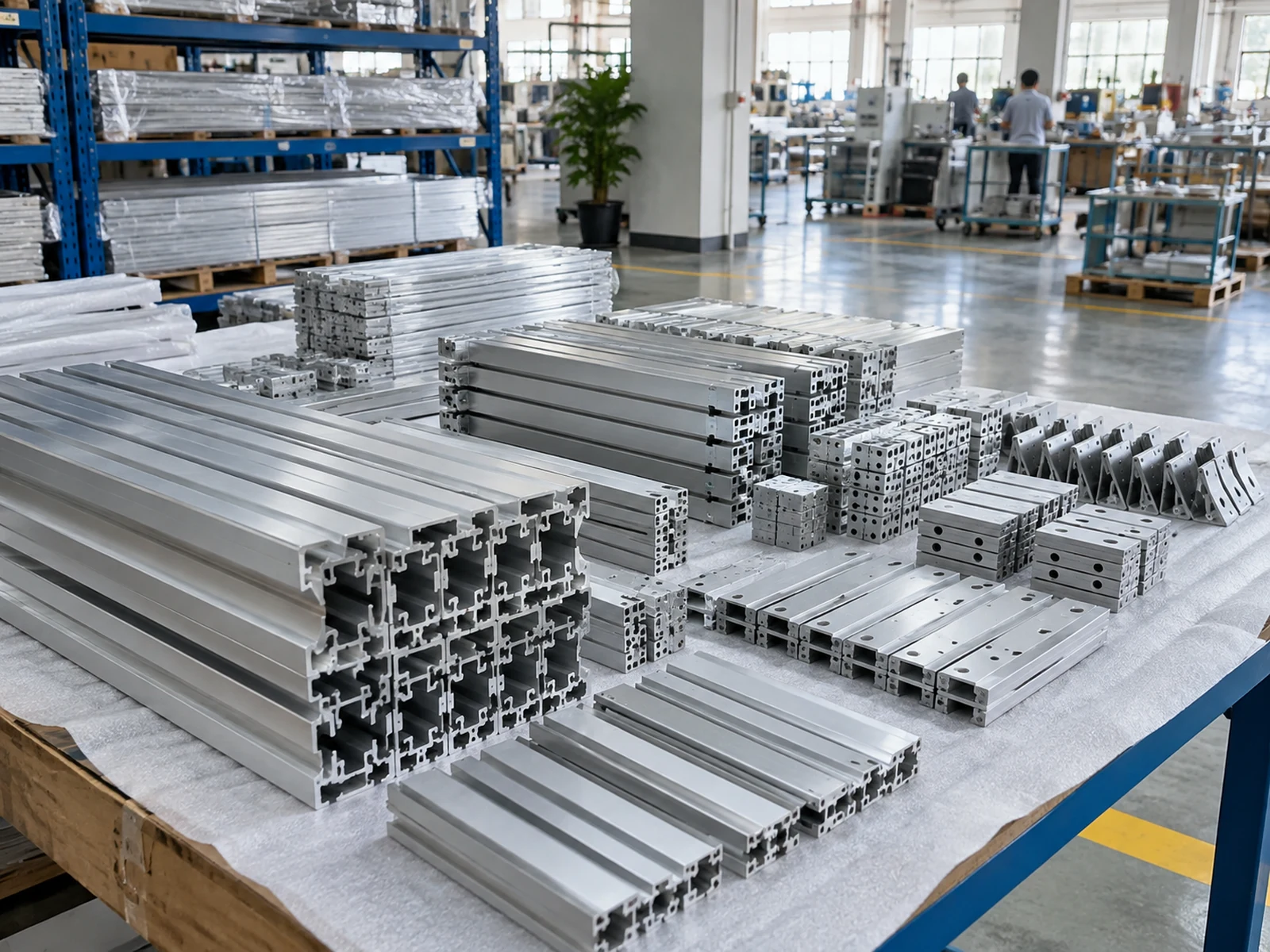
The buyer should nominate the most difficult switch, not merely the widest section. A small difference in contact faces may require new supports or clamps; a different cut datum may require a different length setup; and a different order may require a new label or container. The illustrative assortment of stock shown with this article is a planning aid, not evidence that the pictured profiles were run through a quoted saw.
Record what changes between orders
Ask the supplier to walk through every manual and automated action between the last accepted part of A and the first accepted part of B. That includes clearing the previous work, confirming the new material and drawing, changing any supports or contact points, selecting or entering the cut instruction, checking the stop or feed reference, and routing first-piece and scrap pieces. Repeat the log for B back to A. If a controller stores jobs, verify the exact job name and revision shown to the operator. If it does not, document how the operator enters and verifies the next instruction.
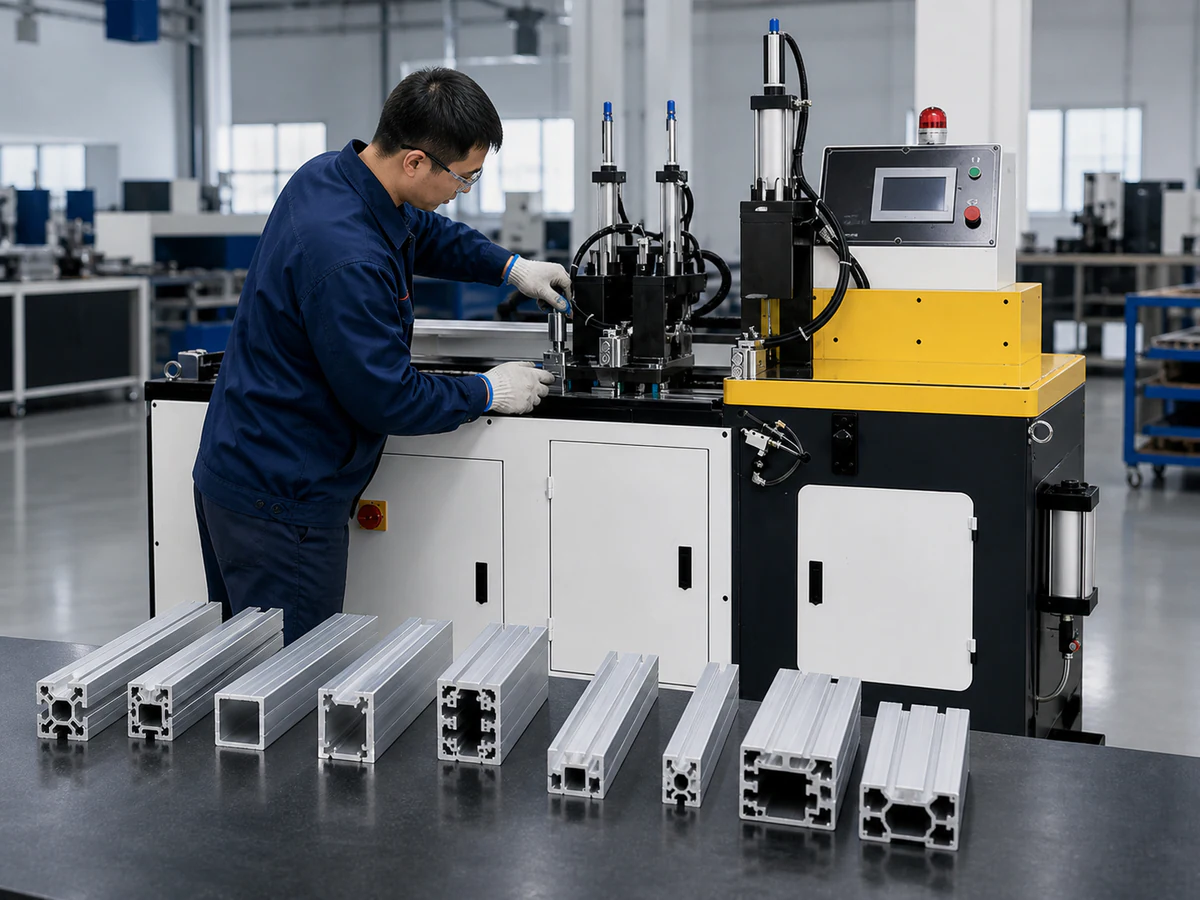
Separate elapsed changeover time from cutting time and from first-piece inspection time. A supplier can then explain what a machine option changes and what it cannot change. An extra clamp, support, part separator, or job-management feature is valuable only if it addresses a measured handoff in your order mix. Do not transfer a claimed cycle rate from one stable run to a day made of many short jobs.
Hold the first piece after each restart
Make the first piece of A, B, and returned A a deliberate release point. Record its order ID, drawing revision, stock section, machine setup or program reference, operator, time, and the actual checks that matter downstream. Measure length at the agreed datum. Check the relevant end face, burr or edge condition, and any mating or surface requirement. A generic “looks good” approval is too weak if two orders use similar looking sections but different lengths or revisions.
Define who can release production after that inspection and where a rejected first piece goes. A failed first piece should trigger a correction and a new first-piece check; it should not be counted as accepted output. If the buyer intends to rely on an in-process gauge, agree its method and responsibility in advance. This is a production-control recommendation, not a claim that a specific saw supplies an inspection system. NIST’s manufacturing case study on setup and first-piece inspection illustrates why these steps are treated as separate improvement opportunities.
Prove physical lot separation at the outfeed
The trial is incomplete when cut parts leave the blade but nobody can tell which order owns them. Before cutting, assign a clearly identified container or location to A and B, plus separate places for first-piece holds, rejected parts, and offcuts. At each switch, clear and reconcile the outfeed before releasing the next order. In the A–B–A sequence, the second A pass should be distinguishable from the first if your records or customer instructions require that distinction.
Count accepted pieces at the point of transfer, not just commanded cuts. Reconcile the count against rejects, samples, and pieces still inside a handling path. If a bundle contains similar lengths from two orders, decide how identity is preserved until packing. Ask the supplier to show the actual handoff path in the proposed scope: a chute, a table, a conveyor, a staffed container, or another agreed route. Do not assume a video of a saw proves part sorting or traceability. Our cutting traceability guide covers the broader batch-link record; here the acceptance question is whether the order switch produces a correctly identified output.
Judge accepted output, not a headline cutting rate
For each A–B–A pass, record material consumed, first-piece samples, rejects, accepted pieces, offcuts, operator interventions, and the time spent cutting, switching, inspecting, and clearing parts. Define the start and stop points before the trial. If the supplier reports machine cycle time alone, ask for a second view of the complete order sequence. The latter is the result a buyer can compare with the production schedule.
A useful acceptance sheet has one row per order pass and a final reconciliation. It states the planned quantity, accepted quantity, disposition of every other piece, the inspection outcome, and any condition that remains unresolved. Use your own contractual tolerances and quality criteria; do not treat catalogue positioning or feed repeatability as a guarantee of finished-part accuracy. When a proposed accessory improves a step, repeat the relevant part of the trial with and without it where practical, or state that the comparison is untested.
Turn the trial into a quote boundary
Ask the supplier to identify the exact machine, blade and cutting setup, material support, clamps or dedicated fixtures, part-handling route, program or job identification method, and inspection responsibilities used in the successful trial. Separate included equipment from optional equipment and from buyer-supplied bins, labels, gauges, labor, and software. List the two tested orders and revisions, the accepted results, and the parts that were not tested. A quote should not quietly expand a successful trial on two sections into a promise for every future profile.
Also agree the installation acceptance method. The buyer should be able to repeat the A–B–A sequence on the delivered configuration with its own stock, drawings, people, and containers. If the supplier proposes a different handling layout or tool set, document how equivalence will be shown. A changeover problem discovered after delivery is much easier to resolve when the order-switch sequence and acceptance record were part of the purchase agreement.
What the equipment video can show
The following video is from Jiurun’s own channel. It shows a different automatic saw as a general equipment and feed/cut sequence example. It does not show this article’s A–B–A jobs, stock, quoted model configuration, customer installation, lot separation, accepted counts, changeover time, or cutting performance. Use it to prepare questions for a witnessed trial on your actual orders.
Send a trial package that can be answered
Send two order packs with drawings and revisions, stock details, length and quantity schedules, acceptance criteria, and your current output labeling or container method. Explain why the return-to-A pass matters. Ask for a written proposed sequence, included equipment and operator tasks, trial records, excluded conditions, and an installation acceptance plan. Contact JiurunCut with that package to request a configuration review and a sample-cut plan before comparing quotations.